Huxley-Parlour are pleased to announce The Yellow Desert, an exhibition of new works
by photographer Zhang Kechun. Presenting eleven works from the photographer’s
latest series, which he began in August 2025, the exhibition explores the desolate
sands of the Gobi Desert and the rich, complicated history of Chinese-Mongolian life.
Venturing far into the dunes and among the mountains of Northern China and Southern
Mongolia, remnants of bygone human activity can be found scattered on and below
the desert sands. Kechun sees in this landscape a condensation and inversion of
time and space, juxtaposing sublimity with artifice, history with contemporaneity, and
desolation with life. The Gobi Desert, which has become a popular tourist destination,
possesses an intrinsic surreality through its haphazardly dispersed reconstructions of
ancient religious sites which were once film sets, the remains of abandoned towns and
oil extraction plants, and graves as old as the Han Dynasty under the feet of holiday
makers. Kechun augments this surreality: restricted palettes and compositions that
isolate landmarks accentuate the vastness of the desert and the strangeness of the
abandoned human products it contains. At other times, the photographer turns his lens
onto swathes of tourists punctuating the dunes and admiring the relics of forgotten
enterprise and human life.
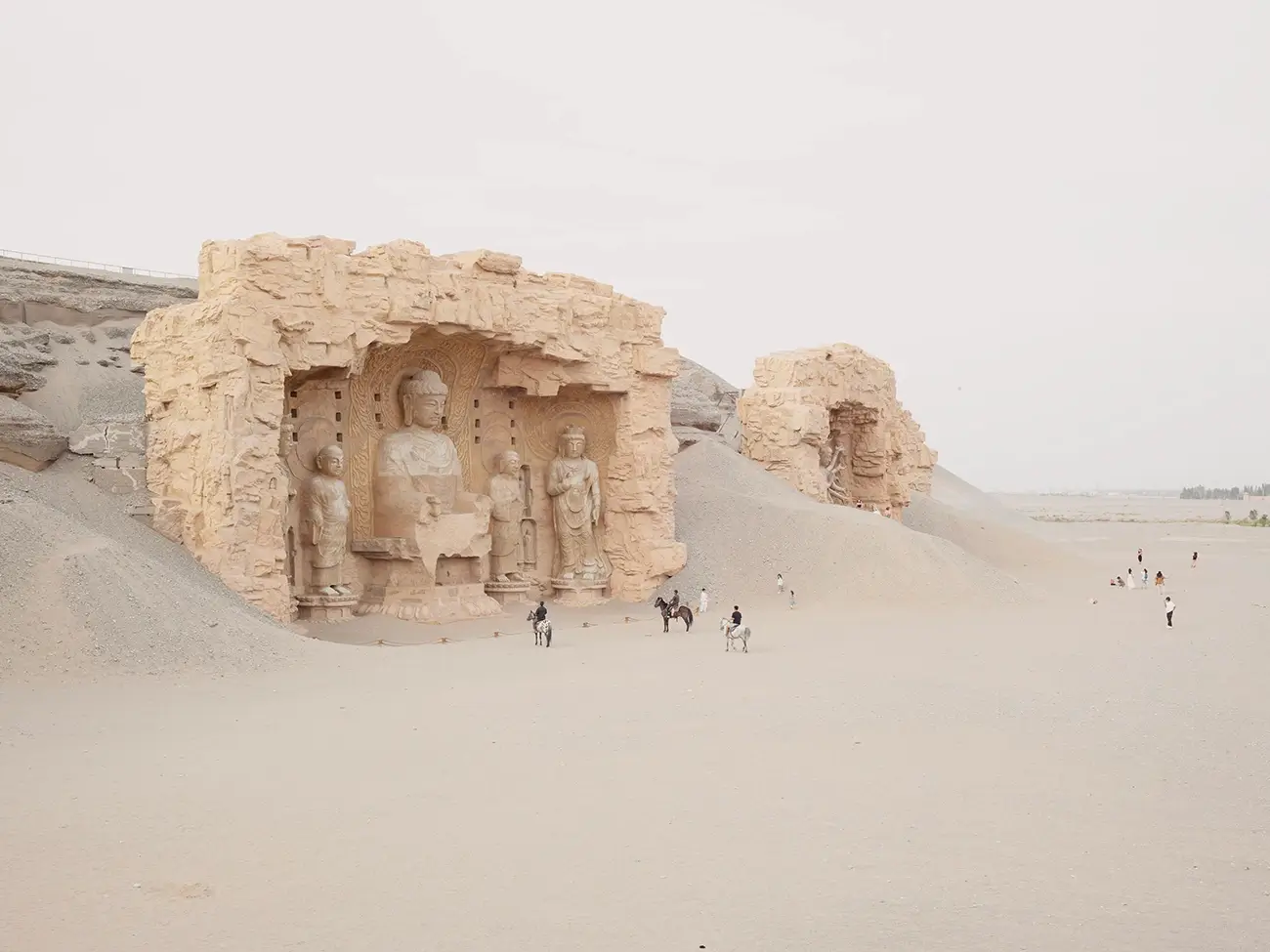
Imitation Longmen Grottoes, 2025, © Zhang Kechun, image courtesy Huxley-Parlour
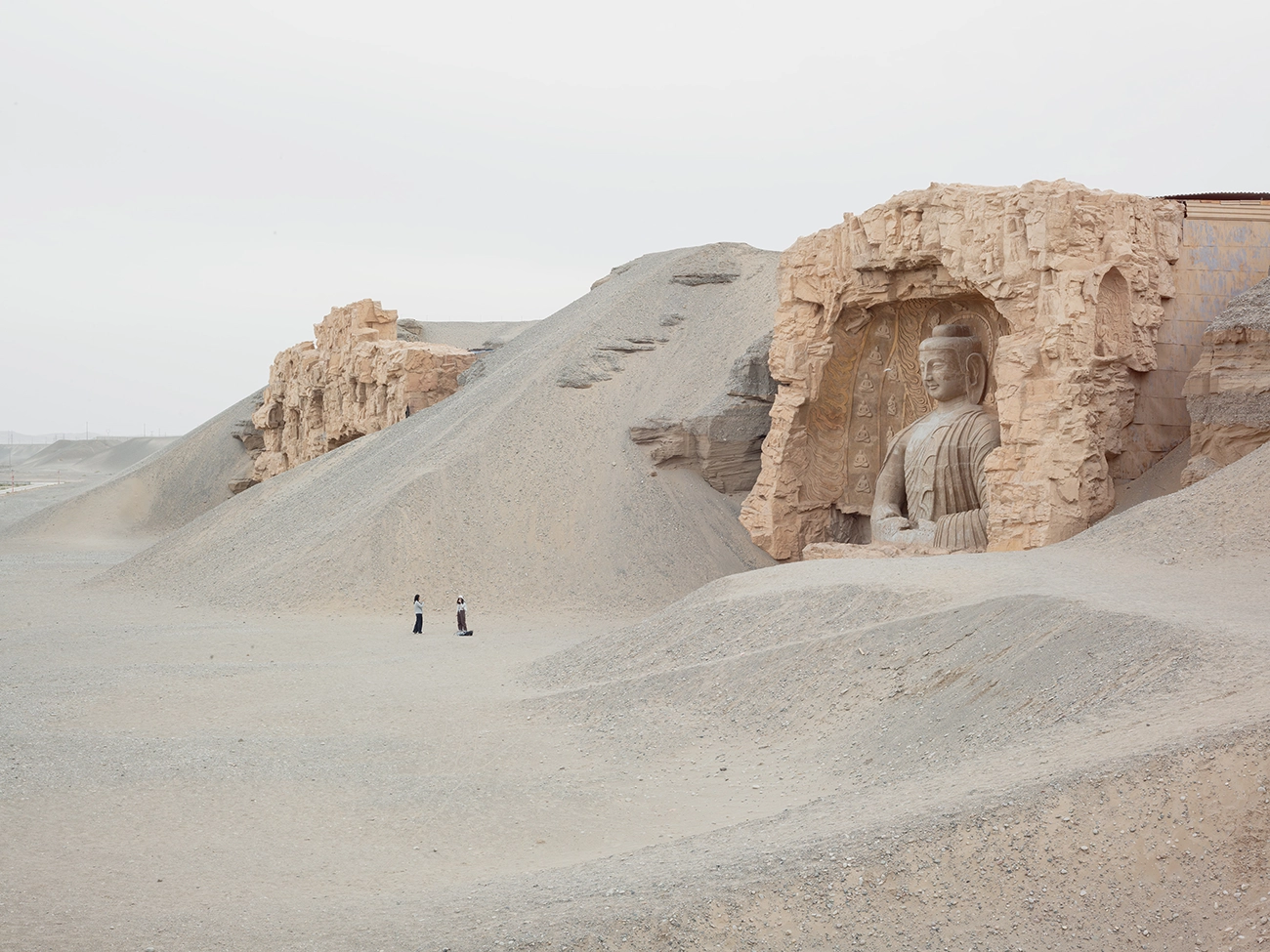
Imitation Yungyang Grottoes, 2025 © Zhang Kechun, image courtesy Huxley-Parlour
Kechun works within the canon of topographic photography, exemplified in his elevated
viewpoints, pastel palette, and 5x4 format. However, the photographer’s referencing
of Chinese traditions of landscape art (particularly from the Song and Yuan Dynasties)
pervades throughout this series. Long, sweeping lines created by mountains rising
from the sand evoke the gentle, calligraphic washes of ink that thirteenth and
fourteenth-century Chinese artists were so adept at applying to silk, and diminutive
figures punctuating the desert likewise recall those early painters. The Yuan Dynasty
was formed after the Mongol invasion of China in the fourteenth-century - Chinese
literati took to landscape painting to express their desires to escape this new reality,
returning to and harmonising with nature in accordance with Daoist philosophy. While
calling on this tradition, The Yellow Desert centres the human footprint in the Gobi
desert (through which the Mongolian armies arrived), reminding the viewer of the
ever-increasing ubiquity and inescapability of human life.
Inversion of concepts and histories forms a central theme in this project. The
photographer returns to the landscapes depicted by antiquated Chinese painters,
but with a large-format camera; echoing this modernising homage to antiquity,
he photographs falsified ancient monuments built in the previous century; and he
juxtaposes the fields of buried tombs with fields of tourists. The Gobi Desert is, in
Kechun’s photographs, a place of supple and fragile reality, where the chronology of
the loss, the ossification, and the reception of history is laid bare.
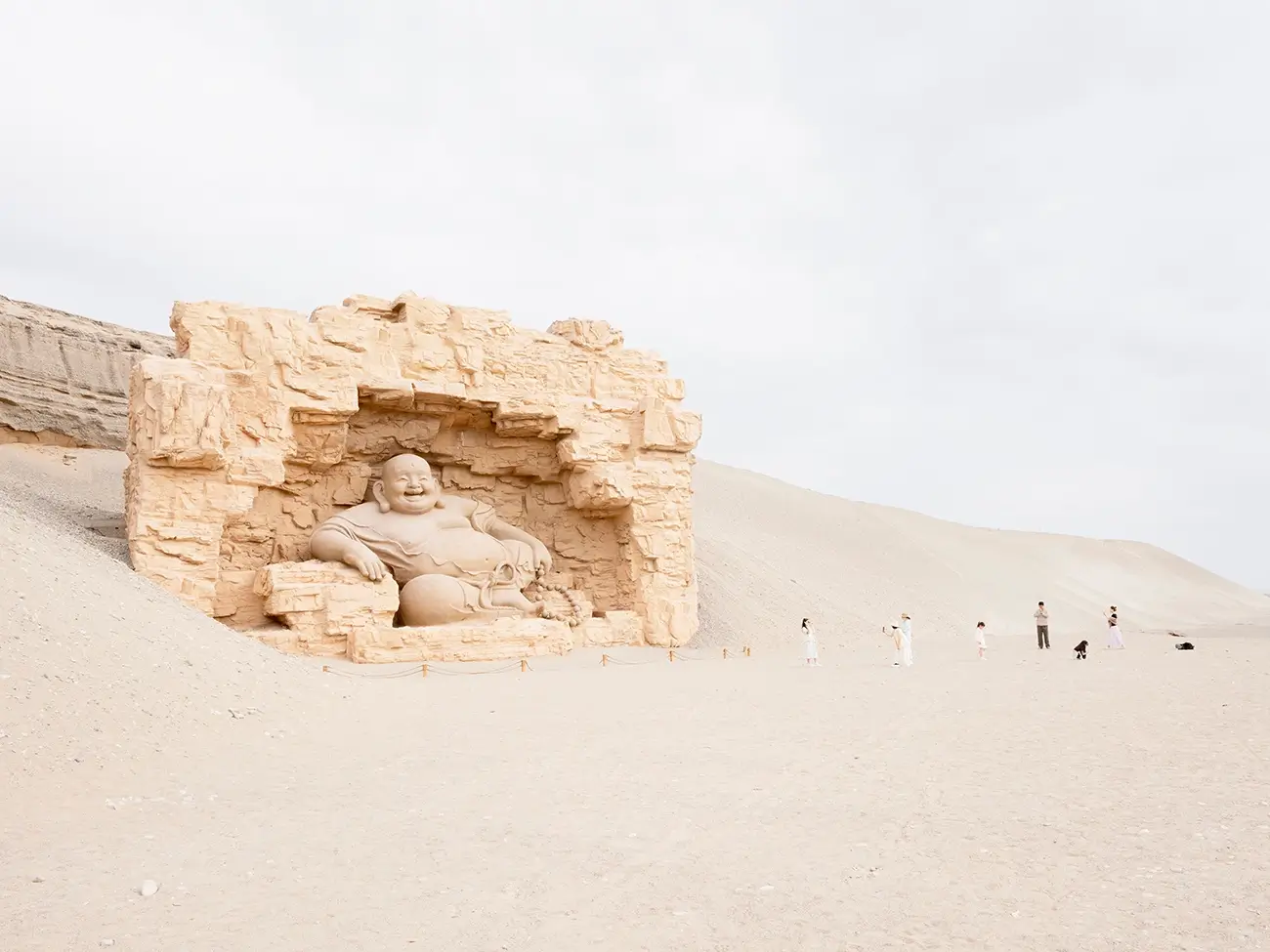
Maitreya Buddha, 2025, © Zhang Kechun, image courtesy Huxley-Parlour
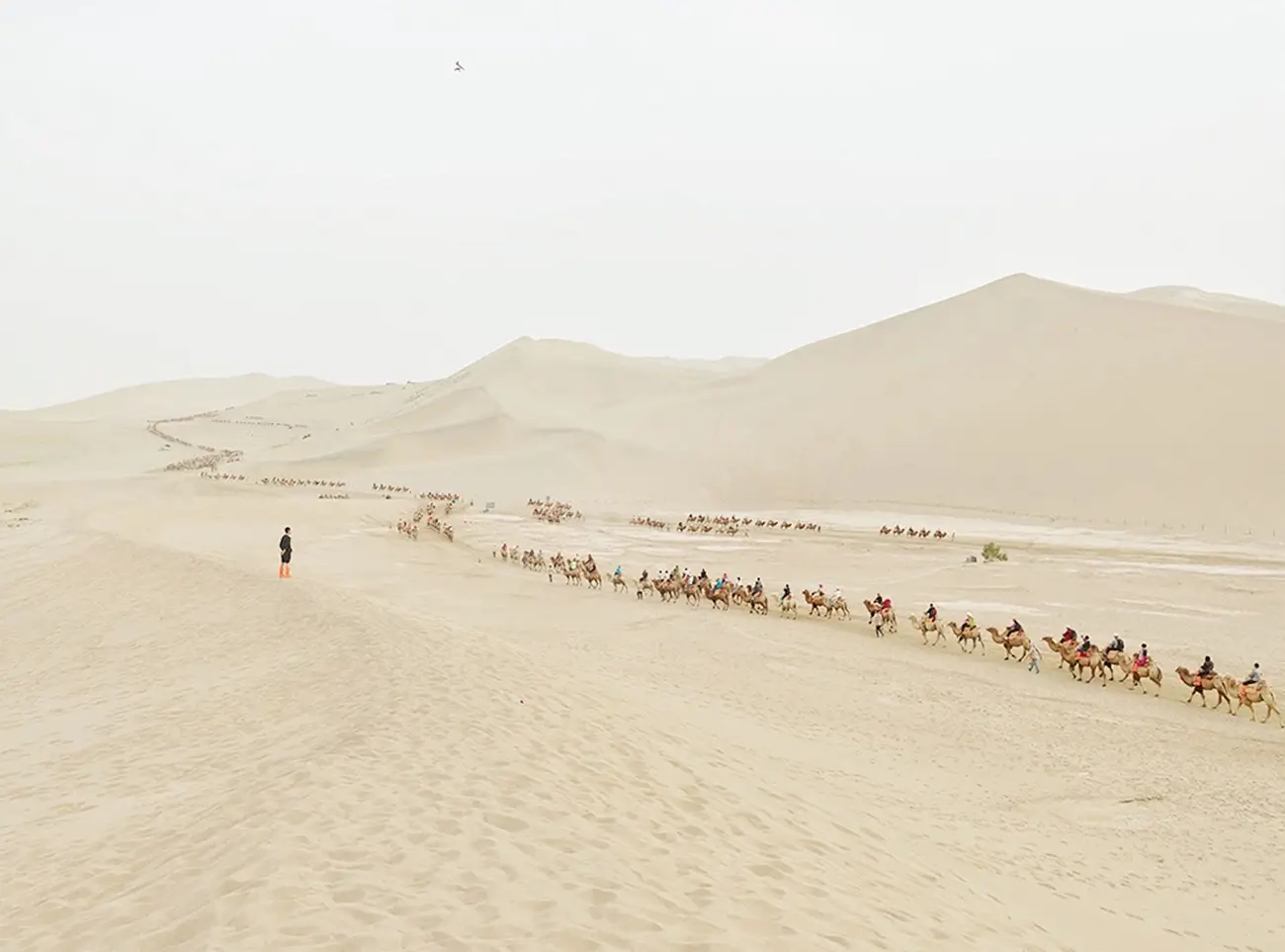
People Riding Camels in the Desert, 2025, © Zhang Kechun, image courtesy Huxley-Parlour
was born in 1980 in Sichuan, China. His work has been exhibited at
Photoquai, Paris, the Beijing Photo Biennale, China and the Delhi Photo Festival, India.
In 2018, Kechun’s photographs were featured in a major exhibition of contemporary
Chinese photography at the Museum of Photography, Berlin. Photographs from his
series The Yellow River were exhibited at the Bangkok Contemporary Art Biennale
in 2020. Kechun won the Discovery Award at Les Rencontres d’Arles for The Yellow
River in 2014. He won the National Geographic Picks Global Photo Contest in 1998
and was shortlisted at the World Photography Awards in 2013.
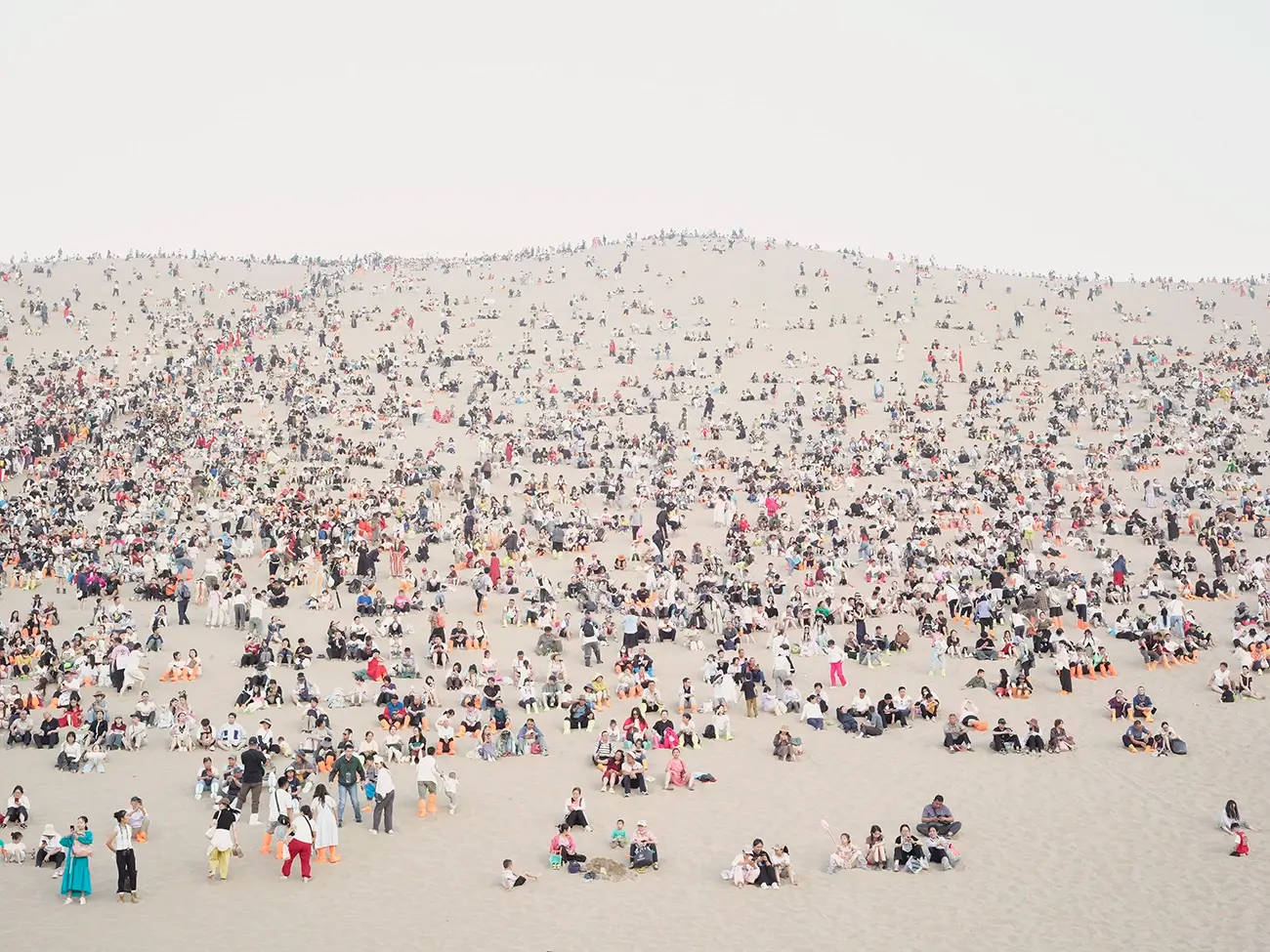
People Singing in the Desert, 2025, © Zhang Kechun, image courtesy Huxley-Parlour
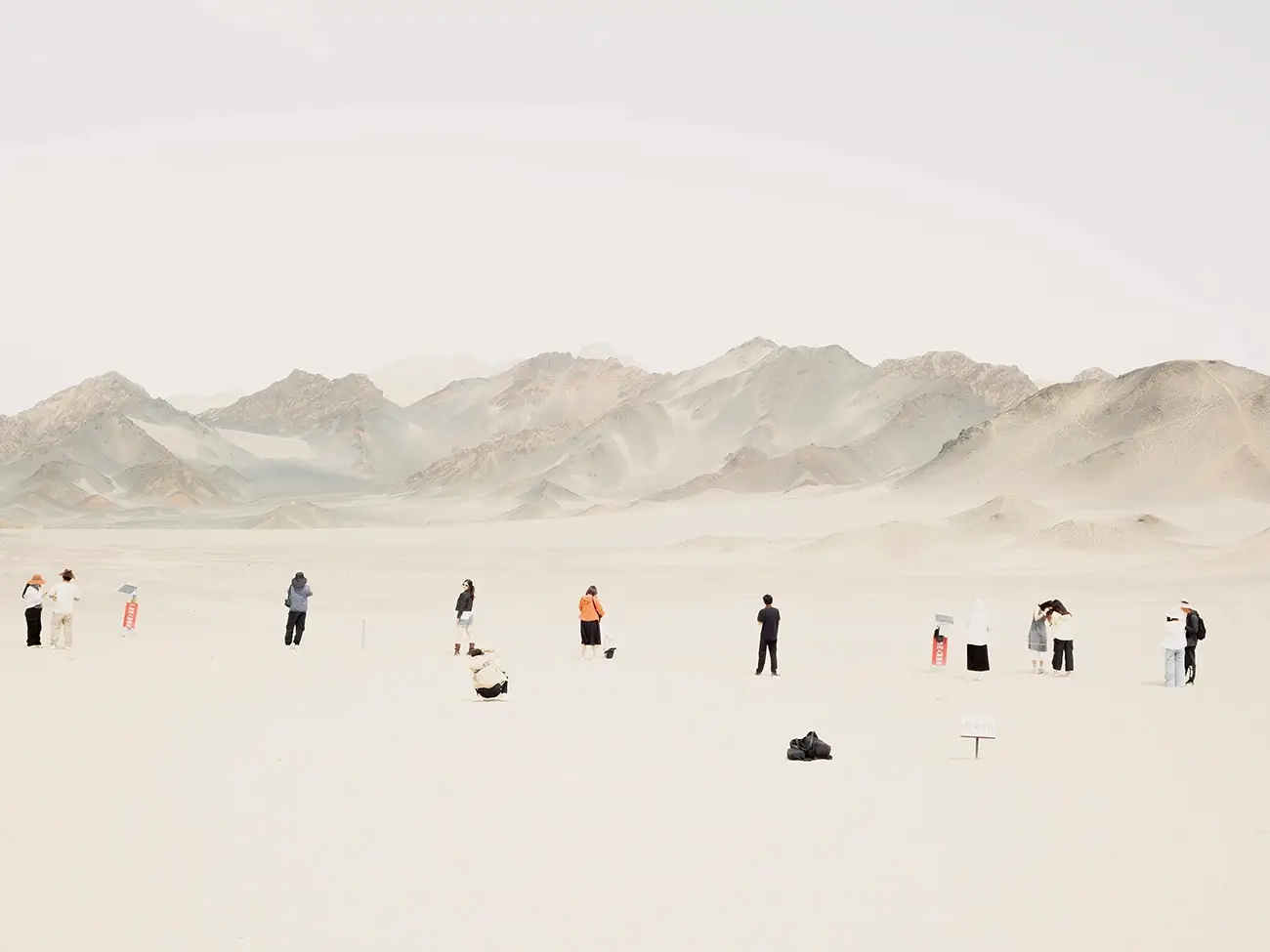
People Taking Photos at Heidushan, 2025 © Zhang Kechun, image courtesy Huxley-Parlour