All about photo.com: photo contests, photography exhibitions, galleries, photographers, books, schools and venues.
Win a Solo Exhibition in April 2026 + An Exclusive Interview!

Distinct Visions: Icons and Innovators in Photography

From May 08, 2025 to June 17, 2025
Share
Distinct Visions: Icons and Innovators in Photography
661 Sun Valley Road
Ketchum, ID 83340
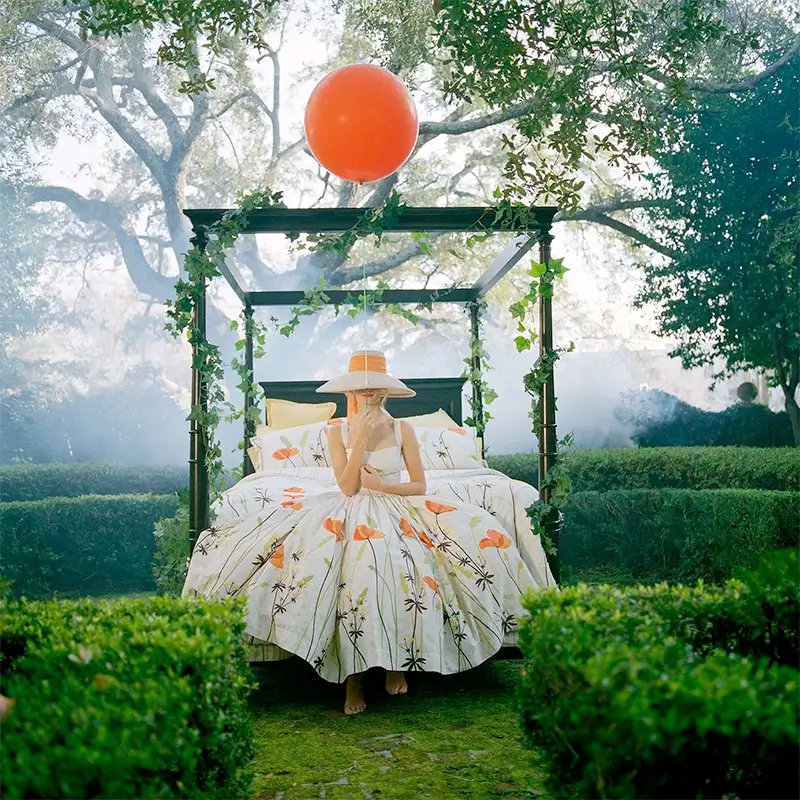
This exhibition presents a curated selection of photographic works by contemporary artists who have significantly influenced the visual language of photography. Spanning genres such as fashion, landscape, and portraiture, the images on display are not bound by a singular theme, but by an enduring, distinct, and powerfully expressive vision. Each photograph bears the unmistakable imprint of its creator, serving as a timeless testament to the art of seeing. Featured artists include Flavia Junqueira, Rodney Smith, JP Terlizzi, Maria Svarbova, Laurie Victor Kay, Ellie Davies, and Dana Hart-Stone.
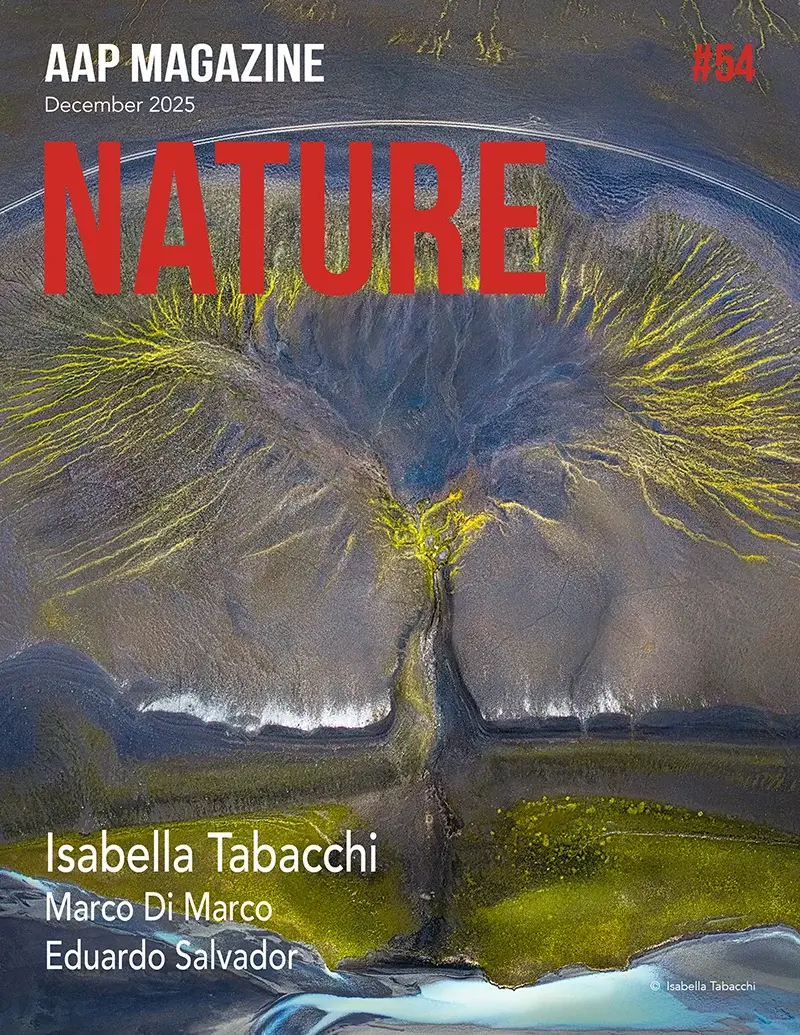
Our printed edition showcases the winners of AAP Magazine call of entries
All About Photo Magazine
Issue #54
Stay up-to-date  with call for entries, deadlines and other news about exhibitions, galleries, publications, & special events.

Exhibitions Closing Soon

SCAD deFINE ART 2026 Painting and Photography Showcase
SCAD Museum of Art | Savannah, GA
From February 11, 2026 to March 15, 2026
SCAD deFINE ART 2026 Painting and Photography Showcase, on view at the Alexander Hall Gallery in Savannah from February 11 to March 15, brings together an ambitious group of works by nominated graduate students from one of the nation’s leading art and design programs. This annual exhibition serves as both a snapshot and a forecast, capturing the creative concerns of artists on the cusp of their professional trajectories while hinting at where contemporary practice may be headed next. Across painting and photography, the exhibition reveals a shared attentiveness to material, process, and concept. Saturated color, layered surfaces, and sensuous textures invite close looking, while familiar forms are often unsettled through unexpected juxtapositions or altered contexts. Historical references surface throughout the show, not as fixed points of nostalgia, but as living archives to be questioned, reworked, and reimagined. These artists demonstrate a fluency in visual language that moves confidently between past and present, analog and digital, intimacy and spectacle. The human body emerges as a recurring site of inquiry—fragmented, staged, abstracted, or rendered with disarming directness. In some works, bodies become vessels for personal narrative or cultural memory; in others, they operate as symbols within broader examinations of power, identity, and social structure. Photography and painting intersect in productive ways, blurring distinctions between documentation and fabrication, observation and invention. What unites the exhibition is a sense of curiosity sharpened by critical awareness. The works do not offer easy conclusions, instead lingering in spaces of ambiguity where beauty and unease coexist. Viewers may recognize echoes of the familiar—domestic scenes, archival imagery, corporeal gestures—yet are prompted to reconsider their meanings through subtle distortions and formal experimentation. Together, the SCAD deFINE ART 2026 Painting and Photography Showcase presents a compelling portrait of an emerging generation of artists: thoughtful, technically adept, and unafraid to probe the complexities of the world they are inheriting and reshaping. Image: JW Toftness, M.F.A. photography, "speaking in the wrong currency," 2025, archival inkjet print, 25 x 35 in. Courtesy of the artist.
The Unending Stream: Chapter II
The Ogden Museum of Southern Art | New Orleans, LA
From September 20, 2025 to March 15, 2026
The Unending Stream is a two-part exhibition that showcases the thriving community of photographers living and working in New Orleans. The title of the exhibition pays homage to a Clarence John Laughlin photograph of the same title, which is a part of the permanent collection at Ogden Museum of Southern Art. Considered “the Father of American Surrealism,” Laughlin was perhaps the most important Southern photographer of the mid-twentieth century. His seminal work, created between the 1935 and 1965, is an important chapter in the long-storied relationship between New Orleans and photography. Following in Laughlin’s visionary footsteps, this exhibition focuses on contemporary photographers who are visually defining the Crescent City in the twenty-first century. The Unending Stream celebrates of the city of New Orleans’ continuing role as one of America’s most important cultural capitals while also highlighting the role the arts have played in revitalizing the region over the past twenty years since Hurricane Katrina. The Unending Stream highlights the work of six photographers who investigate themes similar to Laughlin’s of memory, place, time and identity while capturing the mysterious beauty of America’s most unique city. Each photographer brings a contemporary twist to the exhibition, creating work that provokes thought and conjures emotion. The Unending Stream: Chapter II features photographers (Casey Joiner, Eric Waters, Virginia Hanusik, Giancarlo D’Agostaro, Steve Pyke and Clint Maedgen) who work in both analogue and digital photography. Casey Joiner uses the camera to explore themes of family and grief; Eric Waters documents the complex culture of New Orleans’ Black masking traditions; Virginia Hanusik captures Louisiana’s disappearing coastline in a time of climate change; Giancarlo D’Agostaro makes moody nocturnal photographs of Mardi Gras parades; Steve Pyke records the lush urban forest contained within City Park; and Clint Maedgen fuses multiple images and self-portraiture to create scroll-like collages informed by his musical background. New Orleans has been both muse and home to some of the most important and celebrated photographers of the ninetieth and twentieth century. The Unending Stream sheds light on the current trajectory of photography being created in New Orleans today. Image: Eric Waters, Victor Harris “Mandingo Warriors” FiYiYi, 2015, Pigment Print, 30 x 24 inches, Collection of the Artist
John Willis
Griffin Museum of Photography | Winchester, MA
From January 09, 2026 to March 15, 2026
John Willis’s work enters the Griffin Museum’s Atelier Gallery as part of the exhibition devoted to the evolving idea of Manifest Destiny, offering a contemplative and deeply human counterpoint to the narrative of expansion. Through his projects A View from the Rez and Mni Wiconi, Willis brings decades of sustained engagement with the communities and landscapes of Pine Ridge and Standing Rock, revealing how place itself becomes an active participant in history. His photographs convey a land that remembers—holding traces of endurance, loss, and quiet insistence. Open plains marked by weathered structures or humble memorials become visual testimonies to presence, sovereignty, and survival. In A View from the Rez, Willis turns his attention to the everyday environment, capturing not grand vistas but the intimate, lived spaces that reflect how generations have remained rooted despite continual pressures. These photographs are not documents of abandonment but affirmations of resilience. The land, shaped and reshaped by time and human experience, emerges as a living archive, carrying both hardship and hope in its textures and contours. Mni Wiconi, created during the movement at Standing Rock, shifts the focus to the urgency of defending land and water. Willis’s images reveal encampments defined by community, prayer, and resistance, where the river becomes more than a natural resource—it becomes a sacred lifeline. In these scenes, human action and the natural world converge in a shared declaration that water is not merely essential but spiritually charged. Through these photographs, the viewer encounters a landscape that is not passive but alive, threatened, and fiercely protected. A longtime educator and co-founder of community-centered arts programs, Willis approaches photography as collaboration. His commitment to working alongside Indigenous communities informs every frame. As his career continues to evolve through teaching and nonprofit partnerships, Willis’s work remains rooted in connection—between people, place, and the enduring belief that land and water carry stories that must be honored and defended. Image: © John Willis
Austin Bryant: Where They Remain
Griffin Museum of Photography | Winchester, MA
From January 09, 2026 to March 15, 2026
Austin Bryant: Where They Remain is a contemplative photographic meditation on memory, land, and shared survival. Presented as part of the Griffin Museum’s Manifest Destiny exhibition, this body of work centers on Martha’s Vineyard as both a physical place and a living archive. Bryant approaches the island not as a picturesque retreat, but as a site layered with histories of endurance shaped by African American and Wampanoag communities whose lives have long been intertwined. Through a careful blend of contemporary photographs, archival imagery, and text, Bryant constructs a visual memorial to stories that have been marginalized or deliberately erased. Portraits of individuals are paired with landscapes imbued with quiet significance—shorelines, wooded paths, and communal spaces that hold the presence of those who came before. Rather than illustrating history directly, the work invites viewers to sense it, allowing absence and silence to speak alongside what is visible. Martha’s Vineyard emerges as a place of refuge as well as struggle. The island’s Black seasonal community, established well before Emancipation, and the Wampanoag people, whose presence on Noepe spans millennia, are shown as bound by kinship, land stewardship, and mutual resilience. Bryant’s images resist nostalgia; instead, they emphasize continuity, showing how identity persists through relationship to place, even amid ongoing displacement and change. The photographer’s personal connection to the island lends the work an added intimacy. Having returned to Martha’s Vineyard since childhood, Bryant photographs from within a lived experience, attuned to the comfort and recognition found in seeing families and communities like his own reflected in the landscape. This familiarity allows the work to remain grounded, avoiding distance or spectacle in favor of quiet attentiveness. Where They Remain ultimately speaks to the power of photography as an act of remembrance. Bryant’s images do not claim to recover everything that has been lost, but they insist on presence—on the enduring bond between people and land. In doing so, the work affirms that history is not only recorded in archives, but carried forward through lived connection, care, and the places where communities continue to stand. Image: © Austin Bryant
World Press Photo Exhibition 2025
Bronx Documentary Center | The Bronx, NY
From February 07, 2026 to March 15, 2026
World Press Photo Exhibition 2025 arrives at The Bronx Documentary Center from February 7 to March 15, 2026, bringing together images that define a turbulent and deeply consequential moment in global history. Presented in New York City for the first time, this edition showcases the 42 winners of the annual World Press Photo Contest, each selected by an independent jury for both artistic merit and journalistic integrity. Representing six regions of the world, the exhibition amplifies stories told from within the communities they portray. Thirty of the winning photographers are local to the places they document, offering perspectives shaped by proximity, lived experience, and cultural understanding. Their images trace the contours of a world in transformation — from the shifting climate to the movement of people, from public resistance to personal grief. Among the distinguished laureates is Samar Abu Elouf, whose World Press Photo of the Year depicts nine-year-old Mahmoud Ajjour, gravely wounded while escaping an attack in Gaza. Other finalists include John Moore, chronicling the perilous journey of Chinese migrants at the U.S.–Mexico border, and Musuk Nolte, who turns his lens toward communities facing devastating drought in the Amazon. Each project introduces viewers to places and realities that might otherwise remain distant, revealing the intertwined forces shaping modern life. The exhibition also underscores a stark truth: press freedom remains fragile. With 103 journalists killed in 2024, it was the deadliest year ever recorded for the profession. Against this backdrop, the work on view stands as a testament to courage, persistence, and the irreplaceable role of visual journalism in democratic societies. By inviting visitors to slow down and engage deeply, World Press Photo Exhibition 2025 becomes more than a survey of award-winning photography. It is an appeal to witness, to question, and to recognize the enduring power of images to illuminate the world and inspire action. Image: © Tatsiana Chypsanava, Pulitzer Center, New Zealand Geographic
Cornell Capa: Father of Concerned Photography
The Capa Space | Yorktown, NY
From December 06, 2025 to March 15, 2026
On view from December 6, 2025 to March 15, 2026 at The Capa Space in Yorktown, Cornell Capa: Father of Concerned Photography revisits the legacy of a photographer whose work helped redefine the moral responsibility of the medium. More than a chronicler of events, Cornell Capa believed photography could serve as a call to conscience, urging viewers to look closely at the human condition and respond with empathy and awareness. This exhibition brings together more than three decades of his work, revealing a career shaped by deep conviction and humanist values. Coined by Capa in 1967, the concept of “concerned photography” reflects his belief that photographers should engage with the world ethically, using images to illuminate injustice and affirm dignity. The photographs on view move fluidly between public power and private vulnerability. Intimate portraits of John F. Kennedy and Robert F. Kennedy offer moments of reflection behind political authority, while images made in South America and within psychiatric institutions confront viewers with lives shaped by poverty, exclusion, and neglect. Throughout these varied contexts, Capa’s approach remains measured and compassionate, avoiding spectacle in favor of understanding. Religion and ritual also occupy an important place in Capa’s work, as he documented spiritual practices across cultures with the same attentiveness he brought to political and social subjects. These photographs suggest a shared search for meaning, resilience, and belonging, regardless of geography or belief. His images are quietly powerful, grounded in patience and proximity rather than drama, allowing subjects to retain their individuality and presence within the frame. Together, the works in Cornell Capa: Father of Concerned Photography trace a vision of photography as an ethical practice rooted in responsibility to others. The exhibition underscores Capa’s enduring influence, not only through his images but through his advocacy for photographers committed to social justice. In an era still marked by inequality and conflict, his photographs remain a reminder that the camera, when guided by conscience, can bear witness with clarity, humility, and lasting relevance. Image: Robert F. Kennedy campaigning for Senate in Elmira, New York, September 1964. Photograph by Cornell Capa. Courtesy of the Robert Capa and Cornell Capa Archive at the International Center of Photography © Cornell Capa
Manifest Destiny
Griffin Museum of Photography | Winchester, MA
From January 09, 2026 to March 15, 2026
Manifest Destiny at The Griffin Museum presents a thoughtful reevaluation of America’s landscape — not as an open frontier, but as a layered archive of memory, displacement, and resilience. By highlighting photographers who document present-day terrain rather than romanticized myth, the exhibition challenges the old narratives of conquest and erasure, revealing how land can hold traces of histories often left unseen. It asks us to look at what remains, what is recovering, and what continues to resist. The show brings together powerful voices such as Scott Conarroe, Craig Easton, Lisa Elmaleh, Rich Frishman, Drew Leventhal, and Vicky Sambunaris. Each artist offers a distinct lens: Conarroe travels between places and climates, tracking patterns of change; Easton merges documentary realism with emotional subtlety; Elmaleh explores migration and borderlands through haunting large-format photographs; Frishman investigates the built environment’s social fabric; Leventhal uses his anthropological background to trace ritual, history, and human presence; and Sambunaris documents industrial and ecological transformation across wide expanses. Through these varied practices, Manifest Destiny reframes the American landscape as contested terrain — one shaped by dislocation, environmental disruption, cultural resistance, and ongoing renewal. What appears at first like empty space often reveals itself to be a site of layered histories and urgent human stories. The photographs serve as visual testimonies, capturing what has been lost, changed, or abandoned — while also preserving what endures. As part of the larger “State of Our Union” series, this exhibition participates in a national reflection on identity, legacy, and environment, timed with the country’s 250th anniversary. In doing so, it offers not nostalgia but reckoning: a call to see landscape not as background for myth, but as record of experience, human agency, and ecological consequence. Manifest Destiny invites viewers to reconsider place — to acknowledge that every hill, every field, every empty building once carried lives, labor, and memory. It suggests that the work of recovery and remembrance is ongoing, carried out not only by archives, but by those willing to look, to question, and to hold the land accountable to its history. Image: © Craig Easton
Fragmentary Glimpses:  Alfred Stieglitz and David Vestal in New York
Robert Mann Gallery | New York, NY
From February 05, 2026 to March 21, 2026
Fragmentary Glimpses: Alfred Stieglitz and David Vestal in New York, on view at Robert Mann Gallery from February 5 to March 21, 2026, brings together two distinct yet resonant visions of a city defined by perpetual change. New York has long been a proving ground for photographers, a place where speed, density, ambition, and reinvention collide. Through the eyes of Stieglitz and Vestal, the city emerges not as a fixed portrait but as a series of fleeting impressions—moments suspended between permanence and disappearance. Alfred Stieglitz’s photographs capture New York at a pivotal moment in the early twentieth century, when industrial progress reshaped both the skyline and the rhythm of daily life. His images from Camera Work No. 36 reveal a city in motion: ferries slicing through fog, crowds dissolving into rain, iron structures rising against shifting skies. Often described as “snapshots,” these works are anything but casual. Through daring compositions and tonal subtlety, Stieglitz transformed modern infrastructure and urban weather into expressive forces, positioning photography as a medium capable of poetic insight as well as documentation. David Vestal’s New York, photographed decades later, reflects a quieter yet no less charged atmosphere. Working in the postwar period, Vestal turned his attention to the city’s inhabitants and overlooked corners, where light grazes faces and architecture bears the weight of recent history. His background in painting and his association with the Photo League informed a practice rooted in observation and restraint. While less overtly celebratory than Stieglitz’s work, Vestal’s images register the psychological texture of urban life, revealing beauty and unease in equal measure. Together, these photographs trace a lineage of modern vision. The exhibition’s title, drawn from a 1911 essay describing New York as a vision that briefly glimmers before fading, feels especially apt. Stieglitz and Vestal understood that the city can never be fully grasped—only encountered in fragments. Their work reminds us that photography does more than record change; it shapes how change is remembered, offering lasting glimpses of a city forever becoming itself. Image: David Vestal Flatiron Building, 1963 Vintage silver print © David Vestal
Between Order and Chaos: André Kertész and M. C. Escher
Bruce Silverstein Gallery | New York, NY
From January 22, 2026 to March 21, 2026
Bruce Silverstein Gallery presents Between Order and Chaos: André Kertész and M. C. Escher, an exhibition that stages a compelling dialogue between two visionaries who transformed how reality is perceived. Though working in different media—photography and printmaking—Kertész and Escher each pursued a deeply personal investigation into structure, illusion, and the fragile balance between logic and disruption. Seen together, their works reveal how order and chaos are not opposing forces, but intertwined conditions through which the world becomes visible and meaningful. Both artists came of age during periods of profound social and geographic upheaval, experiences that shaped their independent ways of seeing. Kertész’s migrations across Europe and the United States fostered a poetic sensitivity to fleeting moments and subtle visual anomalies, while Escher’s travels through Italy and Spain sharpened his fascination with geometry, repetition, and spatial paradox. Each cultivated the perspective of an observer slightly removed from the center, attentive to patterns others overlooked and receptive to instability as a source of insight rather than confusion. Escher’s meticulously constructed prints transform natural phenomena and architectural forms into systems of mesmerizing complexity. Ripples, reflections, and recursive spaces become vehicles for visual logic pushed to its breaking point, where certainty dissolves into wonder. His images make visible the hidden structures underlying perception, while simultaneously undermining their reliability. Order appears precise and mathematical, yet always on the verge of collapse into contradiction and impossibility. Kertész achieves a parallel tension through the camera, extracting moments of visual dissonance from everyday life. Through reflection, distortion, and unexpected framing, familiar scenes subtly unravel. Puddles, windows, and bodies become sites where reality bends, revealing poetry within constraint. Unlike Escher’s invented worlds, Kertész’s images remain anchored in lived experience, their quiet disruptions unfolding within ordinary surroundings. Together, Between Order and Chaos invites viewers to reconsider the act of seeing itself. By juxtaposing these two practices, the exhibition reveals how perception is shaped as much by uncertainty as by structure. In the space between precision and instability, Kertész and Escher offer a shared reminder that reality is not fixed, but continually reorganized through the act of looking. Image: André Kertész (1894-1985) December 15, 1979 SX-70 Polaroid 4 1/4 x 3 1/2 in (10.8 x 8.9 cm) © André Kertész
Yasumasa Morimura & Charles Atlas
Luhring Augustine Chelsea | New York, NY
From January 30, 2026 to March 21, 2026
Luhring Augustine presents Yasumasa Morimura & Charles Atlas at its Chelsea location from January 30 through March 21, 2026, bringing together two artists whose practices have long challenged fixed ideas of gender, identity, and representation. While working in different mediums and cultural contexts, both Morimura and Atlas share a commitment to reinvention, using performance, masquerade, and self-fashioning as critical tools. The exhibition unfolds across the gallery’s spaces as a dialogue between still image and moving image, past and present, self and role. In the main gallery, Yasumasa Morimura presents a selection of works spanning more than four decades, alongside recent pieces that reaffirm the enduring relevance of his approach. By inserting himself into iconic images drawn from Western art history, cinema, and popular culture, Morimura collapses distinctions between original and copy, male and female, East and West. His self-transformations, often meticulous and theatrical, disrupt the authority of canonical imagery and unsettle the conventions of self-portraiture. Through the embodiment of female figures in particular, Morimura actively reframes the dynamics of looking, questioning who is seen, who is seeing, and under what terms. In the back gallery, Charles Atlas presents a new 30-minute program of portraits centered on drag and gender play. Drawn from footage shot during the 1980s and 1990s, the work highlights performers who were central to Atlas’s artistic universe, including long-standing collaborators from the worlds of dance, performance, and underground culture. Atlas’s camera captures moments of vulnerability, bravado, and transformation, treating performance not as spectacle but as a form of lived identity. His pioneering role in video art is evident in the way movement, music, and presence are woven into an intimate visual language. Together, the works of Morimura and Atlas reveal how identity can be constructed, dismantled, and reimagined through art. Presented within Luhring Augustine’s Chelsea galleries, the exhibition underscores the continuing power of performance-based practices to question cultural norms, while honoring the artists’ lasting influence on contemporary discussions of gender, visibility, and self-representation. Image: Yasumasa Morimura Doublonnage (Marcel) Color photograph © Yasumasa Morimura

Cooper & Gorfer: Altered Gaze
Jackson Fine Art | Atlanta, GA
From January 22, 2026 to March 21, 2026
Jackson Fine Art presents Altered Gaze, a new exhibition of collages and photographs by the Stockholm-based duo Cooper & Gorfer, whose collaborative practice has steadily redefined contemporary portraiture. Built on nearly two decades of shared work, the exhibition continues their sustained exploration of female identity, asking viewers to reconsider how images are read and how meaning is formed. The works unfold as a collective self-portrait, shaped through relationships with women and guided by the tension between what is revealed and what remains concealed. At the center of the exhibition are monumental, myth-inflected female figures who appear both commanding and introspective. In newly created collages, these women function as guardians of inner worlds shaped by memory, heritage, and lived experience. Collage remains essential to Cooper & Gorfer’s method, not simply as a technique but as a conceptual framework. Fragments are layered, removed, and reassembled, echoing the way identities are formed over time. The surfaces of the works bear traces of construction, allowing vulnerability and strength to coexist within the same image. The portraits operate on multiple levels at once. They are deeply personal, reflecting emotional states, fears, and desires, yet they also carry broader cultural and political resonances. By merging photography with textiles, painterly gestures, and digital manipulation, Cooper & Gorfer blur distinctions between the physical and the imagined. The fragmentation visible in the works mirrors the complexity of contemporary identity, where contradictions are not resolved but held in balance. Rather than presenting fixed representations, the artists create visual spaces where transformation feels ongoing. Founded by Sarah Cooper and Nina Gorfer, the duo has developed a practice that moves fluidly between still images and moving pictures, consistently expanding the possibilities of portraiture. Their work, exhibited internationally and held in major collections, reflects a deep respect for tradition while actively reshaping it. In Altered Gaze, Cooper & Gorfer invite viewers into layered narratives that resist easy interpretation, offering portraits that function less as likenesses and more as sites of reflection, where identity is understood as something assembled, fractured, and continually becoming. Image: Cooper & Gorfer Maryan Clouds, 2025 Mixed media processed collage mounted to Dibond © Cooper & Gorfer
Steve Schapiro: Being Everywhere
Fahey/Klein Gallery | Los Angeles, CA
From January 22, 2026 to March 21, 2026
Steve Schapiro: Being Everywhere offers a sweeping and deeply human portrait of America seen through the lens of one of its most perceptive witnesses. Presented from January 22 through March 21, the exhibition reflects a life spent moving instinctively toward moments of significance, often before history itself had fully formed around them. Schapiro’s photographs carry the quiet authority of someone who understood that presence, patience, and empathy are as vital as timing. Emerging in the early 1960s, Steve Schapiro quickly became a defining visual voice of the Civil Rights Movement. His photographs from the American South capture not only marches and protests, but also the private exchanges, exhaustion, courage, and tenderness that sustained the struggle. Traveling closely with James Baldwin, Schapiro documented a movement from the inside, balancing the gravity of injustice with scenes of solidarity and shared resolve. These images endure because they do more than describe events; they convey lived experience. As his career expanded, Schapiro brought the same sensitivity to cultural life beyond the streets. His behind-the-scenes photographs on legendary film sets reveal cinema not as spectacle, but as a collaborative human endeavor. Whether observing actors between takes or directors lost in concentration, Schapiro remained unobtrusive, allowing moments to unfold naturally. His Hollywood images feel remarkably intimate, shaped by the same documentary instincts that guided his social work. Across decades and subjects, Schapiro’s photography resists dramatization. His images are clear-eyed yet compassionate, grounded in a belief that truth emerges through attention rather than intrusion. Each photograph holds a narrative charge, inviting viewers to linger and reflect rather than consume and move on. This balance between objectivity and emotional resonance defines his enduring relevance. Steve Schapiro: Being Everywhere stands as a testament to a photographer who understood that bearing witness is an ethical act. His work reminds us that history is not only shaped by iconic moments, but by the countless human gestures surrounding them. In looking closely, Schapiro preserved not just what happened, but how it felt to be there. Image: "Steve Schapiro Warhol, Edie et Henry", New York, 1965 © Steve Schapiro, courtesy of FaheyKlein Gallery, Los Angeles
Advertisement
AAP Magazine #56 Shadows
Win a Solo Exhibition in April
AAP Magazine #56 Shadows
Call for Entries
AAP Magazine #56 Shadows
Publish your work in our printed magazine and win $1,000 cash prizes

Related Articles

Gordon Parks: The South in Color
Jackson Fine Art is delighted to announce our spring exhibition Gordon Parks: The South in Color organized in partnership with The Gordon Parks Foundation. The exhibition is timed to commemorate two important milestones - the 70th anniversary of the landmark publication of Parks’ images of the segregated South in Life magazine and the 20th anniversary of the founding of The Gordon Parks Foundation. The South in Color will present more than thirty photographs from the artist’s Segregation Story series and debut a brand-new portfolio published by the Foundation. The exhibition brings together many of Parks’ images not previously shown in the gallery, alongside some of his most recognized such as At Segregated Drinking Fountain, Mobile, Alabama, to offer a fresh look at the series, and deepen its emotional and historical resonance.
Marilyn Stafford, Lee Miller, Colin Jones for UNSEEN at Art Rotterdam
The Albumen Gallery programme for UNSEEN at Art Rotterdam 2026 brings together three iconic names of mid-20th century photography. At a first glance the works of Marilyn Stafford, Lee Miller and Colin Jones cover quite a wide spectrum of photography. Notwithstanding that there are shared aspects across their respective bodies of work that invite interesting comparison with respect to thematic and artistic approach.
Circulation(s) Festival of young European photography
For its sixteenth edition, the Circulation(s) Festival continues to champion emerging European photography and its intersections with contemporary art. Founded in 2009 at the CENTQUATRE-PARIS, the festival has grown into a key platform for young creators, highlighting plural perspectives and experimental practices.
Colour Me Modern: Claire Aho and the New Woman
Colour Me Modern: Claire Aho and the New Woman, celebrates the vibrant photography of the pioneering Finnish artist, Claire Aho (1925-2015) who brought wit, colour and cinematic flair to postwar image-making across her work in fashion, advertising and editorial. Presented by Hundred Heroines, the UK’s only museum dedicated to women in photography, this free exhibition, split over two sites, highlights how Aho, known as ‘the Grand Old Lady of Finnish Photography,’ helped shape a new visual language for Finland, presenting confi dent, contemporary women and transforming everyday scenes into carefully staged moments of style.
Fragilities & Resilience by Thibault Gerbaldi at the Jardin du Luxembourg
From March 21 to July 19, 2026, the French Senate will host Fragilities & Resilience, the first solo exhibition in France of internationally acclaimed photographer Thibault Gerbaldi. Presented outdoors on the iconic grilles of the Jardin du Luxembourg in Paris 6ème, the exhibition features 80 striking photographs captured across five continents, offering a breathtaking exploration of the fragile yet enduring connections between humans and nature. Entry is free, making this a rare opportunity for the public to experience Gerbaldi’s work on a monumental scale.
All About Photo Presents ’ Civilization’ by Damien Aubin
In Civilization, Damien Aubin turns his lens toward environments shaped not by nature, but by ambition. These are places engineered at a scale that exceeds the individual — infrastructures, industrial complexes, vast architectural systems that dwarf the human body and often eclipse it entirely. There are no protagonists here. No narratives unfolding in real time. Instead, Aubin photographs what remains when activity recedes: structures that continue to stand, operate, or simply endure.
Elliott Erwitt: Gold Standard
Weinstein Hammons Gallery is pleased to present Elliott Erwitt: Gold Standard, the third exhibition of photographs by Elliott Erwitt (1928–2023), one of the most influential photographers of the twentieth and twenty-first centuries.
FotoFocus Announces Big Tent Opening of FotoFocus Center
This summer, FotoFocus will expand on their vision and embark on a new chapter with the launch of Big Tent, the inaugural exhibition at the new FotoFocus Center, a 14,700 square foot, purpose-built structure to house photographic exhibitions and year-round programs. Bringing together work by over fifty artists (including An-My Lê, Catherine Opie, Dawoud Bey, Gordon Parks, Justine Kurland, Mitch Epstein, RaMell Ross, Sky Hopinka, Tina Barney and many more), the exhibition (on view May 29-August 22) reflects upon the current state of American democracy while also considering the efficacy of photography to be a catalyst for meaningful change.
 The Queering of Photography by Asa Johannesson
Stills are delighted to announce their spring exhibition: The Queering of Photography by Åsa Johannesson; the artist’s first solo exhibition in Scotland. The Queering of Photography takes place from 1 May – 27 June 2026, Preview: Thursday 30 April, 6–8pm. Åsa Johannesson is an artist working across photography and writing. Over the past two decades she has explored the possibilities of queer visual vocabulary within photographic portraiture – a practice that intertwines queer documentary approaches with performative formalist aesthetics.
Call for Entries
Solo Exhibition April 2026
Get International Exposure and Connect with Industry Insiders