New Brunswick - Rutgers, The State University of New Jersey - 71 Hamilton Street - NJ 8901
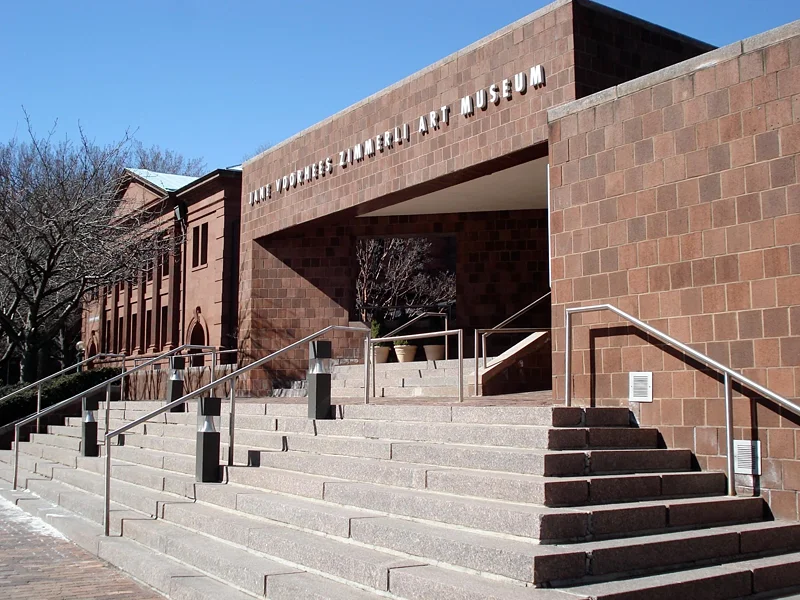
The Zimmerli Art Museum at Rutgers University is recognized as one of the most significant university-based museums in the United States, offering a rich resource for students, scholars, and the public alike. Located on the New Brunswick campus of Rutgers, The State University of New Jersey, the museum has been a cornerstone of cultural and academic life since its founding. Originally established in 1966 as the Rutgers University Art Gallery, it was restructured and expanded in 1983 into the Jane Voorhees Zimmerli Art Museum, thanks to the generosity of Ralph and Alan Voorhees, who named the institution in honor of their mother.
Over the years, the Zimmerli has developed an exceptional reputation for the breadth and depth of its holdings. The collection now encompasses more than 62,000 works spanning antiquity to contemporary art, making it one of the largest university museum collections in the nation. Areas of strength include American art, European art, Soviet nonconformist art, and original illustrations for children’s literature, reflecting a balance between global perspectives and specialized focus.
A defining moment in the museum’s history came in 1991, when Dr. Norton Dodge and his wife Nancy Ruyle Dodge donated more than 20,000 works of Soviet-era nonconformist art, created between the 1950s and 1980s. This extraordinary gift established the world’s most comprehensive collection of unofficial art from the former Soviet Union, cementing the Zimmerli’s international importance.
Beyond its collections, the Zimmerli serves as a vibrant hub of learning and engagement. Through exhibitions, scholarly publications, lectures, and educational programs, the museum brings art into dialogue with history, politics, and contemporary culture. Support from Rutgers, foundations, and private donors ensures its mission of accessibility and innovation. Today, the Zimmerli continues to inspire curiosity, encourage research, and foster a deeper understanding of art across generations and communities.
Website