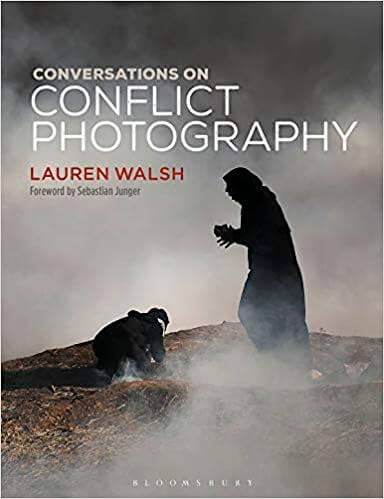
In today's image-saturated culture, the visual documentation of suffering around the world is more prevalent than ever. Yet instead of always deepening the knowledge or compassion of viewers, conflict photography can result in fatigue or even inspire apathy. Given this tension between the genre's ostensible goals and its effects, what is the purpose behind taking and showing images of war and crisis?
Conversations on Conflict Photography invites readers to think through these issues via conversations with award-winning photographers, as well as leading photo editors and key representatives of the major human rights and humanitarian organizations. Framed by critical-historical essays, these dialogues explore the complexities and ethical dilemmas of this line of work. The practitioners relate the struggles of their craft, from brushes with death on the frontlines to the battles for space, resources, and attention in our media-driven culture. Despite these obstacles, they remain true to a purpose, one that is palpable as they celebrate remarkable success stories: from changing the life of a single individual to raising broad awareness about human rights issues.
Opening with an insightful foreword by the renowned Sebastian Junger and richly illustrated with challenging, painful, and sometimes beautiful images, Conversations offers a uniquely rounded examination of the value of conflict photography in today's world.
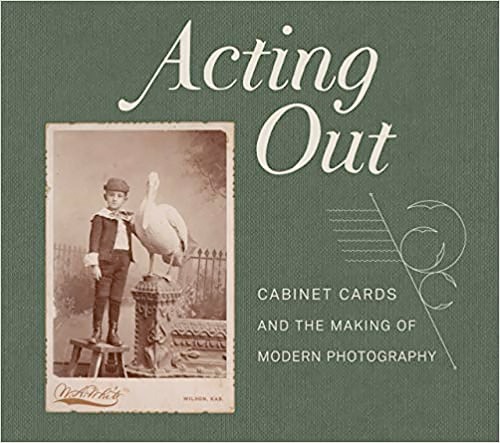
Cabinet cards were America's main format for photographic portraiture throughout the last quarter of the nineteenth century. Standardized at 6½ x 4¼ inches, they were just large enough to reveal extensive detail, leading to the incorporation of elaborate poses, backdrops, and props. Inexpensive and sold by the dozen, they transformed getting one's portrait made from a formal event taken up once or twice in a lifetime into a commonplace practice shared with friends.
The cards reinforced middle-class Americans' sense of family. They allowed people to show off their material achievements and comforts, and the best cards projected an informal immediacy that encouraged viewers to feel emotionally connected with those portrayed. The experience even led sitters to act out before the camera. By making photographs an easygoing fact of life, the cards forecast the snapshot and today's ubiquitous photo sharing.
Organized by senior curator John Rohrbach, Acting Out is the first ever in-depth examination of the cabinet card phenomena. Full-color plates include over 100 cards at full size, providing a highly entertaining collection of these early versions of the selfie and ultimately demonstrating how cabinet cards made photography modern.
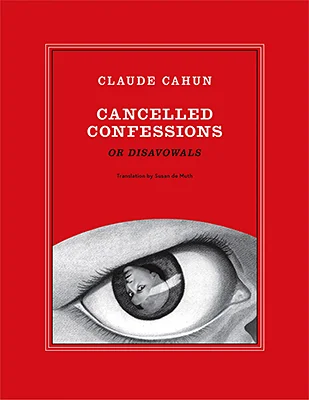
Claude Cahun: Cancelled Confessions (or Disavowals) returns to print as a radical and playful exploration of identity, selfhood, and resistance. Originally published in 1930, this work defies the conventions of the memoir, dismantling the notion of a fixed, singular “I” and reconstructing it in a kaleidoscope of forms: aphorisms, letters, dialogues, fables, dreams, hymns, and proclamations. Through these fragments, Cahun interrogates desire, love, gender, sex, faith, vanity, and fear, creating a literary space that is at once mischievous, profound, and defiant.
In Cancelled Confessions, the instability of self becomes a tool of liberation. Cahun refuses to conform to prescribed identities, instead multiplying and shifting their presentation across text and image. The book mirrors the artist’s famous photographic self-portraits, in which she appears in elaborate costumes, androgynous attire, or masked, often reflecting or doubling herself to question the very notion of coherence in identity. Each page of the memoir is a provocation: a playful yet incisive invitation to reconsider the boundaries imposed by society, art, and the self itself.
This edition thoughtfully recreates the spirit of the original book, enriched with the 1930 preface by Pierre Mac Orlan and contemporary essays by scholar Amelia Groom and translator Susan de Muth. These contextual contributions illuminate Cahun’s prescience, highlighting how her inquiries into gender fluidity, performativity, and defiance of norms resonate with today’s cultural and political conversations. Nearly a century old, the work remains urgent, asserting that resilience requires transforming defeat into power, and that liberation often emerges through imaginative rebellion.
Born in France in 1894, Claude Cahun collaborated closely with Marcel Moore to create a body of work that spans photography, writing, and activism. Celebrated today as a pioneer of queer and feminist expression, Cahun’s art and life reflect audacity, wit, and the courage to challenge oppressive regimes and artistic orthodoxies alike. Cancelled Confessions (or Disavowals) is not only a literary and visual milestone but also a manifesto of imaginative freedom, inviting readers to embrace multiplicity, uncertainty, and the radical potential of the self.
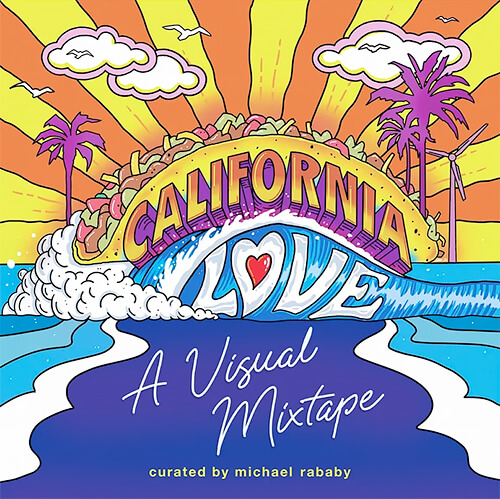
Art of any medium holds the capacity to connect the dots of an idea, or translate and re-translate perceptions, opening visual doors for a wider audience. This stunning collection of 110 California-based photographers reveals a shared appreciation and alignment for all that makes the west coast state the storytelling, dream-holding place that it is. Their images are as varied stylistically as the state is geographically, and reflect the people, places, and personality that help define California.
The book is not a compilation of only one type of photographer, or of only iconic California photographers, and is not meant to be an encyclopedic collection as such. Rather, the selection of photographers mirrors some of the project's essence at conception: together they represent a particular time and place of photographers in the canon of California photography, each looking outward at the land, sky, and people that distinguish California, each photographer finding moments to pause and in doing so, to celebrate.
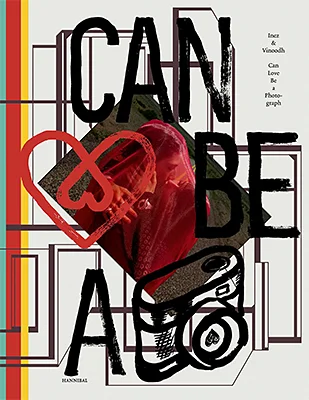
Can Love Be a Photograph: 40 Years of Inez & Vinoodh traces the evolution of a partnership that reshapes the visual language of contemporary photography. Over four decades, Inez van Lamsweerde and Vinoodh Matadin cultivate a practice that moves fluidly between fashion, portraiture, and conceptual art, producing images that feel both immediate and disquieting. Their work resists categorization, drawing equally from the polished world of magazines and the more introspective space of artistic inquiry. Throughout, a sense of curiosity and experimentation guides their approach, allowing each image to operate as both surface and question.
Emerging from the Netherlands and establishing an international presence, the duo collaborates with leading designers and publications while maintaining a distinct visual identity. Their photographs often present familiar subjects—faces, bodies, gestures—yet introduce subtle distortions that unsettle the expected. Early explorations with digital manipulation open new possibilities for the medium, but technology remains a means rather than an end. What persists is a sustained attention to the human figure, approached with a sensitivity that reveals vulnerability alongside artifice.
The title itself suggests a central tension within their work: the attempt to capture something as intangible as love within the fixed frame of an image. This question resonates across their photographs, where intimacy and distance coexist. Subjects appear both present and elusive, inviting a prolonged gaze that uncovers layers of emotion and meaning. The influence of broader cultural currents—fashion imagery, celebrity, advertising—intersects with a more reflective examination of identity and perception.
Accompanied by essays from critics and curators, as well as a conversation with Tilda Swinton, the book situates Inez and Vinoodh’s practice within a wider intellectual and artistic context. Can Love Be a Photograph unfolds as both retrospective and meditation, offering a sustained look at a body of work shaped by collaboration, attention, and a persistent desire to see beyond appearances.
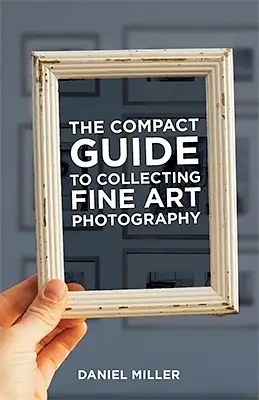
Collecting high-quality fine art photography can seem intimidating, but it doesn’t have to be. Learn to fine-tune your senses and empower yourself to make choices you love. This compact, helpful guide will teach you the important elements of building, maintaining, and displaying a photo collection. You’ll also learn where to buy photographs and how to frame, display, and store them. You’ll gain valuable insights regarding print types, editions, appraisals, and more. Whether you’re new to collecting photographs or a seasoned collector, you’ll find easy-to-read, engaging information on these pages.
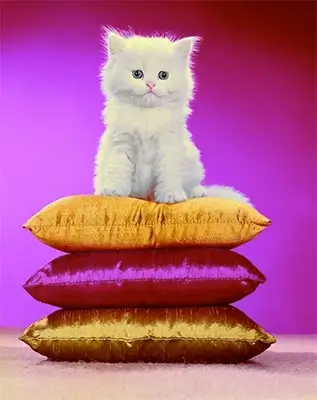
‘Chromotherapia. The Feel-Good Color Photography’ offers genuine relief from the black-and-white world. Often disparaged, not always taken seriously, color photography has nevertheless allowed artists to get out their palettes and “paint.” Many have freed themselves from the medium’s documentary status to explore the common roots of the image and the imaginary, flirting with the worlds of Surrealism and Pop.
Famed Italian visual artist and curator Maurizio Cattelan and curator Sam Stourdzé offer a rereading of the history of color photography through the 20th century into the 21st, and through the works of over 20 artists who take us on a journey into vibrant, acidulous worlds. Treat yourself to sunny yellow, azure blue, bright red, bubbly orange and more, straight from the lenses of the biggest names in color photography. Artist include: Yevonde Middleton, Harold Edgerton, Erwin Blumenfeld, Walter Chandoha, William Wegman, Hiro, Guy Bourdin, Alex Prager, Juno Calypso, Adrienne Raquel, Miles Aldridge, Ouka Leele, Hassan Hajjaj, Ruth Ossai, Pierre et Gilles, Sandy Skoglund, Martin Parr, Arnold Odermatt, ‘Toiletpaper’.
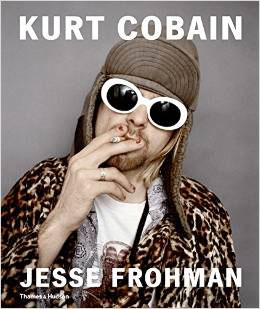
n August 1993, when Nirvana was in New York to perform at the legendary Roseland Ballroom, Jesse Frohman photographed them for the London Observer’s Sunday magazine—the last formal photo shoot in which Cobain participated before he committed suicide on April 5th, 1994. Over the course of ninety photographs, Cobain seems an almost feral creature, by turns gentle, playful, defiant, suffering, or absorbed in his music. There’s a diverse range of shots of Cobain with fellow band members Krist Novoselic and Dave Grohl and on his own, posing, performing, and greeting fans. Jon Savage’s original interview, which appeared with Frohman’s photographs in the Observer is also reproduced, giving us Cobain in his own words. The book is a touching tribute to Cobain twenty years after his tragic demise, and following Nirvana’s recent induction in to the Rock and Roll Hall of Fame. 90 illustrations, 25 in color
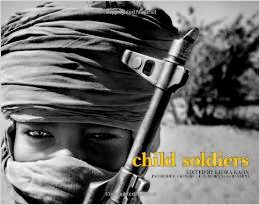
Photographs by: Ghaith Abdul-Ahad, Lynsey Addario, Martin Adler, Richard Butler, Francesco Cito, Gary Calton, Chris de Bode, Donna De Cesare, Miquel Dewever Plana, Tiane Doan na Champassak, Colin Finlay, Riccardo Gangale, Cedric Gerbehaye, Jan Grarup, Tim A. Hetherington, Rhodri Jones, Bob Koenig, Roger Lemoyne, Zed Nelson, Peter Mantello, Heather McClintock, Olivier Pin Fat, Giacomo Pirozzi, Q. Sakamaki, Marcelo Salinas, Dominic Sansoni, Guy Tillim, Sven Torfinn, Ami Vitale, Vincent van de Wijngaard, Tomas van Houtryve, Kadir van Lohuizen, Alvaro Ybarra-Zavala, Francesco Zizola
Essay by: Jo Becker, Jimmi Briggs, Dick Durbin, Emmanuel Jal, Michael Wessells
For some travelers, a hotel is simply a place to stay. For LEONE, it is an experience shaped by atmosphere, people, and a sense of belonging. His third book, *A Place We Like*, grew out of a years-long search for that elusive feeling. Published as the inaugural title under the Leisure imprint of C41 Magazine, the project serves as both a visual guide to some of Europe’s most remarkable hotels and a personal reflection on the meaning of hospitality.
Discover Crossing, Kaplan’s powerful documentary photography project capturing Roxham Road, the irregular Canada-US border crossing used by refugees from 2018 to 2023.
Spurred by Trump-era immigration policies, this tiny site between New York and Quebec became a safe, highly unusual microcosm of global migration. Over four years, Kaplan photographed the entire ecosystem—from local cab drivers and border police to the asylum-seekers themselves. Moving past traditional media tropes of victimhood, these photographs challenge stereotypes to highlight the immense courage and resilience required to step into an unknown future before the site's closure in 2023.
I have spent years looking at Lee Friedlander’s America. It has always been a country of sharp angles, cluttered street corners, and shadows that seem to swallow the photographer whole. So when I picked up his latest monograph, Life Still, I expected the familiar noise of his world. Instead, I found something stranger: a 91-year-old master holding his breath.
Part of a bigger journey of liberation through self-exploration, this new photobook by Jo Ann Chaus is above all a collection of self-portraits, complemented by landscapes, still lifes and domestic interiors observed and inhabited by the photographer-cum-model
Blending photography and poetry, Burnt Eyes explores nostalgia, memory, and identity, offering a profound reflection on the complexities of belonging and the stories that shape us.
Seasons of Time by Nathalie Rubens is an intimate and fearless photobook exploring the emotional distance and deep connection between mother and daughter, while confronting the beauty, vulnerability, and physical reality of a woman’s aging body with rare honesty.
1804 continues Rich-Joseph Facun’s exploration of life in the Appalachian foothills of Southeast Ohio, this time turning his lens toward the local university and its complex, symbiotic relationship with the surrounding community.
GOST Books presents Robin Bernstein’s debut photobook MAPALAKATA, a compelling visual investigation into landscape, memory, and the layered histories of Southern Africa. The project offers a nuanced reflection on how geography is not only inhabited, but continually rewritten through movement, extraction, and shifting narratives of belonging.