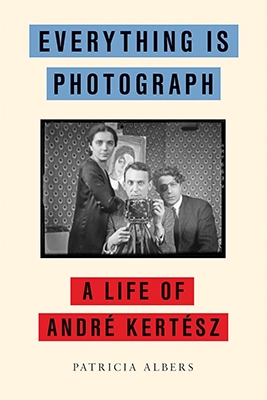
Everything Is Photograph offers a sweeping and intimate portrait of André Kertész, tracing the life and work of a man whose vision helped define modern photography. Born in Budapest in 1894, Kertész’s journey carried him from the cafés of Jazz Age Paris to the bustling streets of wartime New York, through periods of acclaim, obscurity, and reinvention. This biography presents a detailed exploration of both his personal and professional life, revealing the hardships, triumphs, and enduring curiosity that shaped his art.
Kertész was a pioneer in embracing new technologies and approaches. He was among the first to see the potential of the Leica camera, forever linking the instrument to street photography, and he helped establish the language of subjective photojournalism, producing one of the earliest influential photo essays. Over his career, he captured more than 100,000 images, each marked by a distinctive combination of formal rigor, emotional depth, and subtle humor. His work explores human connection, self-expression, and the mysteries embedded in everyday life, making ordinary moments resonate with extraordinary clarity.
The biography delves into Kertész’s complex personal history, from the traumas of World War I to the shadow of the Holocaust, and from tangled romances to professional rivalries with contemporaries like Brassaï and mentorship of figures like Robert Capa. It illuminates the resilience and adaptability that allowed him to navigate both the glamour and the hardships of the photographic world, including his years working for House & Garden and his later resurgence during the 1960s photo boom.
Through archival research and interviews, the book brings Kertész vividly to life: a man of Old-World charm, occasional mischief, and profound artistic insight. Everything Is Photograph is not only a biography but a meditation on photography itself — a medium capable of narrating identity, exploring perception, and connecting people across time and place. It immerses readers in the aesthetics, culture, and humanism of a lost photographic era, while celebrating the enduring influence of one of the medium’s most innovative and generous visionaries.
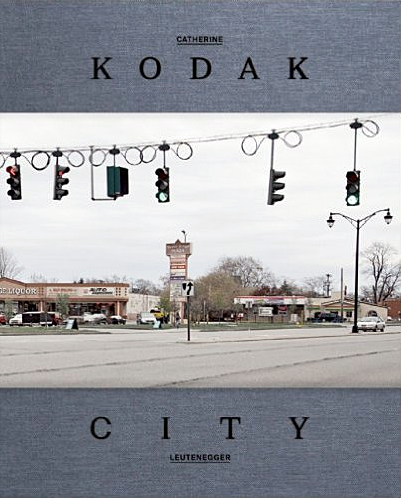
Eastman Kodak, the company which pioneered so much in photography from the 1880s through the 1960s, could have owned digital imaging; the very first electronic camera was born in one of Kodak's labs. Instead, they missed that boat, going into a tailspin that resulted in their eventual bankruptcy. Tied to that economic engine, the fortunes of Rochester, New York, the archetypal company town where Kodak had its headquarters, fell as "Big Yellow" collapsed. Catherine Leutenegger's attentive, deadpan studies of Rochester today explore the face of a city once central to photography but now irrelevant and adrift.
Seasons of Time by Nathalie Rubens is an intimate and fearless photobook exploring the emotional distance and deep connection between mother and daughter, while confronting the beauty, vulnerability, and physical reality of a woman’s aging body with rare honesty.
1804 continues Rich-Joseph Facun’s exploration of life in the Appalachian foothills of Southeast Ohio, this time turning his lens toward the local university and its complex, symbiotic relationship with the surrounding community.
GOST Books presents Robin Bernstein’s debut photobook MAPALAKATA, a compelling visual investigation into landscape, memory, and the layered histories of Southern Africa. The project offers a nuanced reflection on how geography is not only inhabited, but continually rewritten through movement, extraction, and shifting narratives of belonging.
A reflective photobook by Newsha Tavakolian revisiting her early Iranian archive through contact sheets, personal notes, and reworked images. Spanning 1995–2007 and 2017–2019, it explores memory, loss, political context, and resilience through photography and process.
Discover Pyramiden, a contemplative photography book by Damien Aubin exploring abandoned Soviet Arctic settlements through themes of persistence, displacement, and quiet continuity.
For over seven years, Of Lilies and Remains has explored the depths of the goth and darkwave underground, unfolding in Leipzig—a city long associated with a vibrant and enduring subcultural scene. Moving between iconic gatherings such as Wave-Gotik-Treffen and more intimate moments on the fringes, the project offers a rare and immersive glimpse into a world often misunderstood, yet rich in expression and community.
Created by Luca in collaboration with Laura Estelle Barmwoldt, the work embraces a cinematic and deeply personal approach. Rather than documenting from a distance, it moves within the scene itself, capturing its atmosphere, its codes, and its quiet contradictions. The title Of Lilies and Remains hints at this duality—where beauty and darkness, fragility and strength coexist.
As the book prepares for its release, we spoke with both artists about the origins of the project, their process, and what it means to document a subculture that continues to evolve while remaining true to its spirit.
Patterns: Art of the Natural World (Damiani) documents photographer Jon McCormack's meditation on the
geometric patterns that define our planet's most breathtaking landscapes and ecosystems. Through McCormack's
documentation, the Earth reveals itself as both architect and storyteller. Across continents and scales, from
microscopic mineral blooms to vast aerial geometries, the images trace a living grammar of pattern, rhythm, and
resonance that connects the intimate to the immense.
KAOS by Albert Watson is far more than a retrospective monograph spanning more than fifty years of photography. To me, it immediately felt like an object of art—something that insists on being present. With its imposing XL format and nearly eleven pounds, it’s not a book you casually leave on the side of a sofa or slip into a shelf. You place it somewhere with intention. On a table, in full view. Not just as decoration, but as something that invites attention, something you return to
Venezuelan Youth by Silvana Trevale is a powerful photography project exploring identity, resilience, and coming of age in contemporary Venezuela. Blending documentary and portraiture, the series offers an intimate and poetic perspective on youth navigating life amid social and economic challenges. Published by Guest Editions, this compelling body of work redefines visual narratives around Venezuela through sensitivity, depth, and hope.