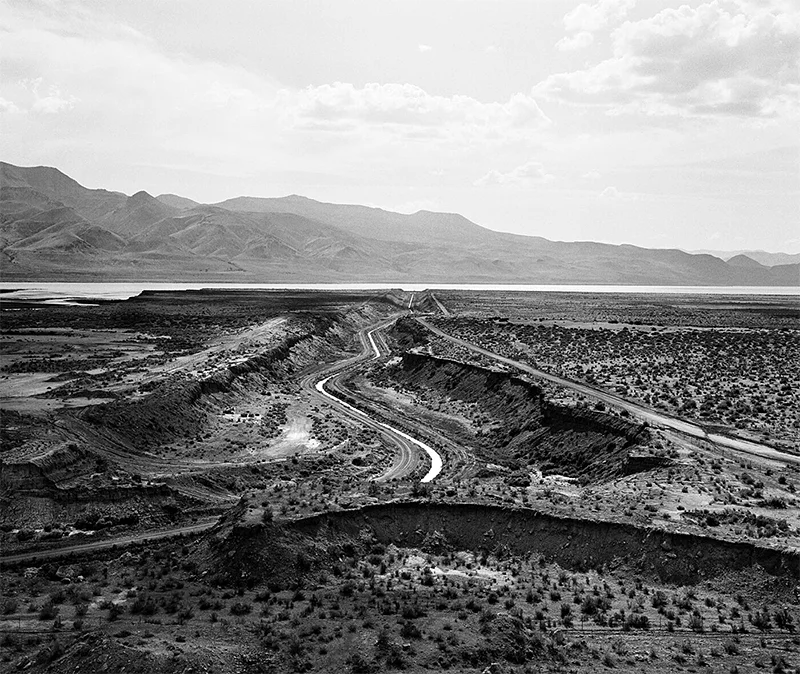
Blazing Light: Photographs by Mimi Plumb brings the first museum survey of the Berkeley photographer to the Johnson Museum of Art, on view from June 13 to September 27, 2026. Installed in the Gold, Schaenen, and Class of 1953 Galleries on the second floor, the exhibition gathers three major bodies of work that track more than five decades of looking at California’s altered landscapes and the pressure they carry.
Plumb began photographing in the 1970s, when rapid development, Cold War anxiety and the first visible warnings of climate crisis shaped daily life. Her work has stayed close to those conditions. Working mostly in and around San Francisco, she uses stark black-and-white photography to capture highways, neighborhoods, open land and urban edges with a raw directness that gives the images their force. The light is often harsh, the spaces unsettled, and the mood tense without becoming theatrical.
The exhibition moves through four key projects.
The White Sky records the fading confidence of the postwar years, when the American Dream still looked intact but already showed cracks.
Landfall and
The Golden City extend that unease into later decades, showing a society heading toward disorder as an undefined disaster hovers in the background.
The Reservoir, made between 2021 and 2025, pushes that logic further, presenting a stripped-down world that feels like it has already come through a collapse. Together, the series make a clear case for Plumb as a photographer who has returned again and again to the same underlying question: what does unease look like when it settles into the landscape itself?
Organized by the High Museum of Art and presented at Cornell by curator Molly Kalkstein, the exhibition arrives with strong institutional backing and a substantial publication record behind the artist. Plumb’s monographs and museum collections have helped secure her place in contemporary photography, but this show gives her work a sharper focus. It places environmental stress, social anxiety and the built world in the same frame, without losing sight of the human presence moving through it.
Image:
© Mimi Plumb