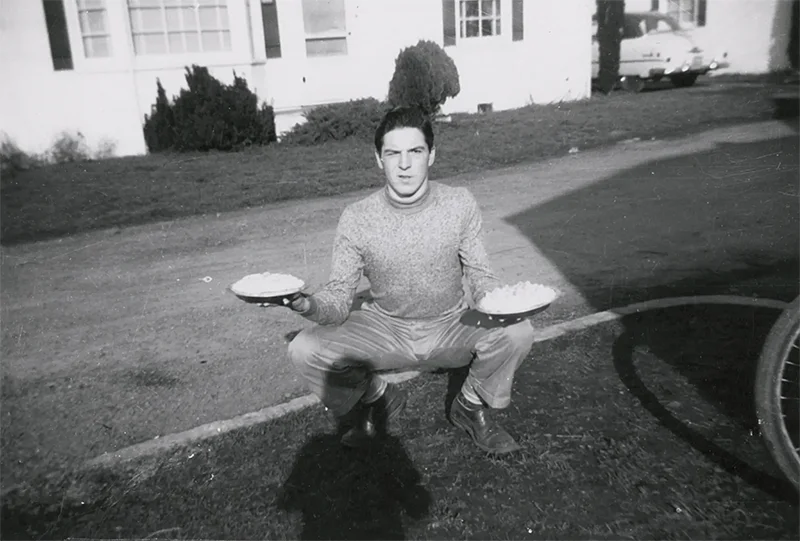
At Fraenkel Gallery,
Slice of the Pie brings together fourteen Bay Area galleries in a collaborative exhibition that maps a local art scene shaped as much by resilience as by experimentation. Spanning more than forty artists and multiple generations, the presentation reflects a regional ecosystem long defined by cycles of expansion and contraction, from the postwar years to the tech-driven transformations of recent decades.
Rather than offering a single curatorial thesis, the exhibition operates as a composite portrait. Each participating gallery contributes artists whose practices range across photography, painting, sculpture and time-based media. This diversity underscores a defining characteristic of the Bay Area: a resistance to stylistic uniformity. From the conceptual rigor of Crown Point Press to the interdisciplinary strategies of younger spaces, the works highlight an ongoing commitment to process and inquiry over market-driven cohesion.
Several contributions foreground the social and political dimensions that have historically shaped the region’s artistic output. Barry McGee’s work, rooted in the Mission District, reflects urban change and subcultural identity, while Erica Deeman’s portraits address race and representation through a critical lens. Elsewhere, artists such as Dewey Crumpler and Julio César Morales engage with histories of migration, labor and power, situating local concerns within broader global narratives.
Photography maintains a strong presence throughout the exhibition, often intersecting with other media. Larry Sultan’s images of suburban life blur the line between staged and documentary, while Klea McKenna’s material experiments expand the possibilities of the photographic surface. These approaches echo Fraenkel Gallery’s long-standing interest in positioning photography within a wider field of artistic production.
By assembling galleries with histories ranging from the 1960s to the present,
Slice of the Pie emphasizes continuity alongside change. The exhibition does not attempt to define the Bay Area so much as to reflect its complexity: a network of spaces and practices that evolve in response to shifting cultural and economic conditions, yet remain anchored in a shared ethos of independence and dialogue.
Image:
Photographer Unknown, Untitled, 1958