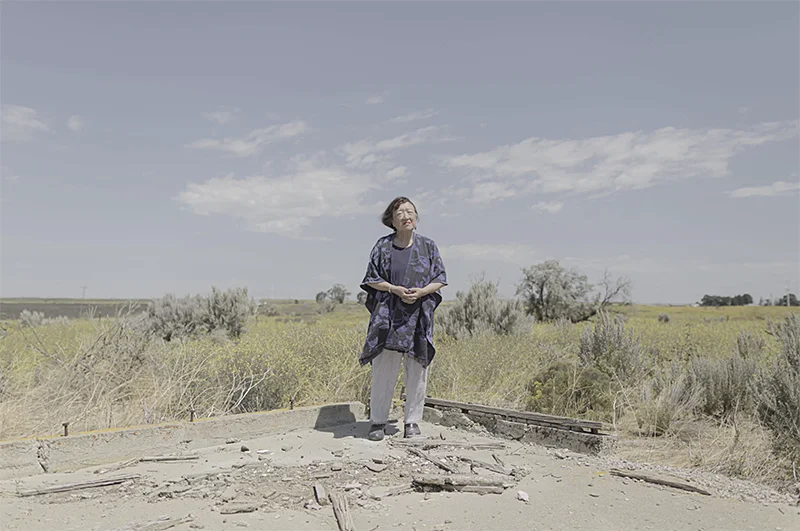
Haruka Sakaguchi: The Camps America Built assembles a poignant constellation of memory, testimony, and landscape at the International Center of Photography. Each photograph rests at the intersection of history and inheritance, where silence gives way to remembrance. Sakaguchi’s lens captures the enduring imprint of World War II incarceration sites, layered with the human voices that return to them, carrying fragments of loss and resilience.
The project portrays descendants and survivors who journey to the ten relocation centers scattered across the United States, from Manzanar in California’s Owens Valley to Heart Mountain in Wyoming and Poston in the Arizona desert. Their handwritten letters, tenderly composed, thread personal recollection with collective reckoning. The words hover between past and present, binding generations through the act of witnessing. In these letters, one hears the ache of departure, the quiet dignity of those who rebuild lives without erasing what cannot be undone.
Sakaguchi, born in Osaka and based in New York, turns her camera toward stories that resist disappearance. Her practice extends beyond visual documentation—it listens. Echoing earlier projects such as her portraits of hibakusha in Hiroshima and Nagasaki, this series deepens her inquiry into how trauma crosses generations, reshaping family narratives and national conscience alike. The landscapes she photographs are nearly emptied of human presence, yet they hum with the traces of what once stood there: barbed wire, barracks, wind.
By combining personal narrative, archival record, and portrait,
The Camps America Built poses a quiet but urgent question about belonging and the meaning of citizenship in the American imagination. Sakaguchi’s portraits do not simply revisit history; they inhabit it, offering viewers a space to contemplate memory as both scar and offering, grief and grace intertwined.
Image:
Nojima Family
Minidoka
Survivor Nikki Nojima Louis remembers her incarceration at Minidoka. © Haruka Sakaguchi