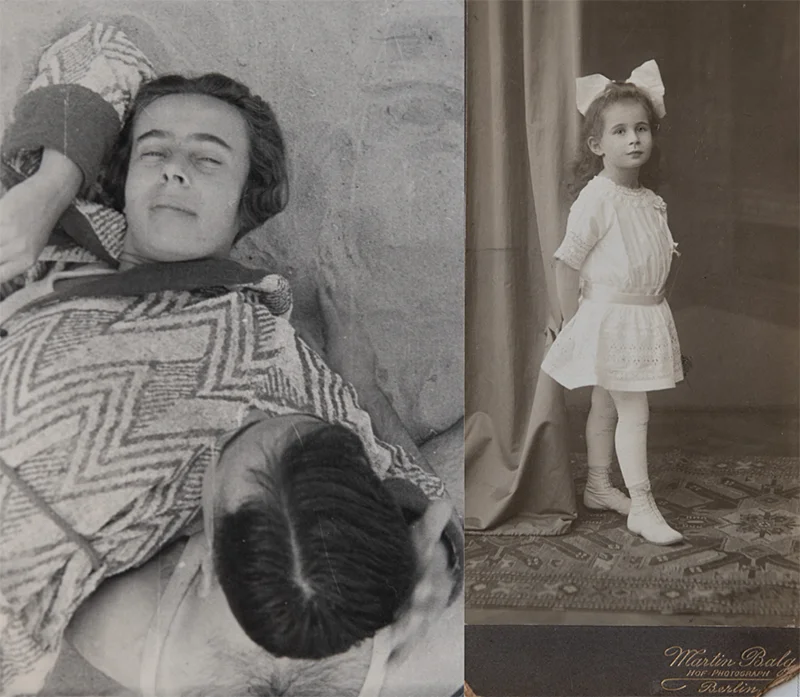
Speaking in Pairs, on view from February 5 to April 19, 2026, approaches portraiture as a site of tension, dialogue, and transformation. Anchored by
August Sander’s 1938 photograph of Hermann Leubsdorf, the exhibition asks whether a single image can hold both violence and healing within its frame. Rather than offering clear answers, the show unfolds portraiture as a layered practice—one shaped by history, power, intimacy, and the shifting relationship between sitter, maker, and viewer.
Installed in a gallery endowed by the Leubsdorf family, the exhibition traces how portraits circulate across time, acquiring new meanings as social and political contexts change. Here, photography is not treated as a neutral record but as a dynamic form of evidence—capable of granting visibility, preserving memory, or exposing vulnerability. The works gathered explore the friction between private lives and public histories, revealing how even the quietest images can echo with conflict, resilience, and unresolved questions.
Bringing together more than eighty contributors from diverse fields,
Speaking in Pairs resists a single authoritative voice. Artists, historians, writers, lawyers, doctors, and curators contribute to an evolving installation that incorporates photographs alongside books, posters, and ephemera. This porous structure blurs boundaries between vernacular imagery and fine art, between the anonymous and the celebrated, and between fact and fiction. In doing so, the exhibition emphasizes exchange—ideas speaking to one another across disciplines, generations, and geographies.
Marking significant anniversaries in the histories of photography, literature, and cultural resistance, the exhibition situates itself within a longer continuum of image-making and storytelling. Portraits are presented as acts of witnessing that can affirm presence while also exposing risk. By juxtaposing images made during moments of crisis and change,
Speaking in Pairs highlights how meaning is never fixed. Instead, it emerges through sustained looking and conversation, inviting viewers to consider who is seen, who speaks, and how images continue to shape our understanding of survival, memory, and responsibility.
Images:
Left: Bertha and Karl Leubsdorf at the beach, New York, c. 1936. Photographer unknown.
Right : Bertha Leubsdorf, Berlin, Germany, c. 1912. Courtesy John Leubsdorf. Photograph by Martin Balg.