All about photo.com: photo contests, photography exhibitions, galleries, photographers, books, schools and venues.
Win a Solo Exhibition in July 2026 + An Exclusive Interview!

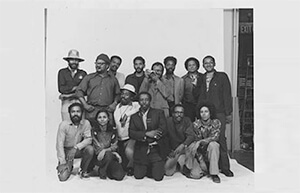
Working Together: Louis Draper and the Kamoinge Workshop

From February 01, 2020 to October 18, 2020
Share
Working Together: Louis Draper and the Kamoinge Workshop
200 N. Arthur Ashe Boulevard
Richmond, VA 23220
Inspired by the archive of Richmond native Louis Draper, VMFA has organized an unprecedented exhibition that chronicles the first twenty years of the Kamoinge Workshop, a group of African American photographers he helped to found in 1963. More than 180 photographs by fifteen of the early members-Anthony Barboza, Adger Cowans, Danny Dawson, Roy DeCarava, Louis Draper, Al Fennar, Ray Francis, Herman Howard, Jimmie Mannas Jr., Herb Randall, Herb Robinson, Beuford Smith, Ming Smith, Shawn Walker, and Calvin Wilson-reveal the vision and commitment of this remarkable group of artists.

When the collective began in New York City, they selected the name Kamoinge, which means “a group of people acting and working together” in Gikuyu, the language of the Kikuyu people of Kenya. They met weekly, exhibited and published together, and pushed each other to expand the boundaries of photography as an art form during a critical era of Black self-determination in the 1960s and 1970s.

The group organized several shows in their own gallery space, in addition to exhibitions at the Studio Museum in Harlem and the International Center for Photography. They were also the driving force behind The Black Photographers Annual, a publication founded by Kamoinge member Beuford Smith, which featured the work of a wide variety of Black photographers at a time when mainstream publications offered them few opportunities.

In the continuing spirit of Kamoinge, Shawn Walker, Beuford Smith, Herb Robinson, and Tony Barboza have also made significant archival contributions and are among the nine members who recorded oral histories to provide the fullest account of the group's first two decades. In addition, through a generous grant from the National Endowment of the Humanities, VMFA has digitized the Draper archive-which will be available online.
Stay up-to-date  with call for entries, deadlines and other news about exhibitions, galleries, publications, & special events.

Exhibitions Closing Soon

Chris McCaw: Double Day
SF Camerawork | San Francisco, CA
From May 21, 2026 to June 21, 2026
Chris McCaw: Double Day, presented at SF Camerawork from May 21 through June 21, 2026, offers a rare opportunity to experience one of the Bay Area photographer’s most ambitious works on the West Coast. Organized in collaboration with Haines Gallery, the exhibition centers on McCaw’s monumental Sunburn series, a body of work that transforms photography into a direct physical encounter with light, duration, and the movement of the Earth itself. For more than two decades, McCaw has pushed the medium beyond traditional image-making through the use of hand-built large-format cameras and long exposures powered entirely by sunlight. In his process, concentrated rays of light pass through oversized lenses and physically scorch photographic paper over hours or even days. The resulting images exist somewhere between photograph, drawing, and scientific trace, recording not only a landscape but also the passage of time as a tangible event. At the center of the exhibition is Sunburned GSP #860 (Double midnight, Galbraith Lake, Arctic Circle, Alaska), created during the Arctic summer in 2015. Stretching more than 25 feet across 25 silver gelatin panels, the work documents approximately thirty continuous hours beneath the “midnight sun,” when daylight never fully disappears near the Arctic Circle. The photograph captures looping solar trajectories burned directly into the paper, while weather conditions, shifting clouds, and subtle changes in the landscape emerge across the composition. Both technically rigorous and visually overwhelming, the piece reflects McCaw’s fascination with humanity’s small position within a larger cosmic system. Born in Daly City, California, McCaw studied photography at the San Francisco Art Institute and remains closely connected to the Bay Area’s experimental photographic tradition. His practice draws from early photographic history while simultaneously challenging contemporary assumptions about digital image production and manipulation. Rather than relying on software or postproduction, his works are shaped through elemental forces: sunlight, heat, chemistry, and time. With Double Day, SF Camerawork continues its long-standing support of artists redefining the possibilities of photography. The exhibition positions McCaw’s work not simply as landscape photography, but as a meditation on endurance, perception, and the physical reality of light itself. Image: Detail of Chris McCaw, Sunburned GSP #860 (Double midnight, Galbraith Lake, Arctic Circle, Alaska), 2015
Picturing Isabella
Isabella Stewart Gardner Museum | Boston, MA
From February 19, 2026 to June 21, 2026
Picturing Isabella, on view at the Fenway Gallery from February 19 to June 21, 2026, offers a nuanced exploration of Isabella Stewart Gardner’s lifelong negotiation with visibility, celebrity, and self-invention. Living at a moment when photography was becoming central to modern life, Gardner simultaneously benefited from and resisted its power. This exhibition reveals how her reluctance to be photographed was not simply shyness, but a deliberate strategy—one that allowed her to maintain control over how she was seen, remembered, and ultimately mythologized. Early photographs show Gardner as a young woman shaped by the conventions of late nineteenth-century portraiture: formal poses, composed expressions, and a clear assertion of social standing. As her influence grew and her public profile expanded, her relationship to the camera shifted. She became increasingly selective, choosing when and how she would appear, often obscured by veils, shadows, or turned profiles. These gestures transformed photography into a performative space where absence and suggestion carried more weight than direct representation. The exhibition brings together an evocative range of materials, including personal snapshots, travel photographs, newspaper images, and candid moments shared with friends and animals. Rather than constructing a single definitive portrait, these fragments accumulate into a layered and sometimes contradictory image of Gardner—private yet theatrical, guarded yet expressive. Each photograph hints at a woman keenly aware of the power of images, and equally aware of their limitations. In resisting the camera, Gardner shaped a public persona that thrived on mystery and contradiction. Ultimately, Picturing Isabella suggests that Gardner’s most enduring self-portrait is not found in any photograph, but in the museum she built. Carefully staged, deeply personal, and intentionally enigmatic, the Gardner Museum stands as an extension of her identity—an architectural and curatorial statement that replaced the traditional portrait. Through this lens, the exhibition invites viewers to reconsider how legacy is constructed, and how the act of withholding can be as powerful as the act of display. Image: Isabella Stewart Gardner Museum, Boston (P33w35) Otto Rosenheim (German, 1871–1955), Isabella Stewart Gardner, 1906. Gelatin silver print
A Surreal Lens: Photography From the Figge Collection
Figge Art Museum | Davenport, IA
From December 20, 2025 to June 21, 2026
A Surreal Lens invites viewers into a world where photography becomes a bridge between reality and imagination. Since the invention of the medium, artists have resisted the notion of photography as a purely documentary tool, instead transforming it into a language of dreams, memories, and illusions. By experimenting with techniques such as montage, double exposure, retouching, and digital manipulation, these photographers blur the line between what is seen and what is felt, crafting images that question our understanding of truth and perception. The exhibition gathers artists who use both technical precision and poetic vision to explore the hidden corners of the mind. Whether through staged compositions or post-production transformations, their works evoke the surreal and the uncanny. These photographs may resemble fragments of dreams or echoes of alternate realities, inviting the viewer to step into a dimension where logic bends and emotion reigns. While not all of these artists align directly with Surrealism, they embody its essence—an exploration of the subconscious and a fascination with the beauty of the strange. Featuring the works of Alan Cohen, György Kepes, Olivia Parker, Kenda North, Michael Stone, Linda Connor, Emmet Gowin, Barbara Morgan, Otmar Thormann, Hans Breder, and others, A Surreal Lens showcases how diverse artistic voices can converge through a shared pursuit of mystery and transformation. Each image reveals the photographer’s hand as both creator and dreamer, manipulating light and time to build impossible worlds that feel intimately familiar. Through this collective vision, the exhibition challenges viewers to reconsider what a photograph can be—not merely a mirror of reality, but a portal into imagination itself. Here, the ordinary becomes extraordinary, and the camera becomes a tool not for recording the world, but for reimagining it. Image: Michael Stone (American, born 1945), Whitehouse Products, 2015, archival pigment print on hahnemuhle photo rag paper, 8 x 12 inches, Gift of the artist, 2016.32.2
Face Value: Celebrity Press Photography
The Museum of Modern Art - MoMA | New York, NY
From June 28, 2025 to June 21, 2026
Face Value invites us to take a close look at the celebrity-making machinery of the 20th-century Hollywood star system. For decades, film studios produced photographic portraits to promote the glamour of the actors they had under contract. This exhibition examines how these images were manipulated for public consumption in the decades before digital tools, AI technology, and social media revolutionized the process. For MoMA’s founding film curator, Iris Barry, building an archive of images that documented the history of motion pictures was second only to collecting films. Barry’s initiative eventually led to the acquisition of editorial archives of two leading fan magazines, Photoplay (1911–80) and Dell (1921–76). More than 60 photographers and filmmakers—from studio staffers to Andy Warhol—are represented in the exhibition, which combines untouched images with those that show evidence of the hands-on alterations that readied them for the press. Silhouetting, in-painting, masking, sectioning, and collage were applied not only to photographs of entertainers but also to those of sports figures, socialites, and politicians. Highlighting the radical editing practices, stylized motifs, and gender stereotypes inherent in the studio system, this exhibition offers a demystifying look at the early constructions of celebrity. Organized by Ron Magliozzi, Curator, with Katie Trainor, Senior Collections Manager, and Cara Shatzman, Collection Specialist, Department of Film. Image: Jean Harlow, c. 1933. Photographer unidentified. Gelatin silver print. The Museum of Modern Art film stills collection
A Light Exists in Spring
The Center for Photographic Art (CFPA) | Carmel, CA
From May 07, 2026 to June 23, 2026
A Light Exists in Spring, on view from May 7 to June 23, 2026, is a central exhibition of PhotoCarmel 2026, curated by Ann Jastrab and presented at the Marjorie Evans Gallery at the Sunset Center in Carmel. Borrowing its title from Emily Dickinson’s poem, the exhibition reflects on the subtle transformation of the world as winter gives way to renewal. It gathers the work of nearly fifty artists who are deeply embedded in the Center for Photographic Art—as volunteers, trustees, staff, and committed stewards of the photographic medium. United by a shared attentiveness to landscape, light, and seasonal change, the participating artists approach spring not as a simple subject, but as a state of perception. Their photographs linger in moments of emergence: lengthening days, shifting atmospheres, and the quiet signals of growth that often go unnoticed. Across diverse practices, the exhibition suggests that spring’s promise is not only visual, but emotional—an invitation to pause, observe, and remain open to transformation. The works on view span a wide range of photographic techniques, from early historical processes such as platinum palladium printing and cyanotypes to contemporary digital and mixed media approaches. This dialogue between past and present mirrors the exhibition’s thematic core, where time feels both fleeting and suspended. Handmade prints sit alongside experimental works, each offering a distinct response to the rhythms of nature and the enduring power of light as photography’s most essential element. More than a showcase of technical mastery, A Light Exists in Spring is a portrait of a community bound by curiosity, care, and shared vision. Curated with sensitivity and restraint, the exhibition invites viewers to slow down and attune themselves to subtle shifts—within the landscape and within themselves. In doing so, it echoes Dickinson’s insight: that certain moments, brief yet luminous, leave an imprint long after the light has changed. Image: Eduardo Fujii, The Psychology of Trees, archival pigment print with mixed media and gold leaf © Eduardo Fujii.
Lawrence Schiller: Motion Pictures
Hilton Contemporary | Chicago, IL
From June 05, 2026 to June 23, 2026
Lawrence Schiller: Motion Pictures presents a career built between the photojournalistic frame and the movie set. On view from June 5 to June 23 at Hilton Contemporary in Chicago, the exhibition gathers images that move from Hollywood backlots to major news events, showing why Schiller has long stood out as both a witness and a storyteller. Schiller, who turns 90 this December, built his reputation on access and timing. His photographs of Marilyn Monroe, Robert Redford, Paul Newman, Muhammad Ali and other cultural figures often feel less posed than observed in motion, with the tension of something just about to happen. That quality runs through the show, including behind-the-scenes work from Butch Cassidy and the Sundance Kid, where he not only photographed the production but also directed several minutes of the film. The exhibition also reaches beyond cinema. Schiller’s career in magazines such as Life, Look, Time and Paris Match placed him at the center of major events in American history, including the aftermath of Robert F. Kennedy’s assassination and the final days of Lee Harvey Oswald. His reporting later expanded into books, documentaries and film projects, confirming a career that moved easily across media without losing its documentary edge. Among the most notable images in Motion Pictures are Schiller’s photographs of Marilyn Monroe made between 1960 and 1962, including some of the last taken on the set of Something’s Got to Give. Those pictures, shown in a year tied to Monroe’s 100th birthday, add another layer of public memory to the exhibition. They also reflect what Schiller does best: turning famous figures into subjects shaped by atmosphere, fatigue, performance and private pause. At Hilton Contemporary, the work sits comfortably between still photography and film history. Schiller’s pictures do not simply record celebrity and spectacle; they carry the sense of a scene unfolding just beyond the edge of the frame. Image: Marilyn Celebrating Her 36th Birthday, 1962 © Lawrence Schiller
Harry Benson: Life and Art
The National Arts Club | New York, NY
From April 27, 2026 to June 26, 2026
Harry Benson: Life and Art offers a sweeping portrait of a photographer whose career has become inseparable from the visual memory of the twentieth century. At The National Arts Club in New York, the exhibition brings together images that reflect Benson’s extraordinary range, from political power to pop culture, from private intimacy to public spectacle. Across more than seven decades, he has built a body of work that reads like an atlas of modern history. Benson’s photographs carry the immediacy of a witness and the timing of a storyteller. He captured thirteen U.S. presidents, alongside figures such as Winston Churchill, Queen Elizabeth II, Martin Luther King JR., Andy Warhol, and Michael Jackson, each frame revealing not only a face but a shifting cultural moment. His work with The Beatles remains among the most recognizable in music photography, preserving the energy of the band’s first American journey with a clarity that still feels alive. Benson’s eye has always moved easily between the extraordinary and the everyday, finding presence in gesture, posture, and glance. What gives this exhibition its force is the sense of continuity running through Benson’s archive. His pictures do not simply illustrate events; they shape how those events are remembered. Whether at the center of state power or in the charged atmosphere surrounding artists and musicians, Benson consistently balanced access with instinct, allowing his subjects to appear both iconic and human. That balance explains why his photographs continue to resonate long after the moment of capture. At ninety-seven, Harry Benson stands as both participant and chronicler of an era that spans war, celebrity, civil rights, and cultural change. Life and Art reflects that remarkable span with grace and vitality, showing photography as a way of preserving history while also animating it. The result is less a retrospective than a living archive, built from encounters that helped define the modern image. Image: © Harry Benson, courtesy of the National Art Club
Edward Burtynsky: Recent Releases
Robert Koch Gallery | San Francisco, CA
From May 13, 2026 to June 27, 2026
At the Robert Koch Gallery, Edward Burtynsky: Recent Releases brings renewed attention to a body of work that has quietly shaped the visual language of environmental photography for decades. The exhibition revisits key early images, now presented in a markedly larger format—up to 72 inches wide—finally aligning with the scale the artist originally envisioned but could not technically achieve at the time. The shift in size does more than amplify detail; it alters the physical encounter with landscapes already defined by their monumental character. Printed without borders and issued in tightly controlled editions, these works re-emerge alongside Burtynsky’s more recent photographs, creating a dialogue across time. His images, often taken from elevated vantage points, map the vast imprint of industry on the land—quarries carved into geometric terraces, oil fields stretching toward abstraction, and water systems redirected by human ambition. What distinguishes Burtynsky’s approach is not only the clarity of his compositions but their ambiguity: beauty and devastation coexist within the same frame, resisting simple moral conclusions. This tension has long defined his practice. Since the late 20th century, Burtynsky has documented sites of extraction and production across the globe, from shipbreaking yards in Bangladesh to lithium evaporation ponds in South America. His work circulates widely in major museum collections, reflecting both its aesthetic appeal and its documentary weight. Recent institutional exhibitions, including a large-scale survey in New York, have reaffirmed his role as a key interpreter of the so-called Anthropocene. Yet the exhibition in San Francisco feels less like a retrospective than a recalibration. By returning to earlier images with contemporary production techniques, Edward Burtynsky underscores a persistent idea: that landscapes altered by industry are not static ruins, but evolving terrains. In these photographs, traces of human intervention remain visible, even as nature begins its slow, uncertain process of reclaiming space. Image: Rock of Ages #15, Active Section, E.L. Smith Quarry, Barre, Vermont, USA, 1992 © Edward Burtynsky, courtesy of the Robert Koch Gallery
Amanda Marchand & Leah Sobsey: This Earthen Door
Traywick Contemporary | Berkeley, CA
From May 02, 2026 to June 27, 2026
At Traywick Contemporary, Amanda Marchand & Leah Sobsey: This Earthen Door offers a thoughtful dialogue between photography, botany, and literary history. On view from May 2 to June 27, 2026, the exhibition takes as its point of departure the herbarium created by Emily Dickinson during her teenage years—a carefully assembled book of pressed plants containing more than 400 specimens. Preserved today at Harvard’s Houghton Library, the fragile archive remains largely inaccessible in physical form, surviving mainly through digital documentation. Marchand and Sobsey revisit this historical object not as a fixed artifact, but as a living framework for contemporary ecological reflection. The collaboration began more than five years ago, when the artists cultivated plant species from Dickinson’s original herbarium in their own gardens in Quebec and North Carolina. From these living specimens, they recreated pages of the herbarium using anthotype, a nineteenth-century camera-less photographic process that relies on plant pigments and sunlight rather than traditional chemical development. The resulting images are delicate and time-intensive, requiring days or even months of exposure. Their surfaces hold both the physical trace of the plants and the quiet evidence of duration, patience, and care. Rather than simply reproducing Dickinson’s archive, Marchand and Sobsey expand it into what they describe as a twenty-first-century herbarium. Their work places historical botanical observation into conversation with contemporary environmental concerns, asking how preservation changes in a time marked by ecological fragility. For the Berkeley presentation, a collaboration with the Point Reyes National Seashore Association introduces a new California-based work using both native and invasive species, drawing attention to restoration efforts and the complex relationships between landscape, stewardship, and human intervention. The exhibition also reflects the artists’ shared commitment to examining the often-overlooked contributions of women working across science and art. By bringing Dickinson’s botanical practice into the present, they reveal the herbarium not only as a personal study but as an enduring model of observation and connection. At Traywick Contemporary, This Earthen Door becomes a meditation on memory, ecology, and the fragile act of holding knowledge in material form. Image: Amanda Marchand & Leah Sobsey, Blue Delphinium - Plate 35, 2023 © Amanda Marchand & Leah Sobsey, courtesy of Traywick Contemporary
Kate Steciw: Pictures
OSMOS | New York, NY
From May 07, 2026 to June 27, 2026
Kate Steciw: Pictures, presented at OSMOS through June 27, examines the unstable condition of images in an era dominated by digital circulation and visual excess. In her first solo exhibition with the gallery, Steciw continues a practice that has long explored how photographs mutate once detached from authorship, context, and permanence. Drawing from stock imagery, internet fragments, screenshots, and personal archives, the artist constructs layered compositions that hover between photography, painting, collage, and sculpture. Steciw emerged in the late 2000s as part of a generation of artists grappling with the overwhelming acceleration of image production online. Her work frequently addresses the strange afterlife of photographs once they become endlessly reproducible files drifting across screens and platforms. Rather than presenting images as stable documents, she treats them as unstable raw material—cropped, distorted, flattened, and recombined until their original meanings dissolve. The exhibition’s title deliberately references the influential 1977 exhibition Pictures, organized by critic Douglas Crimp at Artists Space in New York. That landmark show introduced artists such as Cindy Sherman, Robert Longo, and Jack Goldstein, whose work challenged traditional ideas of originality and representation during the rise of mass media. Steciw revisits those concerns under contemporary digital conditions, where images no longer simply circulate through television or magazines but through infinite online streams shaped by algorithms, compression, and repetition. The new works on view emphasize materiality as much as digital fragmentation. Printed canvases are cut apart and mounted onto wood panels with an economy of gesture that gives the compositions an austere physical presence. Pixelated textures, editing marks, and abrupt visual seams remain visible, preserving traces of the software tools and digital manipulations from which the works emerge. The resulting images appear both familiar and impossible to fully identify, operating as visual echoes of things half-remembered or already lost. Steciw’s restrained approach distinguishes her from earlier traditions of dense collage. Instead of accumulation, she relies on omission and interruption. Her compositions often feel unresolved, suspended between abstraction and recognition. In this tension lies the central force of the exhibition: a meditation on how contemporary perception becomes shaped by images that are simultaneously everywhere and nowhere. Now based in upstate New York, Steciw continues to investigate the psychological and physical residue of digital culture, creating works that transform disposable visual debris into objects of prolonged contemplation. Image: Kate Steciw, IMG_0383.HEICXPICT0711.JPG, 2023 © Kate Steciw, courtesy of OSMOS Gallery
Sheila Pinkel: Early Works, 1974-1977
Higher Pictures | Brooklyn, NY
From April 22, 2026 to June 27, 2026
At Higher Pictures, Sheila Pinkel: Early Works, 1974–1977 brings to light a formative chapter in the artist’s career, presenting a group of cyanotypes that have remained largely unseen until now. On view from April 22 to June 13, 2026, the exhibition gathers twelve works that trace the origins of Pinkel’s sustained investigation into light, material, and transformation. These early experiments reveal a practice already attuned to the intersection of scientific process and artistic intuition. Central to the exhibition are the Body Cyanotypes, in which Pinkel uses sunlight as both medium and collaborator. Exposed at midday to achieve heightened contrast, the works transform the human figure into something fluid and unstable. Bodies appear suspended, fragmented, and multiplied, as if reshaped by the movement of light itself. The resulting images echo surrealist traditions, yet remain grounded in the physical act of exposure, where time, gesture, and environment leave their imprint on the photographic surface. Pinkel expands this approach through increasingly complex techniques, layering objects, photographic negatives, and textures directly onto treated paper. Using tools such as carbon-arc lamps and vacuum frames, she manipulates light with precision, while also introducing a tactile dimension by pressing materials into the paper before exposure. These interventions leave subtle traces that persist even after development, giving the works an almost archaeological quality. The surface becomes a record not only of what is seen, but of what has passed through it. Among the most striking aspects of the exhibition is Pinkel’s early engagement with computer-generated imagery, an unusual move at the time. Integrating digital forms into her cyanotypes, she creates a dialogue between emerging technologies and traditional photographic processes. The recurring presence of Marilyn Monroe, rendered as a ghostly and fragmented figure, underscores this interplay between cultural memory and technological transformation. Together, these works position Pinkel’s early practice as both experimental and prescient, anticipating ongoing conversations around the boundaries of image-making. Now recognized in major collections including the Museum of Modern Art and the Centre Pompidou, Sheila Pinkel emerges here as an artist already pushing against the limits of her medium. This exhibition offers a focused yet expansive view of a body of work that continues to resonate across both analog and digital contexts. Image: © Sheila Pinkel, courtesy of Higher Pictures
Emma Hartvig: Masks & Myths
The Hulett Collection | Tulsa, OK
From May 23, 2026 to June 27, 2026
Masks & Myths, on view at The Hulett Collection from May 23 through June 27, 2026, presents a selection of photographs by Vienna-based artist Emma Hartvig that explore intimacy, memory, and the shifting identities of women. Blending cinematic atmosphere with emotional immediacy, Hartvig creates images that move between portraiture and allegory, capturing moments that feel both deeply personal and universally resonant. Her subjects — mothers, dancers, swimmers, and children — appear suspended between reality and reverie, inhabiting spaces shaped by tenderness, solitude, and transformation. Working in both luminous color and stark black and white, Hartvig constructs carefully composed photographs that resist conventional representations of femininity. Rather than focusing on spectacle, her work emphasizes emotional presence and self-perception. Bodies are photographed with sensitivity and restraint, becoming vessels for vulnerability, resilience, and introspection. Influenced by cinema, theater, and fine art photography, Hartvig’s visual language balances softness with precision, creating images that feel timeless while remaining rooted in contemporary experience. Born in Sweden in 1990, Hartvig studied photography at the University of the Arts London before living in Berlin, Paris, Copenhagen, and Los Angeles. These experiences continue to shape her artistic perspective, particularly her interest in the intersection between private identity and public image. Now based in Vienna, she develops long-term projects centered on women’s experiences and emotional landscapes. Her photographs have appeared in international publications including AnOther Magazine, Fisheye Magazine, and Die Zeit, while her work has also been featured in photography books dedicated to representations of water, bodies, and contemporary femininity. With Masks & Myths, Hartvig continues her exploration of the female gaze through photographs that blur the boundaries between autobiography, fiction, and myth. The exhibition offers a contemplative meditation on womanhood and the quiet emotional narratives carried within everyday gestures and fleeting moments. Image: Courtesy of the Hulett Collection. A mother at home, 2020 © Emma Hartvig.
Advertisement
AAP Magazine #59 Shapes
Win a Solo Exhibition in July
AAP Magazine #59 Shapes
Call for Entries
AAP Magazine #59 Shapes
Publish your work in our printed magazine and win $1,000 cash prizes

Related Articles

Huxley-Parlour Presents ‘Select Works, 1962-2019’ by Joel Meyerowitz
Huxley-Parlour Gallery is thrilled to announce Select Works, 1962-2019, a major exhibition celebrating the enduring legacy of world-renowned photographer Joel Meyerowitz. Marking the artist’s fourth solo show with the gallery, this carefully curated collection brings together twenty-five seminal photographs. Spanning a remarkable six-decade career, the exhibition tracks the evolution of Meyerowitz's influential photographic voice and his pioneering approach to the medium, offering viewers an intimate look at how one of masters of modern photography transformed the way we view the world.
CPW Upstate Photography Biennial
This summer, CPW (Center for Photography at Woodstock) will debut the inaugural Upstate Photography Biennial, a major new exhibition celebrating the thriving photographic arts scene across upstate New York. Bringing together the work of 39 artists, the landmark exhibition offers a compelling snapshot of the region’s creative vitality and its growing influence on contemporary photography.
Beneath the Surface: Mining and American Photography
Beneath the Surface to feature some 150 photographs by 100 artists spanning 185 years of society and industry in the United States
photo basel 2026 Celebrates the Expanding Language of Photography
Switzerland’s Premier Photography Event Returns for Its 11th Edition. Shifting Frames: Photo Basel 2026 Redefines the Limits of Fine Art Photography A Convergence of Legends: Curating 450 Masterworks
All About Photo Presents ’Fading Shehuo’ by Chris Yan
All About Photo is proud to present Chris Yan as the featured artist of our upcoming solo exhibition with his project Fading Shehuo, showcased exclusively on All About Photo. A project preserving the Spirit of Rural China Through Street Photography.
Belfast Photo Festival 2026: Horizons
The 2026 edition takes visitors towards new ‘Horizons’, a theme that positions photography at a critical threshold in an age of AI-generated imagery, automation and algorithmic seeing. The festival returns as the medium undergoes profound transformation and its claims to truth, trust, authorship and materiality are increasingly being questioned.
Meryl Meisler: Queer-Friendly Nightlife Now
Nearly five decades after documenting disco-era revelry, photographer Meryl Meisler returns with a bold new body of work capturing the pulse of contemporary queer nightlife—its grit, glamour, and enduring sense of community. Meryl Meisler: Queer-Friendly Nightlife Now premieres the CPW's inaugural Upstate Photography Biennial, a new exhibition series featuring 39 artists from across the region, opening May 30, 2026.
Prix Pictet Exhibition Makes U.S. Debut at MoCP
The Museum of Contemporary Photography at Columbia College Chicago (MoCP) will present Prix Pictet Storm from May 29 through August 22, 2026, marking the U.S. debut of the internationally touring exhibition dedicated to photography and sustainability. Organized in partnership with Prix Pictet — widely recognized as the world’s leading award focused on photography and sustainability — the exhibition brings together twelve exceptional contemporary photographers whose work explores environmental instability, political unrest, social tension, and the fragile state of the modern world.
Marilyn Monroe at 100: Landmark Exhibition Opens at National Portrait Gallery
Exploring Monroe’s life, career and legacy , the exhibition will include portraits created by many of the greatest photographers and artists of the 21th and 21st centuries , including Andy Warhol, Pauline Boty and Richard Avedon .
Call for Entries
Win A Solo Exhibition in July
Get International Exposure and Connect with Industry Insiders