340 S. Convent Ave
Callahan, Gowin and Sommer, presented at Etherton Gallery from April 14 through July 11, 2026, brings together three defining figures of twentieth-century American photography in a tightly focused exhibition built on dialogue, influence, and shared inquiry. Centered on the work of
Emmet Gowin, the presentation traces a lineage that connects his formative years under
Harry Callahan with his enduring friendship with
Frederick Sommer, offering a rare opportunity to consider their practices in direct conversation.
Harry Callahan’s contribution anchors the exhibition in the rigor of photographic modernism. Largely self-taught, Callahan developed a disciplined, daily approach to image-making that transformed familiar subjects into sites of formal experimentation. Whether photographing his wife and daughter or the streets of Chicago, he pursued variations in light, framing, and repetition, building a visual language rooted in precision and restraint. His influence extended beyond his own work through decades of teaching, where pedagogy and practice remained closely intertwined.
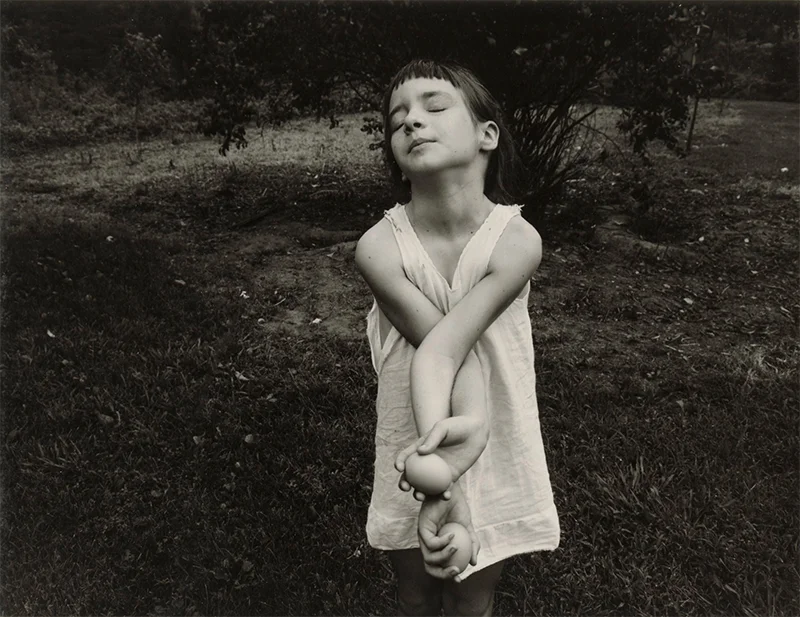
Emmet Gowin’s photographs reflect both continuity and divergence. His early images of his wife Edith and her family in Virginia reveal an intimate, attentive gaze shaped by personal connection and spiritual reflection. This sensibility later expanded into aerial views of altered landscapes across the United States, where patterns of agriculture, industry, and environmental disruption unfold with quiet intensity. Gowin’s work holds a tension between beauty and unease, suggesting that careful observation can reveal both harmony and fracture within the same frame.
Frederick Sommer introduces a more experimental and interdisciplinary dimension. Working largely in the Arizona desert, he navigated between documentation and invention, producing images that range from stark desert studies to intricate assemblages of found materials. His engagement with Surrealism and his broader artistic practice—encompassing drawing, collage, and writing—infuse his photographs with a sense of intellectual and visual curiosity that resists categorization.
Together, the three photographers demonstrate how the medium evolves through sustained attention, exchange, and reinterpretation.
Callahan, Gowin and Sommer reveals photography not as a fixed language, but as a continuous process of looking, questioning, and transforming the ordinary into something enduring.
Image:
© Emmet and Edith Gowin, Nancy, Danville, Virginia, 1969