All about photo.com: photo contests, photography exhibitions, galleries, photographers, books, schools and venues.
FINAL CALL TO ENTER AAP MAGAZINE WOMEN: GET PUBLISHED AND WIN $1,000

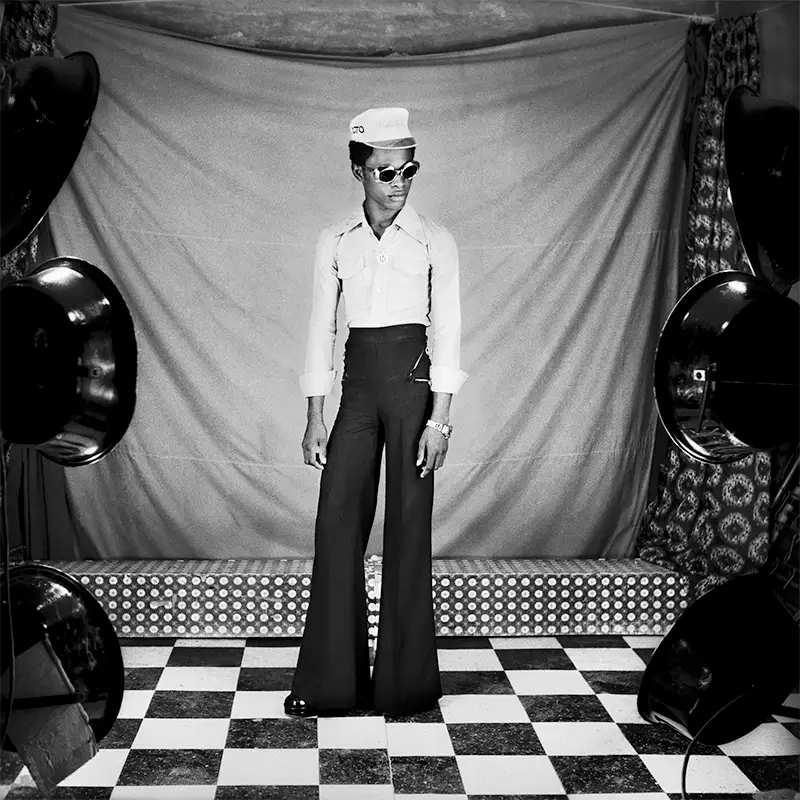
Samuel Fosso: Autoportrait

From September 03, 2025 to November 08, 2025
Share
Samuel Fosso: Autoportrait
245 10th Avenue
New York, NY 10001
Yossi Milo is pleased to announce Samuel Fosso’s debut solo exhibition with the gallery, which opens to the public on Wednesday, September 3, 2025, with a reception from 6-8 PM. This is Fosso’s first solo exhibition in New York in more than two decades, and spans more than thirty years of his practice, showcasing works from his series 70s Lifestyle and African Spirits. The exhibition follows the unveiling of an installation of the artist’s photographs in the Metropolitan Museum of Art’s newly renovated Michael C. Rockefeller Wing earlier this year; the exhibition also precedes the artist’s inclusion in Ideas of Africa: Portraiture and Political Imagination, a survey of African studio photography at the Museum of Modern Art curated by Oluremi Onabanjo and opening on December 14, 2025.

Over his decades-long career, Cameroonian-Nigerian photographer Samuel Fosso (b. 1962; Kumba, Cameroon) has deployed self-portraiture to innovate on storied traditions of studio photography from West Africa and beyond. Since the debut of Fosso’s work on a global stage when he was awarded First Prize at the Rencontres de la Photographie in Bamako, Mali in 1994, the artist has used his practice as a conduit for questions central to identity: How can self-representation reclaim African identity from colonial imagery? How is Fosso’s personal history reflected in collective history? And, critically, how does photography assist in resisting erasure? Collector and author Artur Walther writes in his foreword for AUTOPORTRAIT, a 2020 monograph of the artist’s work: “Since the days of his experimental self-portraits, made as a teenager in the 1970s in a commercial studio in Bangui, the Central African Republic, [Fosso] has constantly explored the mythmaking potential of the camera. In his self-portraits, he amplifies himself and yet becomes someone else entirely.”

Across all his work, and beginning with his earliest series 70s Lifestyle (1975-78), Fosso intuitively pulls back the curtain, collapsing subject and subjectivity by depicting himself, the photographer. 70s Lifestyle was incepted in 1975 at Photo Studio Nationale, the photography venture the artist opened at just thirteen, three years after fleeing from Nigeria’s civil war to Bangui, the Central African Republic. After hours busy with customers taking headshots, portraits, and passport photos, Fosso would photograph himself with the last few frames in a roll of film to send to his grandmother in Nigeria. Over time, the practice took on the capricious qualities of a true artist’s process. In an interview with the late Okwui Enwezor, curator of the 56th Venice Biennale, Fosso shared: “Sometimes when I made photographs I was not satisfied with, where I didn’t feel beautiful inside, I would cut up the negatives instead of printing them… I did not know I was making art photography. What I did know is I was transforming myself into what I wanted to become.” Fosso’s early interest in photography was driven by his own exclusion from photographic record: as a child, Fosso, partially paralyzed, disabled, and displaced, was not pictured until he was ten years old. Eventually, this erasure would spell out the social value of representation to the artist, and self-portraiture would show a way to enter himself into an archive with agency.

In the vintage black-and-white self-portraits of 70s Lifestyle, Fosso shows his keen understanding of the fashion of the time, of his body, and of the formal qualities of the photographs themselves. Every image varies despite their consistent elements: figure, outfit, backdrop, lights. The trappings of the studio are transfigured by Fosso into shapes influenced by imported magazines and popular African singers. The artist screens himself behind dividers, dresses up and down, holds props, and, most critically, looks directly into his camera’s lens. This produces a gestalt that reflects a pop sensibility and uses the commercial as a site of metamorphosis. 70s Lifestyle makes the processes inherent to studio photography self-aware and selfreferential, and brings Fosso and the viewer into a mutual contract of observation.

Fosso would continue this reflexive notion of spectatorship would continue in the following decades, which over time would continue to expand in the scope of its inquiry. The artist’s landmark series African Spirits (2008) orients his practice of self-depiction towards a politically-minded act of channeling. Across fourteen stark monochrome images, Fosso casts himself as figures key to African and diasporic histories. By inhabiting visages like Angela Davis, Miles Davis, Martin Luther King, Jr., Patrice Lumumba, Nelson Mandela, Tommie Smith, Malcolm X, and more, the artist connects a web of historical movements into a unified arc of Black liberation on a global scale. The series was initially conceived as an investigation into the global impact of slavery, and grew into an inspirational review of figures committed to human dignity and the reclamation of culture. Ultimately, it sought to correct a problem of institutional underrepresentation. Though concerned with history, each of these images is only a partial restaging of its source, a détournement from icon into iconography. Fosso strips away the backgrounds behind each subject, lending each composition a graphic quality. Streamlined and simplified, these figures become the symbolic forms they take in collective memory.

Fosso’s oeuvre becomes an evaluation of the deep significance of photography in the modern era, from the historic to the contemporary; from the documentary to the constructed. A thread emerges in tracing the evolution from 70s Lifestyle through African Spirits: an emergence of the self-portrait as something more, an advancement of concern from the personal to the historical. In an almost atavistic process, Fosso harnesses this essential power of photography to show collective and historic truths.

Works by Samuel Fosso are held in permanent collections around the globe, including the Solomon R. Guggenheim Museum; Metropolitan Museum of Art; Museum of Modern Art; Studio Museum in Harlem; Los Angeles County Museum of Art; J. Paul Getty Museum; San Francisco Museum of Modern Art, and the Museum of Fine Arts, Houston; as well as the Musée des Beaux-Arts; Tate Modern; Victoria & Albert Museum; Musée National d’Art Moderne; Centre Pompidou; Fondation Louis Vuitton, and Deutsche Bank, among others. Fosso has mounted solo exhibitions at institutions including the Walther Collection; National Portrait Gallery; Princeton University Art Museum; Museum der Moderne; Museo de Canal, and Jack Shainman Gallery, among others. In 2023, the Menil Collection, presented a solo exhibition of Fosso’s entire African Spirits series. Fosso has exhibited work in prominent group exhibitions internationally, including at the International Center of Photography; Art Institute of Chicago; Fotomuseum; Barbican Art Gallery; Museum of Contemporary Art; Kiasma Museum of Contemporary Art; Museum of Contemporary Art; Stephen Friedman Gallery, and Gagosian Gallery. The artist has been awarded prizes such as the Prix Afrique en Creations in 1995; First Prize for photography at the Dak’Art Biennale de l’Art Africain Contemporain, Dakar, Senegal in 2000, and Deutsche Börse Photography Foundation Prize in 2023. Fosso lives and works between Bangui, Central African Republic and Paris, France.

Image: Samuel Fosso, Autoportrait, From the series 70’s Lifestyle, 1975–1978 © the artist and courtesy Yossi Milo, New York

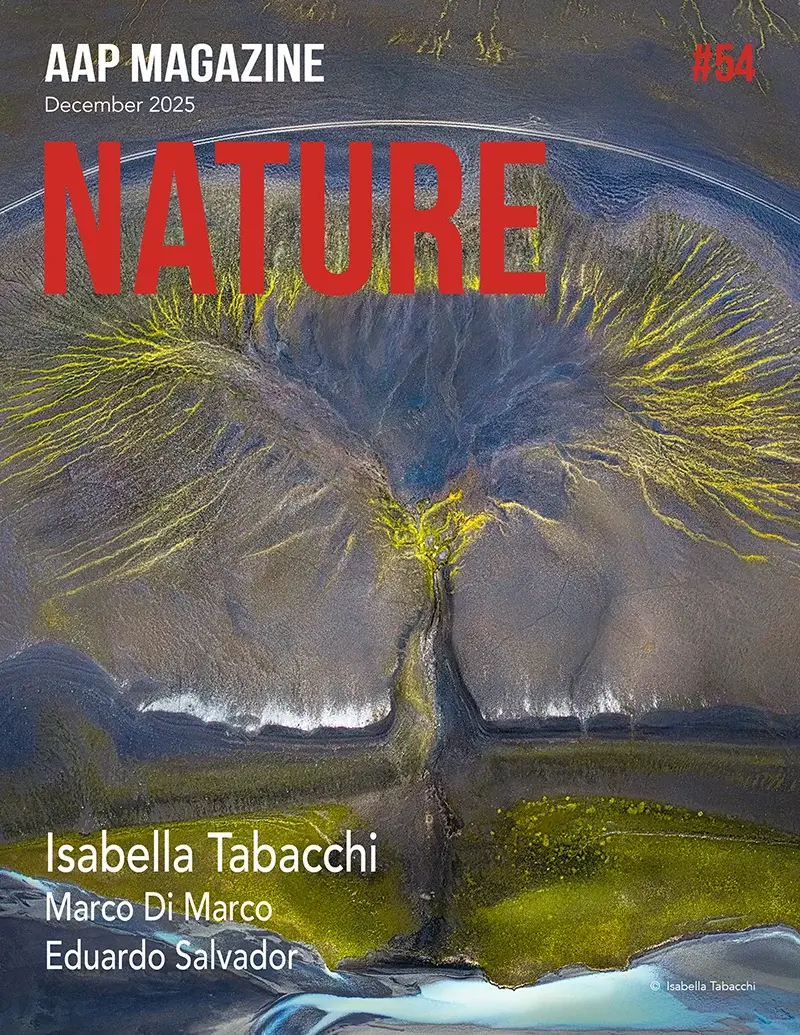
Our printed edition showcases the winners of AAP Magazine call of entries
All About Photo Magazine
Issue #54
Stay up-to-date  with call for entries, deadlines and other news about exhibitions, galleries, publications, & special events.

Exhibitions Closing Soon

Alan Gaynor: Our City
Viridian Artists | New York, NY
From February 17, 2026 to March 07, 2026
Alan Gaynor: Our City, on view from February 17 through March 7, 2026 at Viridian Artists, presents a compelling exploration of New York City’s architectural identity through the lens of architect and photographer Alan Gaynor. This exhibition, Gaynor’s fifth solo show with the gallery, captures the city’s monumental structures with both precision and poetic sensibility, inviting viewers to experience Manhattan not merely as a backdrop but as an immersive, commanding presence. The Cityscapes series featured in Our City portrays skyscrapers as layered compositions of concrete, steel, and glass. Stripped of human figures, the photographs transform the urban landscape into an almost abstract orchestration of form and rhythm. From towering facades to reflections in glass surfaces, Gaynor’s images emphasize the interplay of scale, line, and light, revealing architectural nuances often overlooked in daily life. Drone-assisted perspectives, high-angle shots, and street-level views converge to create panoramas that are at once intimate and expansive. Gaynor’s architectural background, including the founding of his firm in 1974, underpins his photographic approach. His work demonstrates a mastery of analog and digital techniques, delivering exceptional detail and tonal range in both black-and-white and color. Minimal manipulation ensures that each image retains clarity and objectivity, while compositional choices elevate the cityscape into a visual symphony, echoing Johann Wolfgang von Goethe’s notion of architecture as “frozen music.” These photographs unfold like ambient scores, harmonizing rhythm, repetition, and scale into a contemplative visual experience. Having exhibited widely since 2000, Gaynor studied with notable figures including John Sexton, George Tice, and David Vestal, and his work has appeared in esteemed galleries and publications worldwide. Awards such as the 2012 Bronze International Loupe and recognition from Epson International underscore the quality and impact of his practice. Our City solidifies Gaynor’s reputation as a photographer who transforms the familiar cityscape into a space of observation, reflection, and aesthetic resonance, offering viewers a renewed appreciation for the architectural heartbeat of New York. Image: Reflection of the Lipstick Bad, 1996. Archival pigment print, Ed. of 10, Image: 21.75 x 16.75 in. 1996 © Alan Gaynor, courtesy of Viridian Artists
Anthony Friedkin: Ex Post Facto
Von Lintel Gallery | Los Angeles, CA
From January 24, 2026 to March 07, 2026
Anthony Friedkin: Ex Post Facto, on view at Von Lintel Gallery from January 24 to March 7, 2026, offers a rigorous and deeply personal retrospective of one of Los Angeles’s most committed photographic voices. Working exclusively in full-frame black-and-white, Friedkin has spent more than five decades using photography as both a mirror and a compass, grounding his work in lived experience, physical presence, and a profound respect for craft. From an early age, the darkroom became not just a workspace but a place of authorship, where images were shaped deliberately, by hand, and with intention. Los Angeles emerges throughout the exhibition as more than a setting; it is an active force that organizes movement, desire, and contradiction. Friedkin’s city is expansive and intimate at once, a place where freedom and risk coexist and where the boundaries between pleasure and danger are often porous. His photographs reveal a landscape that resists simplification, shaped by sunlight and shadow, performance and vulnerability, secrecy and exposure. At the core of the exhibition is the long-running Surfing Essay, begun in 1975, which reads as both a visual diary and a meditation on obsession. Friedkin photographs the ocean from within its rituals, attuned to repetition, endurance, and the quiet extremity of devotion. Waves become sculptural forces, surfers both fragile and defiant, and the sea a space where discipline and surrender meet. The images carry the weight of participation, shaped by the photographer’s own immersion in the culture he documents. Equally vital are works from the Gay Essay, a groundbreaking series begun in the early 1970s that offers an insider’s view of gay life in Los Angeles before visibility was formalized. These photographs are marked by trust, tenderness, and shared authorship, presenting lives not as symbols but as relationships. Complementing this are images from brothels, private interiors, and Hollywood sets, where bodies, labor, and performance unfold without moral distance or theatrical gloss. Taken together, Ex Post Facto affirms Anthony Friedkin’s position as a photographer of presence—one who enters worlds fully, listens closely, and leaves behind images that are as honest as they are enduring. Image: Woman by the Pool, Beverly Hills, CA 1975 Archival pigment print 20 x 30 inches (50.8 x 76.2 cm) © Anthony Friedkin
Chris McCaw: Reversals and Revolutions
Haines Gallery | San Francisco, CA
From January 21, 2026 to March 07, 2026
On view from January 21 to March 7, 2026, Chris McCaw: Reversals and Revolutions marks a compelling return to San Francisco, presenting a body of work that reconsiders photography at its most elemental. Known for his rigorous engagement with light, time, and materials, McCaw approaches the medium as both a scientific experiment and a poetic act. This exhibition brings together new and iconic works that reveal how photographic images can be formed through direct encounters with natural forces rather than digital intervention. At the center of the exhibition is Inverse, a recent series that extends McCaw’s long-standing investigation into analog processes. Using solarization and carefully controlled overexposure, he creates images in which negative and positive coexist within a single frame. Landscapes appear simultaneously revealed and obscured, their tonal reversals prompting viewers to question how vision operates and how meaning is assigned to familiar terrain. These works feel less like representations of place than meditations on perception itself, where the mechanics of seeing become inseparable from the subject being seen. Complementing these photographs are McCaw’s celebrated Sunburn works, for which the sun is not only depicted but actively participates in the making of the image. Through prolonged exposures, concentrated sunlight physically burns its mark onto light-sensitive paper, tracing arcs and circles that record the Earth’s rotation and the passage of time. Each piece is the result of careful preparation and surrender, balancing precision with the unpredictability of natural conditions. The resulting images possess a striking physical presence, bearing the scars of their own creation. Taken together, the works in Reversals and Revolutions challenge conventional ideas of photography as a tool of capture or reproduction. Instead, McCaw presents the medium as an evolving dialogue between artist, environment, and process. His photographs invite slow looking and reflection, reminding viewers that even in a technologically accelerated world, photography can remain a deeply material, time-bound, and exploratory art form. Image: Chris McCaw, Inverse #122 (Lakes Basin), 2025 6 Unique paper negatives, partial in-camera solarization © Chris McCaw
Ron Jude: Low Tide
Gallery Luisotti | Los Angeles, CA
From January 09, 2026 to March 07, 2026
Ron Jude: Low Tide presents a restrained yet quietly unsettling meditation on landscapes shaped by forces that predate and outlast human presence. Centered on the intertidal zone, the exhibition draws attention to moments of temporary exposure, when the retreating sea reveals surfaces, textures, and organisms usually hidden from view. Jude treats these environments not as scenic destinations, but as thresholds—spaces where geological time, organic growth, and erosion briefly intersect in visible form. The photographs move fluidly between shoreline and inland sites, suggesting that the logic of the tide extends beyond the coast itself. Rocks slick with moisture, tangled roots, fungal growth, and submerged debris appear suspended between states, neither fully land nor sea. Jude’s attention to material detail invites prolonged looking, encouraging viewers to consider how these forms accumulate, decay, and transform outside the rhythms of daily human life. The images reward patience, revealing complexity through quiet repetition rather than spectacle. Building on ideas introduced in his earlier work, Jude continues to question how scale and perception shape our understanding of the world. Here, the absence of human figures or built structures removes familiar points of reference, allowing surfaces and organisms to assert their own presence. The resulting ambiguity destabilizes easy readings of space and distance, creating photographs that feel both intimate and vast. This visual uncertainty echoes the fleeting nature of the intertidal moment itself, a condition defined by constant change. The title Low Tide resonates beyond its literal meaning, suggesting a broader state of revelation and vulnerability. As water withdraws, systems usually kept separate overlap, exposing fragile balances and latent tensions. Without explicitly addressing environmental crisis, the work carries a subtle unease, reflecting a contemporary awareness of ecological instability. These are not images of catastrophe, but of suspension—life caught in a brief pause before conditions shift again. Ultimately, Low Tide offers a contemplative experience grounded in slowness and restraint. Jude’s photographs resist narrative closure, instead proposing landscape as an ongoing process shaped by time, pressure, and persistence. In doing so, the exhibition asks viewers to reconsider their own position within these vast cycles, reminding us that what we see is often determined not by creation, but by moments of absence when deeper structures are allowed to surface. Image: Maritime Forest, 2021 Gelatin silver print © Ron Jude
Nina Katchadourian: Fake Plants and Other Curiosities
The Hyde Collection | Glens Falls, NY
From October 25, 2025 to March 08, 2026
Nina Katchadourian: Fake Plants and Other Curiosities, on view from October 25, 2025 to March 8, 2026 at Feibes & Schmitt Gallery in the historic Hyde House, invites visitors into a playful and incisive exploration of art made from what is usually ignored or discarded. Known for working with everyday materials and self-imposed constraints, Katchadourian transforms the ordinary into the unexpected, revealing how creativity can emerge from limitation rather than abundance. Central to the exhibition are works from Katchadourian’s ongoing Fake Plants series. Constructed from paper food wrappers, disposable masks, sponges, toothpicks, and other cast-off items, these invented botanical forms blur the line between sculpture, satire, and observation. Neither replicas nor caricatures of existing species, the plants suggest an alternate ecosystem rooted in domestic life and consumer culture. A newly developed group of works incorporates upcycled industrial materials sourced from the nearby Finch papermill, weaving local history into the exhibition and extending the dialogue between the museum’s past and present. Installed throughout the Hyde House, Katchadourian’s work interacts directly with the permanent collection, encouraging viewers to reconsider how institutions accumulate meaning over time. By inserting contemporary interventions into a historic setting, the exhibition highlights continuities between craftsmanship, reuse, and storytelling across generations. The contrast between refined interiors and humble materials sharpens awareness of value, authorship, and the quiet poetry embedded in everyday objects. Also on view are selections from Lavatory Self-Portraits in the Flemish Style, a series created entirely in airplane restrooms using a smartphone and improvised props. Drawing inspiration from early Netherlandish painting, these meticulously staged images merge humor with art historical reference, collapsing distance between past and present, high culture and lived experience. The airplane bathroom becomes a temporary studio where constraint fuels invention. Together, the works in Fake Plants and Other Curiosities celebrate attentiveness, wit, and transformation. Katchadourian’s practice reminds us that meaning often resides in what we overlook, and that even the most modest materials can carry imagination, history, and quiet wonder. Image: Nina Katchadourian (American, b. 1968) "Lavatory Self-Portrait in the Flemish Style #12," 2011 (Seat Assignment project, 2010-ongoing) C-print, Edition of 8 +2AP 12 3⁄4 x 10 3⁄4 inches. Collection of Hesu Coue-Wilson and Edward Wilson © Nina Katchadourian
Tawny Chatmon: Sanctuaries of Truth, Dissolution of Lies
National Museum of Women in the Arts | Washington, DC
From October 15, 2025 to March 08, 2026
The exhibition of Tawny Chatmon’s work at NMWA marks a new and profound chapter in the artist’s evolving creative journey. Bringing together selections from her most recent series, The Restoration (2021–present) and The Reconciliation (2024–present), this presentation expands the boundaries of her photography-based practice into assemblage, embroidery, film, and sound. These recent works build upon the luminous visual vocabulary established in earlier series such as If I’m no longer here, I wanted you to know… (2020–2021), Remnants (2021–2023), and Iconography (2023–present), which are also represented in the exhibition. Characterized by ornate patterns, radiant colors, and symbolic layering, Chatmon’s portraits—often of children—draw inspiration from Gustav Klimt’s opulent compositions and the golden mosaics of Byzantine art. Material choices play a vital role in Chatmon’s creative language. Her decision to move away from genuine gold reflects her awareness of the ethical and environmental issues surrounding the extraction of precious materials such as gold and cobalt, particularly in the Democratic Republic of the Congo. In response, her latest works embrace embroidery and textiles as alternative mediums, weaving new narratives of care, resilience, and reverence. In The Reconciliation, Chatmon addresses stereotypes about the food traditions of the African diaspora, reclaiming recipes and rituals that have sustained generations while celebrating their deep cultural and spiritual significance. The Restoration emerged from Chatmon’s commitment to confronting racist imagery found in antique dolls and figurines. By repainting and redressing these objects and placing them in the hands of children, she symbolically transforms symbols of harm into emblems of dignity and renewal. Across her practice, Chatmon calls upon viewers to recognize the sacredness and intrinsic worth of Black identity, illuminating stories of beauty, strength, and humanity that have long been overlooked or misrepresented. Image: Tawny Chatmon, Economic Heritage, from the series “The Reconciliation,” 2024; Embroidery and acrylic paint on archival pigment print, 47 x 32 in. (unframed) ©Tawny Chatmon, Courtesy of the artist and Galerie Myrtis
Eduardo Chacon: Postcards from Nowhere
Boca Raton Museum of Art | Boca Raton, FL
From November 19, 2025 to March 08, 2026
Postcards from Nowhere presents an intimate installation of 42 photographs of people at work and play by South Florida humanist photographer Eduardo Chacon. This is a combined special exhibition that also features a selection of iconic street photographers from the Museum collection that inspire Chacon’s practice. Eduardo Chacon shoots straight photography with no cropping, no auto-focus, and all manual settings. By maintaining the integrity of the original scene, Chacon captures his surroundings rife with that thing most fleeting: human emotion. As a counter to a society obsessed with peering into our phones’ black mirrors, Chacon turns his camera’s eye ever outward and up and, in the blink of a lens, creates visual chronicles of human interaction, from a bartender mid-pour to a family fishing trip, to an embrace while gazing at the stars. Postcards from Nowhere, using only Chacon’s masterful control of timing, contrast, and composition in black-and-white, transports the viewer on a trip to their own personal realm. As the exhibition reveals, this could be anywhere worldwide, as long as it avoids modern technology in favor of a simpler time. Image: Eduardo Chacon, Hangover Bros, 2022 (printed 2023), archival print. Courtesy of the Artist
Milk/Wine
Weisman Art Museum | Minneapolis, MN
From August 02, 2025 to March 08, 2026
Milk/Wine explores the fascinating relationship between art and time, asking what it means for a work of art to age. Whether through visible signs of decay—yellowed paper, cracking pigment, fading tones—or through the gradual shift in cultural values, every artwork carries the marks of its passage through history. Some images honor people or ideals that have since vanished; others reveal truths that resonate even more strongly today. Like milk or wine, art can spoil or mature, its meaning transforming as generations change their gaze. Composed primarily of prints, photographs, and works on paper, Milk/Wine reflects on the fragile and enduring nature of artistic expression. Certain pieces confront moments in collective memory that society may have chosen to forget or suppress. Others illustrate how the creative process itself embodies time—through material deterioration, archival scarcity, or deliberate layering that captures the tension between presence and loss. Each work holds within it both its original intention and the echo of every viewer who encounters it anew. By inviting contemporary audiences to interpret these works, the exhibition encourages a dialogue between past and present. It suggests that meaning is never fixed, but constantly reframed through cultural perspective and the lived experience of time. Labels written by members of the Weisman Art Museum staff and the WAM Collective bring modern reflections into direct conversation with the historical context of each piece, highlighting how perception evolves with each generation. In the end, Milk/Wine reminds us that all art, like life itself, exists in motion—subject to change, reinterpretation, and decay. Yet within that inevitable transformation lies beauty and truth: the understanding that time, in its slow and impartial way, reveals as much as it erodes. Image: Composite of Laura Crosby, Time Take (Sophie, 2 weeks), 2001, gelatin silver print, mat size: 31 5/8 × 31 5/8 in. Collection of the Weisman Art Museum at the University of Minnesota, Minneapolis. Gift of the artist. 2015.34.1 and Laura Crosby, Time Take (Margaret, 100 years), 1999, gelatin silver print, mat size: 31 5/8 × 31 5/8 in. Collection of the Weisman Art Museum at the University of Minnesota, Minneapolis. Gift of the artist. 2015.34.25
The Gay Harlem Renaissance
The New York Historical | New York, NY
From October 10, 2025 to March 08, 2026
Explore the vibrant and dazzling world of Harlem’s gay Black community during the 1920s and 30s. To mark the centennial of The New Negro, Alain Locke’s groundbreaking edited volume of literature and art, The Gay Harlem Renaissance invites visitors to immerse themselves in the richness of LGBTQ+ Black life during the height of the Harlem Renaissance. The exhibition makes the case that the influx of ideas and people into the neighborhood during the Great Migration, on a scale never before seen, enabled a vibrant, visible LBGTQ+ Black culture and network to flourish in Harlem. Facing racist practices and homophobic laws yet drawn by promise and possibility, these individuals created a space where they could gather, build community, and produce art that forever changed American culture. Uniting painting, sculpture, artifacts, documents, photographs, and music from collections across the country, The Gay Harlem Renaissance celebrates the creativity, innovation, and resilience of Black LGBTQ+ Harlemites. Curated by Allison Robinson, associate curator of history exhibitions and Anne Lessy, assistant curator of history exhibitions and academic engagement, with contributions from Rebecca Klassen, curator of material culture and decorative arts, and George Chauncey, author of Gay New York and DeWitt Clinton Professor of American History and Director of the Columbia Research Initiative on the Global History of Sexualities at Columbia University as chief historian. Lead support for The Gay Harlem Renaissance is provided by the Mellon Foundation.
Selections from the Photography Collection: Food
Allentown Art Museum | Allentown, PA
From September 11, 2025 to March 08, 2026
Selections from the Photography Collection offers a continuing reflection on the rich diversity of vision that artists bring to the photographic medium. This latest installation from the Museum’s holdings turns its gaze toward a universal subject—food—and the myriad ways it shapes our lives. Through still lifes, portraits of farmers, intimate dining scenes, and bustling markets, the exhibition explores how sustenance is never merely physical but also deeply cultural, emotional, and social. Spanning nine decades and featuring nineteen artists, the photographs reveal how food binds people together across geography and generations. An image of hands harvesting fruit or a family gathered around a shared meal becomes a meditation on connection and continuity. The works evoke both the dignity of labor and the rituals of daily life, celebrating the beauty in what is often overlooked. Whether through the formal precision of a composed still life or the spontaneous rhythm of a street market, each artist finds poetry in the everyday act of nourishment. Among the highlights is Edward Henry Weston’s 1930 gelatin silver print Eggs, a study in simplicity and form that transforms the ordinary into the sublime. In Weston’s hands, the quiet geometry of eggshells becomes a meditation on balance and light—an emblem of how photography can turn sustenance into art. This iteration of Selections from the Photography Collection underscores how the act of eating, growing, and sharing food continues to define human experience. Supported by the Bernard and Audrey Berman Foundation and the Leon C. and June W. Holt Endowment, the exhibition invites viewers to see food not only as a necessity but as a mirror of community, creativity, and care. A new selection of works will open in the Fuller Gallery on March 14, 2026. Image: H. Donald Bortz (American, 1908–1962), Brenda Bortz, Allentown, Pennsylvania, 1951 (printed 1995), Kodachrome dye transfer print. Allentown Art Museum: Gift of Mary Rose Oldt, 2024. @H. Donald Bortz
Tacita Dean: Blind Folly
Columbus Museum of Art | Columbus, OH
From October 08, 2025 to March 08, 2026
Tacita Dean: Blind Folly is the first major museum survey in the United States of work by British European visual artist Tacita Dean (b. 1965). The exhibition, organized in close collaboration with Dean, spotlights her career-defining approach to creating art through unmediated and chance-based drawing processes across a variety of mediums, from film to printmaking. Blind Folly, the show’s title, reflects Dean’s desire to let the behavior of her mediums dictate the results of her work. For the artist, the playful and old-fashioned phrase connoting foolishness, “blind folly,” represents the role chance and fate play in the creative act. Blind Folly brings together several of Dean’s monumental blackboard drawings along with rarely shown drawings from her studio on paper, found postcards, albumen photographs, and 16mm films. This selection includes several newly created works, some of which were inspired by Dean’s residency at the Menil Collection’s Cy Twombly Gallery, a Renzo Piano-designed building devoted to the work of late American artist Cy Twombly (1928–2011). Tacita Dean: Blind Folly is curated by Michelle White, Senior Curator, The Menil Collection, Houston, and presented at the Columbus Museum of Art in collaboration with Daniel Marcus, Curator of Collections and Exhibitions, and Rae Root, Roy Lichtenstein Curatorial Fellow. The exhibition is accompanied by the book Blind Folly or How Tacita Dean Draws, written by Michelle White (co-published by the Menil and MACK). The text, illustrated with more than forty images, is based on seven years of conversation between the author and the artist.
Steve Cozad: In the Shadow of Mount Everest
Viewpoint Photographic Art Center | Sacramento, CA
From February 11, 2026 to March 08, 2026
On view from February 11 to March 8, 2026 in the Main Gallery at Viewpoint Photographic Art Center in Sacramento, Steve Cozad: In the Shadow of Mount Everest presents a photographic journey into the cultural and spiritual landscapes shaped by the world’s highest mountain. Rising more than 29,000 feet above sea level, Mount Everest looms not only as a geographic monument but as a living presence that has influenced generations of life in Nepal and Tibet. Cozad’s photographs reflect this profound relationship between land and people. The Himalayas are shown here not as distant, untouchable peaks, but as an intimate framework for daily existence. Villages, paths, faces, and gestures reveal how deeply the mountains are woven into belief systems, rituals, and rhythms of everyday life. Elders carry histories etched by time and altitude, while younger generations move forward under the same towering silhouettes, inheriting traditions while shaping new narratives of their own. Cozad’s images honor this continuity, balancing the grandeur of the landscape with the quiet dignity of human presence. Based in Northern California, Steve Cozad approaches photography with a fine art sensibility grounded in patience and respect for place. Traveling extensively with his wife, he has built a body of work that celebrates both the majesty of the natural world and the diversity of those who inhabit it. His compositions emphasize light, scale, and atmosphere, drawing viewers into environments that feel both expansive and deeply personal. The photographs invite reflection rather than spectacle, encouraging a slower, more thoughtful engagement. Through this exhibition, Cozad shares more than images of remarkable terrain; he offers an invitation to reconnect with the planet’s fragile beauty. His work suggests that understanding begins with attention, and that appreciation can lead to stewardship. In the shadow of Mount Everest, these photographs speak to endurance, humility, and coexistence, reminding us that the world’s most extraordinary places are sustained not only by nature, but by the cultures that continue to live alongside it. Image: © Steve Cozad
Advertisement
AAP Magazine #55 Wmen
Win a Solo Exhibition in April
AAP Magazine #55 Wmen
Call for Entries
AAP Magazine #55 Women
Publish your work in our printed magazine and win $1,000 cash prizes

Related Articles

All About Photo Presents ’ Civilization’ by Damien Aubin
In Civilization, Damien Aubin turns his lens toward environments shaped not by nature, but by ambition. These are places engineered at a scale that exceeds the individual — infrastructures, industrial complexes, vast architectural systems that dwarf the human body and often eclipse it entirely. There are no protagonists here. No narratives unfolding in real time. Instead, Aubin photographs what remains when activity recedes: structures that continue to stand, operate, or simply endure.
FotoFocus Announces Big Tent Opening of FotoFocus Center
This summer, FotoFocus will expand on their vision and embark on a new chapter with the launch of Big Tent, the inaugural exhibition at the new FotoFocus Center, a 14,700 square foot, purpose-built structure to house photographic exhibitions and year-round programs. Bringing together work by over fifty artists (including An-My Lê, Catherine Opie, Dawoud Bey, Gordon Parks, Justine Kurland, Mitch Epstein, RaMell Ross, Sky Hopinka, Tina Barney and many more), the exhibition (on view May 29-August 22) reflects upon the current state of American democracy while also considering the efficacy of photography to be a catalyst for meaningful change.
Elliott Erwitt: Gold Standard
Weinstein Hammons Gallery is pleased to present Elliott Erwitt: Gold Standard, the third exhibition of photographs by Elliott Erwitt (1928–2023), one of the most influential photographers of the twentieth and twenty-first centuries.
 The Queering of Photography by Asa Johannesson
Stills are delighted to announce their spring exhibition: The Queering of Photography by Åsa Johannesson; the artist’s first solo exhibition in Scotland. The Queering of Photography takes place from 1 May – 27 June 2026, Preview: Thursday 30 April, 6–8pm. Åsa Johannesson is an artist working across photography and writing. Over the past two decades she has explored the possibilities of queer visual vocabulary within photographic portraiture – a practice that intertwines queer documentary approaches with performative formalist aesthetics.
Eko: Japan In Two Visual Narratives
From 5 March 2026, The National Maritime Museum in Amsterdam presents the exhibition Ekō – Japan in two visual narratives. Curated as artists conversing across time, the exhibit juxtaposes early photographs of Japan from the museum's own collection, including those by Felice Beato, with the contemporary work it inspired as captured by photographer and visual artist Anaïs López.
Photography and the Black Arts Movement at the Getty
From February 24 to June 14, 2026, the J. Paul Getty Museum presents Photography and the Black Arts Movement, 1955–1985, a landmark exhibition exploring how photographic practices helped shape one of the most influential cultural movements of the twentieth century. Organized by the National Gallery of Art, the exhibition reveals how artists across the African diaspora used images not simply to document history, but to transform it.
MoCP at Fifty: Collecting Through the Decades
The Museum of Contemporary Photography at Columbia College Chicago (MoCP) proudly announces its 2026 exhibition, MoCP at Fifty: Collecting Through the Decades, on view from January 22 through May 16, 2026.
Brassaï’s Secret Paris
In 1933, captivated by the nocturnal rhythms and hidden corners of Paris, the Hungarian-born photographer Brassaï published Paris by Night, a landmark photobook that forever transformed how the city of lights was imagined. Through his lens, Brassaï illuminated the city’s shadowed streets, smoky cafés, solitary lovers, and night-time wanderers, creating images that were simultaneously intimate and cinematic. Paris by Night did more than document the city—it defined a modern vision of Paris after dark, capturing a blend of elegance, vulnerability, and intrigue that had never been seen in photography before
Photo Vogue Festival: Women by Women
The PhotoVogue Festival, the first conscious fashion photography festival to bridge ethics and aesthetics, returns to Milan for its tenth anniversary in 2026. From March 1 to 4, during Milan Fashion Week, the festival will take place at the Biblioteca Nazionale Braidense, one of Italy’s most historic and prestigious libraries—a fitting venue for a milestone edition that underscores the festival’s commitment to thoughtful, socially engaged photography.
Call for Entries
AAP Magazine #55 Women
Publish your work in our printed magazine and win $1,000 cash prizes