In 1933, captivated by the nocturnal rhythms and hidden corners of Paris, the Hungarian-born photographer Brassaï published
Paris by Night, a landmark photobook that forever transformed how the city of lights was imagined. Through his lens,
Brassaï illuminated the city’s shadowed streets, smoky cafés, solitary lovers, and night-time wanderers, creating images that were simultaneously intimate and cinematic. Paris by Night did more than document the city—it defined a modern vision of Paris after dark, capturing a blend of elegance, vulnerability, and intrigue that had never been seen in photography before.
Currently on view at
Howard Greenberg Gallery, in collaboration with
Grob Gallery, the exhibition presents nearly forty photographs from Brassaï’s celebrated Paris by Night series alongside selections from The Secret Paris, a striking group of images that were originally withheld from publication due to their provocative subject matter. Secret Paris, which remained unseen until 1976, explores the city’s underworld—its brothels, bars, and illicit nocturnal encounters—highlighting the raw and forbidden side of Parisian life. The exhibition, running from February 6 through March 28, 2026, brings these two complementary series together for the first time, revealing Brassaï’s extraordinary ability to navigate and capture the dual identities of Paris: the poetic and the clandestine, the luminous and the shadowed.
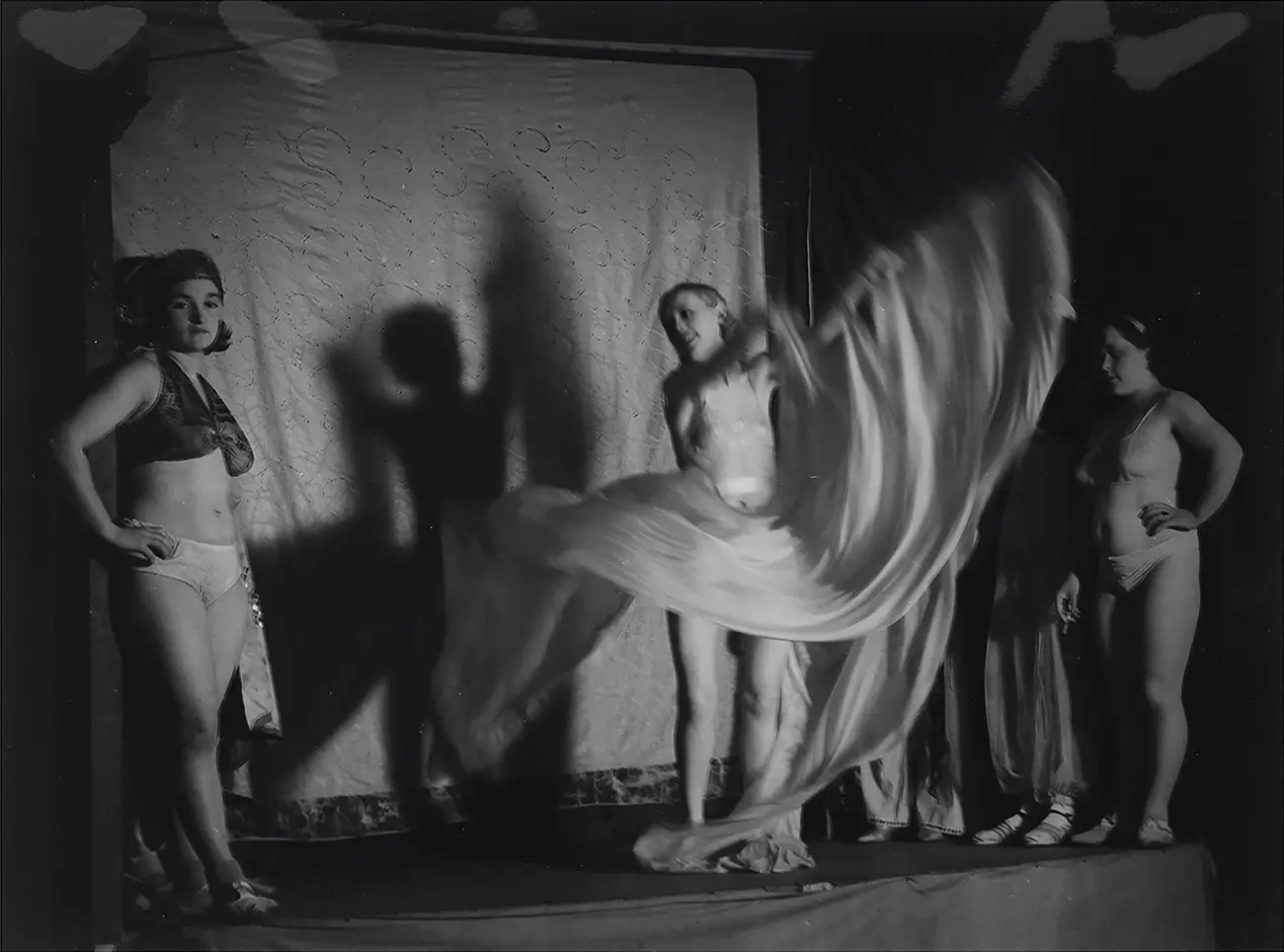
The Human Gorilla's wife in her ”Loïe Fuller” dance, Place d'Italie (La femme de l'homme gorille, dans sa danse de Loïe Fuller, place d'Italie), c.1933 © Brassaï, Courtesy Howard Greenberg Gallery
Infused with tension, mystery, and a cinematic sense of drama, Brassaï’s photographs redefined night photography as a medium capable of narrative, emotion, and social observation. His work presents a Paris both romantic and unflinching, illuminated by street lamps, reflected in mirrors, shrouded in fog, and animated by human presence. By juxtaposing the public and private, the idealized and the forbidden, Brassaï created a visual language that was unprecedented in its ambition and influence, shaping the way generations of photographers would approach urban life and nocturnal imagery.
The exhibition coincides with a new edition of Paris by Night, published by Flammarion on January 27, 2026, as well as a major exhibition of his photographs opening in March at Moderna Museet, underscoring Brassaï’s enduring significance as one of the most poetic and influential photographers of the twentieth century.
Arriving in Paris in 1924, Brassaï worked by day as a journalist and, by night, roamed the streets photographing bars, bistros, cabarets, and brothels. He was often accompanied on his nocturnal explorations by the writer Henry Miller, who famously dubbed him “the eye of Paris.” Inspired by fellow Hungarian photographer André Kertész, Brassaï developed an iconic style that elevated night photography into a refined visual art form, merging social documentary with an almost cinematic sensibility. His images are celebrated not only for their technical mastery but for the way they reveal Paris as a city of dualities—simultaneously glamorous and gritty, intimate and theatrical, public and private.
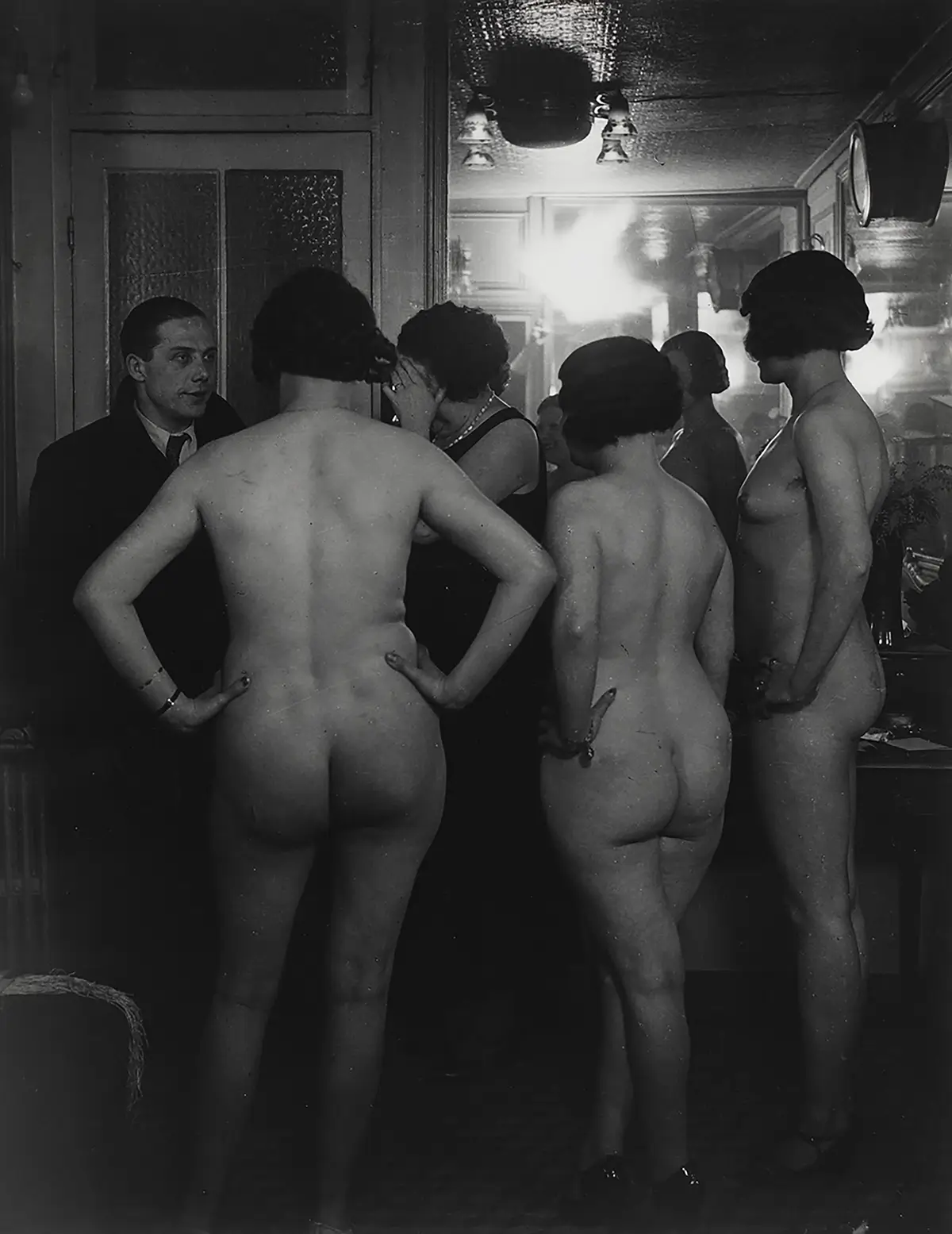
At Suzy, introductions (Chez 'Suzy', la presentation), c.1932 © Brassaï, Courtesy Howard Greenberg Gallery
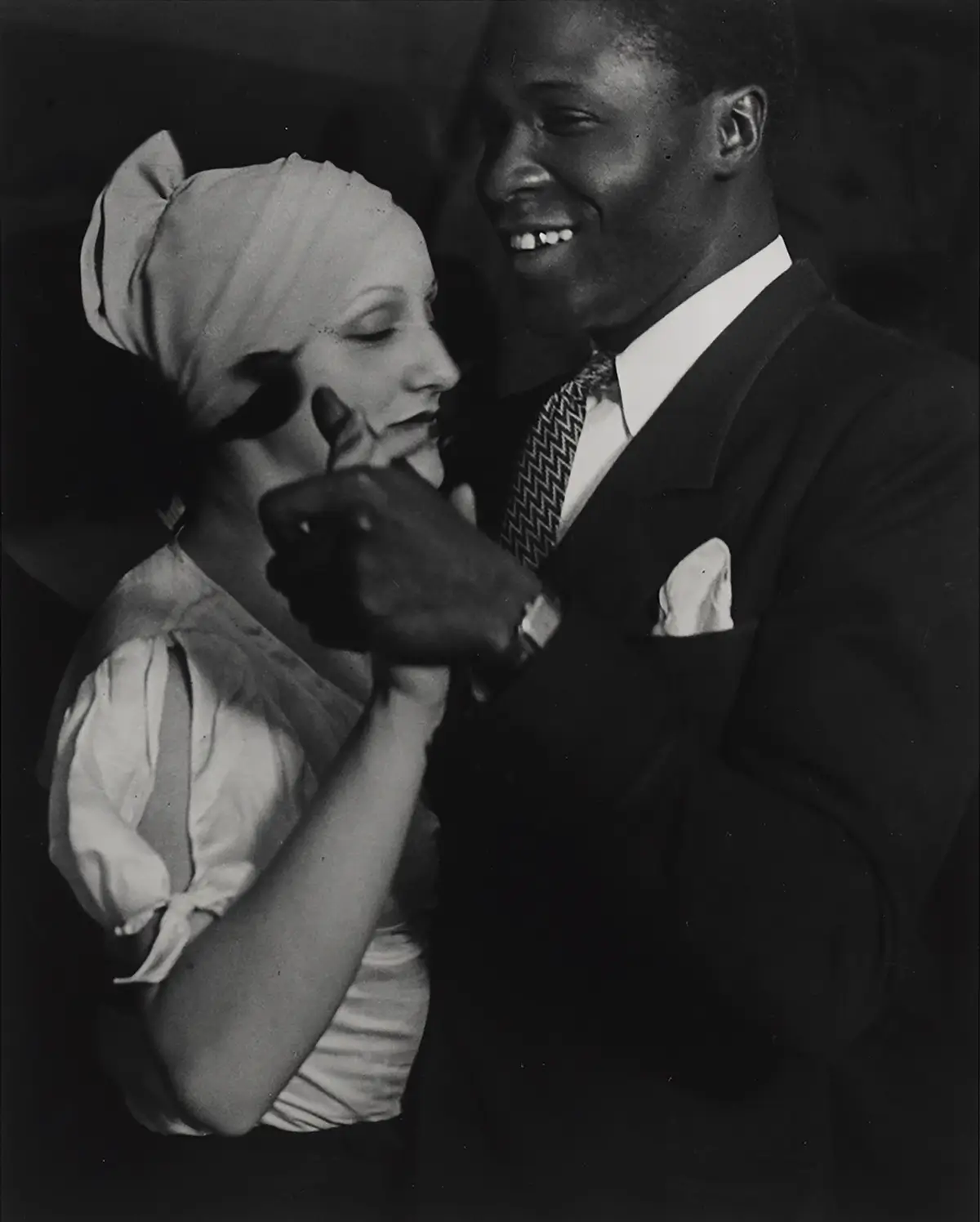
Couple at the Bal Nègre, Rue Blomet (Couple au Bal Nègre, Rue Blomet), c.1932 © Brassaï, Courtesy Howard Greenberg Gallery
Brassaï (1899–1984), born Gyula Halász in Brassó, Transylvania (then part of Hungary, now Romania), was one of the most influential and versatile photographers of the 20th century. Trained as a painter and sculptor, he initially pursued a career in the visual arts before emigrating to Paris in 1924, where he worked as a journalist. Photography began as a practical tool to illustrate his articles, but he soon discovered its expressive potential and became enchanted by its ability to capture the poetry and complexity of urban life. Adopting the name “Brassaï,” meaning “from Brassó,” he quickly established himself as a chronicler of Paris, particularly the city’s nocturnal landscapes.
During the 1920s and 1930s, Brassaï became part of a dynamic circle of artists and writers that defined the Parisian avant-garde, including Henry Miller, Pablo Picasso, Dmitri Kessel, and fellow photographers like André Kertész and Man Ray. This milieu of painters, poets, and Surrealist thinkers influenced his approach to light, composition, and narrative, allowing him to bridge documentary realism with a highly cinematic, almost literary vision. His landmark photobook, Paris by Night (1933), captured the city’s streets, cafés, lovers, and nocturnal wanderers in a way that forever reshaped the perception of Paris as a city of mystery, intimacy, and glamour. Later, his Secret Paris series revealed the hidden underworld of brothels, bars, and clandestine encounters, pushing the boundaries of social documentary photography.
Aside from his focus on Paris, Brassaï’s work encompassed a wide range of subjects and genres. He photographed still lifes, portraits of writers and artists, architecture, and landscapes, producing work across Europe, North America, and South America. He contributed to leading publications of the era, including Minotaure, Verve, Coronet, Picture Post, and Harper’s Bazaar, traveling extensively on assignments to England, Spain, the United States, and Brazil. His portraiture included intimate studies of contemporaries such as Picasso, Matisse, Chagall, and Cocteau, capturing the personalities and cultural ethos of his time.
Brassaï was also a multidisciplinary artist. In addition to photography, he created drawings and sculpture, explored experimental film, and wrote extensively on art and culture. His short film Tant qu’il y aura des bêtes (1955) won the prize for Most Original Film at the Cannes Film Festival in 1956. Throughout his career, he maintained a singular ability to reveal the dualities of life—public and private, poetic and raw, elegant and dangerous.
Brassaï’s influence on generations of photographers cannot be overstated. His pioneering work in night photography, urban documentary, and portraiture continues to resonate in contemporary photography and visual culture. Among his many accolades, he received the Chevalier des Arts et des Lettres (1974), the Chevalier de l’Ordre de la Légion d’Honneur (1976), and was awarded the first Grand Prix National de la Photographie in Paris (1978). At the time of his death in 1984, Brassaï had published 17 books, hundreds of articles, and exhibited his photography, sculpture, and drawings worldwide, leaving a legacy that remains central to the history of 20th-century photography.
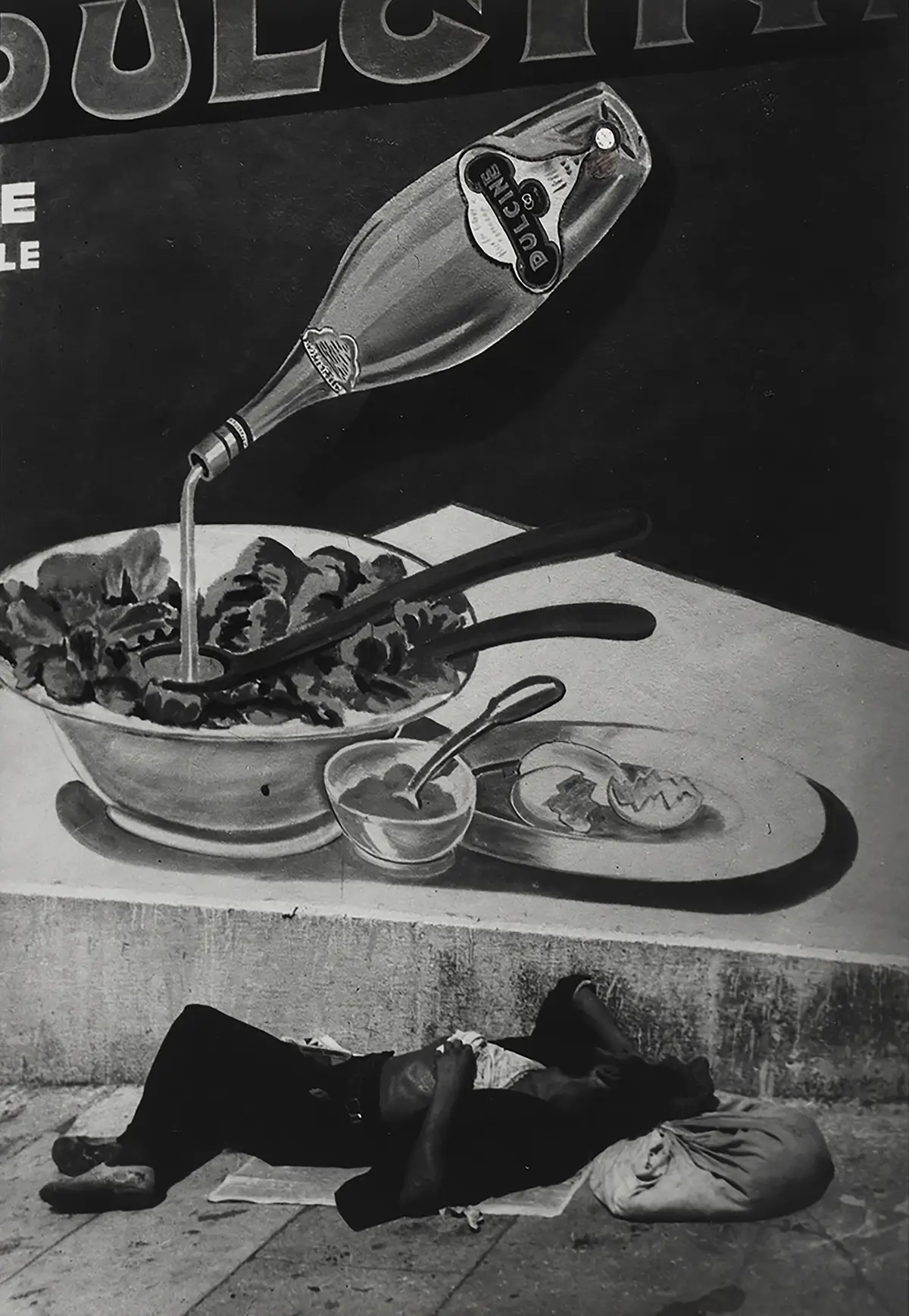
Homeless person sleeping in Marseille (Clochard dormant à Marseille), 1937 © Brassaï, Courtesy Howard Greenberg Gallery
Founded in London in 1981 by David Grob,
Grob Gallery is a family-run business specializing in Modern and Contemporary Art, with particular emphasis on sculpture and vintage photography. Over more than four decades, the gallery has assembled a significant body of works that reflects key artistic developments of the 20th and 21st centuries. This collection functions not as a static holding but as an active resource, regularly showcased through exhibitions. Operating today through a flexible, international network, Grob Gallery maintains close working relationships with museums, institutions, and private collections worldwide. This nomadic model supports the careful circulation and contextualization of artworks across different cultural settings, allowing historical material to remain in active dialogue with contemporary perspectives.
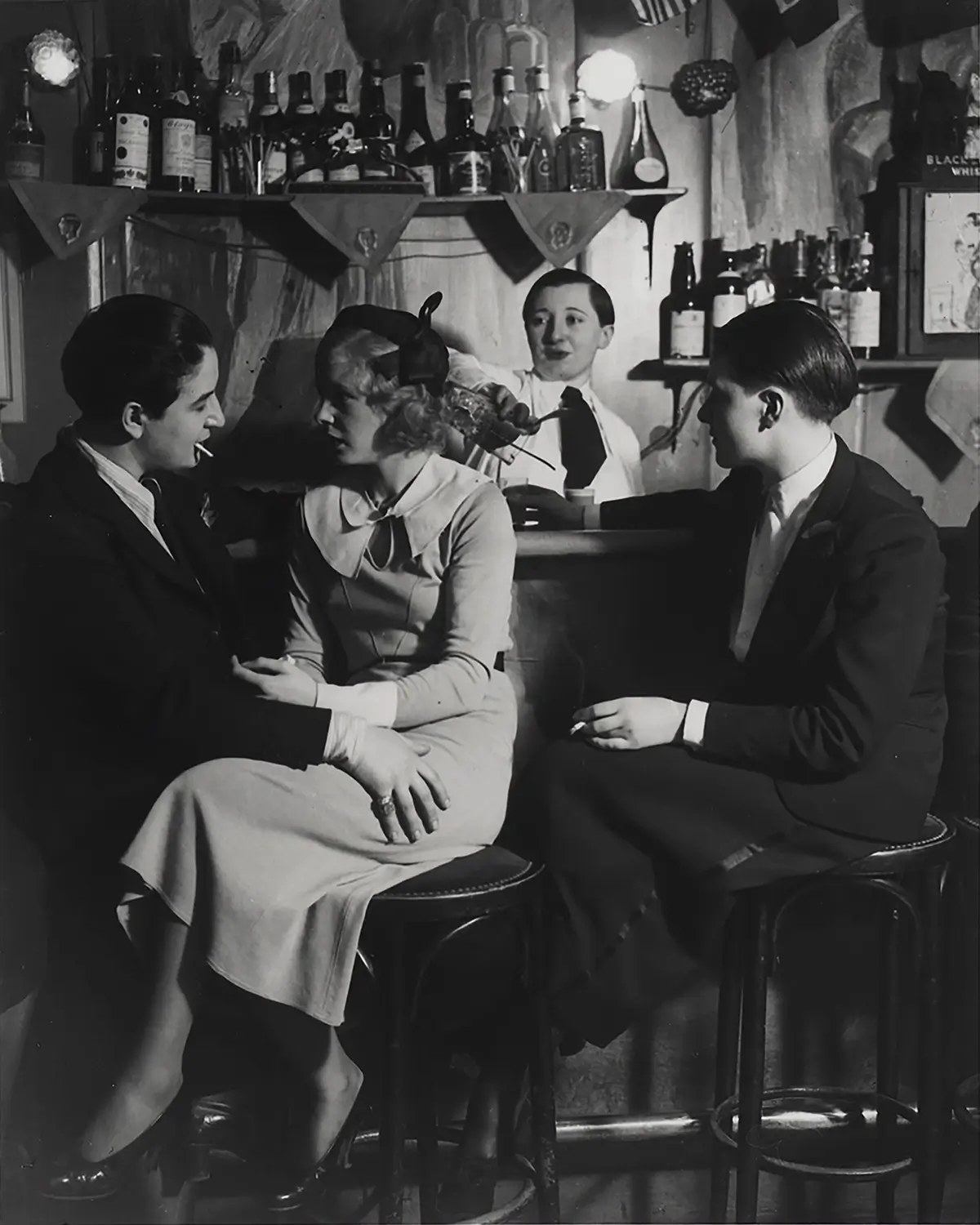
Le Monocle, the bar. On the left is Lulu de Montparnasse (Au Monocle, le bar. à gauche: Lulu de Montparnasse), c.1932 © Brassaï, Courtesy Howard Greenberg Gallery
Since its inception in New York 45 years ago,
Howard Greenberg Gallery has built a vast and ever-changing collection of some of the most important photographs in the medium. The Gallery's collection acts as a living history of photography, offering genres and styles from Pictorialism to Modernism, in addition to contemporary photography and images conceived for industry, advertising, and fashion.
Formerly a photographer and founder of The Center for Photography in Woodstock in 1977, Howard Greenberg has been one of a small group of gallerists, curators, and historians responsible for the creation and development of the modern market for photography. Howard Greenberg Gallery—founded in 1981 and originally known as Photofind—was the first to consistently exhibit photojournalism and street photography, now accepted as important components of photographic art. The Gallery is located in the Fuller Building at 41 East 57th Street, Suite 801, in New York City. The Gallery’s archive is located at 32 East 57th Street, directly across from the Fuller Building, to house, manage, and present its collection of over 40,000 prints.
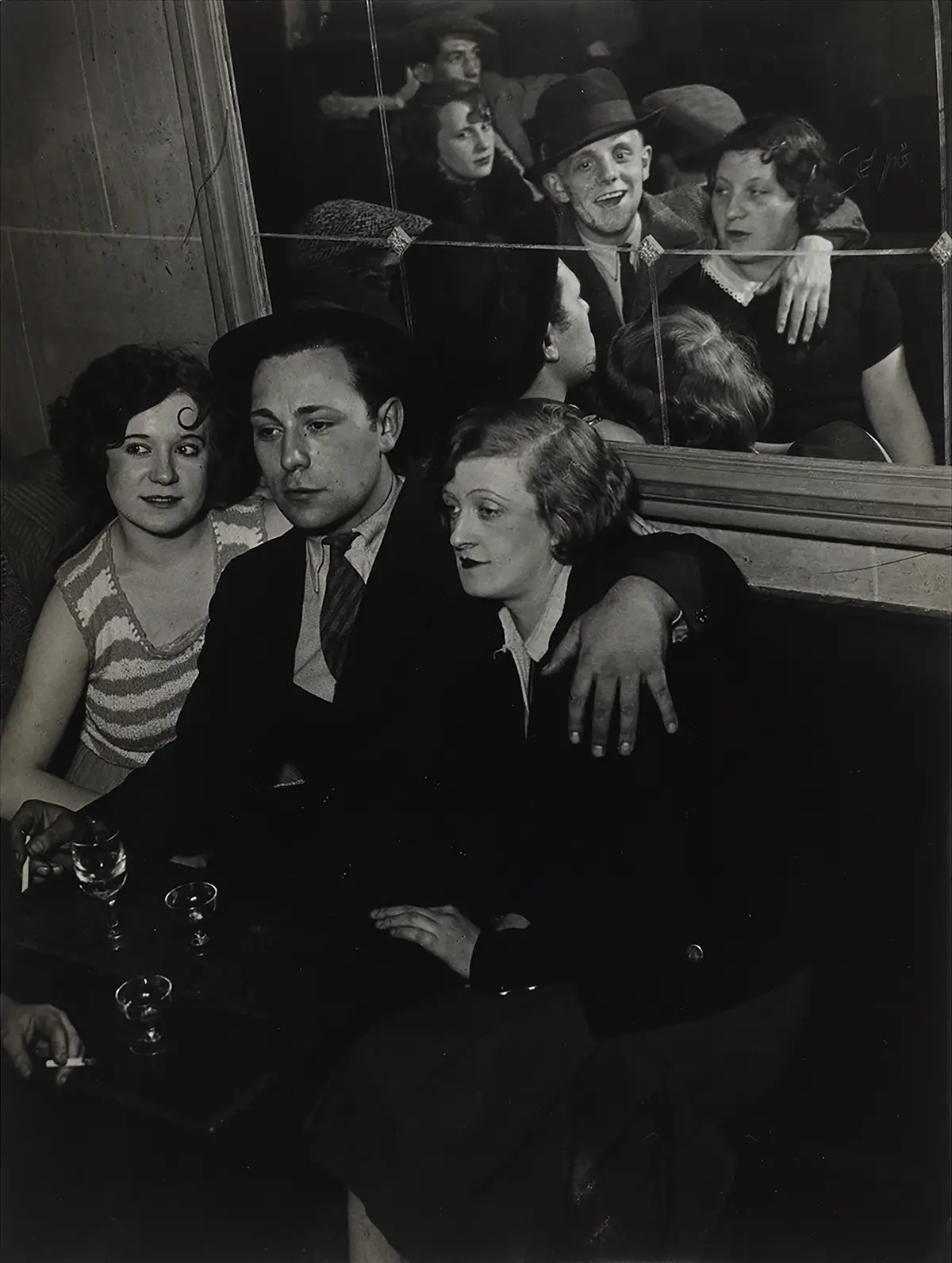
A happy group at the Quartre Saisons (Groupe joyeux au bal musette de Quatre-Saisons), c.1932 © Brassaï, Courtesy Howard Greenberg Gallery