All about photo.com: photo contests, photography exhibitions, galleries, photographers, books, schools and venues.
Win a Solo Exhibition in April 2026 + An Exclusive Interview!

Chicago: Mark Steinmetz

From February 07, 2025 to June 27, 2025
Share
Chicago: Mark Steinmetz
230 W. Superior, Fourth Floor
Chicago, IL 60654
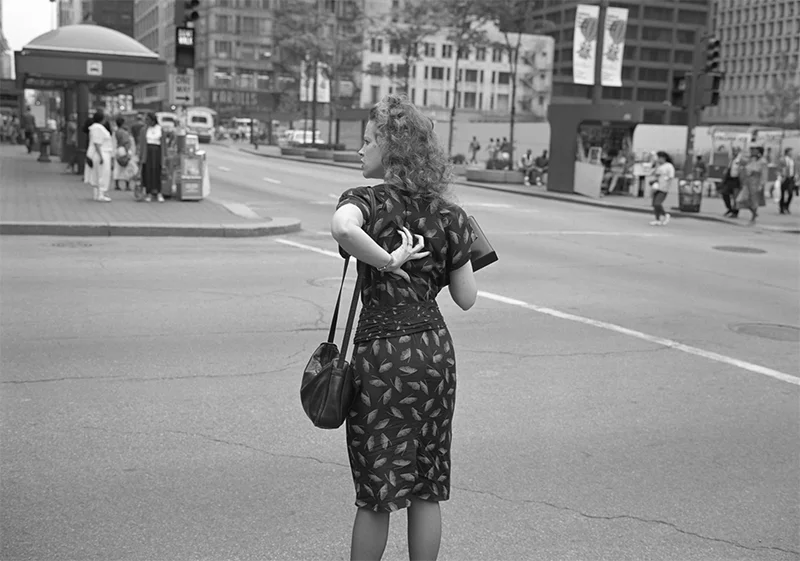
Stephen Daiter Gallery proudly presents Chicago: Mark Steinmetz, on view from February 7 to April 27, 2025. This marks Steinmetz’s first solo exhibition at the gallery, showcasing selections from his newly released book, Chicago.

Nearly thirty-five years ago, Steinmetz lived in a modest apartment in Wrigleyville, where he transformed his bedroom into a makeshift darkroom. It was during this time that he developed some of his most well-known series—The Players, Summertime, and Carnival—alongside a lesser-known body of work made in Chicago, now coming to light for the first time.

“The gestures of these men and the expressions on their faces are observed with delicate precision,” writes Peter Galassi in the book’s introduction (Chicago: Nazraeli Press, 2025). “Elsewhere, with the same gentle eye, Steinmetz is alert to people in the act of adjusting a sandal or a sneaker, reading, giving the thumbs-up, lifting weights, flying a kite, lighting a cigarette, focusing a long lens, leaning against a rickety bus stop, fishing, counting change, talking on a pay phone—and a woman scratching her back.”

Steinmetz’s photography is defined by its compassion, curiosity, and quiet respect. His images do not impose meaning but allow subjects to simply exist—capturing them with a sensitivity that is both rare and deeply human. His lens reveals Chicagoans in their element, embracing everyday moments that, in his hands, become profound reflections of the city’s unique rhythm and soul.

Image: © Mark Steinmetz
Our printed edition showcases the winners of AAP Magazine call of entries
All About Photo Magazine
Issue #54
Stay up-to-date  with call for entries, deadlines and other news about exhibitions, galleries, publications, & special events.

Exhibitions Closing Soon

Family Diary 2026
Atlanta Photography Group Gallery | Atlanta, GA
From February 03, 2026 to February 27, 2026
Family Diary 2026, presented by the Atlanta Photography Group, reconsiders the idea of the family album through a contemporary yet deeply rooted photographic lens. Rather than focusing on casual snapshots or overt confessions, the exhibition highlights bodies of work grounded in duration, attentiveness, and lived experience. These are projects shaped by time—photographs made slowly, deliberately, and with an understanding that meaning often emerges through repetition and return. At the heart of Family Diary 2026 is a belief long central to photographic tradition: that sustained observation can reveal truths unavailable to the fleeting image. Long-term portraiture, documentary series, and studies of domestic or communal spaces function as visual journals, even when executed with formal restraint or classical technique. Here, the diary is not a single moment, but an accumulation—of gestures, routines, absences, and subtle shifts that define everyday life. The exhibition embraces an expansive definition of family. Biological ties sit alongside chosen families, inherited communities, and relationships forged through place and shared experience. Family may be anchored in a household, a neighborhood, or a generational landscape shaped by memory and change. In this context, typologies and archival approaches take on new resonance, transforming structured methodologies into intimate records of connection and continuity. What unites the works on view is a quiet rigor. These photographs resist spectacle, instead honoring the modest scale of daily life and the emotional weight carried by familiar spaces. Kitchens, bedrooms, front yards, and streets become sites where personal histories intersect with broader social narratives. Over time, the camera becomes both witness and companion, attentive to what endures and what slips away. Juried by Jamie M. Allen, Stephen B. and Janice G. Ashley Curator and Head of the Department of Photography at the George Eastman Museum, Family Diary 2026 situates contemporary practice within a lineage of photographic storytelling. The exhibition affirms that the diary form remains vital—not as a record of isolated moments, but as a sustained act of looking that honors tradition while remaining open to evolving definitions of family and belonging. Image: © Debra Barnhart
Ilene Amster: Nocturne
Soho Photo Gallery | New York, NY
From February 04, 2026 to February 28, 2026
Ilene Amster: Nocturne, on view at Soho Photo Gallery from February 4 to 28, 2026, invites viewers into a realm where the night transforms the familiar into something uncanny and luminous. Through her Nocturne series, Amster examines the city and landscape under the quiet dominion of darkness, revealing how evening light reshapes perception, mood, and meaning. The series captures the delicate balance between serenity and unease. Streets, buildings, and natural spaces take on new textures and colors under nocturnal illumination, where shadows stretch and neon or artificial light punctuates the darkness. These images oscillate between the poetic and the unsettling, exploring the duality of night as both a refuge and a place where hidden tensions emerge. Amster’s work is attentive to detail and atmosphere. Each frame considers composition, light, and color, transforming the ordinary into a scene charged with narrative potential. The quiet corners of a city, the glow of a distant window, or the glimmer of reflections on water become portals to a world at once familiar and estranged. There is a sense of intimacy in her gaze, as if she is guiding the viewer through the city’s nocturnal secrets, allowing us to witness the hidden rhythms of night. At the heart of Nocturne is an exploration of contrasts: light and shadow, beauty and disquiet, dream and nightmare. Amster reminds us that the night is not merely an absence of daylight, but a space where new forms of perception, emotion, and imagination arise. The series encourages contemplation, inviting the viewer to linger in the tension between calm and unease, and to recognize the poetry inherent in darkness. Through Nocturne, Ilene Amster celebrates the transformative power of night, crafting a visual meditation on how the world subtly shifts when the sun sets, revealing both its beauty and its mysteries. Image: Nocturne 4. Courtesy of Soho Photo Gallery © Ilene Amster
Bruce Hooke: The Dark Forest
Soho Photo Gallery | New York, NY
From February 04, 2026 to February 28, 2026
Bruce Hooke: The Dark Forest, on view at Soho Photo Gallery from February 4 to 28, 2026, invites viewers to step into the shadowed, enigmatic spaces of the natural world. Hooke’s photographs capture forests in their most elemental states—fog-laden, rain-soaked, and stripped bare by winter—inviting both apprehension and wonder. These images draw on the ancient resonance of the forest as a site of myth and memory, a place where danger and refuge exist side by side. In The Dark Forest, Hooke explores the human encounter with wildness, illuminating how we navigate fear, power, and vulnerability within and beyond ourselves. Twisted branches, skeletal trunks, and misty expanses become metaphors for the challenges and mysteries inherent in life. At the same time, they offer moments of quiet reflection, spaces where beauty emerges from darkness, and the viewer can confront the unknown while discovering solace. Hooke’s background as a sculptor and performance artist informs the tactile and spatial qualities of his photography. His lens captures texture, depth, and atmosphere with a sculptor’s eye for form, and a performative sense of presence. The images resonate with themes of gender, power, and vulnerability, revealing the forest as a mirror for human experience: wild yet ordered, threatening yet protective, chaotic yet meditative. Across the series, Hooke emphasizes our evolving relationship with nature, reminding us that forests are not merely landscapes but living, breathing spaces that reflect our fears, histories, and desires. The interplay of light, shadow, and fog imbues each image with narrative tension, as if the woods themselves are telling stories of survival, transformation, and quiet revelation. The Dark Forest is both a visual meditation and a psychological exploration, where the forest’s darkness is not merely a threat but an invitation. Hooke’s work encourages contemplation of the delicate balance between danger and beauty, solitude and connection, and the ways in which we find ourselves within the untamed rhythms of the natural world. Image: November, Courtesy of Soho Photo Gallery © Bruce Hooke
Martin Frank: Gradient
Soho Photo Gallery | New York, NY
From February 04, 2026 to February 28, 2026
Martin Frank: Gradient, on view at Soho Photo Gallery from February 4 to 28, 2026, presents a meditative exploration of form, tone, and transformation. Drawing inspiration from both the literal and metaphorical meanings of "gradient," Frank’s series traces a journey from representation to abstraction, inviting viewers to consider how objects, surfaces, and light evolve over space and perception. At the start, the series presents images of a distressed steam engine in Paterson, New Jersey, captured with precise attention to its industrial geometry. Riveted lines, perpendicular beams, and stamped letters dominate the frame, grounding the work in tangible structure. As the eye moves across the series, these architectural details gradually dissolve into textured surfaces, rusted planes, and fractured signage. Splattered paint and natural decay interrupt the mechanical order, guiding the viewer toward an emergent surreal landscape where the boundary between the literal and the imagined blurs. The gradient also manifests in Frank’s meticulous handling of tonal range. Each hand-coated platinum print moves from deep blacks through subtle grays to luminous whites, mirroring the visual shift from concrete machinery to abstracted surfaces. This careful modulation of light and shadow heightens the sense of progression, emphasizing both the physical and emotional rhythms embedded in industrial decay. Frank’s practice combines two decades of large-format analog photography with a fascination for alternative processes, inspired by the works of Edward Steichen. His approach foregrounds patience, craft, and the contemplative possibilities of slow observation. The resulting prints reward extended viewing, revealing detail, texture, and nuance with each encounter. In Gradient, Martin Frank offers more than industrial portraiture: he creates a visual meditation on transformation, entropy, and perception. The series encourages viewers to trace subtle shifts in form, texture, and tone, discovering the poetry hidden in machinery, rust, and light. These images affirm photography’s power to turn everyday structures into spaces of reflection and wonder. Image: Gradient 4, Courtesy of Soho Photo Gallery © Martin Frank
Elliott Schildkrout: On the Water
Soho Photo Gallery | New York, NY
From February 04, 2026 to February 28, 2026
Elliott Schildkrout: On the Water, on view at Soho Photo Gallery from February 4 to 28, 2026, offers a meditative exploration of stillness, movement, and perception. Drawn from years spent drifting across shallow turquoise flats, these images originate in moments of quiet observation rather than pursuit. As boats glide almost imperceptibly across the water, the act of looking becomes unhurried, allowing the surface of the sea to unfold as a place of calm, repetition, and subtle transformation. The photographs emerge from a process rooted in duration. Schildkrout works slowly, capturing the water over time and merging multiple exposures to reflect the way experience accumulates rather than freezes. The result is imagery that hovers between abstraction and recognition, where horizons dissolve and reflections blur into soft fields of color. Sky and sea merge into a single breathing surface, evoking the sensation of drifting without destination. These works invite viewers to let go of orientation and instead inhabit a rhythm shaped by light, motion, and silence. While the turquoise flats may appear constant at first glance, Schildkrout reveals them as endlessly variable. Subtle shifts in tone, current, and reflection become the subject itself. The photographs resist spectacle, favoring nuance and restraint. This attentiveness recalls a long photographic tradition concerned with inner states as much as external form, where landscape serves as a mirror for contemplation and emotional quiet. Schildkrout’s practice is informed by decades of engagement with photography, shaped early on by rigorous formal training and sustained alongside a life devoted to medicine. That dual commitment—to observation and care—resonates throughout this body of work. The images feel considered and generous, offering space rather than instruction, and encouraging viewers to slow their own pace of looking. In On the Water, photography becomes an act of immersion rather than documentation. These works ask little more than attention and breath. As the layered images gently unfold, they create a sense of timelessness, a reminder that beauty often reveals itself not through drama, but through quiet presence and the willingness to drift. Image: On the Water 2, Courtesy of Soho Photo Gallery © Elliott Schildkrout
KP Madhaven: Interior Passages
Soho Photo Gallery | New York, NY
From February 04, 2026 to February 28, 2026
KP Madhaven: Interior Passages, on view at Soho Photo Gallery from February 4 to 28, 2026, presents a contemplative body of work in which landscape becomes an interior map. Across vast terrains shaped by fire, ice, water, and night, Madhaven uses light and shadow to chart emotional and spiritual movement. These photographs are less about place as destination than about passage—moments where the external world reflects inward transformation. The series unfolds through six symbolic thresholds, each image functioning as an archetype rather than a document. It begins in upheaval, where elemental forces collide and the land appears charged with tension and mythic energy. Storms sweep across salt flats, skies fracture with light, and the ground itself seems to breathe. From this volatility, the work gradually ascends toward moments of clarity and suspension, where chaos gives way to awareness and the act of looking slows into stillness. As the journey progresses, Madhaven lingers in liminal spaces—those pauses between states where meaning is not fixed but forming. Waterfalls become celestial markers, moonlight serves as guide, and geological forms stand as silent witnesses to time beyond human scale. These images resist immediacy, asking viewers to remain with uncertainty and to recognize transformation as a process rather than an event. Motion is implied, yet everything feels held, as if the land itself is listening. Night plays a crucial role in the final passages of the series. Long roads, distant lights, and empty structures beneath expansive skies suggest solitude not as isolation, but as arrival. Human presence is reduced to trace and echo, allowing space for acceptance and integration. The photographs feel cinematic yet restrained, drawing power from patience and careful attention rather than spectacle. Through Interior Passages, Madhaven invites viewers to inhabit these thresholds personally. The work opens a space where atmosphere replaces narrative and scale encourages introspection. Standing before these images, one is not asked to interpret, but to pause—to linger where darkness softens into light, and where the landscape quietly mirrors the journeys we carry within ourselves. Image: Salted Fire Ode to Mangala, Courtesy of Soho Photo Gallery © KP Madhaven
Michael Schenker: Strangers in the Park 2
Soho Photo Gallery | New York, NY
From February 04, 2026 to February 28, 2026
Strangers in the Park 2, on view at Soho Photo Gallery from February 4 to 28, 2026, continues an evolving series of large-format black-and-white portraits begun in the summer of 2024. Predominantly photographed in Washington Square Park and across locations in the UK, the project centers on encounters with people previously unknown to the artist—moments of connection shaped by chance, curiosity, and time. Using a 4x5 camera, the work embraces slowness as both method and meaning. Large format portraiture demands attention, patience, and presence. Each photograph begins not with an image, but with a conversation—an exchange that unfolds before the shutter is released. In these deliberate encounters, the act of photographing becomes a way of listening. The resulting portraits aim to reflect something essential about each sitter, but equally important is the process itself: a quiet, humanistic practice rooted in respect, empathy, and mutual recognition. The park functions as a democratic stage, a shared public space where lives briefly intersect. Here, strangers agree to pause, to be seen, and to participate in an unfamiliar ritual. The camera’s imposing physicality slows the pace, encouraging sitters to settle into themselves. Expressions are unguarded yet dignified, shaped not by performance but by presence. The portraits resist spectacle, favoring subtlety, texture, and psychological depth over easy narratives. The New York presentation carries a particular resonance. The opening offers the rare and meaningful opportunity to invite many of the photographed individuals back into the frame—this time as viewers, encountering their own likenesses on the gallery walls. This gesture completes a circle, transforming the exhibition into a shared experience between artist, subject, and audience. Conceived as an ongoing project, Strangers in the Park 2 will continue to expand into other cities around the world, mapping human diversity through sustained observation. With plans to eventually bring the work together as a book, the series stands as a quiet affirmation of photography’s enduring ability to foster connection, understanding, and appreciation across difference. Image: Carly, courtesy of Soho Photo Gallery © Michael Schenker
Cybele Lyle: The Treasure of the Sierra Madre
Et al. | San Francisco, CA
From January 16, 2026 to February 28, 2026
Cybele Lyle: The Treasure of the Sierra Madre unfolds as a meditation on place, memory, and the slow work of reconciliation with one’s own past. Presented from January 16 to February 28, 2026, the exhibition takes its title from the 1948 film that once shaped the artist’s expectations and disappointments alike. Lyle revisits this cinematic reference not as homage, but as a lens through which childhood longing, misinterpretation, and eventual understanding come into focus. As a child relocated to Sierra Madre, California, Lyle experienced the town as remote and confining, far removed from the ease of her earlier life. The promise embedded in the film’s title suggested a hidden value, a sense of significance that might render the unfamiliar lovable. Yet the discovery that the story’s Sierra Madre belonged to Mexico, and not her own hillside town, created an early fracture between imagination and reality. This sense of dissonance—between what is named and what is lived—echoes throughout the exhibition. Now based in Los Angeles, with physical and emotional distance from her childhood home, Lyle returns to these landscapes with renewed curiosity. The exhibition brings together three interconnected bodies of work that explore identity through fragmentation and reassembly. In the Boy Mounds self-portrait series, collaged images of iconic male figures are embedded into local terrains from the artist’s life, allowing the body to re-enter her practice as a vessel for memory, projection, and permission. These figures appear both present and unresolved, mirroring the complexities of self-formation. The hanging textile works and floor collages extend this exploration through material and spatial shifts. Drawn from photographs, colors, and patterns associated with her childhood home and garden, these pieces break familiar imagery into abstracted forms. Textiles suspend fragments in midair, while ground-level collages anchor them back to the earth, suggesting a dialogue between instability and belonging. Together, the works in The Treasure of the Sierra Madre hold space for contradiction. They acknowledge disappointment without dismissing affection, and propose the landscape as an active participant in shaping identity. Through re-framing and fragmentation, Lyle invites viewers to consider how home is not found intact, but continuously rebuilt over time. Image: © Cybele Lyle
Arthur Tress | The Ramble
Clamp | New York, NY
From January 08, 2026 to February 28, 2026
Arthur Tress | The Ramble brings to light a long-hidden chapter of New York City’s cultural and social history through a remarkable body of photographs made in Central Park at the end of the 1960s. Created during a period of profound social tension and quiet transformation, the series documents the Ramble as both a physical location and a symbolic refuge. Overgrown, neglected, and partially concealed from the city surrounding it, this wooded enclave became a meeting ground where desire, risk, and anonymity coexisted within the shadows of urban life. Working with a medium-format camera, Arthur Tress approached the Ramble not merely as an observer, but as a visual poet. His images move fluidly between candid distance and deliberate staging, capturing fleeting gestures alongside carefully constructed scenes. Men appear partially hidden by foliage, light, or movement, their bodies suspended between exposure and concealment. This oscillation reflects the realities of queer life before liberation, where intimacy unfolded in secrecy and the landscape itself became an active participant in the encounter. The photographs reveal Tress’s deep engagement with both documentary traditions and surrealist aesthetics. Informed by his background in ethnographic work and his interest in psychological states, he treated the Ramble as a distinct social ecosystem. Desire, vulnerability, and imagination are rendered with equal weight, producing images that feel at once tender and unsettling. References to art history subtly surface, yet the work remains firmly rooted in lived experience rather than allegory alone. Long withheld from public view due to their subject matter, these photographs now emerge as a crucial visual record of queer existence in a city on the brink of change. Seen today, they resonate as both historical testimony and timeless meditation on longing and belonging. The Ramble affirms Arthur Tress’s enduring ability to merge social observation with imaginative depth, offering images that continue to challenge, move, and quietly illuminate the complexities of human desire. Image: Biding Time The Ramble, Central Park, 1969/2025. Gelatin silver print. © Arthur Tress
Marvin Lazarus: Painters & Sculptors of the 1950s–1960s
Deborah Bell Photographs | New York, NY
From January 15, 2026 to February 28, 2026
Marvin Lazarus: Painters & Sculptors of the 1950s–1960s, on view at Deborah Bell Photographs from January 15 to February 28, presents a compelling portrait of the postwar art world through the discerning eye of Marvin Lazarus. Working quietly during a decade of intense artistic transformation, Lazarus created an extraordinary photographic record of painters and sculptors whose work reshaped modern art. His images capture a moment when abstraction, experimentation, and personal vision converged to redefine cultural expression in the United States and beyond. Lazarus’s portraits are notable for their restraint and intimacy. Rather than staging dramatic scenes, he photographed artists in their studios, homes, or familiar environments, allowing personality and presence to emerge naturally. The resulting images convey concentration, vulnerability, and resolve, offering a human counterpoint to the monumental reputations many of these figures would later acquire. Painters and sculptors appear not as distant icons, but as working individuals deeply engaged with their craft. Spanning the late 1950s and 1960s, the series reflects a period marked by bold aesthetic shifts and cultural confidence. Abstract Expressionism, postwar figuration, and emerging sculptural practices all find representation through Lazarus’s lens. His photographs suggest the diversity of approaches that coexisted at the time, from explosive gestural painting to quieter, more contemplative forms. Together, they form a visual map of an era defined by both experimentation and conviction. What distinguishes Lazarus’s work is his sensitivity to the creative atmosphere surrounding his subjects. The portraits are less about fame than about process, focus, and artistic identity. Subtle details—a gesture, a posture, a glance—hint at the inner lives of artists navigating a rapidly changing art world. In this way, the photographs function as both historical documents and deeply personal observations. Presented today, Painters & Sculptors of the 1950s–1960s invites viewers to reconsider a foundational period in modern art through a body of work that values quiet observation over spectacle. At Deborah Bell Photographs, Lazarus’s images offer a thoughtful and enduring tribute to the artists who shaped the visual language of the twentieth century. Images: Marvin Lazarus. Marcel Duchamp, 1955, Photo_MDPortraits2_no.095 © Marvin Lazarus, courtesy Association Marcel Duchamp
Bill Armstrong | All a Blur
Clamp | New York, NY
From January 08, 2026 to February 28, 2026
CLAMP is pleased to present Bill Armstrong | All a Blur, an exhibition that brings together a compelling selection of works from one of contemporary photography’s most singular voices. Known for his meditative approach to abstraction, Armstrong has spent decades exploring the emotional and perceptual power of the photographic image, challenging the conventions of clarity, focus, and representation. At the heart of the exhibition is Armstrong’s celebrated Infinity series, a body of work in which imagery dissolves into fields of color, light, and suggestion. Drawing from a vast archive of source images—ranging from historical photographs to personal references—Armstrong rephotographs, layers, and defocuses his subjects until they hover between recognition and disappearance. The resulting works invite prolonged looking, encouraging viewers to engage with photography not as documentation, but as an experiential and emotional medium. Rather than offering fixed narratives, All a Blur embraces ambiguity. Faces, figures, and landscapes emerge only partially, evoking memory, desire, and the fragile nature of perception itself. Armstrong’s practice recalls painterly traditions while remaining deeply rooted in photographic process, bridging the gap between analog craft and contemporary conceptual inquiry. His images resonate with the quiet intensity of works that resist instant consumption, rewarding patience and introspection. Bill Armstrong’s work has been exhibited internationally and is held in numerous public and private collections. Alongside his artistic practice, he has played an influential role as an educator, shaping generations of photographers through his teaching. All a Blur offers a rare opportunity to experience the depth and coherence of his vision within the intimate gallery setting of CLAMP, reaffirming the enduring relevance of photography as a space for contemplation, uncertainty, and visual poetry. Image: Portrait #302 c. 1999-2000. Archival pigment print. © Bill Armstrong
Shaunté Gates: The Night Before: Poppies & Parachutes
Marc Straus | New York, NY
From January 09, 2026 to February 28, 2026
Shaunté Gates: The Night Before: Poppies & Parachutes, on view from January 9 to February 28, 2026, marks the artist’s first solo exhibition at Marc Straus. This ambitious presentation unfolds like a cinematic sequence, where each image feels suspended within a larger, unseen narrative. Gates draws viewers into a world shaped by memory, aspiration, and motion, inviting them to linger in the charged moment just before an event, a victory, or a transformation. Gates’s visual language is deeply rooted in storytelling, informed by early exposure to cinema through his uncle’s vast home archive of recorded films. That formative experience instilled a sensitivity to how sweeping landscapes can coexist with intimate character studies. In this exhibition, his compositions echo that balance, presenting expansive, almost mythic settings that frame personal acts of resolve, tenderness, and ambition. The works read as carefully staged scenes, where every material element—wood, canvas, leather, photographic fragments—functions like a prop with symbolic weight. While Gates often favors restrained, grayscale palettes, this body of work introduces striking bursts of red that punctuate glaciers, night skies, and open waters. These chromatic interruptions heighten emotional tension, suggesting urgency, risk, and desire. The figures that populate these scenes are always in motion, propelled forward with purpose. They are not fleeing adversity, but advancing toward possibility, embodying competition, perseverance, and self-determination. The heroism Gates depicts is quiet yet resolute, grounded in collective memory and cultural inheritance. In works such as Cooley High, Gates reimagines iconic figures from African American cinema, placing them within fantastical environments populated by chariots and parachutes. These juxtapositions elevate everyday tenderness into epic scale, blending nostalgia with speculative grandeur. The Night Before: Poppies & Parachutes ultimately presents a world that resists full explanation, yet resonates deeply. Through layered imagery and cinematic pacing, Gates offers a vision of Black life defined by movement, imagination, and an unyielding drive toward becoming. Images: Shaunté Gates, Cooley High, 2025, acrylic, photo, pulled paper, colored pencil, pastel, collage on wood © Shaunté Gates
Advertisement
AAP Magazine #55 Wmen
Win a Solo Exhibition in April
AAP Magazine #55 Wmen
Call for Entries
AAP Magazine #55 Women
Publish your work in our printed magazine and win $1,000 cash prizes

Related Articles

FotoFocus Announces Big Tent Opening of FotoFocus Center
This summer, FotoFocus will expand on their vision and embark on a new chapter with the launch of Big Tent, the inaugural exhibition at the new FotoFocus Center, a 14,700 square foot, purpose-built structure to house photographic exhibitions and year-round programs. Bringing together work by over fifty artists (including An-My Lê, Catherine Opie, Dawoud Bey, Gordon Parks, Justine Kurland, Mitch Epstein, RaMell Ross, Sky Hopinka, Tina Barney and many more), the exhibition (on view May 29-August 22) reflects upon the current state of American democracy while also considering the efficacy of photography to be a catalyst for meaningful change.
Elliott Erwitt: Gold Standard
Weinstein Hammons Gallery is pleased to present Elliott Erwitt: Gold Standard, the third exhibition of photographs by Elliott Erwitt (1928–2023), one of the most influential photographers of the twentieth and twenty-first centuries.
 The Queering of Photography by Asa Johannesson
Stills are delighted to announce their spring exhibition: The Queering of Photography by Åsa Johannesson; the artist’s first solo exhibition in Scotland. The Queering of Photography takes place from 1 May – 27 June 2026, Preview: Thursday 30 April, 6–8pm. Åsa Johannesson is an artist working across photography and writing. Over the past two decades she has explored the possibilities of queer visual vocabulary within photographic portraiture – a practice that intertwines queer documentary approaches with performative formalist aesthetics.
Eko: Japan In Two Visual Narratives
From 5 March 2026, The National Maritime Museum in Amsterdam presents the exhibition Ekō – Japan in two visual narratives. Curated as artists conversing across time, the exhibit juxtaposes early photographs of Japan from the museum's own collection, including those by Felice Beato, with the contemporary work it inspired as captured by photographer and visual artist Anaïs López.
Photography and the Black Arts Movement at the Getty
From February 24 to June 14, 2026, the J. Paul Getty Museum presents Photography and the Black Arts Movement, 1955–1985, a landmark exhibition exploring how photographic practices helped shape one of the most influential cultural movements of the twentieth century. Organized by the National Gallery of Art, the exhibition reveals how artists across the African diaspora used images not simply to document history, but to transform it.
MoCP at Fifty: Collecting Through the Decades
The Museum of Contemporary Photography at Columbia College Chicago (MoCP) proudly announces its 2026 exhibition, MoCP at Fifty: Collecting Through the Decades, on view from January 22 through May 16, 2026.
Brassaï’s Secret Paris
In 1933, captivated by the nocturnal rhythms and hidden corners of Paris, the Hungarian-born photographer Brassaï published Paris by Night, a landmark photobook that forever transformed how the city of lights was imagined. Through his lens, Brassaï illuminated the city’s shadowed streets, smoky cafés, solitary lovers, and night-time wanderers, creating images that were simultaneously intimate and cinematic. Paris by Night did more than document the city—it defined a modern vision of Paris after dark, capturing a blend of elegance, vulnerability, and intrigue that had never been seen in photography before
Photo Vogue Festival: Women by Women
The PhotoVogue Festival, the first conscious fashion photography festival to bridge ethics and aesthetics, returns to Milan for its tenth anniversary in 2026. From March 1 to 4, during Milan Fashion Week, the festival will take place at the Biblioteca Nazionale Braidense, one of Italy’s most historic and prestigious libraries—a fitting venue for a milestone edition that underscores the festival’s commitment to thoughtful, socially engaged photography.
Ruth Orkin: Women on the Move
Few photographers shaped the visual language of the mid-20th century with the clarity, empathy, and narrative force of Ruth Orkin. Long recognized as a key figure in the rise of American photojournalism, Orkin forged a body of work that placed women—ordinary and extraordinary—at the center of the modern world. Ruth Orkin: Women on the Move, on view at the National Museum of Women in the Arts from December 12, 2025, through March 29, 2026, revisits this legacy through 21 iconic and intimate photographs made between the 1950s and 1970s.
Call for Entries
AAP Magazine #55 Women
Publish your work in our printed magazine and win $1,000 cash prizes