All about photo.com: photo contests, photography exhibitions, galleries, photographers, books, schools and venues.
Final Call to enter All About Photo Awards: $5,000 Cash Prizes - Juror Steve McCurry

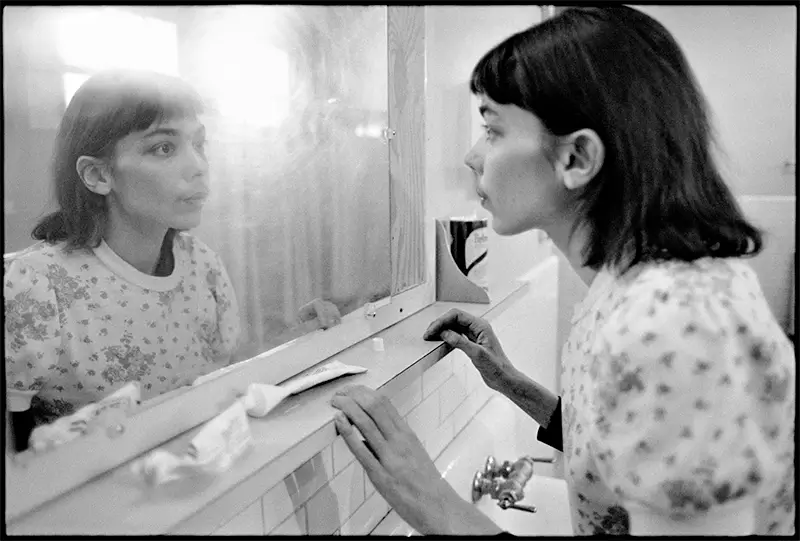
Mary Ellen Mark: Ward 81

From January 18, 2025 to May 04, 2025
Share
Mary Ellen Mark: Ward 81
25 Dederick Street
Kingston, NY 12401
In 1976, photographer MEM embarked on an arduous, self-assigned project with sociologist Dr. Karen Folger Jacobs to document the lives of women living in the high-security, all-female wing of the Oregon State Hospital in the city of Salem. The year before, Mark had photographed there on the set of the Milǒs Forman’s film One Flew Over the Cuckoo’s Nest, and she had met several women who lived on Ward 81 of the hospital. Hoping to better understand and represent their life experiences, Mark and Jacobs arranged to spend a month living alongside the women in Ward 81. The duration of their stay, and their extraordinary access to patients and staff, enabled the collaborators to produce a nuanced and compelling record of female psychiatric treatment in the United States during the mid-1970s. In 1978, Mark and Jacobs published the seminal book Ward 81, which revealed the often-porous line between sanity and mental illness for women relegated to the margins of society. In the words of Jacobs, “They are the women we might have been or one day become.”

Mary Ellen Mark: Ward 81 greatly amplifies that earlier study. Most exciting are the newly discovered audio narratives that the women recorded with Jacobs, which have been integrated into a short film, Moonlight Heaven Black, made for the exhibition by Martin Bell, Mark’s husband. As well, the exhibition brings together never-before-seen prints, contact sheets, and rare archival materials.

The original exhibition was organized by curators Gaëlle Morel and Kaitlin Booher for the Image Centre, Toronto, in collaboration with the Mary Ellen Mark Foundation, New York. It is accompanied by the publication Ward 81: Voices by Mary Ellen Mark and Karen Folger Jacobs, edited by Martin Bell, Julia Bezgin, and Meredith Lue (Steidl, 2023).
Our printed edition showcases the winners of AAP Magazine call of entries
All About Photo Magazine
Issue #53
Stay up-to-date  with call for entries, deadlines and other news about exhibitions, galleries, publications, & special events.

Exhibitions Closing Soon

Teri Figliuzzi: Gathering
Soho Photo Gallery | New York, NY
From December 31, 2025 to January 25, 2026
Teri Figliuzzi: Gathering unfolds as a quiet, tactile meditation on the intimate bond between human touch and the natural world. On view from December 31, 2025 to January 25, 2026, the exhibition reflects Figliuzzi’s lifelong impulse to collect, observe, and preserve organic forms encountered in fields, gardens, forests, and along the edges of water. These landscapes are not backdrops but collaborators—places of refuge that offer stillness, color, and a sense of continuity beyond the rhythms of daily life. At the heart of this body of work is the act of gathering itself. Figliuzzi works directly with fragments of living matter—petals, leaves, seeds, stems—assembling them by hand into delicate phytograms. This slow, intentional process allows each element to retain its individuality while becoming part of a larger composition. The resulting images feel both carefully composed and quietly instinctive, balancing structure with the organic unpredictability of nature. Themes of growth, decay, and renewal move gently through the work. Figliuzzi does not shy away from fragility; instead, she embraces it as an essential stage of life. Wilted edges, translucent veins, and subtle discolorations become markers of time rather than imperfections. In this way, the work honors nature’s cycles, reminding viewers that resilience is inseparable from vulnerability, and that rebirth often follows moments of loss or stillness. The process of preserving these botanical encounters becomes an act of memory. Each composition holds the trace of a specific place and moment, transforming fleeting experiences into lasting visual records. There is a quiet reverence in this preservation, a recognition of nature’s capacity to heal, steady, and restore. The images invite close looking, rewarding patience with layers of texture and nuance. Gathering ultimately speaks to connection—between hand and earth, observation and presence, transience and continuity. Figliuzzi’s work offers a gentle reminder that beauty often resides in what is overlooked, and that attentiveness to the natural world can foster both reflection and renewal in our own lives. Image: Duet © Teri Figliuzzi
Richard Gardner: Animas-Animus
Soho Photo Gallery | New York, NY
From December 31, 2025 to January 25, 2026
Richard Gardner: Animas-Animus presents a contemplative body of work that draws viewers into the quiet, often unseen terrain of the psyche. On view from December 31, 2025 through January 25, 2026, the exhibition unfolds as a visual meditation on Carl Jung’s concept of the Anima and Animus—the inner forces that shape how individuals relate to themselves and the world. Gardner approaches these ideas not through grand symbolism, but by carefully arranging familiar, everyday objects, inviting reflection through recognition rather than spectacle. In this series, ordinary materials are transformed into psychological stand-ins, each composition functioning as a portrait of inner life. The feminine principle of Eros, associated with connection, intuition, and feeling, appears in subtle tensions with the masculine principle of Logos, linked to order, logic, and structure. Rather than presenting these forces as opposites locked in conflict, Gardner treats them as interdependent energies, constantly negotiating balance. The resulting images carry a quiet intensity, encouraging slow looking and introspection. Light and shadow play a crucial role throughout the work, echoing Jung’s belief that self-understanding requires acknowledgment of both conscious and unconscious aspects of the personality. Some images suggest harmony and integration, while others expose friction, imbalance, or unresolved tension. This oscillation mirrors the ongoing psychological process of individuation, where wholeness is not achieved through dominance of one side, but through acceptance of complexity. Gardner’s use of still-life traditions grounds the work in a long photographic and artistic lineage, yet his conceptual framework situates the series firmly in contemporary discourse around identity and inner life. By stripping away narrative excess, he leaves space for viewers to project their own experiences, memories, and emotional responses onto the images. Animas-Animus ultimately invites a personal reckoning. Through quiet compositions and symbolic restraint, the exhibition asks viewers to consider how opposing impulses coexist within them, and how recognizing both shadow and light can serve as a bridge toward a more integrated sense of self. Image: © Richard Gardner
Casa Susanna
The Metropolitan Museum of Art | New York, NY
From July 21, 2025 to January 25, 2026
Casa Susanna brings together a remarkable collection of photographs and printed materials created by and for a discreet community of cross-dressers who gathered in New York City and the Catskill Mountains during the 1960s. At a time when gender expression was heavily policed and misunderstood, two small resorts operated by Susanna Valenti and her wife, Marie Tornell, offered a rare refuge. Within these walls, guests could safely dress en femme, share stories, and experience moments of acceptance. The camera played a central role in these encounters, serving as both a tool of affirmation and a medium of self-discovery. These photographs—ranging from casual snapshots to carefully staged portraits—were exchanged at gatherings or sent through the mail, preserving a private world of identity and friendship that defied social norms. Rediscovered at a Manhattan flea market in 2004, the images became known as the Casa Susanna photographs, now recognized as a landmark record of pre-Stonewall queer history. The exhibition also includes rare issues of *Transvestia*, an underground magazine that circulated among cross-dressers during the same era. Combining fiction, poetry, personal essays, and practical advice on makeup and clothing, the publication helped build a sense of belonging for individuals who otherwise lived in secrecy. Together, the photographs and printed materials illuminate a network that was both intimate and quietly revolutionary. Casa Susanna reveals the tension between conformity and liberation that shaped the community’s expression of femininity. Many of the participants portrayed themselves as respectable housewives or elegant ladies, embodying ideals of middle-class womanhood that reflected both aspiration and constraint. The exhibition invites visitors to consider these complex acts of self-fashioning within the broader history of gender and identity, tracing a poignant connection between the hidden lives of the past and the ongoing struggles for visibility and acceptance today. Image: Andrea Susan (American, 1939–2015). Photo shoot with Lili, Wilma, and friends, Casa Susanna, Hunter, NY, 1964–1968. Chromogenic print, 3 5/16 x 4 1/4 in. (8.4 x 10.8 cm). Art Gallery of Ontario, Purchase, with funds generously donated by Martha LA McCain, 2015
Hayes Prize 2025: Tommy Kha, Other Things Uttered
Addison Gallery of American Art | Andover, MA
From September 02, 2025 to January 25, 2026
The Addison Gallery of American Art presents Other Things Uttered, the first museum solo exhibition by Tommy Kha, recipient of the Bartlett H. Hayes JR. Prize. Through his distinctive approach to photography, Kha explores how identity, belonging, and difference are shaped and perceived. His work questions the conventions of self-portraiture, responding to the long history of exclusion and invisibility within the photographic medium. Describing photography as a form of language, Kha constructs his own visual grammar—one that speaks to the complexities of representation, translation, and selfhood. The exhibition’s title pays homage to Theresa Hak Kyung Cha’s 1978 performance Other Things Seen, Other Things Heard, acknowledging a shared artistic engagement with language, memory, and fragmented identity. For Kha, the act of photographing becomes a means of navigating his multiple inheritances and the spaces in between. Born in Memphis’s Whitehaven neighborhood to a family whose journey spanned China, Vietnam, and the American South, Kha brings together these cultural threads in a body of work that is both personal and political. His images reveal the tension between visibility and invisibility, intimacy and distance, humor and melancholy. Kha’s photographs frequently feature masks, cutouts, or surrogates of his own face and body, creating tableaux that blur the line between self and other. These visual doubles inhabit domestic and public spaces, evoking the feeling of being present yet detached—a reflection on what it means to see and be seen. The effect is at once uncanny and tender, a meditation on the porous boundaries of identity. Awarded every two years, the Bartlett H. Hayes Jr. Prize continues the Addison’s legacy of supporting contemporary artists. In honoring Tommy Kha, the museum extends its tradition of fostering new voices who challenge, reinterpret, and expand the language of American art. Image: Tommy Kha, Constellations XVIII, Whitehaven, Memphis, 2019. Archival pigment print. © Tommy Kha
Ordinary Miracles: Robert Glenn Ketchum’s Photographs of Cuyahoga Valley National Park
Akron Art Museum | Akron, OH
From August 09, 2025 to January 25, 2026
On view at the Fred and Laura Ruth Bidwell Gallery from August 9, 2025, through January 25, 2026, this exhibition honors both the history and the evolving landscape of Cuyahoga Valley National Park. For more than 12,000 years, humans have inhabited the lands that now form the park, leaving traces of shifting relationships between people, land, and time. Today, the park’s boundaries encompass not only preserved wilderness but also small towns, farms, and industries that reflect the complexity of shared stewardship. Through large-format color photographs captured across changing seasons, Robert Glenn Ketchum reveals this intersection of natural beauty and human intervention—where gas wells punctuate farmlands, graffiti marks the remains of industry, and wild growth reclaims what was once shaped by labor. Ketchum’s work has long stood at the crossroads of art and environmental activism. Using his camera as both instrument and conscience, he documents the realities of landscape management and the moral dimensions of preservation. In his book Overlooked in America: The Success and Failure of Federal Land Management, Ketchum reflects on the ways photographic culture has elevated the spectacular while neglecting the ordinary. He warns of a collective blindness: a society that travels great distances in search of untouched beauty yet overlooks the natural vitality just beyond its highways. His photographs challenge that hierarchy, urging viewers to reconsider what it means to value the land. Presented as part of the fiftieth-anniversary celebrations of Cuyahoga Valley National Park, this exhibition calls for renewed attention to the everyday environments that sustain life and memory. Through Ketchum’s lens, the park becomes not merely a scenic preserve but a living archive—a record of resilience, responsibility, and the enduring dialogue between people and place. Image: Robert Glenn Ketchum CVNRA #705 from the Federal Land Series, 1988. Cibachrome print. 30 x 40 in. (76.2 x 101.6 cm). Purchased with funds from Stephen and Celeste Myers 1989.7 © Robert Glenn Ketchum
Shifting Visions: Photographs from the Collection of Ken and Jacki Widder
The San Diego Museum of Art | San Diego, CA
From August 02, 2025 to January 25, 2026
The collection of Ken and Jacki Widder, now shared with The San Diego Museum of Art, offers a remarkable journey through the central movements of mid-twentieth-century American photography. As pioneers in biotechnology and passionate collectors, the Widders assembled a body of work that captures the diversity and vitality of an era defined by experimentation, social change, and artistic inquiry. Their collection spans a broad spectrum—from documentary realism and portraiture to architectural studies and compositions that edge toward abstraction—revealing how photography evolved as both a craft and a language of modern life. The exhibition highlights how photographers across generations explored the shifting contours of urban experience. Images of cities, buildings, and streets become meditations on geometry and human presence, often blurring the line between representation and abstraction. Alongside these works, selections from the golden age of the illustrated press—roughly the 1930s through the 1980s—demonstrate how photography shaped public understanding, from news coverage to visual storytelling. Through the lens of these photojournalists, one can trace how photography served as both document and interpretation, turning moments of daily life into enduring symbols of their time. Equally compelling are the environmental portraits that situate their subjects within the flow of the world around them. Rather than isolating sitters in the studio, these photographs embrace the textures of place—street corners, interiors, landscapes—revealing how identity and setting intertwine. Across the exhibition, a shared impulse emerges: to challenge perception, to expand what photography could show, and to invite viewers into new ways of seeing. Presented at the Museum of Photographic Arts at The San Diego Museum of Art’s Nash Gallery, this exhibition celebrates not only the Widders’ vision as collectors but also the enduring power of photography to mirror, question, and reimagine the modern world. Image: Ray Metzker, 80 H-Y5, 1980. Gelatin silver print. Collection of Ken and Jacki Widder. © Estate of Ray K. Metzker, Courtesy of Howard Greenberg Gallery.
Warm Room: Photographs from Historic Greenhouses by Peter A. Moriarty
Delaware Art Museum | Wilmington, DE
From August 23, 2025 to January 25, 2026
Warm Room: Photographs from Historic Greenhouses, on view from August 23, 2025, to January 25, 2026, presents a striking series by Peter A. Moriarty, who has explored greenhouses, orangeries, conservatories, and arboretums since the 1990s. Through his lens, these “warm rooms”—designed to preserve and cultivate prized plant specimens—are revealed as both architectural marvels and spaces of quiet beauty. Moriarty’s work spans locations from the Royal Botanic Gardens at Kew in England to Longwood Gardens in Kennett Square, Pennsylvania. His photographs capture the distinctive structures, intricate details, and lush collections housed within these environments. Using traditional gelatin-silver printing techniques, Moriarty conveys the luminous, atmospheric qualities of the light-filled spaces, emphasizing both the grandeur of the architecture and the delicate forms of the plants. The exhibition reflects Moriarty’s personal and graphic sensibility, transforming these historic greenhouses into compelling visual experiences. Each image balances meticulous observation with an artistic interpretation that highlights the interplay of light, structure, and living forms. Visitors are invited to appreciate not only the horticultural treasures within but also the historical and cultural significance of these cultivated spaces. Warm Room is made possible through the support of the Emily DuPont Exhibition Fund and is further supported in part by a grant from the Delaware Division of the Arts, in partnership with the National Endowment for the Arts. The Division promotes arts events across the state at www.DelawareScene.com. This exhibition offers a rare opportunity to encounter the serene elegance and enduring heritage of historic greenhouses through the careful eye and technical mastery of Peter A. Moriarty. Image: Great Conservatory, Interior, Syon, West London, 2010. Peter A. Moriarty (born 1952). Gelatin silver print, 16 x 20 in. Collection of the Artist. © Peter A. Moriarty.
Sheida Soleimani: What a Revolutionary Must Know
Contemporary Arts Center Cincinnati | Cincinnati, OH
From October 24, 2025 to January 25, 2026
Sheida Soleimani’s exhibition offers a striking encounter with memory, resistance, and visual storytelling. Bringing together the entirety of her Ghostwriter series, the presentation reveals how photography, sculpture, and video can rebuild a past marked by upheaval. Through carefully constructed sets and symbolic gestures, she reimagines the path her parents took as they fled Iran’s oppressive regime. Each piece becomes a tribute to endurance, transforming fragments of lived experience into a broader reflection on identity, exile, and the echoes of political trauma. This exhibition also marks the first time Soleimani’s moving-image work is featured in a museum setting, adding a new layer to her narrative practice. Raised in the Loveland neighborhood of Cincinnati, Soleimani is an Iranian-American artist whose work consistently investigates the aftershocks of authoritarian power. She draws from media archives and contemporary digital sources, reshaping them into scenes that feel both theatrical and intimate. By merging photography with sculpture, collage, and film, she invites viewers to consider how personal histories often mirror geopolitical realities. Her installations stand as meditations on displacement and the lingering weight carried by those forced to leave their homelands. Her work is included in several major public collections, among them the Guggenheim Museum, the Museum of Fine Arts Boston, the Pennsylvania Academy of the Fine Arts, MIT’s List Visual Arts Center, and Kadist Paris. Throughout her career, she has garnered attention from publications such as The New York Times, Financial Times, Art in America, and Interview Magazine, which have highlighted the urgency and originality of her vision. Now based in Providence, Rhode Island, Soleimani serves as an associate professor of Studio Art at Brandeis University. She is also the founder and executive director of Congress of the Birds and works as the state’s only federally licensed wildlife rehabilitator. For Wave Pool’s ninth Welcome Edition, she created one hundred cast-aluminum tulips to honor protestors killed after the death of Mahsa Amini in 2022—an artwork first unveiled at the 2023 Armory Show. The project continues to support both CAC and Wave Pool and remains available through the CAC gift shop. Image: Sheida Soleimani, Deliverance, 2024, Archival pigment print, 72 x 90 inches. Image courtesy of the artist, Harlan Levey Projects, Brussels & Edel Assanti, London. © Sheida Soleimani
Paul McCartney Photographs 1963–64: Eyes of the Storm
Frist Art Museum | Nashville, TN
From November 07, 2025 to January 26, 2026
Organized by the National Portrait Gallery, London, this exhibition is an intimate and historic opportunity to see the extraordinary archive of recently discovered photographs taken by Paul McCartney between December 1963 and February 1964. Over the course of these three short months, the Beatles—Paul McCartney, John Lennon, George Harrison, and Ringo Starr—were propelled from being the most popular band in Britain to an unprecedented international cultural phenomenon.. The photographs in this exhibition, taken by McCartney with his own camera, provide a uniquely personal perspective on what it was like to be a Beatle at the start of Beatlemania—from gigs in Liverpool and London to performing on the Ed Sullivan show in New York for an unparalleled television audience of 73 million people.. Drawn from McCartney’s own personal archive, the majority of these images have never been seen before. They allow us to experience the Beatles’ extraordinarily rapid rise from a successful regional band to global stardom through McCartney’s eyes. At a time when so many camera lenses were on them, this perspective—from the inside—brings fresh insight to the band, their experiences, the fans, and the early 1960s.. Paul McCartney Photographs 1963–64: Eyes of the Storm has been organized by the National Portrait Gallery, London, England, in collaboration with Paul McCartney. It is curated by Sir Paul McCartney with Sarah Brown for MPL Communications and Rosie Broadley for the National Portrait Gallery. Image: Paul McCartney. Self-portrait. London, 1963. © 1963-1964 Paul McCartney under exclusive license to MPL Archives LLP
Phantom Sun: Ohan Breiding
Baxter Street | New York, NY
From November 20, 2025 to January 28, 2026
BAXTER ST at the Camera Club of New York presents Phantom Sun, a solo exhibition by Swiss-American artist and filmmaker Ohan Breiding, curated by Mathilde Walker-Billaud, the 2025–2026 Guest Curatorial recipient. On view from November 20, 2025, to January 28, 2026, the exhibition brings together photography, video, and archival material to examine how landscapes bear witness to histories of erasure, displacement, and resilience. Breiding’s lens-based approach transforms the natural world into a space of testimony—one that reveals both ecological fragility and enduring forms of care. At the center of Phantom Sun is Breiding’s engagement with the Killed Negatives, a collection of images originally created under the Farm Security Administration (FSA) during the Great Depression. These photographs, once deemed unsuitable for publication and physically punctured to mark their rejection, expose the selective narratives that shaped America’s visual record of that era. By reanimating these discarded negatives, Breiding challenges the authority of the archive and its power to define whose stories are told and whose are omitted. The resulting installation overlays the ghosts of the past with present-day questions about belonging, stewardship, and visibility. Through the recurring motif of the black hole—floating above the rejected images—Breiding transforms absence into a site of inquiry. This circular void becomes both a wound and a portal, inviting viewers to look through the gaps of history and imagine what might emerge from them. In collaboration with Walker-Billaud, the artist expands the documentary tradition pioneered by Roy Stryker and his FSA team, pushing it toward a trans-feminist reimagining of care, ecology, and collective memory. Phantom Sun ultimately proposes a new kind of seeing—one that acknowledges loss while illuminating the persistence of life and meaning in the spaces once cast aside. Image: © Ohan Breiding
Spark of a Nail
Baxter Street | New York, NY
From November 20, 2025 to January 28, 2026
BAXTER ST at the Camera Club of New York presents Spark of a Nail, an exhibition of new and recent works by photographer Morgan Levy, on view from November 20, 2025, to January 28, 2026. This body of work foregrounds women and non-binary individuals within the intersections of photography, labor, and architecture. Through collaborative, participatory practice, Levy explores the overlooked gestures of craft and construction, reimagining how acts of making can shape both physical environments and social relationships. Her images invite reflection on the power of creative labor to forge communities of care and resistance in spaces historically dominated by patriarchal structures. In Spark of a Nail, Levy works alongside tradespeople from apprenticeship programs and professional workshops, creating photographs that blend documentary, performance, and staged composition. Each image becomes a site of collaboration and conversation—between gesture and material, between artist and worker. The resulting scenes convey a sense of quiet strength, where moments of exertion and repose coexist, revealing the tenderness embedded within the act of building. Through deliberate framing, Levy positions cis-men at the edges of her compositions, constructing a world primarily inhabited by women and non-binary figures engaged in their own systems of creation and solidarity. Drawing inspiration from early twentieth-century labor photography and the feminist art practices of the 1970s and 1980s, Levy extends this lineage with a contemporary sensitivity. Echoes of Betty Medsger’s investigative photography and Lynda Benglis’ sculptural subversions of industrial materials resonate through her work. By merging visual research, field observation, and reenactment, Levy reclaims and redefines the visual language of labor. Spark of a Nail ultimately proposes a reimagined landscape of work—one where collaboration, artistry, and agency intersect, illuminating new possibilities for representation and belonging in both art and society. Image: © Morgan Levy
Markus Klinko: Bowie Remembered in Black and White
bG Gallery | Santa Monica, CA
From January 03, 2026 to January 28, 2026
Markus Klinko: Bowie Remembered in Black and White, on view at bG Gallery from January 3 through January 28, 2026, offers a moving tribute to one of the most influential artistic collaborations of recent decades. Marking ten years since David Bowie’s passing, the exhibition revisits iconic portraits taken by Markus Klinko and reintroduces them in newly released black-and-white editions that feel both timeless and newly intimate. Originally photographed in color during the celebrated 2001 sessions that accompanied Bowie’s Heathen era, these images take on a heightened emotional resonance when stripped of hue. Light and shadow now carry the weight of expression, revealing Bowie as a figure suspended between vulnerability and control. The absence of color sharpens every gesture and gaze, allowing the viewer to focus on the subtle theatricality that defined Bowie’s presence before the camera. Several key works anchor the exhibition. The haunting Heathen portrait, with Bowie blindfolded and bandaged, evokes fragility, transformation, and inner vision. In The Protector, his silhouette appears both grounded and spectral, while The Pack merges myth and instinct as Bowie stands poised among wolves. In quieter moments such as Smoking, stillness and introspection take center stage, underscoring Bowie’s ability to inhabit multiple identities without ever losing himself. Klinko’s sculptural, cinematic approach plays a crucial role in shaping these images. Known for his collaborations with leading figures in music and fashion, the photographer brings a refined sense of drama and precision to each composition. Yet his work with Bowie remains singular, defined by trust, creative risk, and a shared understanding of image as performance. Seen together, these photographs are more than portraits; they are meditations on legacy, collaboration, and the power of reinvention. Bowie Remembered in Black and White invites viewers to reflect on Bowie not only as an icon, but as an artist whose visual language continues to resonate—quietly, boldly, and far beyond the moment it was made. Image: Markus Klinko - The Realization, 2001Fujicolor Crystal Archive Print © Markus Klinko
Advertisement
All About Photo Awards 2026
Win a Solo Exhibition in March
All About Photo Awards 2026
Call for Entries
All About Photo Awards 2026
$5,000 Cash Prizes! Juror: Steve McCurry

Related Articles

The Gordon Parks Foundation Celebrates 20 Years
The Gordon Parks Foundation is celebrating its 20th anniversary with a yearlong series of exhibitions, publications, fellowships and events, all of which will highlight how the legacy of Gordon Parks (1912–2006) continues to inform contemporary artistic practice in new and innovative ways. Since its founding in 2006 to steward Parks’ multifaceted work as a photographer, musician, writer and filmmaker, the Foundation has steadily grown and expanded its capacity to provide crucial support to emerging, mid-career and late-career artists across a wide variety of disciplines. This focus on interdisciplinarity is at the heart of both the Foundation and the legacy of Parks himself, who believed unreservedly in the power of art to be a catalyst for social change and to illuminate the human condition.
Eugène Atget: The Making of a Reputation
The International Center of Photography (ICP) is proud to present Eugène Atget: The Making of a Reputation, an exhibition that examines how Eugène Atget (1857–1927) came to be regarded as one of the forefathers of modern photography through the timely and tireless advocacy of Berenice Abbott. Featuring historic prints from ICP’s collection alongside landmark publications and other printed ephemera, the exhibition reconsiders the role that Abbott played in establishing Atget’s now-canonical status, sometimes to the detriment of her own remarkable career as a photographer. Though Atget didn’t live to see it, Abbott became the ideal steward, proving that every photographer needs a champion.
Zhang Kechun: The Yellow Desert
Huxley-Parlour is pleased to present The Yellow Desert, a photography exhibition by contemporary Chinese photographer Zhang Kechun. Featuring eleven new large-format works from his latest series, begun in August 2025, the exhibition explores the Gobi Desert across Northern China and Southern Mongolia. Through landscape photography that bridges history, culture, and human presence, Zhang Kechun examines the complex relationship between desolation, memory, and modern life in this vast and evolving terrain.
All About Photo Presents ’Fay and Gay’ by Samantha Yancey
The project Fay and Gay by Samantha Yancey, on view throughout January 2026, offers an intimate and deeply human portrait of devotion, routine, and shared identity. This compelling body of work centers on Fay and Gay, twin sisters born in 1936 near Pelahatchie, Mississippi, whose lives have unfolded side by side for nearly nine decades.
Alia Ali
Gilman Contemporary presents a striking introduction to the work of Alia Ali, an artist whose multicultural background spanning Yemen, Bosnia, and the United States deeply informs her visual language. Her photographs, rich in pattern and color, navigate the complex terrain of identity, migration, and belonging. Rather than offering conventional portraiture, Ali envelops her subjects in boldly patterned textiles, allowing fabric itself to become both veil and voice. These coverings obscure familiar markers of identity, inviting viewers to question how much of what we think we know about a person is shaped by what we see—or what we assume.
Bigaignon x rhinoceros gallery - Act 2/3: Col Tempo
In Rome, rhinoceros gallery, the art space founded by Alessia Caruso Fendi within Palazzo Rhinoceros, presents “Act 2/3: Col Tempo (With Time)”,the second chapter of a trilogy of exhibitions developed in collaboration with the Paris-based gallery Bigaignon. On view from November 26, 2025 to January 14, 2026, this new exhibition is dedicated to the essential element of time,marking the continuation of a three-part project that will unfold through March 2026.
Yamamoto Masao
Robert Koch Gallery unveils a rare and essential exhibition dedicated to Japanese photographer Yamamoto Masao, bringing together works from several of his most celebrated series, including A Box of Ku, Nakazora, Kawa=Flow, Bonsai, and Tomasu. This presentation offers a profound immersion into one of contemporary photography’s most poetic and contemplative voices—an artist whose practice invites viewers to slow down, breathe, and rediscover the hidden beauty embedded in everyday life.
All About Photo Presents ’Notes From The Edge’ by Antonio Denti
All About Photo is proud to announce Antonio Denti as the winner of the December Solo Exhibition Contest, selected by internationally acclaimed photographer Ed Kashi. His long-term project, “Notes from the Edge,” offers a striking and poetic exploration of what it means to live in a world caught between collapse and rebirth.
My Circus by Ellen von Unwerth
Fotomuseum aan het Vrijthof in Maastricht presents an exhibition by famous Paris-based German fashion and fine art photographer Ellen von Unwerth from 31 January until 13 September 2026. The high-profile exhibition My Circus features 160 iconic photographs of models and pop musicians in which femininity, playfulness, eroticism, and fashion take center stage. The stylish images were created for fashion brands, publications, and her own inspiring VON magazine and books.
Call for Entries
All About Photo Awards 2026
$5,000 Cash Prizes! Juror: Steve McCurry