All about photo.com: photo contests, photography exhibitions, galleries, photographers, books, schools and venues.
LAST CALL to Win a Solo Exhibition this March!

Double Space: Women Photographers and Surrealism

From March 29, 2024 to August 04, 2024
Share
Double Space: Women Photographers and Surrealism
One Collins C. Diboll Circle, City Park
New Orleans, LA 70124
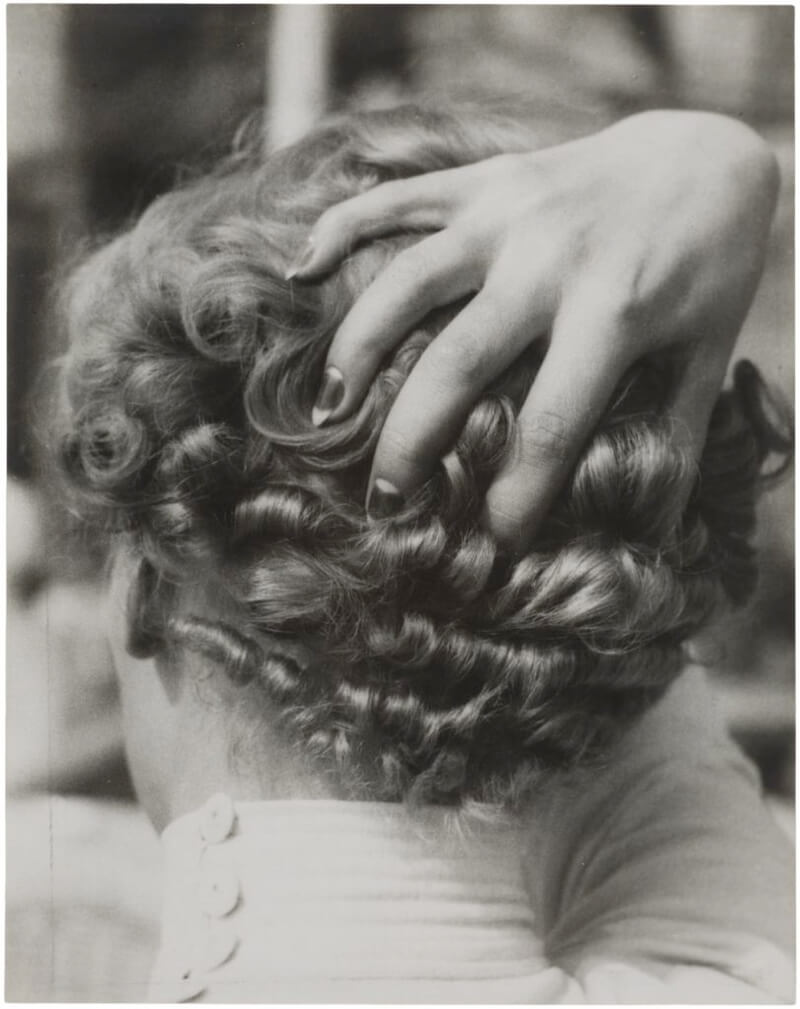
In the 100th anniversary of the Surrealist Manifesto, The New Orleans Museum of Art presents works by six women photographers whose work explores the subconscious mind, blurs the boundary between reality and dreams, or magnifies the uncanny in everyday life. Drawn from NOMA’s permanent collection, works by Ilse Bing, Ruth Bernhard, Lola Alvarez-Bravo, Carlotta M. Corpron, Florence Henri, and Lee Miller illustrate ways that women pushed the boundaries of surrealist art.

In 1924, French poet André Breton published the first Surrealist Manifesto, setting out ideologies and principles for writers and artists to engage and explore the unconscious mind. While Breton’s text launched Surrealism as a transcontinental movement, Breton’s conspicuous exclusion of work by women artists ignored the reality that women were advancing many of the artistic techniques associated with Surrealism. The title of this exhibition, Double Space, calls attention to some of these techniques, including the use of double exposures, mirrors and reflection, distorted figures, solarization, and multiples. Additionally, while male Surrealists often engaged with notions of the womanly muse as enchantress or childlike, many of the artists in this exhibition challenged these notions of by representing female figures as subjects of agency and queer desire, constructing an alternative to a masculinist uncanny.

Image: Untitled (Woman with Hand in Hair) 1931 © Lee Miller
Our printed edition showcases the winners of AAP Magazine call of entries
All About Photo Magazine
Issue #53
Stay up-to-date  with call for entries, deadlines and other news about exhibitions, galleries, publications, & special events.

Exhibitions Closing Soon

Time Travelers:  Photographs from the Gayle Greenhill Collection
The Museum of Modern Art - MoMA | New York, NY
From October 31, 2025 to February 16, 2026
Time Travelers: Photographs from the Gayle Greenhill Collection invites viewers to journey through photography’s rich and evolving history, exploring how images can transport us across time, place, and imagination. Each photograph on view functions as both a document and a dream—an open doorway into the moments, ideas, and emotions that have defined the medium since its inception. From its earliest experiments to contemporary visions, the exhibition offers a meditation on photography’s enduring power to connect us to worlds both real and imagined. Spanning nearly two centuries, the selection traces photography’s transformation from scientific innovation to expressive art form. William Henry Fox Talbot’s pioneering studies of light and shadow meet the ethereal portraits of Julia Margaret Cameron, while Edward Steichen’s atmospheric compositions reveal the painterly potential of the camera. Works by László Moholy-Nagy and Jan Groover push the boundaries of perception, using abstraction to question how we see and what we know. Meanwhile, JoAnn Verburg’s immersive landscapes invite viewers into spaces where time seems to expand and dissolve, offering quiet moments of reflection within nature’s rhythm. The photographs presented here—ranging from portraits and landscapes to experimental and documentary works—demonstrate the many ways artists have used the camera to observe, interpret, and invent the world around them. Each image holds a conversation between the past and the present, between the photographer’s vision and the viewer’s imagination. Honoring a generous gift from Robert F. Greenhill to The Museum of Modern Art in memory of his wife, Gayle Greenhill, Time Travelers celebrates a life lived through art and the enduring human desire to reach beyond the moment. As photographer Emmet Gowin once reflected, “For me, pictures provide a means of holding, intensely, a moment of communication between one human and another.” Image: Tod Papageorge. Central Park. 1989. Gelatin silver print, 15 5/16 × 22 13/16" (38.9 x 57.9 cm). The Museum of Modern Art, New York. The Gayle Greenhill Collection. © 2025 Tod Papageorge
The Shape of Things: Where Color Meets Form
Holden Luntz Gallery | Palm Beach, FL
From January 17, 2026 to February 17, 2026
The Shape of Things: Where Color Meets Form explores photography’s ability to construct a sense of depth, presence, and materiality through chromatic intensity and formal precision. Presented at Holden Luntz Gallery, the exhibition brings together artists who treat color not as embellishment but as structure—an active force that shapes how space is perceived and bodies are imagined. Within this dialogue, color becomes a threshold between the visible and the sensed, inviting viewers to reconsider how photographic images occupy physical and psychological space. At the heart of the exhibition is the work of Christopher Bucklow, whose practice stands apart for its fusion of conceptual rigor and quiet introspection. Known for his use of pinhole photography, Bucklow creates images that feel both ancient and futuristic, grounded in simple optical principles yet charged with metaphysical inquiry. In his celebrated Guests series, life-sized human silhouettes emerge from thousands of tiny apertures, each pinhole acting as a conduit through which light, time, and memory pass. The figures appear simultaneously solid and immaterial, suggesting presences shaped as much by absence as by form. Bucklow’s background in art history and his early career at the Victoria & Albert Museum inform a practice deeply attuned to tradition, even as it pushes against conventional photographic methods. His work draws from cosmology, psychology, and spiritual philosophy, weaving together scientific observation and inner vision. Color in his images is never merely descriptive; it carries emotional weight, mapping interior states onto outward forms. Through this approach, photography becomes a tool for contemplating identity, consciousness, and the fragile boundary between self and other. The Shape of Things situates Bucklow’s work within a broader exploration of how photographers translate three-dimensional experience into flat surfaces without sacrificing complexity or depth. The exhibition underscores photography’s enduring capacity to question perception itself—how we see, how we remember, and how form and color collaborate to give shape to the intangible. In an age of accelerated image consumption, these works ask for slowness, attention, and a renewed sensitivity to the quiet power of looking. Image: Tetrarch, 12.50pm, 23rd April, 2011 2011 Cibachrome photograph © Christopher Bucklow
Harry Benson: Moments Observed, A Photographic Odyssey
Holden Luntz Gallery | Palm Beach, FL
From January 24, 2026 to February 19, 2026
Harry Benson: Moments Observed, A Photographic Odyssey offers a sweeping journey through modern history as seen through the lens of one of its most persistent witnesses. Presented at Holden Luntz Gallery @ JL Modern, the exhibition brings together decades of images shaped by proximity, intuition, and a relentless curiosity about human behavior. Benson’s photographs are not constructed from distance or spectacle; they emerge from presence, from being inside the moment as it unfolds, where history reveals its most human contours. Born in wartime Glasgow, Benson developed an early sensitivity to urgency and consequence—qualities that would define his photographic approach. His career pivoted dramatically in 1964 when he was assigned to follow The Beatles, capturing them not as distant idols but as restless young men caught between fame and freedom. That instinct for access, for slipping past the surface, became Benson’s signature. Whether photographing musicians, actors, or heads of state, he consistently sought the emotional center, believing that meaning lives where formality breaks down. Across more than six decades, Benson photographed presidents, royalty, artists, and athletes, yet his work never privileges status over substance. He moved fluidly between celebrity culture and political upheaval, documenting civil rights marches, war zones, and moments of profound national grief. His presence beside Robert F. Kennedy on the night of the assassination, or alongside Dr. Martin Luther King, Jr. during the Civil Rights Movement, underscores a career built not on spectacle, but on trust and moral proximity to history as it happens. What gives Benson’s work its lasting power is its balance of immediacy and restraint. His images do not dramatize events; they clarify them. Each photograph feels anchored in a belief that photography serves as both record and reckoning—a way of preserving not only what occurred, but how it felt to be there. Moments Observed is ultimately a meditation on witnessing itself, reminding us that history is not only shaped by leaders and icons, but by the quiet, fleeting expressions that reveal our shared humanity. Image: Ali Hits George, Miami 1969, Printed later Infused dyes sublimated on aluminum © Harry Benson
Kit Young and Mikko Takkunen: A New York State of Mind
FAS44 | Las Vegas, NV
From January 22, 2026 to February 20, 2026
A New York State of Mind, on view from January 22 to February 20, 2026, brings together the photographic visions of Kit Young and Mikko Takkunen in an evocative dialogue dedicated to New York City. Presented by FAS44 Gallery at its Las Vegas location in collaboration with The Hulett Collection, the exhibition captures the restless energy of a city defined by constant transformation. Through two distinct yet harmonizing approaches, the show reveals New York as both a lived-in environment and an ever-unfolding visual narrative. Kit Young’s photographs immerse viewers in a cinematic New York shaped by atmosphere, mood, and fleeting moments. His images often feel suspended in time, where artificial light, weather, and architecture combine to create scenes that are introspective and quietly dramatic. Young approaches the city as a stage, allowing ambiguity and emotion to guide the viewer’s interpretation. His work emphasizes how New York can feel deeply personal, even when surrounded by millions of others. In contrast, Mikko Takkunen brings a sharp, observational clarity to his exploration of the city. His photographs focus on structure, gesture, and the subtle interactions between people and their surroundings. With a documentary sensibility, Takkunen reveals the poetry embedded in everyday routines, highlighting moments that might otherwise pass unnoticed. His images anchor the exhibition in the tangible realities of urban life, balancing Young’s atmospheric approach with precision and restraint. Together, these bodies of work form a multifaceted portrait of New York that resists simplification. The city emerges as restless yet intimate, overwhelming yet humane. By placing these perspectives side by side, A New York State of Mind underscores the enduring power of photography to interpret place through personal vision. The exhibition invites viewers to reconsider their own relationship with the city—whether remembered, imagined, or newly discovered—through the eyes of two photographers attuned to its endless complexity. Image: Mikko Takkunen, Port Authority, New York, 2025 Archival pigment print © Mikko Takkunen
Art as Consciousness
Thomas Erben Gallery | New York, NY
From January 15, 2026 to February 21, 2026
Art as Consciousness, on view at Thomas Erben Gallery from January 15 to February 21, 2026, brings together a group of artists whose practices engage with perception, awareness, and the unseen structures that shape reality. Featuring works by Anna and Bernhard Blume, Eli Bornowsky, Mike Cloud, Róza El-Hassan, Barry Gerson, Harriet Korman, Mehran Mohajer, Dona Nelson, and Adrian Piper, the exhibition reflects a growing cultural turn toward spirituality and alternate modes of understanding in response to the limitations of materialist worldviews. For centuries, Western thought has been organized around the assumption that matter precedes mind. Recent scientific and philosophical inquiries have unsettled this hierarchy, suggesting instead that consciousness may be fundamental rather than incidental. Within this framework, reality is no longer fixed or singular, but fluid, relational, and continuously unfolding. The works in Art as Consciousness resonate with this shift, proposing art as a means of accessing states of awareness that exist beyond empirical measurement or linear logic. Across a wide range of materials and approaches, the artists in the exhibition explore how meaning arises through sensation, memory, and intuition. Some works gesture toward altered states or ritualized processes, while others investigate repetition, fragmentation, and abstraction as pathways into deeper forms of attention. Rather than offering definitive statements, these works remain open-ended, inviting viewers to engage with ambiguity and to recognize perception itself as an active, creative force. Form and matter function not as endpoints, but as conduits through which inner experience becomes momentarily visible. Rooted in Thomas Erben Gallery’s long-standing interest in the intangible dimensions of art, Art as Consciousness proposes that artistic practice can act as a bridge between the material and the immaterial. Here, art is not merely an object to be observed, but an encounter—one that encourages reflection on the nature of existence, individuality, and interconnectedness. The exhibition ultimately frames consciousness not as a private phenomenon, but as a shared field in which creativity, perception, and meaning continuously evolve. Image: Adrian Piper. Food for the Spirit (Image no.1), 1971 B/W silver gelatin print 14.5 × 15in. © Adrian Piper
Claire A. Warden: Mimesis
Candela Books + Gallery | Richmond, VA
From January 09, 2026 to February 21, 2026
Candela Books + Gallery presents Claire A. Warden: Mimesis, an exhibition that uses abstraction as a lens through which questions of identity, perception, and representation are quietly but insistently examined. Installed in the gallery’s back space, Warden’s large-scale monochromatic works resist immediate recognition, asking viewers to linger in uncertainty and reconsider the impulse to define what is seen. Rather than offering clarity, the images open a contemplative space where looking becomes an active, reflective act tied to lived experience. Working with alternative photographic processes, Warden physically intervenes in the creation of her images, manipulating silver halides directly on the negative. This deliberate disruption of the photographic surface becomes a metaphor for the layered forces—cultural, biological, historical—that shape identity. The resulting abstractions evoke visual languages borrowed from scientific imagery: cellular structures, topographic formations, and celestial fields. These references suggest systems of classification and observation, while simultaneously revealing their limitations when applied to something as fluid and complex as the self. Mimesis positions photography not as a tool for description, but as a site of negotiation between visibility and erasure. The works hover between portraiture and landscape, presence and absence, reflecting how racialized identities are often read through fragmented or inadequate frameworks. By obscuring literal representation, Warden foregrounds the emotional and psychological dimensions of perception, challenging the viewer to confront how meaning is projected rather than discovered. The exhibition extends into an adjacent room with a projected video work that deepens this exploration of time, movement, and embodied experience. Here, stillness gives way to rhythm and duration, reinforcing the idea that identity is not static but continually in flux. The moving image echoes the tactile qualities of Warden’s photographic practice, emphasizing process as an essential component of understanding. Rooted in sustained research and experimentation, Mimesis reflects Warden’s broader interdisciplinary practice, which engages language, materiality, and representation with quiet rigor. The exhibition invites viewers to sit with ambiguity, acknowledging that identity cannot be fully captured or translated. Instead, it emerges through layered impressions, partial readings, and moments of recognition that remain open, unresolved, and deeply human. Image: Emphasis, 2015. Pigment print (piezo), 36 x 58 inches, 40 x 62 inches © Claire A. Warden
Philipp James Hoffmann: DROMOS
D. D. D. D. | New York, NY
From January 16, 2026 to February 21, 2026
Philipp James Hoffmann: DROMOS marks the first solo exhibition in the United States by New York–based artist Philipp James Hoffmann, presented at D. D. D. D. The exhibition centers on the volatile worlds of Motocross and Freestyle Motocross—sports defined by velocity, risk, and spectacle. Rather than documenting these events in a conventional manner, Hoffmann approaches them obliquely, treating competition footage as raw material for a layered and rigorous photographic process. Working from moving images of MX and FMX competitions, Hoffmann projects selected sequences onto surfaces, isolating fleeting instants from the ongoing rush of action. He then photographs these projections, repeating the cycle of projection and re-photography multiple times. With each iteration, the image drifts further from its origin. Contours dissolve, colors fracture, and the riders’ bodies stretch into luminous apparitions. What began as documentation becomes something far less stable—an arena where time buckles and momentum leaves visible scars. The resulting works carry the residue of their making. Blurs, ruptures, and chromatic distortions are not mere aesthetic effects but traces of attrition. In this sense, the photographs embody the very conditions of Motocross: abrasion, impact, and exposure to danger. Hoffmann’s images echo the dynamism once championed by early twentieth-century Futurism, yet they avoid simple homage. Instead, they present a contemporary meditation on acceleration—on how technology compresses space and stretches perception to its limits. Born in 1992 and based in New York City, Hoffmann draws from cultural theory, myth, and art history to inform his practice. His interest in time-space compression and optical instability positions photography as a site of transformation rather than record. In DROMOS, violence and lyricism intertwine; the grit of the racetrack meets a strange, almost devotional luminosity. The riders remain present, suspended between heroism and erasure, as if emerging from and dissolving back into the very speed that defines them. Image: Philipp James Hoffmann | BELLEROPHON, 2026 © Philipp James Hoffmann
William Eggleston: The Last Dyes
David Zwirner | New York, NY
From January 15, 2026 to February 21, 2026
The Last Dyes presents a rare and resonant moment in the history of photography, marking the final chapter of William Eggleston’s pioneering engagement with the dye-transfer process. Shown at David Zwirner’s New York gallery, this exhibition brings together a carefully selected group of images that embody Eggleston’s lifelong pursuit of color as a structural and emotional force. These works are not simply photographs; they are the culmination of an analog practice that shaped the language of color photography itself. Eggleston’s embrace of dye-transfer printing in the early 1970s allowed him to achieve a depth of color and tonal precision previously unseen in art photography. Developed originally for commercial use, the process demanded exceptional technical skill and patience, transforming each image into a meticulously crafted object. With Kodak’s discontinuation of the materials decades ago, these prints stand as the last expressions of a medium inseparable from Eggleston’s vision, produced in close collaboration with master printers who shared his devotion to craft. The photographs span some of Eggleston’s most influential bodies of work, capturing the American South with an intensity that elevates the ordinary into the iconic. Expansive skies, weathered buildings, parked cars, and quiet interiors become stages for color to assert itself as subject rather than ornament. Figures appear less as portraits than as compositional elements, embedded within fields of saturated reds, greens, and blues that pulse with life and memory. Equally compelling are the interior scenes, where light emerges from deep shadow with a near-sacred intensity. These images reveal Eggleston’s sensitivity to atmosphere and form, transforming intimate, unremarkable spaces into meditations on presence and perception. Across landscapes and interiors alike, the photographs achieve a balance between formal rigor and lived experience. The Last Dyes is both an ending and a reaffirmation. It honors an artist-medium partnership that forever altered photographic history, while reminding viewers that these images, though rooted in a specific time and process, remain vibrantly alive. Through color, light, and unwavering attention, Eggleston’s vision endures. Image: William Eggleston, Untitled, 1970 © Eggleston Artistic Trust. Courtesy Eggleston Artistic Trust and David Zwirner
Beyond the Frame | Personal Projects by Veterans
Colorado Photographic Arts Center CPAC | Denver, CO
From January 09, 2026 to February 21, 2026
Beyond the Frame | Personal Projects by Veterans invites visitors to encounter photography shaped not only by artistic vision but by lived experience, service, and personal transformation. Presented at the David & Laura Merage Foundation Gallery, the exhibition brings together new work created by eight Colorado artists who have served in the U.S. military, each developing a deeply personal project over six months of advanced study. Their images reflect stories honed through discipline, curiosity, and an extended commitment to looking inward—beyond memory, beyond service, and beyond the single frame. These projects mark the culmination of CPAC’s Veterans Workshop Series, an initiative launched in 2017 to offer Veterans meaningful access to professional photographic education at no cost. Now in its ninth year, the program has supported 76 participants, nurturing a space where creativity becomes a way to reclaim narrative, build community, and discover new forms of expression. Alongside the new cohort, the exhibition features works by sixteen alumni who continue to refine their practices professionally, demonstrating the lasting impact of this sustained mentorship. Their presence underscores the long arc of artistic growth—how a single workshop can blossom into a lifetime of visual exploration. Each participating artist has pursued a subject that resonates personally. Jennifer Adair turns her lens toward women’s motorcycle groups, capturing the ways camaraderie and empowerment manifest on the open road. Harold Robert looks to his Scottish heritage, weaving portraiture and landscape into a meditation on identity and lineage. Others explore family histories, recovery, or the quiet rhythms of everyday life. Together, their works form a richly varied portrait of contemporary Veteran artists. Year after year, the exhibition reveals how these photographers expand their voices, deepen their craft, and continue to grow—both as artists and as storytellers. Image: © Jennifer Adair
Ethan Aaro Jones: Eccentric Nights
Filter Photo | Chicago, IL
From January 09, 2026 to February 21, 2026
Eccentric Nights brings together a striking body of work created by Ethan Aaro Jones during a summer spent just south of the Arctic Circle, where the sun hovered above the horizon for more than nine consecutive days. Immersed in this extraordinary cycle of continuous daylight, Jones turned his attention to the shifting bands of blazing orange light that moved across his bedroom walls at night. The experience unsettled familiar rhythms, prompting him to reconsider the very notion of nightfall and how much of daily life depends on darkness that, in this place, simply never arrived. Jones describes the constant light as both beautiful and disorienting, a reminder that natural forces follow their own logic regardless of human expectations. By day, when the sun burned bright white, he explored a built environment shaped by the ways people mold landscapes to suit their desires. By night—or what passed for night—he watched the light drift and pulse across his walls, wondering whether these domestic apparitions or the altered land outside felt more unnatural. The photographs in the exhibition arise from this tension, tracing the thin boundaries between what is made, what is observed, and what is felt when place refuses to behave as expected. The project is deeply rooted in Jones’s ongoing interest in how landscapes reveal human intention. Based in Minneapolis, he has long used photography to understand how people inhabit and reshape their surroundings. His work has appeared in exhibitions at institutions such as the Minnesota Museum of American Art and the Minneapolis Institute of Art, and he has participated in residencies from Iceland to Norway. In 2025, he co-founded Nocturno Books with Brad Zellar, further extending his engagement with photographic storytelling. Eccentric Nights invites viewers into an environment where light becomes both subject and catalyst, asking us to reconsider what it means to know a place when its most basic rhythms slip out of sync with expectation. Image: © Ethan Aaro Jones
Susan Burnstine
Catherine Couturier Gallery | Houston, TX
From January 17, 2026 to February 21, 2026
The upcoming exhibition Susan Burnstine, on view from January 17 to February 21, 2026, offers a rare opportunity to explore the work of an artist whose vision stands apart in contemporary photography. Originally from Chicago and now based in Los Angeles, Burnstine has built an international reputation for images that seem to rise directly from the realm of memory and dreams. Her photographs, celebrated in galleries worldwide, have been featured extensively in publications, and her long-running writings for photography magazines have earned her a respected voice within the medium. Her acclaimed monograph Within Shadows marked a defining moment in her career, earning major recognition and solidifying her status as a leading figure in fine art photography. Burnstine’s distinctive approach is rooted in an uncompromising commitment to creating all of her effects in-camera. To accomplish this, she constructed twenty-one handmade film cameras and lenses from plastic, vintage components, and everyday objects. Their temperamental, imperfect nature allows her to surrender fully to instinct, embracing uncertainty as a creative force. This process echoes the very themes she pursues: the fragile borders between consciousness and the dream world, clarity and mystery, memory and imagination. In this exhibition, viewers will discover Iar Connacht, a series inspired by the storied landscapes of western Ireland. The region’s Gaelic name evokes a deep sense of history, and Burnstine’s images channel that ancestral atmosphere with remarkable sensitivity. Mist-draped horizons, shadowed mountains, and reflective waters appear as if suspended outside of time, offering glimpses into a land where legend and reality intertwine. With Iar Connacht, Burnstine creates a visual meditation on place, memory, and the unseen forces that shape experience. The series invites viewers to step into an ethereal world that feels both ancient and intimate, a space where the past lingers gently in every shifting veil of light. Image: Beyond the Quiet Man Bridge — Susan Burnstine Archival pigment ink print, varnished © Susan Burnstine
A Tender Excavation
Luckman Gallery | Los Angeles, CA
From November 01, 2025 to February 21, 2026
A Tender Excavation offers a reflective encounter with artists who turn to photographic archives as starting points for reimagining the past. Their approaches vary, yet each one sifts through personal, familial, or historical materials to bring overlooked stories into view. By revisiting inherited images and memories, the exhibition invites a renewed understanding of how history can be reassembled with care, allowing new meanings to emerge from fragments that might otherwise remain unseen. The title draws inspiration from Arlene Mejorado’s approach, described as an act of care that uncovers objects, anecdotes, and memories with deliberate sensitivity. This sense of attentive discovery shapes the entire exhibition. Rather than accepting the limits of official histories, the artists build alternative paths, revealing voices and experiences long pushed aside. Their work underscores how archives, even in their silences, contain the seeds of transformation when handled with intention and imagination. The exhibition highlights creators whose identities have often been omitted from mainstream artistic narratives. Many of the artists have ties to communities shaped by migration, displacement, or cultural erasure. For them, engaging with archives becomes a way to reconnect with what has been lost or hidden, offering both a personal and collective act of healing. By reshaping found materials through collage, installation, film, painting, or mixed media, they demonstrate how the past can be both a weight and a resource for envisioning new futures. Through these reinterpreted histories, the exhibition suggests that the act of reconstructing memory is inherently generative. Each work contributes to a broader conversation about belonging and identity, reminding viewers that the story of a place or a people is never fixed. Instead, it continues to evolve through the hands of those who seek to understand and redefine it. Image: Ann Le, What we lost in the Ocean, 2022 (video still). Courtesy of the artist.
Advertisement
AAP Magazine #55 Wmen
Win a Solo Exhibition in March
AAP Magazine #55 Wmen
Call for Entries
AAP Magazine #55 Women
Publish your work in our printed magazine and win $1,000 cash prizes

Related Articles

MoCP at Fifty: Collecting Through the Decades
The Museum of Contemporary Photography at Columbia College Chicago (MoCP) proudly announces its 2026 exhibition, MoCP at Fifty: Collecting Through the Decades, on view from January 22 through May 16, 2026.
Brassaï’s Secret Paris
In 1933, captivated by the nocturnal rhythms and hidden corners of Paris, the Hungarian-born photographer Brassaï published Paris by Night, a landmark photobook that forever transformed how the city of lights was imagined. Through his lens, Brassaï illuminated the city’s shadowed streets, smoky cafés, solitary lovers, and night-time wanderers, creating images that were simultaneously intimate and cinematic. Paris by Night did more than document the city—it defined a modern vision of Paris after dark, capturing a blend of elegance, vulnerability, and intrigue that had never been seen in photography before
Photo Vogue Festival: Women by Women
The PhotoVogue Festival, the first conscious fashion photography festival to bridge ethics and aesthetics, returns to Milan for its tenth anniversary in 2026. From March 1 to 4, during Milan Fashion Week, the festival will take place at the Biblioteca Nazionale Braidense, one of Italy’s most historic and prestigious libraries—a fitting venue for a milestone edition that underscores the festival’s commitment to thoughtful, socially engaged photography.
Ruth Orkin: Women on the Move
Few photographers shaped the visual language of the mid-20th century with the clarity, empathy, and narrative force of Ruth Orkin. Long recognized as a key figure in the rise of American photojournalism, Orkin forged a body of work that placed women—ordinary and extraordinary—at the center of the modern world. Ruth Orkin: Women on the Move, on view at the National Museum of Women in the Arts from December 12, 2025, through March 29, 2026, revisits this legacy through 21 iconic and intimate photographs made between the 1950s and 1970s.
World Press Photo Exhibition 2025
For the first time in New York City, the World Press Photo Exhibition 2025 opens its doors, presenting the 42 winners of the annual World Press Photo Contest. This year’s selection brings together striking and thought-provoking images that capture the defining issues of our time, offering a window into urgent global stories through the lens of exceptional photographers.
All About Photo Presents ’When The Pavement Breathes’ by Margarita Mavromichalis
When The Pavement Breathes is a vivid exploration of those fleeting, often overlooked moments that quietly transform the mundane into the extraordinary. Through spontaneous and candid encounters, Margarita Mavromichalis reveals a street world alive with subtle disruptions—unexpected juxtapositions, fleeting expressions, visual coincidences, and delicate details that momentarily suspend routine perception. In her images, the street is not merely a backdrop for daily life but a living, breathing stage where the ordinary continuously flirts with surprise.
The Gordon Parks Foundation Celebrates 20 Years
The Gordon Parks Foundation is celebrating its 20th anniversary with a yearlong series of exhibitions, publications, fellowships and events, all of which will highlight how the legacy of Gordon Parks (1912–2006) continues to inform contemporary artistic practice in new and innovative ways. Since its founding in 2006 to steward Parks’ multifaceted work as a photographer, musician, writer and filmmaker, the Foundation has steadily grown and expanded its capacity to provide crucial support to emerging, mid-career and late-career artists across a wide variety of disciplines. This focus on interdisciplinarity is at the heart of both the Foundation and the legacy of Parks himself, who believed unreservedly in the power of art to be a catalyst for social change and to illuminate the human condition.
Eugène Atget: The Making of a Reputation
The International Center of Photography (ICP) is proud to present Eugène Atget: The Making of a Reputation, an exhibition that examines how Eugène Atget (1857–1927) came to be regarded as one of the forefathers of modern photography through the timely and tireless advocacy of Berenice Abbott. Featuring historic prints from ICP’s collection alongside landmark publications and other printed ephemera, the exhibition reconsiders the role that Abbott played in establishing Atget’s now-canonical status, sometimes to the detriment of her own remarkable career as a photographer. Though Atget didn’t live to see it, Abbott became the ideal steward, proving that every photographer needs a champion.
Zhang Kechun: The Yellow Desert
Huxley-Parlour is pleased to present The Yellow Desert, a photography exhibition by contemporary Chinese photographer Zhang Kechun. Featuring eleven new large-format works from his latest series, begun in August 2025, the exhibition explores the Gobi Desert across Northern China and Southern Mongolia. Through landscape photography that bridges history, culture, and human presence, Zhang Kechun examines the complex relationship between desolation, memory, and modern life in this vast and evolving terrain.
Call for Entries
AAP Magazine #55 Women
Publish your work in our printed magazine and win $1,000 cash prizes