All about photo.com: photo contests, photography exhibitions, galleries, photographers, books, schools and venues.
LAST CALL to Win a Solo Exhibition this March!

Willie Anne Wright: Artist and Alchemist

From October 21, 2023 to April 28, 2024
Share
Willie Anne Wright: Artist and Alchemist
200 N. Arthur Ashe Boulevard
Richmond, VA 23220
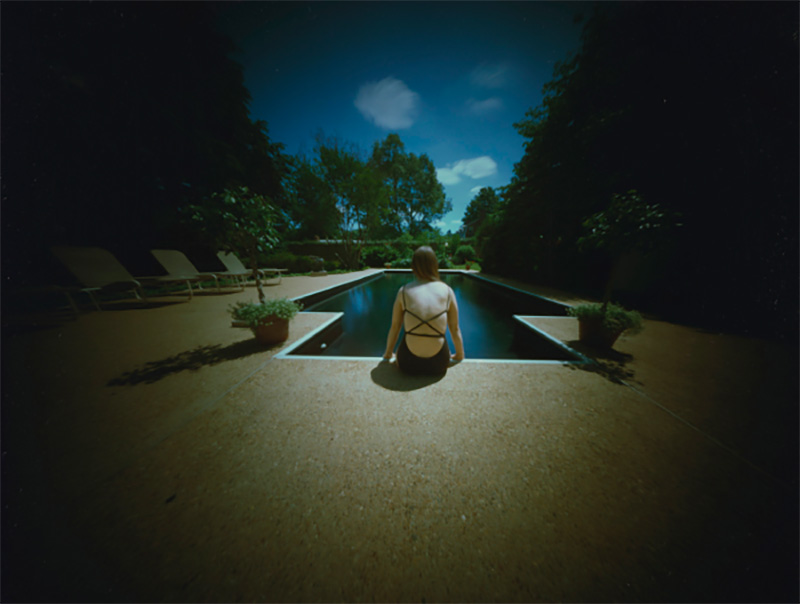
Celebrate this groundbreaking, internationally renowned photographer and painter whose remarkable Richmond-based career spans over six decades. Presenting 63 photographs and 9 paintings by the Richmond native, born in 1924, this is the first major exhibition to explore the trajectory of her impressive 60-year career. From playful and irreverent scenes of everyday life to ethereal evocations of the past, Willie Anne Wright’s experimental paintings and photographs examine pop-culture, feminine identity, the pull of history and the shifting cultural landscape of the South. With a focus on photography’s role in shaping collective understandings of history, place, and gender, the exhibition draws from VMFA’s recent acquisition of Wright’s work, including more than 230 photographs and 10 paintings, as well as a comprehensive artist archive.

Image: Anne S at Jack B’s Pool, 1984 © Willie Anne Wright
Our printed edition showcases the winners of AAP Magazine call of entries
All About Photo Magazine
Issue #53
Stay up-to-date  with call for entries, deadlines and other news about exhibitions, galleries, publications, & special events.

Exhibitions Closing Soon

When Langston Hughes Came to Town
Nevada Museum of Art | Reno, NV
From May 03, 2025 to February 15, 2026
When Langston Hughes Came to Town explores the history and legacy of Langston Hughes through the lens of his largely unknown travels to Nevada and highlights the vital role Hughes played in the Harlem Renaissance and beyond. James Mercer Langston Hughes (1902-1967) was born in Joplin, Missouri. Hughes studied at Columbia University in 1921 for one year and would eventually become one of leading writers of the Harlem Renaissance. A writer with a distinctive style inspired by jazz rhythms, Hughes documented all facets of Black culture but became renowned for his incisive poetry. The exhibition begins by examining the relationship of this literary giant to the state of Nevada through a unique presentation of archival photographs, ephemera, and short stories he wrote that were informed by his visit to the area. The writer’s first trip to Nevada took place in 1932, when he investigated the working conditions at the Hoover Dam Project. He returned to the state in 1934, at the height of his career, making an unexpected trip to Reno, and found solace and a great night life in the city. The presentation continues with work created by leading artists of the Harlem Renaissance who had close ties to Hughes, including sculptures by Augusta Savage and Meta Vaux Warrick Fuller, and paintings by Beauford Delaney, Aaron Douglas, Norman Lewis, and Archibald Motley, Jr., among others. The range of work on display foregrounds the rich expressions of dance, music, and fashion prevalent during the influential movement. The final section of the exhibition features contemporary artists who were inspired by Hughes and made work about his life. Excerpts from Hughes’s poems and short stories are juxtaposed with related works of art, demonstrating how his legacy endures in the twenty-first century. Isaac Julien, Kwame Brathwaite, Glenn Ligon, and Deborah Willis are among the artists whose works are included. Julien, for example, in his renowned series Looking for Langston Hughes reimagines scenarios of Hughes’s life in Harlem during the 1920s. His black-and-white pictures are paired with Hughes poem No Regrets. Similarly, Brathwaite’s impactful photographs highlight the continuation of the Harlem Renaissance through the Black pride movement of the 1960s and are coupled with the poem My People. Finally, Glenn Ligon’s black neon sculpture relates to Hughes’s poignant poem Let America Be America Again, which both leave viewers to ponder the question of belonging in America.
Roni Horn: Water, Water on the Wall, You’re the Fairest of Them All
The Museum of Contemporary Art Denver (MCA Denver) | Denver, CO
From September 12, 2025 to February 15, 2026
This exhibition brings together works by Roni Horn in a range of mediums—sculpture, photography, drawing, and bookmaking—offering the first presentation devoted entirely to her exploration of water. Among the featured works are You are the Weather, Part 2 (2010–11), a series of one hundred photographs depicting a woman immersed in Iceland’s geothermal pools; a group of newly unveiled cast glass sculptures whose luminous surfaces suggest the stillness and depth of liquid; and volumes from To Place, Horn’s ongoing series of artist books begun in 1989, which probe the intricate ties between self, landscape, and perception. For Horn, water is both subject and metaphor—a material through which she examines the mutable nature of identity and emotion. In her writing, she describes water as shifting endlessly between states: calm and turbulent, pure and opaque, soft and hard. This language of paradox underscores her larger inquiry into how something that appears constant is, in fact, perpetually in flux. The qualities she attributes to water—its weight, transparency, and volatility—mirror the contradictions inherent in human experience, where clarity and uncertainty often coexist. In the context of the American West, this focus acquires a deeper resonance. Water has long been regarded as a dependable and abundant element, yet climate change and population growth are revealing its fragility. Horn’s meditations on water, therefore, speak not only to inner transformation but also to ecological vulnerability. Her art becomes an invitation to look more closely at what sustains us—materially and spiritually—and to recognize the precarious balance between stability and change. Through these works, Horn transforms water into a lens for understanding both our environment and the shifting contours of identity itself. Image: Installation view, Roni Horn: Water, Water on the Wall, You’re the Fairest of Them All, Museum of Contemporary Art Denver, September 12, 2025 — February 15, 2026. Photos by Wes Magyar.
Dorothea Lange: Seeing People
Nevada Museum of Art | Reno, NV
From April 12, 2025 to February 15, 2026
During her long, prolific, and groundbreaking career, the American photographer Dorothea Lange made some of the most iconic portraits of the 20th century. Dorothea Lange: Seeing People reframes Lange’s work through the lens of portraiture, highlighting her unique ability to discover and reveal the character and resilience of those she photographed. Featuring 100 photographs, the exhibition addresses her innovative approaches to picturing people, emphasizing her work on social issues including economic disparity, migration, poverty, and racism. This exhibition debuted at the National Gallery of Art in 2023 and is curated by Philip Brookman, consulting curator in the department of photographs, National Gallery of Art. The Nevada Museum of Art’s presentation of Dorothea Lange: Seeing People will be the only West Coast venue for this exhibition. This exhibition is organized by the National Gallery of Art, and is part of its Across the Nation program to share the nation’s collection with museums around the country.
Norman Rockwell: From Camera to Canvas
New Britain Museum of American Art | New Britain, CT
From September 26, 2025 to February 15, 2026
Norman Rockwell: From Camera to Canvas reveals an intimate and little-known side of one of America’s most beloved artists. For over forty years, photography served as the foundation of Rockwell’s creative process—his bridge between imagination and the finished painting. After producing initial sketches, Rockwell turned to the camera to stage his ideas, choreographing every detail of gesture, light, costume, and expression to bring his vision vividly to life before he ever touched a brush to canvas. During the early and mid-twentieth century, photography was a common tool among illustrators seeking accuracy and efficiency. Yet Rockwell’s use of the medium far exceeded mere documentation. A perfectionist with an unwavering eye for detail, he transformed his reference photographs into fully realized works of art. He scouted locations, directed amateur models, and meticulously arranged props, ensuring that each photograph conveyed the story, warmth, and humanity that would later define his paintings. Each camera study became a rehearsal for his final act on canvas—a performance both technical and deeply emotional. These photographs offer a rare glimpse into Rockwell’s method, revealing how he translated reality into the timeless scenes that shaped American visual culture. His photographic compositions capture the same charm, humor, and empathy that animate his finished illustrations, while also exposing the layers of planning and artistry behind their creation. They stand as more than mere references; they are visual stories in their own right, echoing the painter’s narrative genius in another form. Featuring more than 150 photographs, tear sheets, paintings, and drawings, this exhibition traces Rockwell’s creative evolution and the essential role photography played in it. Curated by Ron Schick and Stephanie Haboush Plunkett, and organized by the Norman Rockwell Museum in Stockbridge, Massachusetts, it invites visitors to rediscover Rockwell’s art through the lens of the camera that shaped his vision. Image: Gene Pelham, Photographs for Going and Coming, 1947, Cover illustration for The Saturday Evening Post, August 30, 1947, Norman Rockwell Museum Collection, Norman Rockwell Art Collection Trust, ST1976_2992; ST1976_2993 © Norman Rockwell Family Agency
This Is a Thing
RISD Museum of Art | Providence, RI
From August 23, 2025 to February 15, 2026
Museums are living collections—constantly evolving gatherings of objects, ideas, and stories shaped by time, curiosity, and generosity. Each piece within their walls carries both a history and a sense of presence, connecting past intentions with present meaning. This Is a Thing brings together more than forty works on paper, created between 1774 and 2022, to explore the nature of objects and the many ways they occupy our imagination. Drawn from recent acquisitions by the RISD Museum’s Department of Prints, Drawings, and Photographs, these works reflect an ongoing dialogue between artists and the material world. From precise studies of natural forms to abstract explorations of texture and space, the exhibition embraces a wide spectrum of thing-ness. Some pieces approach the object as a subject of affection—a cherished item rendered with tenderness—while others critique or question the role of objects in shaping human identity. Figures pose alongside tools, fragments, and inventions; landscapes dissolve into arrangements of forms that blur the line between living and made things. The result is a meditation on how artists perceive, reconstruct, and give life to the inanimate. Equally, This Is a Thing highlights the act of collecting itself—the processes, decisions, and collaborations that determine what becomes part of the museum’s story. Each acquisition tells of an encounter between artist, curator, donor, and institution, affirming the museum as a community of shared vision. Ultimately, this exhibition invites visitors to reconsider what makes a “thing” worth preserving. Whether humble or monumental, familiar or strange, every work in this collection testifies to the endless interplay between human creativity and the world of objects—reminding us that to make, to keep, and to look closely are among the most enduring things we do. Image: Edward Grazda, Mycroyan Apartments, Kabul, Afghanistan (housing projects built by the Soviets), 1992, gelatin silver print © Edward Grazda
In Focus: Photographing Plants
Delaware Art Museum | Wilmington, DE
From September 20, 2025 to February 15, 2026
In Focus: Photographing Plants, on view from September 20, 2025, to February 15, 2026, invites viewers to explore the beauty and diversity of plant life through the lens of photographers spanning the 20th and 21st centuries. Curated to complement the exhibition of Peter Moriarity’s work, this presentation draws from the Museum’s photography collection, highlighting the ways artists have observed, interpreted, and celebrated flora over time. The exhibition features a remarkable selection of photographers whose approaches range from meticulous realism to expressive abstraction. Tom Baril’s work emphasizes form and detail, while Paul Caponigro captures the contemplative and spiritual qualities of the natural world. Imogen Cunningham’s pioneering images showcase the elegance and structure inherent in plant forms, and Alida Fish offers delicate studies that reveal subtle textures and patterns. Erica Lennard brings a contemporary perspective, blending traditional botanical observation with modern compositional sensibilities. By bringing together these diverse visions, In Focus: Photographing Plants illuminates the evolving relationship between photographers and their subjects. Plants are presented not merely as objects of documentation but as sources of inspiration, reflection, and aesthetic inquiry. This exhibition underscores photography’s ability to reveal the intricate details and ephemeral qualities of the natural world, offering audiences a deeper appreciation for both botanical forms and the artistic practice that celebrates them. Visitors are invited to engage with the collection thoughtfully, considering how each image interprets light, shape, and texture to convey the life and presence of plants. From historic approaches to contemporary explorations, the show emphasizes photography’s enduring power to transform the everyday into the extraordinary, capturing the quiet elegance and complexity of the plant world. Image: Windy Scene with Tree, 1900. William B. Post (1857–1921). Platinum print, sheet: 7 1/2 × 9 3/8 inches. Delaware Art Museum, Gift of Robert D. LeBeau, 2007.
Mario Giacomelli: La Gente, La Terra
Santa Barbara Museum of Art | Santa Barbara, CA
From September 07, 2025 to February 15, 2026
Mario Giacomelli (1925–2000) stands among the most influential figures in postwar Italian photography, a self-taught artist whose vision reshaped the boundaries of the medium. Born in the small Adriatic town of Senigallia, Giacomelli left school at the age of thirteen to work as a typesetter, later serving briefly in the Italian army. His path to art was far from conventional: in 1950, he opened a small printshop in his hometown, and three years later, he purchased his first camera. What began as a curiosity quickly evolved into a lifelong exploration of image-making, where the darkroom became a place of invention and transformation. Giacomelli approached photography as a field of experimentation, manipulating film and paper to create stark contrasts and bold compositions that captured the psychological texture of postwar Italy. His landscapes of the Marche region—rolling hills, furrowed vineyards, and solitary figures—became metaphors for resilience and renewal. The rural terrain, seen through his lens, transforms into near-abstract compositions, echoing the emotional power of contemporary painting while remaining deeply rooted in the land and its people. His portraits and scenes of everyday life, gathered under the series La Gente (The People), reveal an unvarnished intimacy with his subjects. Whether depicting farmers, priests, or children at play, Giacomelli’s photographs blend compassion and melancholy, reflecting the contradictions of a society emerging from war into a period of rapid modernization known as il miracolo economico italiano. The exhibition Mario Giacomelli: La Gente, La Terra presents 36 photographs spanning from 1955 to 1980, drawn entirely from the Santa Barbara Museum of Art’s collection. Together, the portfolios La Gente and Paesaggio (Landscape) form a poetic dialogue between humanity and nature, offering a timeless vision of Italy’s enduring spirit. The Paesaggio portfolio is a recent gift from Carol Vernon and Robert Turbin, enriching the museum’s collection with Giacomelli’s singular vision of light, shadow, and life. Image: Mario Giacomelli, Storie di terra from the portfolio "Paesaggio," 1955, printed 1981. Gelatin silver print. SBMA, Gift of Carol Vernon and Robert Turbin in Memory of Marjorie and Leonard Vernon, 2025.10.1. © Mario Giacomelli
Time Travelers:  Photographs from the Gayle Greenhill Collection
The Museum of Modern Art - MoMA | New York, NY
From October 31, 2025 to February 16, 2026
Time Travelers: Photographs from the Gayle Greenhill Collection invites viewers to journey through photography’s rich and evolving history, exploring how images can transport us across time, place, and imagination. Each photograph on view functions as both a document and a dream—an open doorway into the moments, ideas, and emotions that have defined the medium since its inception. From its earliest experiments to contemporary visions, the exhibition offers a meditation on photography’s enduring power to connect us to worlds both real and imagined. Spanning nearly two centuries, the selection traces photography’s transformation from scientific innovation to expressive art form. William Henry Fox Talbot’s pioneering studies of light and shadow meet the ethereal portraits of Julia Margaret Cameron, while Edward Steichen’s atmospheric compositions reveal the painterly potential of the camera. Works by László Moholy-Nagy and Jan Groover push the boundaries of perception, using abstraction to question how we see and what we know. Meanwhile, JoAnn Verburg’s immersive landscapes invite viewers into spaces where time seems to expand and dissolve, offering quiet moments of reflection within nature’s rhythm. The photographs presented here—ranging from portraits and landscapes to experimental and documentary works—demonstrate the many ways artists have used the camera to observe, interpret, and invent the world around them. Each image holds a conversation between the past and the present, between the photographer’s vision and the viewer’s imagination. Honoring a generous gift from Robert F. Greenhill to The Museum of Modern Art in memory of his wife, Gayle Greenhill, Time Travelers celebrates a life lived through art and the enduring human desire to reach beyond the moment. As photographer Emmet Gowin once reflected, “For me, pictures provide a means of holding, intensely, a moment of communication between one human and another.” Image: Tod Papageorge. Central Park. 1989. Gelatin silver print, 15 5/16 × 22 13/16" (38.9 x 57.9 cm). The Museum of Modern Art, New York. The Gayle Greenhill Collection. © 2025 Tod Papageorge
The Shape of Things: Where Color Meets Form
Holden Luntz Gallery | Palm Beach, FL
From January 17, 2026 to February 17, 2026
The Shape of Things: Where Color Meets Form explores photography’s ability to construct a sense of depth, presence, and materiality through chromatic intensity and formal precision. Presented at Holden Luntz Gallery, the exhibition brings together artists who treat color not as embellishment but as structure—an active force that shapes how space is perceived and bodies are imagined. Within this dialogue, color becomes a threshold between the visible and the sensed, inviting viewers to reconsider how photographic images occupy physical and psychological space. At the heart of the exhibition is the work of Christopher Bucklow, whose practice stands apart for its fusion of conceptual rigor and quiet introspection. Known for his use of pinhole photography, Bucklow creates images that feel both ancient and futuristic, grounded in simple optical principles yet charged with metaphysical inquiry. In his celebrated Guests series, life-sized human silhouettes emerge from thousands of tiny apertures, each pinhole acting as a conduit through which light, time, and memory pass. The figures appear simultaneously solid and immaterial, suggesting presences shaped as much by absence as by form. Bucklow’s background in art history and his early career at the Victoria & Albert Museum inform a practice deeply attuned to tradition, even as it pushes against conventional photographic methods. His work draws from cosmology, psychology, and spiritual philosophy, weaving together scientific observation and inner vision. Color in his images is never merely descriptive; it carries emotional weight, mapping interior states onto outward forms. Through this approach, photography becomes a tool for contemplating identity, consciousness, and the fragile boundary between self and other. The Shape of Things situates Bucklow’s work within a broader exploration of how photographers translate three-dimensional experience into flat surfaces without sacrificing complexity or depth. The exhibition underscores photography’s enduring capacity to question perception itself—how we see, how we remember, and how form and color collaborate to give shape to the intangible. In an age of accelerated image consumption, these works ask for slowness, attention, and a renewed sensitivity to the quiet power of looking. Image: Tetrarch, 12.50pm, 23rd April, 2011 2011 Cibachrome photograph © Christopher Bucklow
Harry Benson: Moments Observed, A Photographic Odyssey
Holden Luntz Gallery | Palm Beach, FL
From January 24, 2026 to February 19, 2026
Harry Benson: Moments Observed, A Photographic Odyssey offers a sweeping journey through modern history as seen through the lens of one of its most persistent witnesses. Presented at Holden Luntz Gallery @ JL Modern, the exhibition brings together decades of images shaped by proximity, intuition, and a relentless curiosity about human behavior. Benson’s photographs are not constructed from distance or spectacle; they emerge from presence, from being inside the moment as it unfolds, where history reveals its most human contours. Born in wartime Glasgow, Benson developed an early sensitivity to urgency and consequence—qualities that would define his photographic approach. His career pivoted dramatically in 1964 when he was assigned to follow The Beatles, capturing them not as distant idols but as restless young men caught between fame and freedom. That instinct for access, for slipping past the surface, became Benson’s signature. Whether photographing musicians, actors, or heads of state, he consistently sought the emotional center, believing that meaning lives where formality breaks down. Across more than six decades, Benson photographed presidents, royalty, artists, and athletes, yet his work never privileges status over substance. He moved fluidly between celebrity culture and political upheaval, documenting civil rights marches, war zones, and moments of profound national grief. His presence beside Robert F. Kennedy on the night of the assassination, or alongside Dr. Martin Luther King, Jr. during the Civil Rights Movement, underscores a career built not on spectacle, but on trust and moral proximity to history as it happens. What gives Benson’s work its lasting power is its balance of immediacy and restraint. His images do not dramatize events; they clarify them. Each photograph feels anchored in a belief that photography serves as both record and reckoning—a way of preserving not only what occurred, but how it felt to be there. Moments Observed is ultimately a meditation on witnessing itself, reminding us that history is not only shaped by leaders and icons, but by the quiet, fleeting expressions that reveal our shared humanity. Image: Ali Hits George, Miami 1969, Printed later Infused dyes sublimated on aluminum © Harry Benson
Kit Young and Mikko Takkunen: A New York State of Mind
FAS44 | Las Vegas, NV
From January 22, 2026 to February 20, 2026
A New York State of Mind, on view from January 22 to February 20, 2026, brings together the photographic visions of Kit Young and Mikko Takkunen in an evocative dialogue dedicated to New York City. Presented by FAS44 Gallery at its Las Vegas location in collaboration with The Hulett Collection, the exhibition captures the restless energy of a city defined by constant transformation. Through two distinct yet harmonizing approaches, the show reveals New York as both a lived-in environment and an ever-unfolding visual narrative. Kit Young’s photographs immerse viewers in a cinematic New York shaped by atmosphere, mood, and fleeting moments. His images often feel suspended in time, where artificial light, weather, and architecture combine to create scenes that are introspective and quietly dramatic. Young approaches the city as a stage, allowing ambiguity and emotion to guide the viewer’s interpretation. His work emphasizes how New York can feel deeply personal, even when surrounded by millions of others. In contrast, Mikko Takkunen brings a sharp, observational clarity to his exploration of the city. His photographs focus on structure, gesture, and the subtle interactions between people and their surroundings. With a documentary sensibility, Takkunen reveals the poetry embedded in everyday routines, highlighting moments that might otherwise pass unnoticed. His images anchor the exhibition in the tangible realities of urban life, balancing Young’s atmospheric approach with precision and restraint. Together, these bodies of work form a multifaceted portrait of New York that resists simplification. The city emerges as restless yet intimate, overwhelming yet humane. By placing these perspectives side by side, A New York State of Mind underscores the enduring power of photography to interpret place through personal vision. The exhibition invites viewers to reconsider their own relationship with the city—whether remembered, imagined, or newly discovered—through the eyes of two photographers attuned to its endless complexity. Image: Mikko Takkunen, Port Authority, New York, 2025 Archival pigment print © Mikko Takkunen
Claire A. Warden: Mimesis
Candela Books + Gallery | Richmond, VA
From January 09, 2026 to February 21, 2026
Candela Books + Gallery presents Claire A. Warden: Mimesis, an exhibition that uses abstraction as a lens through which questions of identity, perception, and representation are quietly but insistently examined. Installed in the gallery’s back space, Warden’s large-scale monochromatic works resist immediate recognition, asking viewers to linger in uncertainty and reconsider the impulse to define what is seen. Rather than offering clarity, the images open a contemplative space where looking becomes an active, reflective act tied to lived experience. Working with alternative photographic processes, Warden physically intervenes in the creation of her images, manipulating silver halides directly on the negative. This deliberate disruption of the photographic surface becomes a metaphor for the layered forces—cultural, biological, historical—that shape identity. The resulting abstractions evoke visual languages borrowed from scientific imagery: cellular structures, topographic formations, and celestial fields. These references suggest systems of classification and observation, while simultaneously revealing their limitations when applied to something as fluid and complex as the self. Mimesis positions photography not as a tool for description, but as a site of negotiation between visibility and erasure. The works hover between portraiture and landscape, presence and absence, reflecting how racialized identities are often read through fragmented or inadequate frameworks. By obscuring literal representation, Warden foregrounds the emotional and psychological dimensions of perception, challenging the viewer to confront how meaning is projected rather than discovered. The exhibition extends into an adjacent room with a projected video work that deepens this exploration of time, movement, and embodied experience. Here, stillness gives way to rhythm and duration, reinforcing the idea that identity is not static but continually in flux. The moving image echoes the tactile qualities of Warden’s photographic practice, emphasizing process as an essential component of understanding. Rooted in sustained research and experimentation, Mimesis reflects Warden’s broader interdisciplinary practice, which engages language, materiality, and representation with quiet rigor. The exhibition invites viewers to sit with ambiguity, acknowledging that identity cannot be fully captured or translated. Instead, it emerges through layered impressions, partial readings, and moments of recognition that remain open, unresolved, and deeply human. Image: Emphasis, 2015. Pigment print (piezo), 36 x 58 inches, 40 x 62 inches © Claire A. Warden
Advertisement
AAP Magazine #55 Wmen
Win a Solo Exhibition in March
AAP Magazine #55 Wmen
Call for Entries
AAP Magazine #55 Women
Publish your work in our printed magazine and win $1,000 cash prizes

Related Articles

MoCP at Fifty: Collecting Through the Decades
The Museum of Contemporary Photography at Columbia College Chicago (MoCP) proudly announces its 2026 exhibition, MoCP at Fifty: Collecting Through the Decades, on view from January 22 through May 16, 2026.
Brassaï’s Secret Paris
In 1933, captivated by the nocturnal rhythms and hidden corners of Paris, the Hungarian-born photographer Brassaï published Paris by Night, a landmark photobook that forever transformed how the city of lights was imagined. Through his lens, Brassaï illuminated the city’s shadowed streets, smoky cafés, solitary lovers, and night-time wanderers, creating images that were simultaneously intimate and cinematic. Paris by Night did more than document the city—it defined a modern vision of Paris after dark, capturing a blend of elegance, vulnerability, and intrigue that had never been seen in photography before
Photo Vogue Festival: Women by Women
The PhotoVogue Festival, the first conscious fashion photography festival to bridge ethics and aesthetics, returns to Milan for its tenth anniversary in 2026. From March 1 to 4, during Milan Fashion Week, the festival will take place at the Biblioteca Nazionale Braidense, one of Italy’s most historic and prestigious libraries—a fitting venue for a milestone edition that underscores the festival’s commitment to thoughtful, socially engaged photography.
Ruth Orkin: Women on the Move
Few photographers shaped the visual language of the mid-20th century with the clarity, empathy, and narrative force of Ruth Orkin. Long recognized as a key figure in the rise of American photojournalism, Orkin forged a body of work that placed women—ordinary and extraordinary—at the center of the modern world. Ruth Orkin: Women on the Move, on view at the National Museum of Women in the Arts from December 12, 2025, through March 29, 2026, revisits this legacy through 21 iconic and intimate photographs made between the 1950s and 1970s.
World Press Photo Exhibition 2025
For the first time in New York City, the World Press Photo Exhibition 2025 opens its doors, presenting the 42 winners of the annual World Press Photo Contest. This year’s selection brings together striking and thought-provoking images that capture the defining issues of our time, offering a window into urgent global stories through the lens of exceptional photographers.
All About Photo Presents ’When The Pavement Breathes’ by Margarita Mavromichalis
When The Pavement Breathes is a vivid exploration of those fleeting, often overlooked moments that quietly transform the mundane into the extraordinary. Through spontaneous and candid encounters, Margarita Mavromichalis reveals a street world alive with subtle disruptions—unexpected juxtapositions, fleeting expressions, visual coincidences, and delicate details that momentarily suspend routine perception. In her images, the street is not merely a backdrop for daily life but a living, breathing stage where the ordinary continuously flirts with surprise.
The Gordon Parks Foundation Celebrates 20 Years
The Gordon Parks Foundation is celebrating its 20th anniversary with a yearlong series of exhibitions, publications, fellowships and events, all of which will highlight how the legacy of Gordon Parks (1912–2006) continues to inform contemporary artistic practice in new and innovative ways. Since its founding in 2006 to steward Parks’ multifaceted work as a photographer, musician, writer and filmmaker, the Foundation has steadily grown and expanded its capacity to provide crucial support to emerging, mid-career and late-career artists across a wide variety of disciplines. This focus on interdisciplinarity is at the heart of both the Foundation and the legacy of Parks himself, who believed unreservedly in the power of art to be a catalyst for social change and to illuminate the human condition.
Eugène Atget: The Making of a Reputation
The International Center of Photography (ICP) is proud to present Eugène Atget: The Making of a Reputation, an exhibition that examines how Eugène Atget (1857–1927) came to be regarded as one of the forefathers of modern photography through the timely and tireless advocacy of Berenice Abbott. Featuring historic prints from ICP’s collection alongside landmark publications and other printed ephemera, the exhibition reconsiders the role that Abbott played in establishing Atget’s now-canonical status, sometimes to the detriment of her own remarkable career as a photographer. Though Atget didn’t live to see it, Abbott became the ideal steward, proving that every photographer needs a champion.
Zhang Kechun: The Yellow Desert
Huxley-Parlour is pleased to present The Yellow Desert, a photography exhibition by contemporary Chinese photographer Zhang Kechun. Featuring eleven new large-format works from his latest series, begun in August 2025, the exhibition explores the Gobi Desert across Northern China and Southern Mongolia. Through landscape photography that bridges history, culture, and human presence, Zhang Kechun examines the complex relationship between desolation, memory, and modern life in this vast and evolving terrain.
Call for Entries
AAP Magazine #55 Women
Publish your work in our printed magazine and win $1,000 cash prizes