All about photo.com: photo contests, photography exhibitions, galleries, photographers, books, schools and venues.
Submit your Best Project to Win a Solo Exhibition this March!

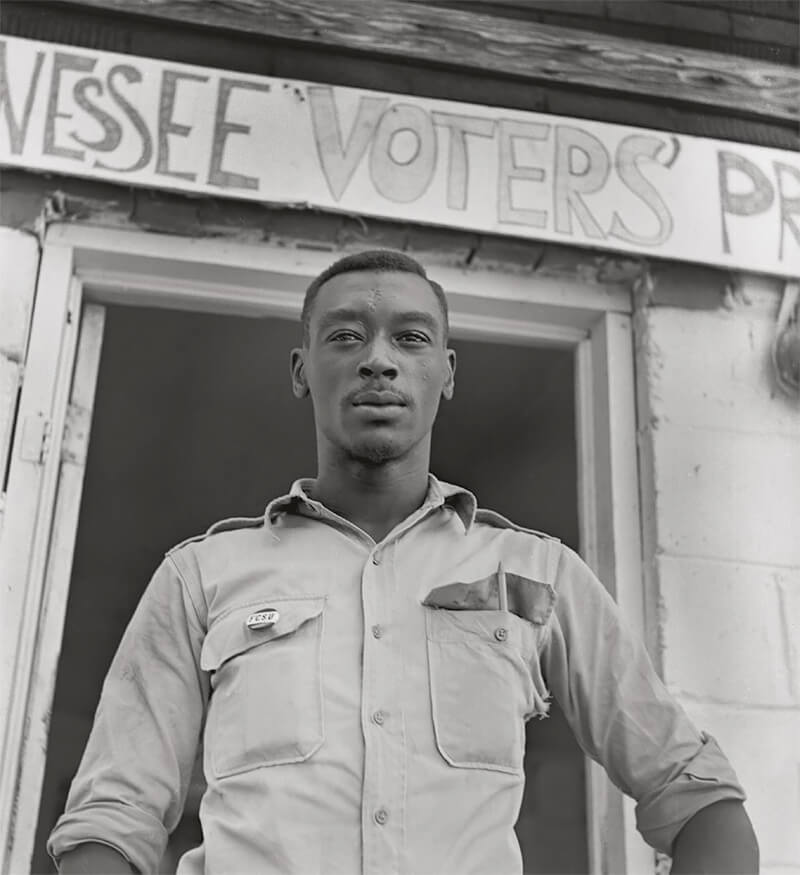
Ernest C. Withers: I'll Take You There

From June 24, 2021 to July 31, 2021
Share
Ernest C. Withers:  I’ll Take You There
148 North La Brea
Los Angeles, CA 90036
The Fahey/Klein gallery is pleased to present "Ernest Withers: I'll Take You There", an exhibition hosted in conjunction with his recently published book, "The Revolution in Black and White" (CityFiles Press). This exhibition and publication are a record of African American life in the South during the mid-20th century. Withers's photographs of Beale Street, family life in Memphis, the rise of Rock 'n' Roll and R&B, and the Civil Rights movement capture a time of radical change.

"Photography is a collection of memories. One who is trained in photography knows that. Instinctively, people who have an occupation know what they ought to do. You call the fireman to put out the fire; you call the police to solve a police problem; and people who are news people and journalists are collectors and recorders of present evidence, which after a given length of time-days, months, years becomes history." Ernest C. Withers

Withers documented a history that still resonates today, capturing the momentous, and often dangerous, upheaval of America's civil rights movement across the South from the late 1940's through the 1960's. Apart from documenting those fighting for racial justice and equity, Withers gained acclaim by capturing the African American experience, creating a singular record of day-to-day life in an effort to better illustrate and understand life in the South during this crucial era. His vast archive also includes images of famed Memphians who brought Soul, Rock 'n' Roll, and the Blues into the white, mainstream music scene. From blues to baseball, high school proms and football games to funerals and marches, and moments both mundane and historic, Withers was there, camera in hand. The confidence and skill he developed in the juke joints of Beale Street and on assignment for newspapers served him well when history happened. He was fearless in the face of intimidation, risking life and limb to get the shot.

Dr. Ernest C. Withers, Sr. (1922 - 2007) a native Memphian, is an internationally acclaimed photojournalist. His photographs have been published extensively in the New York Times, Washington Post, Time, Life, Jet, and Ebony. His well-known images comprise an unequaled time capsule of the heartland of Mid-Century America. Withers's images are in the permanent collection of The Smithsonian and other esteemed institutions.
Our printed edition showcases the winners of AAP Magazine call of entries
All About Photo Magazine
Issue #53
Stay up-to-date  with call for entries, deadlines and other news about exhibitions, galleries, publications, & special events.

Exhibitions Closing Soon

Time Exposed: Hiroshi Sugimoto’s Seascapes
Parrish Art Museum | Water Mill, NY
From September 13, 2025 to February 08, 2026
Time Exposed: Hiroshi Sugimoto’s Seascapes, on view at the Parrish Art Museum from September 13, 2025 through February 8, 2026, presents one of the most meditative bodies of work in contemporary photography. Drawn from a decade-long pursuit that began in 1980, this exhibition invites viewers to slow down and contemplate the elemental meeting of sea and sky, a horizon that has remained unchanged throughout human history. For Sugimoto, the ocean is both subject and metaphor, a timeless presence that anchors memory, perception, and being. Traveling to distant coastlines across the globe, Sugimoto photographed oceans that have witnessed the passage of civilizations, wars, and migrations. From the Atlantic to the Pacific, from the Adriatic to the Tasman Sea, each image shares the same restrained composition: water below, sky above, divided by a nearly perfect horizon line. Yet within this apparent sameness lies infinite variation. Shifts in light, atmosphere, and weather transform each photograph into a unique meditation on time and impermanence. Using a large-format, nineteenth-century camera and black-and-white film, Sugimoto embraces a deliberately traditional photographic process. Long exposures allow subtle movements of water and air to register on the film, creating images that feel suspended between stillness and motion. Some seascapes appear crystalline and sharply defined, while others dissolve into mist, where sea and sky nearly merge. The absence of land, figures, or man-made elements intensifies the sense of quiet and encourages a contemplative mode of viewing. Seen together, the fifty-one photolithographs form a visual rhythm rather than a linear narrative. Repetition becomes a tool for reflection, reminding viewers that while the world accelerates, certain experiences remain constant. Time Exposed: Hiroshi Sugimoto’s Seascapes offers not spectacle, but solace—an encounter with the sublime that reconnects us to nature’s enduring presence and to photography’s capacity to reveal the profound within the seemingly simple. Image: Hiroshi Sugimoto (Japanese, b. 1948). Sea of Japan, Oki, 1987, photolithograph, 9 ½ x 12 in. Parrish Art Museum, Water Mill, New York, Gift of the Joy of Giving Something, Inc., 2022.7.73. © Hiroshi Sugimoto
Ken Ohara: CONTACTS
Whitney Museum of American Art | New York, NY
From October 10, 2025 to February 08, 2026
In 1974, photographer Ken Ohara embarked on an experiment that transformed the act of image-making into a collective gesture of trust and chance. Living in New York City but born in Tokyo in 1942, Ohara began what he called a photographic chain letter—an invitation sent to strangers chosen randomly from the phone book. Each received a preloaded camera with simple instructions: take photographs of yourself, your family, and your surroundings, then return the camera along with the name of the next participant. Over two years, this modest device passed through a hundred hands across thirty-six states, traveling from Hawai’i to the Bronx, carrying with it fragments of countless unseen lives. The resulting project, titled CONTACTS, emerged amid the turbulence of 1970s America—an era marked by both disillusionment and transformation. Through this process, Ohara relinquished authorship, replacing the single photographer’s gaze with the plural vision of a nation in flux. What he gathered was not a documentary in the traditional sense, but a collective self-portrait of intimacy and distance, chaos and connection. Each roll of film became a diary of a moment in time, revealing the textures of domestic life, friendship, and solitude across vastly different geographies. The title CONTACTS resonates on multiple levels. It recalls the photographic contact sheet—a sequence of small images that reveal the rhythm and accidents of seeing—while also invoking the human touch at the project’s core. The selected enlarged contact sheets displayed in chronological order form a visual map of encounter and exchange. Through repetition, simplicity, and surrender, Ohara created what he described as a photography of possibility—an image of America shaped not by its surface unity, but by the unpredictable beauty found in its multiplicity of voices. Image: Ken Ohara, CONTACTS 47, Carr, San Francisco, California, 1974–1976. Gelatin silver print, 19 13/16 × 23 3/4 in. (50.3 × 60.3 cm). Whitney Museum of American Art, New York; purchase with funds from the Photography Committee 2025.37.47. © Ken Ohara
Tengo Lincoln Park en mi Corazón: Young Lords in Chicago
Depaul Art Museum | Chicago, IL
From September 11, 2025 to February 08, 2026
Tengo Lincoln Park en mi Corazón: Young Lords in Chicago revisits a pivotal moment in the city’s history, tracing the transformation of the Young Lords Organization (YLO) from a local street gang into a powerful force for social justice. Set against the backdrop of Lincoln Park’s gentrification and urban renewal during the 1950s and 1960s, the exhibition captures the resilience of Chicago’s Puerto Rican community as it confronted displacement and fought for recognition, dignity, and self-determination. Through an array of archival materials, photographs, murals, and prints, the exhibition reveals how activism took shape within everyday life. The works of Carlos Flores, Ricardo Levins Morales, and John Pitman Weber—alongside newly commissioned pieces by Sam Kirk—trace a visual history of collective resistance. At the heart of the presentation, a multimedia installation by Arif Smith with Rebel Betty invites visitors to experience the emotional and cultural landscape of the movement, transforming memory into an immersive act of witness. A central concept explored throughout is counter-mapping: the act of redrawing the city through the eyes of those who lived its hidden histories. These maps reclaim space and voice, charting a geography of belonging that challenges the erasures of official narratives. They serve as tools of empowerment, reminding audiences that place, culture, and struggle are intertwined. One of the most defining moments in this story came in May 1969, when the Young Lords occupied the Stone Administration Building at McCormick Seminary—now part of DePaul University. This act of defiance became a lasting symbol of protest and community action. Today, a public plaque marks the site, anchoring the exhibition’s reflection on memory, justice, and legacy. Curated by DePaul University Professor Jacqueline Lazú and organized by the DePaul Art Museum, Tengo Lincoln Park en mi Corazón stands as both tribute and testimony—an enduring reminder of how collective resistance can reshape the city’s heart. Image: Young Lords members protesting the Vietnam War in a march from Lincoln Park to Humboldt Park, 1969. ST-70004742-0005, Chicago Sun-Times collection, Chicago History Museum.
Gregory Crewdson: Eveningside
Taubman Museum of Art | Roanoke, VA
From September 04, 2025 to February 08, 2026
Gregory Crewdson has long stood at the crossroads of photography and cinema, crafting images that are at once meticulously staged and hauntingly ambiguous. Over the past three decades, he has created a distinct visual language rooted in mystery, emotion, and the subtle drama of the everyday. Through elaborate sets, hand-built interiors, and carefully controlled lighting, Crewdson transforms ordinary American settings—often small towns in the Northeast—into dreamlike spaces where the familiar becomes strange and the mundane turns mythic. His recent series, Eveningside (2021–2022), marks a striking evolution in his work. Rendered entirely in black and white, these photographs evoke a cinematic melancholy, recalling both the shadows of film noir and the rich tonal traditions of classic photography. Each image is created with the precision of a film production, involving large crews, complex lighting, and deliberate choreography. Yet the result is a single frozen moment—a still that suggests an untold story, leaving viewers to imagine what exists beyond the frame. Presented at the Taubman Museum of Art, Eveningside invites audiences into a quiet, surreal world of solitude and beauty. The figures who inhabit these scenes seem both grounded and otherworldly, suspended in moments of introspection or longing. Crewdson’s art asks us to slow down, to feel the emotional weight of stillness, and to consider how light itself can tell a story. Born in Brooklyn and now based in western Massachusetts, Crewdson is a professor and the Director of Graduate Studies in Photography at the Yale School of Art. His influential career—spanning works such as Twilight, Beneath the Roses, and Cathedral of the Pines—has redefined what a photograph can be: a fragment of fiction that captures the quiet intensity of life’s most elusive moments. Image: Madeline’s Beauty Salon, 2021-22, digital pigment print, © Gregory Crewdson, Courtesy of the Artist
Engaging the Elements: Poetry in Nature
The Baltimore Museum of Art | Baltimore, MD
From September 17, 2025 to February 08, 2026
This focus exhibition explores artistic engagement with the natural environment as a source of creative inspiration worth celebrating and protecting. Approximately 25 photographs, prints, drawings, and textiles illustrate the elements of air, water, earth, and fire against broader themes of ecological awareness and preservation. These range from how artists have used visual language to convey the act of locating oneself in nature; works that depict natural forms through the physical integration of environmental components; and artists’ commentary on sites of environmental disaster, the socio-political ramifications of human impact, and the potential of symbiotic healing for this planet and its occupants. Presented as part of the Turn Again to the Earth environmental initiative. Curated by Andaleeb Badiee Banta, BMA Senior Curator of Prints, Drawings, and Photographs.
Deadbeat Club, The Californians: Ian Bates, Tracy L. Chandler, and Janet Delaney
The Center for Photographic Art (CFPA) | Carmel, CA
From January 10, 2026 to February 08, 2026
The exhibition Deadbeat Club, The Californians at the Center for Photographic Art offers a compelling portrait of California through the lenses of three distinct photographers: Ian Bates, Tracy L. Chandler, and Janet Delaney. Though each artist follows their own path, the show weaves their works together into a collective reflection on identity, place, and the shifting cultural landscape of the Golden State. Ian Bates, based in the San Francisco Bay Area, explores the contradictions of human nature and how individuals engage with their environments. His images often register subtle tensions—between desire and decay, freedom and restraint—revealing a California that is both alluring and troubled. Bates’s viewpoint offers a contemporary look at setting, social dynamics, and the intimate dramas that unfold in the spaces we inhabit. Tracy L. Chandler brings a deeply personal and emotional perspective to the exhibition. Working across portraiture, landscape, and narrative, Chandler’s photographs confront memory, psychological projection, and the weight of place. Her series A Poor Sort of Memory connects individual history with broader cultural currents, tracing the impact of time and change on people and land alike. Chandler’s work resonates with vulnerability and quiet strength, inviting the viewer to reflect on what is carried forward and what is lost. Janet Delaney’s long-term engagement with urban transformation brings documentary depth to the show. Her photographs bear witness to the evolving realities of cities like San Francisco and New York—through gentrification, protest, migration, and shifting social fabrics. Delaney captures not just physical change, but the human stories entwined with it: communities at once fragile and resilient, searching for belonging amid upheaval. Together, the works in Deadbeat Club, The Californians present California as a layered landscape—geographic, cultural, and emotional. The exhibition explores continuity and disruption, memory and reinvention. By bringing these three photographers together, the show reveals how identity and place merge, diverge, and transform, reflecting both the promise and the complexity of life in California. Image: Janet Delaney, Too Many Products © Janet Delaney
David Stock: Heart of the City
440 Gallery | Brooklyn, NY
From January 08, 2026 to February 08, 2026
Heart of the City presents a vivid and unsentimental portrait of New York street life through the lens of David Stock, whose photography has long been rooted in the daily realities of working communities. On view at 440 Gallery from January 8 to February 8, 2026, the exhibition reflects Stock’s sustained engagement with the neighborhoods of Jackson Heights, Queens, an area defined by migration, labor, and constant movement. Rather than seeking spectacle, Stock focuses on the ordinary moments that reveal the city’s enduring pulse. Wandering busy sidewalks and storefront-lined avenues, Stock captures scenes shaped by chance encounters and human proximity. His photographs are alive with motion and color, yet grounded in careful observation. Within the apparent chaos of the street, he uncovers small narratives—glances exchanged, gestures frozen mid-action, fleeting interactions that speak to perseverance and collective energy. These images form a textured portrait of grassroots New York, where cultural difference coexists with shared routines and aspirations. Stock’s background as a political activist deeply informs his approach. Having worked a range of labor-intensive jobs after graduating from Harvard in the early 1970s, he brings an insider’s awareness to the people he photographs. His work resists romanticization while maintaining a clear sense of empathy and respect. The camera becomes a tool for solidarity, bearing witness to lives shaped by work, migration, and resilience, and honoring the dignity found in everyday struggle. This exhibition marks Stock’s fifth solo presentation at 440 Gallery, underscoring a long-standing relationship between artist and venue. Over the decades, his photographs have been shown internationally in museums, universities, and community spaces, reflecting a practice that moves fluidly between art institutions and public contexts. That balance mirrors the spirit of his images, which remain firmly rooted in lived experience rather than abstraction. Heart of the City is both a continuation and a reaffirmation of David Stock’s commitment to street photography as a form of social engagement. In an era of rapid urban change, these photographs preserve the rhythms of neighborhood life and remind viewers that the soul of the city is found not in landmarks, but in the people who animate its streets each day. Image: © David Stock
Scott Offen: Grace
Griffin Museum of Photography | Winchester, MA
From December 08, 2025 to February 12, 2026
Grace, a seven-year collaborative project by Scott Offen, is a profound meditation on intimacy, aging, and selfhood. In this work, Offen photographs alongside his partner, Grace, examining the nuanced intersections of gender, representation, autonomy, and visibility over the course of a long-term relationship. By situating Grace within both domestic interiors and mythic outdoor landscapes, the project navigates how personal identity evolves in private and public spheres, and how presence is felt even in moments of solitude. Within domestic interiors, Grace’s essence permeates the space, revealing traces of her life and agency even when she is not physically in frame. These quiet moments reflect the ways intimacy and familiarity shape understanding, capturing the subtle gestures and rhythms that constitute everyday life. Outdoors, mythic landscapes become a character in themselves—like fantastical realms reminiscent of Wonderland or Oz, the natural world oscillates between the whimsical, the eerie, and the sublime, inviting viewers to consider the interplay between human presence and environment, and how landscapes shape our perception of identity. Offen’s photographic approach blends traditional and contemporary methods, from 8×10 large format to digital photography, producing images that are at once meticulously composed and emotionally resonant. The resulting series foregrounds Grace’s autonomy and explores the larger questions surrounding aging and visibility in a society often dismissive of older women, presenting both vulnerability and strength in equal measure. First published as a monograph by L’Artiere in 2025, Grace has been exhibited nationally and recognized in festivals and reviews across major photography publications, solidifying Offen’s place among contemporary photographers exploring intimate collaboration and identity. On view at The Griffin @ WinCam, this exhibition offers a rare opportunity to experience a deeply personal, collaborative exploration of life, love, and the enduring complexity of human presence, both indoors and in the vast, unpredictable landscapes that mirror our inner worlds. Image: © Scott Offen
Eyes in Gaza II
St. James Chapel of the Cathedral of St. John the Divine | New York, NY
From January 22, 2026 to February 12, 2026
Eyes in Gaza II arrives in New York as a quiet yet unflinching act of witness, presented by the Lucie Foundation at the St. James Chapel of the Cathedral of St. John the Divine. On view from January 22 to February 12, 2026, the exhibition gathers firsthand photographic accounts from within the Gaza Strip, a territory where daily life, memory, and survival are in constant jeopardy. Set within a sacred architectural space long associated with reflection and moral conscience, the exhibition invites visitors to slow down and confront images shaped by urgency, loss, and endurance. The roots of Eyes in Gaza II trace back to the Lucie Impact Award, which since 2018 has honored outstanding journalistic contributions in photography. In a historic decision, the 2023 award was granted not to a single author but to a collective of Gaza-based photojournalists whose work documented unfolding events in real time. Their photographs, often produced under extreme danger, circulated globally and reshaped public understanding of the conflict. This second chapter revisits those voices, presenting images by photographers who risked everything to record what they saw, felt, and endured. Years later, the circumstances that prompted the original project remain painfully unresolved. Eyes in Gaza II brings together earlier photographs alongside more recent images from those still able to work on the ground, while acknowledging the many journalists who have been forced into exile or silence. Each photograph functions as a fragment of a larger narrative, revealing everyday moments alongside profound tragedy. Together, the images resist abstraction, grounding geopolitical realities in human experience and personal testimony. The exhibition is made possible through the support of the Cathedral of St. John the Divine and its leadership, whose openness has allowed this urgent body of work to reach a wider audience. Eyes in Gaza II is also a memorial, dedicated to Omar Al-Derawi, a 2023 Lucie Impact Award honoree killed in January 2025. His legacy, and that of his colleagues, endures through images that insist on being seen, remembered, and reckoned with. Image: Saher Alghorra. Palestinian children play on a swing between the tents of displaced people in the Khan Yunis camp in the southern Gaza Strip on October 28, 2024. © Saher Alghorra
Ashima Yadava: Font Yard
Chung 24 Gallery | San Francisco, CA
From January 07, 2026 to February 14, 2026
Ashima Yadava: Front Yard, presented at Chung 24 Gallery from January 7 to February 14, 2026, offers a quietly radical rethinking of documentary photography through collaboration, intimacy, and shared authorship. Rooted in the symbolic space of the “front yard,” the exhibition frames domestic thresholds as sites where personal histories, cultural memory, vulnerability, and resilience intersect. Here, the home becomes both a literal and metaphorical landscape—one that reflects love, fear, silence, and survival across diverse communities in the San Francisco Bay Area. At the heart of this body of work is Yadava’s refusal of the traditional, one-sided documentary gaze. Instead, she invites her subjects into the image-making process itself. Families are given black-and-white photographic prints and encouraged to color, mark, or embellish them as they choose. These gestures—thumbprints forming balloons, flowers outlining poetic lines in Tamil or Urdu—transform the photograph into a living, tactile conversation. The resulting images reveal not only how people wish to be seen, but how they understand themselves within broader social and emotional realities. The project spans households from varied socio-economic backgrounds, each contributing a distinct visual and cultural language. Poetry, text, ornament, and touch coexist within the photographic frame, collapsing boundaries between documentation and expression. These collaborative acts often open the door to deeper dialogue, allowing stories to unfold slowly and organically. What emerges is a collective portrait of communities negotiating identity, belonging, and care amid uncertainty and global unrest. Yadava’s practice has long positioned photography as a tool for social engagement and reform, and Front Yard continues this commitment with remarkable sensitivity. By foregrounding collaboration over extraction, the work suggests that understanding begins not with observation, but with participation. In a world marked by division and distrust, this exhibition proposes a gentler, enduring alternative: the shared sowing of visual seeds that affirm connection, dignity, and humanity. Image: Ashima Yadava, Frontyard_Manju_02 (AP 2/2) Archival Pigment Print of Original Inkjet Print with Mixed Media 22 x 17 in, at Chung 24 Gallery © Ashima Yadava
The Abstract Image
Praxis Gallery | Minneapolis, MN
From January 20, 2026 to February 14, 2026
The Abstract Image, on view at Praxis Photo Arts Center from January 20 to February 14, 2026, brings together photographic works that deliberately step away from description and toward visual exploration. Rather than anchoring meaning in identifiable subjects, the exhibition emphasizes photography as a language of form—one shaped by light, color, texture, rhythm, and spatial tension. Here, the camera becomes less a tool of documentation than an instrument for inquiry, revealing how abstraction can reframe the act of seeing itself. Across the exhibition, images unfold through surfaces and structures that invite sustained attention. Shadows dissolve into geometry, color fields pulse with quiet energy, and lines intersect in ways that feel both deliberate and intuitive. These photographs do not ask to be read quickly; instead, they reward lingering observation. By removing the certainty of representation, the works encourage viewers to respond sensorially and emotionally, allowing perception to guide interpretation rather than narrative or context. The artists featured employ a wide range of lens-based strategies, from experimental camera techniques to darkroom interventions and digitally mediated processes. Some images originate in the physical world but are transformed through framing and reduction, while others approach pure abstraction, untethered from any recognizable reference. Together, these approaches demonstrate how abstraction has long been embedded in the photographic tradition, from early modernist experiments to contemporary practices that continue to test the medium’s limits. Juried by the Praxis Directors, The Abstract Image reflects a commitment to photography as both a disciplined craft and an open field of experimentation. The exhibition affirms abstraction not as an escape from reality, but as another way of engaging with it—one that values ambiguity, formal intelligence, and visual clarity. By focusing on how images are built rather than what they depict, the exhibition highlights photography’s enduring capacity to surprise, challenge, and expand our understanding of visual experience. Image: Out of Control , USA. © Bernice Williams
Landscapes
Praxis Gallery | Minneapolis, MN
From January 20, 2026 to February 14, 2026
Landscapes, presented at Praxis Photo Arts Center from January 20 to February 14, 2026, explores the enduring relationship between photography and place. Landscape has long been a foundational subject in the history of the medium, valued for its ability to describe the world while also reflecting the inner life of the photographer. In this exhibition, the landscape appears in many forms—expansive and panoramic, intimate and closely observed, or abstracted into textures and details that invite slower, more contemplative looking. The works on view move fluidly between nature as it exists beyond human intervention and environments shaped by human presence. Untouched vistas coexist with altered terrains, revealing how land is continuously negotiated, occupied, and transformed. Roads, structures, and subtle traces of activity suggest stories of habitation and change, while quieter images emphasize stillness and resilience. Together, these photographs resist a single definition of landscape, presenting it instead as a living, evolving condition. Emotional and psychological undercurrents run throughout the exhibition. Many of the images function as repositories of memory, carrying echoes of attachment, loss, and longing. Familiar places become sites of reflection, while distant or imagined terrains evoke desire and uncertainty. In this way, the landscape operates not only as subject matter but also as metaphor—an external form mirroring internal states of mind and experience. Juried by Aline Smithson, Landscapes brings together diverse photographic approaches that expand how land and place can be understood. The exhibition highlights the camera’s unique ability to translate space into feeling, offering viewers a chance to reconsider their own relationship to the environments they inhabit or imagine. By embracing both observation and interpretation, the exhibition affirms landscape photography as a vital and expressive field—one that continues to evolve alongside our changing relationship with the world around us. Image: Land Heist, USA. © Sangram
Advertisement
AAP Magazine #55 Wmen
Win a Solo Exhibition in March
AAP Magazine #55 Wmen
Call for Entries
AAP Magazine #55 Women
Publish your work in our printed magazine and win $1,000 cash prizes

Related Articles

Photo Vogue Festival: Women by Women
The PhotoVogue Festival, the first conscious fashion photography festival to bridge ethics and aesthetics, returns to Milan for its tenth anniversary in 2026. From March 1 to 4, during Milan Fashion Week, the festival will take place at the Biblioteca Nazionale Braidense, one of Italy’s most historic and prestigious libraries—a fitting venue for a milestone edition that underscores the festival’s commitment to thoughtful, socially engaged photography.
Ruth Orkin: Women on the Move
Few photographers shaped the visual language of the mid-20th century with the clarity, empathy, and narrative force of Ruth Orkin. Long recognized as a key figure in the rise of American photojournalism, Orkin forged a body of work that placed women—ordinary and extraordinary—at the center of the modern world. Ruth Orkin: Women on the Move, on view at the National Museum of Women in the Arts from December 12, 2025, through March 29, 2026, revisits this legacy through 21 iconic and intimate photographs made between the 1950s and 1970s.
World Press Photo Exhibition 2025
For the first time in New York City, the World Press Photo Exhibition 2025 opens its doors, presenting the 42 winners of the annual World Press Photo Contest. This year’s selection brings together striking and thought-provoking images that capture the defining issues of our time, offering a window into urgent global stories through the lens of exceptional photographers.
All About Photo Presents ’When The Pavement Breathes’ by Margarita Mavromichalis
When The Pavement Breathes is a vivid exploration of those fleeting, often overlooked moments that quietly transform the mundane into the extraordinary. Through spontaneous and candid encounters, Margarita Mavromichalis reveals a street world alive with subtle disruptions—unexpected juxtapositions, fleeting expressions, visual coincidences, and delicate details that momentarily suspend routine perception. In her images, the street is not merely a backdrop for daily life but a living, breathing stage where the ordinary continuously flirts with surprise.
The Gordon Parks Foundation Celebrates 20 Years
The Gordon Parks Foundation is celebrating its 20th anniversary with a yearlong series of exhibitions, publications, fellowships and events, all of which will highlight how the legacy of Gordon Parks (1912–2006) continues to inform contemporary artistic practice in new and innovative ways. Since its founding in 2006 to steward Parks’ multifaceted work as a photographer, musician, writer and filmmaker, the Foundation has steadily grown and expanded its capacity to provide crucial support to emerging, mid-career and late-career artists across a wide variety of disciplines. This focus on interdisciplinarity is at the heart of both the Foundation and the legacy of Parks himself, who believed unreservedly in the power of art to be a catalyst for social change and to illuminate the human condition.
Eugène Atget: The Making of a Reputation
The International Center of Photography (ICP) is proud to present Eugène Atget: The Making of a Reputation, an exhibition that examines how Eugène Atget (1857–1927) came to be regarded as one of the forefathers of modern photography through the timely and tireless advocacy of Berenice Abbott. Featuring historic prints from ICP’s collection alongside landmark publications and other printed ephemera, the exhibition reconsiders the role that Abbott played in establishing Atget’s now-canonical status, sometimes to the detriment of her own remarkable career as a photographer. Though Atget didn’t live to see it, Abbott became the ideal steward, proving that every photographer needs a champion.
Zhang Kechun: The Yellow Desert
Huxley-Parlour is pleased to present The Yellow Desert, a photography exhibition by contemporary Chinese photographer Zhang Kechun. Featuring eleven new large-format works from his latest series, begun in August 2025, the exhibition explores the Gobi Desert across Northern China and Southern Mongolia. Through landscape photography that bridges history, culture, and human presence, Zhang Kechun examines the complex relationship between desolation, memory, and modern life in this vast and evolving terrain.
All About Photo Presents ’Fay and Gay’ by Samantha Yancey
The project Fay and Gay by Samantha Yancey, on view throughout January 2026, offers an intimate and deeply human portrait of devotion, routine, and shared identity. This compelling body of work centers on Fay and Gay, twin sisters born in 1936 near Pelahatchie, Mississippi, whose lives have unfolded side by side for nearly nine decades.
Alia Ali
Gilman Contemporary presents a striking introduction to the work of Alia Ali, an artist whose multicultural background spanning Yemen, Bosnia, and the United States deeply informs her visual language. Her photographs, rich in pattern and color, navigate the complex terrain of identity, migration, and belonging. Rather than offering conventional portraiture, Ali envelops her subjects in boldly patterned textiles, allowing fabric itself to become both veil and voice. These coverings obscure familiar markers of identity, inviting viewers to question how much of what we think we know about a person is shaped by what we see—or what we assume.
Call for Entries
AAP Magazine #55 Women
Publish your work in our printed magazine and win $1,000 cash prizes