All about photo.com: photo contests, photography exhibitions, galleries, photographers, books, schools and venues.
Win a Solo Exhibition in June 2026 + An Exclusive Interview!

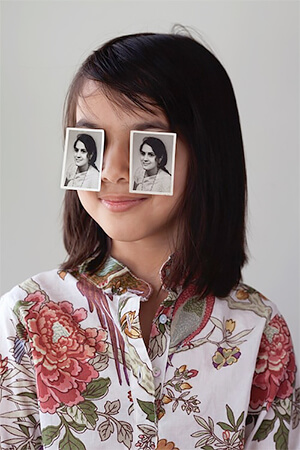
Heirloom: Weaving Memory with the Now

From March 26, 2021 to August 01, 2021
Share
Heirloom: Weaving Memory with the Now
333 North Laura Street
Jacksonville, FL 32202
This UNF Gallery exhibition features the work of Priya Kambli. Born in India, Kambli moved to the United States in 1993 at the age of eighteen, a few years after the death of her parents, to pursue her education. Carefully stowed within her single, small suitcase was a cache of family photographs which became the basis of Kambli's creative work-a growing body of images exploring migration, transience, and cultural identity. Her lyrical photographic compositions are not only a rich synthesis of light, pattern, and texture, but also a moving testament to the tangible, archival nature of photography.
Stay up-to-date  with call for entries, deadlines and other news about exhibitions, galleries, publications, & special events.

Exhibitions Closing Soon

Improper Frames
Cleveland Print Room | Cleveland, OH
From February 14, 2026 to May 10, 2026
On view from February 14 through May 10, Improper Frames gathers artists who probe the unstable edges of Cleveland’s built environment, tracing the fault lines between documentation and lived experience. Organized by Cleveland Print Room and curated by Theodossis Issaias, the exhibition unfolds as a response to the city’s recently completed property inventory—an exhaustive survey that catalogues parcels and structures with bureaucratic precision. While such inventories promise clarity and order, the works presented here reveal what slips through official grids: memory, improvisation, and the quiet negotiations that shape daily life. Cleveland, long defined by cycles of industrial growth and contraction, has seen its neighborhoods reclassified and revalued through shifting policies and redevelopment plans. Against this backdrop, the participating artists approach the survey not as a neutral tool, but as a framing device that determines which stories are legible. Trees extend across invisible property lines, disregarding cadastral borders. Photographic assemblages collect fragments of testimony and architecture, layering them into provisional wholes. Dust accumulates inside a home, becoming an unintended archive—an index of presence that no municipal ledger records. The exhibition features Amber Ford, Jon Gott, Michael Indriolo, Da’Shaunae Marisa, Vivica Satterwhite, and Alejandro Vergara, each developing projects through sustained engagement with Cleveland’s evolving terrain. Their practices move between photography, installation, and spatial intervention, suggesting that the city is less a fixed map than a series of overlapping frames. Improvised structures rise in vacant lots; partial views hint at lives unfolding just beyond the picture’s edge. These gestures resist the clean boundaries of classification, proposing instead a layered understanding of place. Improper Frames ultimately questions who has the authority to define a neighborhood’s limits and future. By foregrounding what is provisional, obscured, or unruly, the exhibition invites viewers to reconsider the city not as a completed survey, but as a living composition—one continually revised by those who inhabit it. Image: Private Property Tree—West Boulevard, part of Momentary Grounds, 2025. | Alejandro Vergara. Courtesy of the artist
Insistent Presence: Contemporary African Art from the Chazen Collection
The Palmer Museum of Art | University Park, PA
From February 07, 2026 to May 10, 2026
Insistent Presence: Contemporary African Art from the Chazen Collection, on view from February 7 to May 10, 2026, presents a compelling exploration of the human figure as a site of memory, resistance, and imagination. Spanning sculpture, painting, ceramics, printmaking, and photography, the exhibition brings together forty works by twenty-two artists whose practices reflect both lived experience and broader social realities. Across diverse visual languages, the artists assert the figure as a powerful means of addressing history, identity, and spiritual continuity in an ever-shifting contemporary world. The exhibition unfolds through three thematic sections that consider how the body is represented, implied, or deliberately withheld. “The Body in Society” examines how individuals exist within collective structures, revealing how proximity, isolation, and shared space shape personal and political identity. “The Artist is Present” turns inward, foregrounding artists who use their own bodies as tools of inquiry, performance, and testimony. In contrast, “The Absent Body” removes figuration entirely, inviting viewers to sense human presence through objects, clothing, and symbolic traces that evoke what is unseen but deeply felt. Artists represented come from across the African continent and its global diaspora, including voices connected to Tunisia, Egypt, Nigeria, Kenya, South Africa, Senegal, Ghana, the Democratic Republic of the Congo, and beyond. Despite the diversity of materials and approaches, the works share a commitment to affirming humanity in the face of political instability, colonial legacies, and social transformation. Emotional intimacy coexists with sharp critique, allowing everyday gestures, rituals, and expressions to carry broader cultural and historical weight. Drawn from the Chazen Museum of Art’s Contemporary African Art Initiative, the exhibition reflects a sustained effort to deepen the understanding of modern and contemporary African artistic production. By foregrounding the figure—whether visibly present or subtly implied—Insistent Presence encourages reflection on how bodies carry memory, belief, and resilience. The exhibition ultimately invites viewers to reconsider their own relationships to identity, community, and the shared human condition, emphasizing presence not as something static, but as something continually asserted and reimagined. Image: Nana Yaw Oduro (Ghanaian, b. 1994) PHILIP, 2019, inkjet print, 19-5/8 x 29-1/2 inches. Sara Guyer and Scott Straus Contemporary African Art Initiative made possible by the Straus Family Foundation, 2021.28.3 © Nana Yaw Oduro
Modern Women / Modern Vision: Photographs from the Bank of America Collection
Hudson River Museum | Yonkers, NY
From January 30, 2026 to May 10, 2026
Modern Women / Modern Vision: Photographs from the Bank of America Collection, on view at the Hudson River Museum from January 30 through May 10, 2026, offers a sweeping exploration of photography through the eyes of women who helped shape the medium from its earliest moments to the present day. Featuring nearly one hundred works, the exhibition foregrounds photography as a site of innovation, resistance, and self-determination, revealing how women consistently expanded the boundaries of visual culture across generations and continents. Organized into six thematic sections, the exhibition traces photography’s evolution alongside major social and historical shifts. From early modernist experimentation to the urgency of documentary work during the New Deal era, and from the collective activism of the Photo League to contemporary global perspectives, these photographs reveal how women used the camera to interpret—and often challenge—the world around them. Their images do more than record events; they propose new ways of seeing, questioning dominant narratives and redefining whose stories are worthy of attention. Throughout the twentieth century, women photographers navigated rapidly changing social landscapes, using photography as both a creative outlet and a means of independence. Many forged professional paths in the face of systemic barriers, pursuing subjects overlooked or dismissed by their male counterparts. Their work encompasses intimate portraits, experimental self-representation, political critique, environmental studies, and deeply human documentary projects, demonstrating an extraordinary range of approaches unified by curiosity, rigor, and vision. The exhibition brings together iconic figures and lesser-known voices, placing celebrated images into dialogue with works that deserve renewed recognition. Familiar photographs gain new resonance when viewed within broader historical and thematic contexts, while contemporary works underscore the ongoing vitality of women’s contributions to photography. Across styles that range from formal precision to emotional immediacy, these images reflect shifting ideas of identity, power, place, and representation. Modern Women / Modern Vision ultimately affirms photography as a medium profoundly shaped by women’s perspectives. By highlighting their enduring influence, the exhibition invites viewers to reconsider the history of photography not as a linear progression dominated by a few names, but as a complex, evolving conversation enriched by diverse experiences and bold acts of looking. Image: Dorothea Lange (American, 1895–1965). Child and Her Mother, Wapato, Yakima Valley, Washington, 1939. Gelatin silver print. Bank of America Collection. © Dorothea Lange
Gerald Incandela: Photographic Drawings
Wadsworth Atheneum Museum of Art | Hartfort, CT
From October 16, 2025 to May 10, 2026
Gerald Incandela has long stood apart as an artist who reshaped the boundaries between photography and painting. From the beginning of his career in the early 1970s, he rejected the prevailing ideals of straight photography—a movement that celebrated clarity and unaltered representation—and instead pursued an approach rooted in gesture, emotion, and transformation. Working within the darkroom as if it were a painter’s studio, Incandela created what he calls photographic drawings, images that blur the line between the mechanical and the handmade. His prints carry the marks of his process, filled with movement, energy, and a distinct sense of authorship. Before settling in the United States in 1977, Incandela lived and worked in Berlin and London, cities that shaped his early artistic vision. His rise to recognition came swiftly when the visionary curator Sam Wagstaff invited him to exhibit at the Corcoran Gallery of Art in 1978, giving him a dedicated room alongside Robert Mapplethorpe—a rare honor that underscored his singular approach to the medium. Around the same time, his exhibitions at The Kitchen, New York’s influential avant-garde space, further solidified his position as a creative force pushing the limits of photographic form. Even today, Incandela continues to explore the expressive potential of photography from his studios in Connecticut and California. Each print he creates remains a one-of-a-kind object, alive with texture and intuition. The exhibition traces his artistic evolution through three distinct series: the poetic landscapes and portraits of the 1970s and 1980s; the monumental figurative works of the following decades; and the intimate photographs taken on the set of Derek Jarman’s film Caravaggio (1986), marking forty years of their extraordinary collaboration. Together, these works reaffirm Incandela’s lifelong belief that photography is, above all, an act of creation. Image: © Gerald Incandela
Blazing Light: Photographs by Mimi Plumb
High Museum of Art | Atlanta, GA
From February 06, 2026 to May 10, 2026
Over the past five decades, photographer Mimi Plumb has constructed a striking and deeply personal record of the American West, capturing both its enduring beauty and its quiet disquiet. Her images reveal the intricate relationship between people and the landscapes they inhabit—spaces marked by change, resilience, and the shifting tides of modern life. In her first solo museum exhibition, the High Museum of Art presents three major bodies of her work, bringing together over one hundred photographs taken in and around San Francisco and throughout the Western United States. Plumb’s work chronicles an evolving America—one shaped by environmental transformation, political upheaval, and economic uncertainty. From the vast, open deserts to the fringes of suburban sprawl, her photographs reflect the contradictions of a region defined by both opportunity and decline. Her lens captures the quiet drama of everyday existence: teenagers gathered at the edge of town, dust settling over a parched field, the melancholic glow of a neon sign flickering against the twilight. These moments, though ordinary, convey a profound sense of fragility and endurance. The exhibition invites viewers to consider how the Western landscape has mirrored the changing hopes and fears of American life since the 1970s. Through Plumb’s precise compositions and empathetic eye, the familiar becomes mysterious, and the distant past feels eerily present. Her photographs are less about nostalgia than about reckoning—an attempt to understand how humans move through, alter, and are shaped by their environments. Following its debut at the High, the exhibition will travel to the Herbert F. Johnson Museum of Art at Cornell University, the Norton Museum of Art, and the Museum of Contemporary Photography at Columbia College Chicago, extending Plumb’s meditative exploration of place and time to new audiences across the country. Image: Mimi Plumb (American, born 1953), Boys and Tires, Sears Point, 1976, pigmented inkjet print, Gift of Lucas Foglia, 2025.87. © Mimi Plumb.
Nona Faustine
The Center for Photography at Woodstock - CPW | Kingston, NY
From January 31, 2026 to May 10, 2026
The first major retrospective devoted to Nona Faustine offers a sweeping tribute to an artist whose vision forever changed the landscape of contemporary photography. Spanning landmark series such as White Shoes, Mitochondria, and My Country, the exhibition traces how Faustine confronted the United States’ historical amnesia while giving form to the profound strength found within matrilineal heritage. Her work fused personal narrative with political urgency, creating images that continue to resonate long after they are seen. Faustine’s photographs are defined by their fearless insistence on truth. Her self-portraits at former slave auction sites stand among the most arresting images of the past several decades—quiet, unwavering acts of testimony that compel viewers to face the buried histories beneath familiar streets and skylines. Alongside these stark reflections on America’s past, her tender portrayals of her mother, sister, and daughter reaffirm Black womanhood as both a vessel of memory and a wellspring of resilience. Through these interconnected bodies of work, Faustine established a lineage that binds private experience to collective history. A limited-edition artist’s book, published by CPW, accompanies the exhibition and offers deeper insight into Faustine’s creative process, especially her collaboration with her sister, Channon Faustine. Born and raised in New York, the artist was profoundly shaped by the city’s layered past. White Shoes began in 1991 after Faustine encountered an excavation in lower Manhattan that revealed the remains of thousands of enslaved Africans. The discovery dismantled long-held assumptions about New York’s historical role and laid bare the hidden labor that built the foundations of the city. This retrospective invites viewers to engage with Faustine’s work with renewed attention—to the landscapes that shelter forgotten stories, to the bodies that carry generational memory, and to the fierce clarity of an artist who understood that bearing witness is an act of inheritance. Image: They Tagged The Land With Trophies and Institutions From Their Rapes And Conquests, Tweed Courthouse, NYC, 2013, pigment print, 40 × 60 inches. © Nona Faustine
The Family Album of Ralph Eugene Meatyard
High Museum of Art | Atlanta, GA
From December 12, 2025 to May 10, 2026
A largely self-taught photographer, Ralph Eugene Meatyard (American, 1925–1972) was a pioneering and inventive artist who created some of the most original images of the mid-twentieth century. His work defies easy categorization as he experimented across various genres and subjects, and throughout his career, he maintained the ethos of an amateur, approaching photography with a sense of affection, discovery, and surprise. He is best known for his staged scenes that suggest an absurd fantasy set in the dilapidated houses and banal suburban environs near his home in Lexington, Kentucky. These scenes, often featuring his family as actors and using props such as masks and dolls, reveal Meatyard’s search for inner truths amid the ordinary. This exhibition, coinciding with the artist’s centenary, will feature the thirty-six prints that comprise the artist’s first monograph (Gnomon Press, 1970)—one of only two books he published in his lifetime—which Meatyard intended to stand as his definitive artistic statement. Through his idiosyncratic selection of images, this exhibition will explore how Meatyard’s singular approach and voracious curiosity expanded photography’s expressive and conceptual potential. Image: Self-Portrait (Frontispiece), ca. 1964–1966
Ocean Vuong: SỐNG
The Center for Photography at Woodstock - CPW | Kingston, NY
From January 31, 2026 to May 10, 2026
Ocean Vuong’s first public exhibition of photographs offers a rare glimpse into the visual dimension of a voice already celebrated for its clarity, compassion, and emotional depth. Known for his poetry and prose that illuminate the immigrant working-class experience, Vuong now extends that attentive gaze through the camera lens, revealing how his storytelling expands when translated into images. This exhibition presents a deeply personal exploration of memory, family, and the quiet spaces where identity takes shape. Vuong has long turned to photography as part of his creative process, yet these works have remained private until now. His images move between the vivid glow of nail salons, the quiet of familiar interiors, and the muted corners of everyday life. Each frame feels like a held breath, attentive to the textures of belonging and the shadows of loss. A central focus of the exhibition is a series of intimate portraits of his younger brother, taken during a period marked by mourning and renewal after their mother’s passing. Through these photographs, Vuong reflects on the fragile balance between grief and care, finding moments of tenderness within the uncertainty of healing. A limited-edition artist’s book, co-published by CPW and 1080PRESS, further expands this dialogue between words and images. Vuong’s own reflections trace the beginning of his photographic journey back to community college, when he first borrowed a friend’s Nikon D80 to document punk shows in basements and bars. It was through these early experiments that he discovered the evocative power of omission: how a single frame can offer only a fragment, inviting viewers to imagine the world beyond its edges. That sense of partial revelation carries into his later work, including early photographs made in his mother’s nail salon in 2009. There, he observed the daily rhythms of the women who shaped his world—working, resting, sharing moments of humor and fatigue. Vuong’s images honor these small gestures, insisting that everyday life, in all its complexity, deserves to be seen and remembered. Image: © Ocean Vuong
Qiana Mestrich: Do Not Fold, Spindle, or Mutilate
The Center for Photography at Woodstock - CPW | Kingston, NY
From January 31, 2026 to May 10, 2026
This exhibition presents a selection of works by Qiana Mestrich, honored with the CPW 2025 Saltzman Prize for Emerging Photographer of the Year. Chosen by a distinguished jury of Dawoud Bey, Stephen Shore, and Lucy Sante, Mestrich brings forward a practice rooted in research, visual storytelling, and a commitment to reshaping how labor histories are remembered. Her ongoing collage series, The Reinforcements, forms the core of this presentation, offering a powerful reconsideration of the American workplace in the 1970s and ’80s. In this series, Mestrich constructs a speculative visual archive that restores women of color to the center of the corporate environments they helped sustain. Using both found photographs and personal images—including those of her own mother—she reimagines office spaces filled with the textures of their time: fax machines, rotary phones, typewriters, and modular desks. Through these collages, she highlights the essential roles women of color occupied, while questioning why their presence has been largely excluded from mainstream archival records. A limited-edition artist’s book, published by CPW in collaboration with 1080PRESS, accompanies the exhibition. This publication expands on Mestrich’s exploration of Black and immigrant women’s labor histories, drawing connections between personal experience, collective memory, and social structures that shaped the workplace from the late 1960s onward. These images trace systemic inequities—unequal pay, restricted advancement, and racial and gender bias—while emphasizing the resilience and agency of the women who navigated them. The Reinforcements emerges from Mestrich’s broader research project, @WorkingWOC, an independent digital archive dedicated to documenting the experiences of women of color in the workforce from the Civil Rights era to the early 2000s. By blending historical documentation with creative intervention, Mestrich challenges the gaps left by traditional archives and encourages viewers to rethink how corporate histories are constructed. Through this exhibition, CPW reaffirms its dedication to presenting artists whose work provokes dialogue and brings long-overlooked narratives into sharper focus. Image: Untitled (The Ideal File Clerk)”, from the Reinforcements series, 2023 Mixed Media Collage on Stonehenge Aqua Coldpress Black Paper 8 x 10 © Qiana Mestrich
Persona: Photography and the Re-Imagined Self
Isabella Stewart Gardner Museum | Boston, MA
From February 19, 2026 to May 10, 2026
Persona: Photography and the Re-Imagined Self, on view at Hostetter Gallery from February 19 to May 10, 2026, examines how artists have long used photography to step outside themselves and become someone—or something—else. Spanning more than a century, the exhibition traces a lineage of photographic self-transformation that reflects shifting ideas of identity, freedom, and representation. At its core is a simple but powerful proposition: the self is not fixed, and the camera can be a tool for reinvention. Since the early twentieth century, photographers have adopted alter egos as a way to test social boundaries and challenge inherited roles. Some personas emerge through disguise, costume, or makeup, while others are constructed through performance, ritual, or digital manipulation. Whether subtle or theatrical, these transformations allow artists to question how identity is shaped by gender, race, nationality, class, and desire. By presenting themselves as avatars, icons, or imagined doubles, they expose the fragile line between who we are and who we are expected to be. The works gathered in Persona range from playful experiments to deeply political statements. Historical figures converse with contemporary voices, revealing how strategies of masking, role-playing, and self-staging have evolved alongside photographic technology. Time collapses as artists borrow from mythology, popular culture, and future speculation, bending reality to create spaces where new selves can briefly exist. In these images, humor and provocation often coexist with vulnerability, inviting viewers to reflect on their own assumptions about authenticity and truth. More than a survey of artistic practices, the exhibition functions as an invitation. By witnessing acts of transformation, viewers are encouraged to imagine alternative versions of themselves and to consider identity as fluid rather than prescribed. Persona: Photography and the Re-Imagined Self suggests that reinvention is not an escape from reality, but a means of expanding it—opening room for empathy, creativity, and the possibility of becoming otherwise. Image: Photo courtesy of the artist and Yossi Milo, New York Samuel Fosso (Cameroonian), Self-Portrait (Angela Davis) from African Spirits series, 2008. Ilford Fiberbased Glossy Paper, 101.5 x 76 cm (40 x 30 in) © Samuel Fosso
In the Library: Mary Cassatt’s American Legacy
National Gallery of Art | Washington, DC
From February 16, 2026 to May 15, 2026
In the Library: Mary Cassatt’s American Legacy at the National Gallery of Art offers an intimate look at the transatlantic networks that shaped one of the most celebrated figures of Impressionism. On view from February 16 through May 15, 2026, this focused installation in the museum’s Library complements the major exhibition dedicated to Cassatt’s life and work, illuminating the documentary traces behind her artistic achievements. Drawing from the Gallery’s extensive research holdings, the presentation gathers archival photographs, rare exhibition catalogues, and personal correspondence to reveal Cassatt’s deep and sustained ties to the United States. Born in Pennsylvania and professionally rooted in Paris, Cassatt cultivated a cosmopolitan identity that bridged continents. Her work absorbed diverse influences, from the radical compositional strategies of Japanese printmakers such as Hiroshige and Hokusai to the painterly authority of European masters including El Greco and Diego Velázquez. Through this synthesis, she forged a distinctly modern language grounded in observation, intimacy, and structural clarity. Beyond her achievements as a painter and printmaker, Cassatt played a crucial advisory role for American collectors and institutions. Letters and documents on view underscore how she guided patrons toward progressive acquisitions, encouraged support for contemporary French art, and championed both avant-garde innovation and historical masterworks. Her recommendations helped shape important private collections and influenced the development of public museums in the United States at a pivotal cultural moment. By presenting these materials within the scholarly setting of the Library, the exhibition emphasizes Cassatt’s impact not only as an artist but as a cultural mediator. The installation highlights how her exchanges—across oceans, languages, and artistic traditions—expanded American understanding of modern art. In tracing these connections, In the Library: Mary Cassatt’s American Legacy affirms her enduring role in forging a dialogue between American ambition and European modernism. Image: Mary Cassatt with Mrs. Joseph Durand-Ruel, after 1894, c.1916, Gelatin silver
Jean-Pierre Laffont: New York Noir
Leica Store Miami | Coral Gables, Miami, MI
From March 12, 2026 to May 15, 2026
Jean-Pierre Laffont: New York Noir, presented from March through May 2026 at the Leica Store Miami, explores the striking black-and-white vision of the renowned French-American photographer Jean-Pierre Laffont. The exhibition gathers twenty-seven gallery prints alongside a digital projection of street photographs that evoke the restless pulse of New York City during the late twentieth century. Working primarily with grainy film and dramatic contrasts, Laffont constructs images filled with shadow, glare, and movement, echoing the visual intensity associated with classic noir cinema while capturing the unpredictability of urban life. Born in 1935 in French Algeria and raised in Morocco, Laffont studied photography in Vevey before settling in the United States in the mid-1960s. New York quickly became both his adopted home and a constant source of inspiration. Armed with a camera and an instinct for storytelling, he documented a nation undergoing profound transformation. His photographs recorded civil rights demonstrations, anti-war protests during the Vietnam era, and the political upheaval surrounding the resignation of President Richard Nixon. Alongside his wife Eliane, he helped establish influential photo agencies that played an important role in the international circulation of photojournalism. The images in New York Noir reveal another dimension of Laffont’s practice: the city as a stage where drama unfolds in everyday encounters. Streetlights carve sharp patterns across sidewalks, rain-slick pavement reflects passing headlights, and anonymous figures appear suspended between anonymity and narrative. The photographs recall the mood of mid-century noir films, yet they remain firmly rooted in lived experience. Each frame conveys the tension, humor, and raw vitality that defined the city he encountered when he first arrived in the 1960s. Throughout a career spanning more than five decades, Laffont’s photographs appeared in major publications including Time, Life, and Newsweek. Beyond the press, his long-term projects addressed humanitarian concerns, most notably his documentation of global child labor beginning in the late 1970s. Seen together, the works in this exhibition form a personal portrait of New York—an environment that appeared chaotic, exhilarating, and endlessly compelling through the lens of one of photography’s most dedicated observers. Image: © Jean-Pierre Laffont
Advertisement
AAP Magazine #58 B&W
Win a Solo Exhibition in June
AAP Magazine #58 B&W
Call for Entries
AAP Magazine #58 B&W
Publish your work in our printed magazine and win $1,000 cash prizes

Related Articles

Prix Pictet Exhibition Makes U.S. Debut at MoCP
The Museum of Contemporary Photography at Columbia College Chicago (MoCP) will present Prix Pictet Storm from May 29 through August 22, 2026, marking the U.S. debut of the internationally touring exhibition dedicated to photography and sustainability. Organized in partnership with Prix Pictet — widely recognized as the world’s leading award focused on photography and sustainability — the exhibition brings together twelve exceptional contemporary photographers whose work explores environmental instability, political unrest, social tension, and the fragile state of the modern world.
Marilyn Monroe at 100: Landmark Exhibition Opens at National Portrait Gallery
Exploring Monroe’s life, career and legacy , the exhibition will include portraits created by many of the greatest photographers and artists of the 21th and 21st centuries , including Andy Warhol, Pauline Boty and Richard Avedon .
Posto 5: The Renaissance of Committed Photographic Narrative
The birth of an auteur collective dedicated to a sensitive inventory of the world, where the rigor of visual storytelling honors the standards of historical foundations.
Peckham 24: 10th Anniversary, The Eras Edition
Peckham 24, the acclaimed festival of contemporary photography, returns to Copeland Park in Peckham, South London, for its landmark 10th anniversary edition. Over the past decade, the festival has grown into a major cultural highlight, championing innovation while providing a global platform for emerging photographic talent.
The Nature of Hope: A Photo Project Supporting Roots & Shoots and Vital Impacts
Renowned photographer Ami Vitale unveils The Nature of Hope, a global photo project inspired by Jane Goodall. Featuring leading environmental photographers, the initiative supports conservation through Vital Impacts and celebrates storytelling as a force for planetary change and hope.
Brussels Street Photography Festival honors Josef Koudelka with Lifetime Achievement Award
The Brussels Street Photography Festival (BSPF) is pleased to announce that Josef Koudelka, one of the most iconic photographers of our time, will be the guest of honor at this year’s 10th-anniversary celebration. Koudelka will receive the festival’s Lifetime Achievement Award in recognition of his extraordinary contributions to photography during a special evening at Brussels City Hall on May 30, 2026. The event will also feature an interview with the photographer and the announcement of this year’s competition winners.
Tangerine Dreams by Sophie Green
British documentary photographer Sophie Green presents Tangerine Dreams, a vivid portrait of the communities, subcultures and social gatherings that shape contemporary Britain. For over a decade, she has documented how rituals and traditions build connection, belonging and shared identity. This celebratory and emotively kaleidoscopic work will be on show as a free exhibition at the Martin Parr Foundation, Bristol from 4 June - 6 September 2026.
All About Photo Presents ’Passing Through’ by Olivia Vivanco
Passing Through is a solo exhibition by Mexican photographer Olivia Vivanco exploring migration in Mexico through abandoned objects, transit spaces, and visual traces of displacement. The project offers an ethical, human-centered perspective on migrant journeys, memory, and resilience.
Mike Brodie Joins Casemore Gallery Ahead of First Solo Exhibition
Casemore Gallery announces its representation of Mike Brodie, marking a significant new chapter in the artist’s career. The collaboration launches with Brodie’s debut solo exhibition at the gallery, opening Saturday, May 2, from 5–7 pm.
Call for Entries
Win A Solo Exhibition in June
Get International Exposure and Connect with Industry Insiders