All about photo.com: photo contests, photography exhibitions, galleries, photographers, books, schools and venues.
Win a Solo Exhibition this February. Juror: Harvey Stein

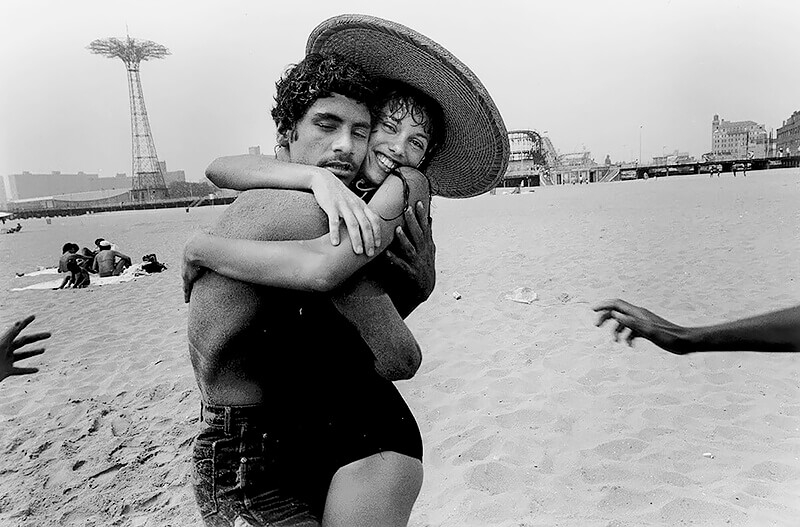
Harvey Stein: Coney Island, An Eternal Romance

From June 10, 2020 to July 18, 2020
Share
Harvey Stein: Coney Island, An Eternal Romance
100 Crosby St, #603
New York, NY 10012
Sous Les Etoiles Gallery is pleased to present Cosney Island, New York photographer Harvey Stein premiere's with the gallery. The show is an exclusive online exhibition on view from June 10ththrough July 20, 2020 trough the gallery website.

Cosney island is synonymous of summer and recreation!

Iconic Coney Island series tells the tale of world-renowned photographer Harvey Stein's 40-year romance with "America's playground." Stein's timeless black-and-white images, taken from the 1970s through 2010, capture that quintessential weird and wonderful quality central to the mythos of this iconic Brooklyn beachfront. Consistently shot through the decades with a 21 mm lens, this series of photographs evokes a sense of nostalgia, fantasy and adventure. Walking, observing the boardwalk, the pier, the Amusements, the Mermaid Parade, the beach, the workers, the people, Harvey Stein explore every corners with discipline and an immense commitment, fascinated to be just here and there, embracing the energy, the strangeness and the crowd in a quiet manner.

"Entering Coney Island is like stepping into another culture," Stein writes. "Coney Island is an American icon celebrated worldwide, a fantasy land of the past with an irrepressible optimism about its future. There isn't anywhere else like it." With more than one thousand trips, the photographer seems unstoppable about what can be discovered again; Does he belong to Cosney Island? Harvey Stein seems to be inhabited with a kind of eternal return that will never ends!

Harvey Stein frequently leads workshops and lectures worldwide. He has taught at the International Center of Photography since the 1970s. His new book on Cosney Island is cheduled to be released in 2021.

Harvey Stein b. 1941 is an American photographer, teacher, curator, and author based in New York City. His images have been published in the New Yorker, TIME, Life, Esquire, Smithsonian, The New York Times, Reader's Digest, Psychology Today, Harpers, ARTnews, American Artist, People, and Der Spiegel, among many others.

Stein's photographs have been widely exhibited in the United States and Europe — over 81 one-person and 160 group shows to date. His photographs can be found in more than 55 permanent collections, including the George Eastman House, Bibliothèque nationale de France, the Art Institute of Chicago, the Brooklyn Museum, the New Orleans Museum of Art, the International Center of Photography, the Denver Museum of Art, the Musée de la Photographie in Charleroi and the Museum of Fine Arts, Houston, and, among others, the corporate collections of Johnson & Johnson, Hewlett Packard, LaSalle Bank, Barclays Bank, and Credit Suisse.
Our printed edition showcases the winners of AAP Magazine call of entries
All About Photo Magazine
Issue #52
Stay up-to-date  with call for entries, deadlines and other news about exhibitions, galleries, publications, & special events.

Exhibitions Closing Soon

Nouvelle Vague French Photography from the 1950s and 1960s
Peter Fetterman Gallery | Los Angeles, CA
From September 06, 2025 to January 03, 2026
Peter Fetterman Gallery presents Nouvelle Vague, an evocative survey celebrating the essence of French photography through the eyes of some of the twentieth century’s most admired artists. Bringing together works by Edouard Boubat, Raymond Cauchetier, Henri Cartier-Bresson, Jean-Philippe Charbonnier, Robert Doisneau, Willy Ronis, Sabine Weiss, and others, the exhibition pays tribute to a generation that forever transformed the language of visual storytelling in postwar France. Emerging from the ideals of the French Humanist movement of the 1930s, these photographers created a visual style that balanced documentary realism with poetic sensibility. Their images captured fleeting moments of tenderness, humor, and quiet beauty within the rhythms of everyday life. Whether depicting lovers in a Parisian street, children at play, or workers returning home at dusk, their work sought to reveal the universal dignity and emotional depth of human experience. Positioned between journalism and fine art, these photographs offered an empathetic lens through which to view a world rebuilding itself after the devastation of war. The Humanist spirit that animated these artists extended beyond photography, influencing film, literature, and visual art throughout the mid-twentieth century. Their collaborations with publications such as LIFE, Paris Match, and Vogue helped disseminate this lyrical realism to a global audience, shaping the visual identity of modern France. Today, these images endure as timeless meditations on connection, resilience, and the quiet poetry of the ordinary. Nouvelle Vague invites viewers to revisit the golden age of French photography while reflecting on its continuing relevance in a fractured contemporary world. The exhibition reaffirms photography’s enduring power to convey empathy and to remind us, across generations and borders, of our shared humanity. Image: Robert Doisneau 1912-1994 Le Baiser Blotto, 1950/Printed Later Signed in ink on recto; titled and dated in ink on verso Gelatin Silver Print Image: 14-1/8" x 11-3/4", Paper: 20" x 16", Mat 24" x 20"
Gathering Place | A Family Album
Griffin Museum of Photography | Winchester, MA
From October 01, 2025 to January 03, 2026
The Griffin Museum is excited to present Gathering Place | A Family Album, an exhibition exploring the rituals, warmth, and complexities of coming together. From holiday dinners and everyday meals to quiet corners and inherited objects, the photographers featured in the show reflect on how we gather, remember, and connect. On view at the Jenks Center in Winchester, MA, from October 1 to January 3, 2026, Gathering Place | A Family Album brings together photographic works that celebrate the intimate spaces and shared traditions that define family—chosen or inherited—through still-lifes, portraits, domestic scenes, or elsewhere. Featured artists: Aga Luczakowska, Alexandra Frangiosa, Alina Balseiro, Ankita Singh, Ashley Smith, Betsy Woldman, Catie Keane, Chris Ireland, Christopher Perez, Cynthia Smith, Dana Matthews, David Manski, Diane Bush, Elizabeth Calderone, Faith Ninivaggi, Francine Weiss, Hannah Latham, Heather Pillar, Iaritza Menjivar, Isaac Glimka, John Benton, Julia Arstorp, Justin Carney, Kathy M. Manley, Ken Rothman, Xenia Nikolskaya, Kim-Sarah I, Laura Kirsch, Linda Moses, Magdalena Oliveros, Mona Sartoveh, Naomi Shon, Natia Ser, Peter Balentine, Sarah Malakoff, Shea Baasch, Steven Edson, Susan Lapides, Susan Rosenberg Jones, Talya Arbisser, Tristan Partridge and Virginia Nash. Image: Kayla, Roxbury, Massachusetts @ Linda Moses
A Snapshot of Photography at the Nasher
Nasher Museum of Art at Duke University | Durnham, NC
From July 17, 2025 to January 04, 2026
The museum’s photography collection originated in 1972, when Duke University Museum of Art purchased a portrait of artist Barbara S. Thompson by noted North Carolina photographer and educator John Menapace. Twenty years later, Duke University purchased its second photograph: Cindy Sherman’s Untitled #140, depicting a human-pig hybrid creature and part of the celebrated artist’s portrayal of female characters in classic fairy tales. The opening of the Nasher Museum in 2005 initiated a more focused approach to collecting photography building upon these two earlier acquisitions. Within its first decade, the museum acquired significant groups of works by Andy Warhol, Barkley L. Hendricks, and Mike Disfarmer, among many others, as it built a robust collection of national, international, and regional photography. More recently the Nasher has added over 2,000 photographs to its collection that allow us, for the first time, to chronicle a broad historical sweep of the medium from its dawn in the 1830s and 40s to more recent innovative, experimental approaches. A five-year donation of over 1,500 photographs by Linda and Charles Googe (A.B. ’84) has more than doubled the museum’s photography holdings and included works by the best-known practitioners from the nineteenth and twentieth centuries, such as Edouard Baldus, Ilse Bing, Henri Cartier-Bresson, André Kertész, Arthur Rothstein, Nadar, and Edward Weston. Coming into Focus: A Snapshot of Photography at the Nasher celebrates these gifts and other acquisitions, highlighting a sampling of gems and illuminating a bright future of continued collecting and presenting of photography in innovative and ambitious ways. Coming into Focus: A Snapshot of Photography at the Nasher was organized by Ellen C. Raimond, Associate Curator of Academic Initiatives and Marshall N. Price, Chief Curator and Nancy A. Nasher and David J. Haemisegger Curator of Modern and Contemporary Art., with assistance from Nasher interns, Charles Blocksidge, III (’25) and Jordan Moyd (Robertson Scholar ’26, University of North Carolina, Chapel Hill), and Ghita Basurto-Covarrubias (University of North Carolina, Chapel Hill, ‘26). This exhibition is made possible by The Nancy A. Nasher and David J. Haemisegger Family Fund for Exhibitions; the Frank Edward Hanscom Endowment; the Janine and J. Tomilson Hill Family; the Neely Family Fund; the E.T. Rollins Jr. and Frances P. Rollins Fund; the J. Horst and Ruth Mary Meyer Fund; and the K. Brantley and Maxine E. Watson Endowment Fund. Image: Genevieve Gaignard, The Quietest Room in the House, 2018. © Genevieve Gaignard. Image courtesy of the artist and Vielmetter Los Angeles.
Photography´s New Vision: Experiments in Seeing
High Museum of Art | Atlanta, GA
From June 13, 2025 to January 04, 2026
New Vision: Photography and Modern Seeing explores the radical and transformative approaches to photography that emerged in the 1920s and 1930s, a period that redefined how artists and audiences perceived the world. Rooted in the avant-garde experimentation of the era, the New Vision movement rejected conventional photographic norms, embracing innovation, unusual perspectives, and technical inventiveness. As László Moholy-Nagy, the influential Bauhaus artist and teacher, asserted in 1928, “The illiterate of the future will be the person ignorant of the use of the camera as well as of the pen.” This philosophy underscored the belief that photography was not merely a tool for documentation, but a language for seeing and thinking anew. The exhibition spans Europe, America, and beyond, highlighting the far-reaching influence of New Vision photographers. Through photograms, photomontages, abstract light studies, and extreme angles, these artists challenged traditional approaches, often capturing the ordinary in extraordinary ways. Their work reflects a desire to explore alternate perspectives, uncover hidden details, and reinterpret the visual environment in the wake of the upheavals of World War I. Movements such as Surrealism intersected with New Vision approaches, further expanding the possibilities of photographic expression and perception. Featuring over one hundred works drawn from the High’s photography collection, the exhibition traces the movement’s evolution from its interwar origins to its enduring impact on contemporary photography. Visitors are invited to consider how New Vision’s experimental spirit continues to influence modern photographic practice, inspiring generations of artists to push boundaries, question assumptions, and reimagine the act of seeing. By situating early twentieth-century innovation alongside its ongoing legacy, the exhibition illuminates the persistent vitality and relevance of a movement that reshaped both the medium and the ways in which we engage with the world around us. Image: Walker Evans American, 1903–1975 The Bridge, 1929 Gelatin silver print Gift of Arnold H. Crane, 73.72 F © Walker Evans
Kelli Connell Double Life
Museum of Contemporary Art Cleveland | Cleveland, OH
From June 27, 2025 to January 04, 2026
Since 2002, Kelli Connell has been developing Double Life, a photographic series that examines the intimate dialogue we maintain with ourselves. At first glance, the images appear to depict two women in moments of shared affection, tension, or reflection. Yet each scene is a carefully composed illusion—every figure portrayed by a single model, Kiba Jacobson, who embodies both characters through Connell’s digital manipulation. This merging of identities transforms Double Life into a quiet study of the human psyche, revealing the contradictions that shape selfhood: desire and restraint, doubt and acceptance, solitude and connection. Connell’s work transcends portraiture, probing the emotional negotiations that define how we live with ourselves and, by extension, how we relate to others. In this mirror of the self, empathy becomes both subject and method. Her images evoke the private gestures of care, forgiveness, and conflict that form the architecture of emotional growth. Each photograph invites viewers to reflect on their own dualities and on the continuous dialogue between inner and outer worlds. In 2024, Connell was commissioned by The Progressive Corporation to extend her Double Life series around the theme of “Empathy” for the company’s annual report. These new works, presented at the Museum of Contemporary Art Cleveland from June 28, 2025, through January 4, 2026, join Progressive’s distinguished contemporary art collection. Through these pieces, Connell expands her exploration of self and other, using photography to visualize emotional intelligence and mutual understanding. Connell’s photographs are held in major institutions including the Metropolitan Museum of Art, the Getty Museum, and the Museum of Fine Arts, Houston. A professor at Columbia College Chicago, she continues to shape the dialogue between identity, representation, and the unseen emotional labor of being human. Image: Kelli Connell, Negotiation, 2025 © Kelli Connell
Dawoud Bey: Elegy
NOMA - New Orleans Museum of Art | New Orleans, LA
From September 26, 2025 to January 04, 2026
Dawoud Bey: Elegy brings together three powerful photographic series—Stony the Road (2023), In This Here Place (2019), and Night Coming Tenderly, Black (2017)—to explore how the landscapes of Virginia, Louisiana, and Ohio continue to hold the echoes of America’s past. Through these deeply reflective works, Bey reconsiders sites marked by slavery and resistance, transforming them into spaces where memory, imagination, and history converge. The exhibition also features two films, Evergreen (2019) and 350,000 (2023), expanding the dialogue between still and moving images while delving into the emotional resonance of these charged locations. In Stony the Road, Bey retraces the steps of more than 350,000 enslaved Africans who were forced to march to holding pens in Richmond, Virginia. The accompanying film, created with cinematographer Bron Moyi and choreographer Dr. E. Gaynelle Sherrod, reimagines this passage through a haunting visual and sonic meditation. With In This Here Place, the artist turns his lens to former plantations near New Orleans, focusing on architecture and land as silent witnesses to human suffering and endurance. The film Evergreen, paired with this series, heightens the emotional atmosphere through the voice and music of composer Imani Uzuri. The third series, Night Coming Tenderly, Black, evokes the perilous journey of those who sought freedom along the Underground Railroad. Bey’s black-and-white prints are enveloped in deep tonal shadows, allowing viewers to sense both the fear and hope of that nocturnal passage. Across all three bodies of work, Bey’s art becomes a meditation on presence—how the earth itself remembers. Dawoud Bey: Elegy asks us to confront the enduring legacies of slavery and to recognize the landscapes of the American South and North as living vessels of collective memory. Image: Untitled (Tangled Branches) 2023 Dawoud Bey (American, born 1953) Gelatin silver print Image: 44 x 55 in., Paper: 48 x 59 in. Virginia Museum of Fine Arts, Gift of Mrs. Alfred duPont, by exchange, 2020.168.4. © Dawoud Bey
The View from Here: Women Photographers of the American Landscape
NOMA - New Orleans Museum of Art | New Orleans, LA
From July 25, 2025 to January 04, 2026
The View From Here: Women Photographers of the American Landscape brings together a remarkable range of artists who have shaped, challenged, and redefined the way we see the natural world. The exhibition includes works by internationally recognized figures such as Laura Gilpin and Lilian De Cocke Morgan, alongside regional voices like Stephanie Dinkins and Suzanne Camp Crosby. For photographers Marion Post Wolcott and Berenice Abbott—celebrated for their depictions of urban life—these images reveal another side of their artistry, showcasing their skill in capturing the subtleties of landscape and light. Imogen Cunningham and Ellen Land-Weber expand the very notion of what a landscape can be, merging poetic composition with surreal or experimental techniques. In contrast, contemporary artists like Dionne Lee and Sally Mann turn their gaze inward, using the landscape as a means of reflection on identity, ancestry, and belonging. Their images situate personal histories within larger terrains, allowing nature to serve as both witness and participant in the shaping of human experience. The year 2025 marks the fortieth anniversary of Deborah Bright’s groundbreaking essay “Of Mother Nature and Marlboro Men: An Inquiry in the Cultural Meanings of Photography.” Bright called for a deeper understanding of photography—one that considers the historical and cultural context of every image while highlighting the crucial yet often overlooked role of women photographers in defining the landscape tradition. Presented in this spirit, The View From Here invites viewers to look closely and think broadly about the American landscape, not just as a physical place but as a space of memory, imagination, and cultural meaning. Drawn entirely from NOMA’s collection, these photographs chart more than a century of artistic vision, revealing how women have continually reimagined the view from here. Image: Advertisement Near Black Mountain North Carolina 1939, printed later Marion Post Wolcott (American, 1910-1990) Gelatin silver print Museum purchase, General Acquisition Fund
Family Portrait
Addison Gallery of American Art | Andover, MA
From September 02, 2025 to January 04, 2026
The exhibition Family Portrait gathers photographs from the Addison’s collection to explore how artists have represented the idea of family across nearly two centuries. From the earliest daguerreotypes to contemporary color prints, the exhibition traces the evolution of one of photography’s most enduring subjects. Through these works, the notion of family emerges not as a static construct but as a living, shifting web of relationships, emotions, and memories. Since photography’s beginnings in the nineteenth century, artists have used the camera to capture both the familiar and the extraordinary moments that define domestic life. Some have turned their lenses inward, documenting their own families in scenes that reveal tenderness, humor, and vulnerability. These images often expose the quiet rituals and fleeting gestures that shape everyday existence—the embrace of a child, the glance of a parent, the shared silence of grief or joy. In this way, photography becomes an intimate language of belonging and connection. Other photographers have approached the family portrait as a broader meditation on time, change, and memory. Their works extend beyond the personal to consider the social and cultural meanings attached to kinship. Through their compositions, we see how generations influence one another, how traditions endure or fade, and how images themselves act as vessels of remembrance. Whether solemn or exuberant, private or public, each photograph tells a story of continuity and loss, of affection and transformation. Family Portrait ultimately reveals how photography holds within it the paradox of family life—its constancy and its impermanence. As faces age and moments pass, the photograph endures, preserving traces of our shared humanity and reminding us that the act of looking is itself a form of connection across time. Image: Eugene Richards, Family Album, Dorchester, Massachusetts, 1976. Gelatin silver print, 8 1/4 x 12 inches. Addison Gallery of American Art, Phillips Academy, Andover, Massachusetts, museum purchase, 1977.134
Funny Business: Photography and Humor
Phoenix Art Museum | Phoenix, AZ
From June 14, 2025 to January 04, 2026
Spanning nearly the entire history of the medium, Funny Business: Photography and Humor offers a compelling view into the ways artists have utilized visual humor not only to provoke laughter and delight, but also as a means of resistance, an antidote to the heaviness of the world, and a way to interrogate and subvert norms and hierarchies. Drawn primarily from the collection of the Center for Creative Photography (CCP) at the University of Arizona in Tucson, the exhibition presents 70 photographs that showcase the mechanics of photographic humor, while examining the reasons for which artists throughout time have employed it as a strategy in their work. Featured artists include Liz Cohen, Steffi Faircloth, Jeff Mermelstein, Bucky Miller, Reynier Leyva Novo, among others. Funny Business is arranged in four thematic sections. All the World’s a Stage highlights slapstick and observational comedy through a constellation of early 20th-century gelatin silver prints and snapshots displayed in conversation with examples of canonical mid-20th century street photography. Inside Jokes charts the medium’s evolution in the 1970s, when art institutions began accepting and exhibiting photography as a legitimate art form. Featured works highlight photographers’ adoption of a tongue-in-cheek attitude toward their predecessors and the conventions and aesthetics of the medium itself. Context is Everything explores how subjects and photographic images can become absurd, ironic, and nonsensical when shown outside of their original contexts or in unexpected juxtaposition with one another. Comic Relief features the work of contemporary artists who use humor in a critical or subversive manner to explore issues of identity and belonging, politics, and general dimensions of contemporary life. Humor operates in their work as a means of resistance, a coping mechanism, a refusal to become cynical, or a way to subvert power structures and challenge stereotypes. Image: Jo Ann Callis, Parrot and Sailboat, 1980, 1980. Dye transfer print. Center for Creative Photography, University of Arizona: Purchase, 86.16.5. © Jo Ann Callis
Star Power: Photographs from Hollywood’s Golden Age by George Hurrell
National Portrait Gallery | Washington, DC
From March 01, 2024 to January 04, 2026
During the 1930s and early 1940s, George Hurrell (1904–1992) reigned as Hollywood’s preeminent portrait photographer. Hired by the Publicity Department at Metro-Goldwyn-Mayer (MGM) when he was only twenty-five, Hurrell advanced rapidly to become the studio’s principal portraitist. With a keen eye for artful posing, innovative lighting effects, and skillful retouching, he produced timeless portraits that burnished the luster of many of the “Golden Age’s” greatest stars. “They were truly glamorous people,” he recalled, “and that was the image I wanted to portray.” In 1933, Hurrell left MGM to open a photography studio on Sunset Boulevard. There, he created some of his most iconic portraits of MGM stars as well as memorable images of leading actors from the other major studios. After closing his Sunset studio in 1938, Hurrell worked briefly for Warner Bros. and Columbia Pictures before serving with a military film production unit during World War II. Following the war, candid photographs, made with portable, small-format cameras, rose to replace the meticulously crafted, large-format studio portraits that epitomized Hurrell’s style. For George Hurrell, Hollywood’s “Golden Age” had come to an end. “When we stopped using those 8 x 10 cameras,” he declared, “the glamour was gone.” This exhibition has been made possible in part through the generous support of Mark and Cindy Aron. Image: Clark Gable and Joan Crawford by George Hurrell / 1936, Gelatin silver print / National Portrait Gallery, Smithsonian Institution; acquired in part through the generosity of an anonymous donor
Murray Lemley: Fifty Years of Photography and Design
Plains Art Museum | Fargo, ND
From July 05, 2025 to January 04, 2026
The Ruth and Seymour Landfield Atrium, Xcel Energy Gallery, and Starion Bank Gallery Fifty Years of Photography and Design is a retrospective exhibition celebrating Murray Lemley’s artistic career. The exhibit features a wide range of imagery, including extensive black-and-white analogue street photography from Europe in the 1970s and 80s, documentary portrait studies of people from his hometown of Hope, powerful portraits of Native Americans on the Fort Berthold Reservation, and a radical transition in later years to creating modern Polaroid images he calls “STREET COLLAGE GRAFFITI.” With this more recent work, he has, in one sense, returned to the streets he haunted in Europe in the 1970s, but in vivid color and with a new point of view and style. After leaving his home on the family farm near Hope, Lemley studied architecture at North Dakota State University, but after disagreements with his design professor, he shifted his focus to photography, journalism, graphic design, and anti-establishment activism. This journey inspired him to launch three independent magazines, work in radio, and edit the controversial yearbook The Last Picture Book, which famously omitted the name of the university from its cover and led to a temporary discontinuation of yearbooks at NDSU. Despite amassing double the required credits for a degree, his political activism resulted in the administration, in an act of petty revenge, from granting him a degree. Lemley’s photography career took off after two pivotal experiences in the early 70s: photographing for the Concordia College May Seminars Abroad and attending the Apeiron Photo Workshops in New York, which deepened his creative vision and marked a shift from photojournalism to more artistic photography. His design career flourished as well, working at Atomic Press in Seattle and later in Amsterdam, where he designed books for artists and photographers. After the years in Seattle and San Francisco Lemley moved to Amsterdam in the early 90s and has lived primarily in Europe ever since. During his early years there, Lemley worked at many things from construction to graphic design and art. He managed an art gallery for a prolific painter and designed eight books for artists and photographers, many of which are featured in this retrospective exhibition at Plains Art Museum. Lemley has had several exhibitions of this photography at the Plains as well at Suzanne Biederberg Gallery, Ververs Gallery and the Zamen Art Gallery.
A Decade of Collecting Photography: 2015-2025
Telfair Museums - Jepson Center | Savannah, GA
From August 15, 2025 to January 04, 2026
Since its invention in 1826, photography has transformed the way we see, record, and interpret the world. What began as a scientific curiosity quickly evolved into one of the most influential art forms of modern times. This exhibition traces the remarkable journey of photography as both a documentary tool and a fine art practice, reflecting its growing prominence in museum collections. At the Telfair Museums, the photography collection has expanded impressively—from 400 works in 2015 to more than 1,100 today—marking a renewed commitment to the medium’s artistic and historical significance. The exhibition brings together a range of photographers whose work has shaped the trajectory of the field. Among them is Joel Meyerowitz (b. 1938), a pioneer of large-format color photography whose vivid, nuanced images helped legitimize color as a serious artistic language in the 1970s. Equally important is Helen Levitt (1913–2009), whose lyrical street scenes of New York captured the spontaneity of urban life. Working in a male-dominated field, Levitt’s photographs reveal both empathy and humor, giving voice to the ordinary moments that define human experience. The exhibition also honors the South’s deep relationship with the photographic image. Historic works such as George Barnard’s (1819–1902) post–Civil War views of Savannah’s River Street provide a striking record of change and endurance. Contemporary artists continue this dialogue with the region, including Savannah-based photojournalist Jason Miccolo Johnson (b. 1956). His moving image of a pastor standing before a burned church speaks to the intertwined forces of tragedy and faith, capturing both loss and resilience. Ultimately, this exhibition is a celebration of photography’s ability to shape memory, culture, and imagination. It reminds us that photographs are not merely reflections of reality—they are acts of vision, interpretation, and art. Image: Helen Levitt (1913-2009); New York, c. 1942; vintage gelatin silver print; gift of Mimi Muray Levitt, 2019.35. © Helen Levitt
Advertisement
All About Photo Awards 2026
Win a Solo Exhibition in February
All About Photo Awards 2026
Call for Entries
All About Photo Awards 2026
$5,000 Cash Prizes! Juror: Steve McCurry

Related Articles

All About Photo Presents ’Fay and Gay’ by Samantha Yancey
The project Fay and Gay by Samantha Yancey, on view throughout January 2026, offers an intimate and deeply human portrait of devotion, routine, and shared identity. This compelling body of work centers on Fay and Gay, twin sisters born in 1936 near Pelahatchie, Mississippi, whose lives have unfolded side by side for nearly nine decades.
Alia Ali
Gilman Contemporary presents a striking introduction to the work of Alia Ali, an artist whose multicultural background spanning Yemen, Bosnia, and the United States deeply informs her visual language. Her photographs, rich in pattern and color, navigate the complex terrain of identity, migration, and belonging. Rather than offering conventional portraiture, Ali envelops her subjects in boldly patterned textiles, allowing fabric itself to become both veil and voice. These coverings obscure familiar markers of identity, inviting viewers to question how much of what we think we know about a person is shaped by what we see—or what we assume.
Bigaignon x rhinoceros gallery - Act 2/3: Col Tempo
In Rome, rhinoceros gallery, the art space founded by Alessia Caruso Fendi within Palazzo Rhinoceros, presents “Act 2/3: Col Tempo (With Time)”,the second chapter of a trilogy of exhibitions developed in collaboration with the Paris-based gallery Bigaignon. On view from November 26, 2025 to January 14, 2026, this new exhibition is dedicated to the essential element of time,marking the continuation of a three-part project that will unfold through March 2026.
Yamamoto Masao
Robert Koch Gallery unveils a rare and essential exhibition dedicated to Japanese photographer Yamamoto Masao, bringing together works from several of his most celebrated series, including A Box of Ku, Nakazora, Kawa=Flow, Bonsai, and Tomasu. This presentation offers a profound immersion into one of contemporary photography’s most poetic and contemplative voices—an artist whose practice invites viewers to slow down, breathe, and rediscover the hidden beauty embedded in everyday life.
All About Photo Presents ’Notes From The Edge’ by Antonio Denti
All About Photo is proud to announce Antonio Denti as the winner of the December Solo Exhibition Contest, selected by internationally acclaimed photographer Ed Kashi. His long-term project, “Notes from the Edge,” offers a striking and poetic exploration of what it means to live in a world caught between collapse and rebirth.
My Circus by Ellen von Unwerth
Fotomuseum aan het Vrijthof in Maastricht presents an exhibition by famous Paris-based German fashion and fine art photographer Ellen von Unwerth from 31 January until 13 September 2026. The high-profile exhibition My Circus features 160 iconic photographs of models and pop musicians in which femininity, playfulness, eroticism, and fashion take center stage. The stylish images were created for fashion brands, publications, and her own inspiring VON magazine and books.
Sayuri Ichida and Tomasz Laczny at IBASHO and IN-DEPENDANCE
IBASHO and its sister gallery IN-DEPENDANCE by IBASHO proudly present parallel solo exhibitions by UK-based Japanese artist Sayuri Ichida and her life partner, Polish-British artist Tomasz Laczny. Their works will be on view in tandem from 22 November 2025 to 11 January 2026 in Antwerp.
Joel Meyerowitz, Outstanding Contribution to Photography 2026
Meyerowitz to be recognised at the annual Awards ceremony in London on 16 April 2026. A special presentation of Meyerowitz’s work, including new video and audio installations, to be shown at Somerset House, London from 17 April - 4 May 2026
70 Prints for 70 Years: World Press Photo Print Sale
70 Prints for 70 Years, from 17 November 2025 until 26 November, is a limited-time sale that invites the public to own a piece of visual history through a curated selection of 70 images from the World Press Photo archive.
Call for Entries
All About Photo Awards 2026
$5,000 Cash Prizes! Juror: Steve McCurry