All about photo.com: photo contests, photography exhibitions, galleries, photographers, books, schools and venues.
FINAL CALL TO ENTER AAP MAGAZINE B&W: PUBLICATION AND $1,000 CASH PRIZES

A History of Photography: Selections from the Museum's Collection

From October 03, 2019 to February 28, 2020
Share
A History of Photography: Selections from the Museum’s Collection
1001 Bissonnet
Houston, TX 77005
A History of Photography: Selections from the Museum's Collection comprises a series of installations that trace the course of photography from its invention to the present day, showcasing important new acquisitions and treasured masterpieces.

Every six months, a new selection of photographs, drawn from the rich collection the Museum has built over the past half century, presents the medium's history in a slightly different light. In this way, an increasingly complex picture of photographic history emerges, encouraging visitors to look closely, move slowly, and return for more.

Each new installation also includes a focused look at the work of a single artist or theme held in depth by the Museum, plus a selection of photographically illustrated books highlighting the key role that publications have played in the development of the medium.

This installation showcases photographs by artists including Berenice Abbott, Charles Aubry, Walker Evans, Heinrich Kühn, László Moholy-Nagy, Patrick Nagatani, Kiki Smith, Carleton E. Watkins, and Ishimoto Yasuhiro. Also on view is a selection of photographs by Josef Sudek, along with Czech and Slovak photo books.
Stay up-to-date  with call for entries, deadlines and other news about exhibitions, galleries, publications, & special events.

Exhibitions Closing Soon

Student Perspectives 2026
Perspective Gallery | Evanston, IL
From May 07, 2026 to May 31, 2026
At Perspective Gallery, Student Perspectives 2026 marks the fifteenth edition of an exhibition dedicated to emerging photographic voices from Chicago-area high schools. On view from May 7 to May 31, 2026, the annual juried show brings together a wide range of student work, offering a glimpse into how younger generations are engaging with photography as both artistic expression and personal inquiry. The exhibition opens with a public reception and awards ceremony on May 9, reinforcing its role as both celebration and community gathering. This year’s selection was made by Kelli Connell, a Chicago-based artist recognized for work exploring identity, gender, sexuality, and the complex dynamics between photographer and subject. From more than 750 submitted images by 261 students across 21 schools and programs, Connell chose 52 artists whose photographs reflect both technical curiosity and strong individual perspective. Her own practice, represented in major museum collections including the Metropolitan Museum of Art and the J. Paul Getty Museum, lends particular relevance to an exhibition centered on the power of visual storytelling. The selected works span a broad range of subjects and approaches, from portraiture and documentary observation to conceptual experimentation and studies of everyday life. Students from schools including Evanston Township, Lane Tech College Prep, Chicago High School for the Arts, and Glenbrook South contribute images that reveal both personal narratives and broader reflections on place, family, and identity. What emerges is not a single generational statement, but a collection of distinct voices shaped by different experiences and visual instincts. As photography continues to evolve in the digital age, exhibitions like Student Perspectives underscore the enduring importance of mentorship and public platforms for young artists. By placing student work in a professional gallery setting, Perspective Gallery creates space for serious engagement with these early practices. The exhibition affirms that photography remains a vital tool for observation and self-definition, while also reminding viewers that some of the most compelling perspectives often come from those just beginning to shape their artistic language. Image: Alejandro Ascencio, Lost in the Blues © Alejandro Ascencio
Lydia Azout: Reflections…now
Dot Fiftyone Gallery | Miami, FL
From March 21, 2026 to May 31, 2026
At Dot Fiftyone Gallery, Lydia Azout: Reflections…now brings together a new body of work that extends the artist’s long-standing investigation into form, balance and transcendence. Presented alongside the release of a monograph surveying five decades of practice, the exhibition situates recent sculptures and installations within a broader continuum, where material experimentation remains closely tied to philosophical inquiry. Azout’s use of industrial materials—stainless steel, iron, aluminum—anchors the exhibition in a language of tension and precision. Her sculptural structures often appear improbably balanced, sometimes resting on a single point, as if suspended between stability and collapse. This approach, developed over decades, reflects an ongoing interest in equilibrium as both a physical and metaphysical condition. The polished surfaces of the works interact with light and space, while photographic elements printed on aluminum and accented with gold introduce a reflective, almost icon-like dimension. The exhibition also includes a video installation that expands these concerns into time-based form, reinforcing the idea that Azout’s work resists fixity. Her practice has long drawn from pre-Hispanic cosmologies and the symbolic weight of sacred landscapes, particularly in Colombia, where she emerged as a key figure in modern and contemporary art. References to ritual and totemic structures persist, though they remain abstracted, embedded in geometry rather than overt representation. A defining moment often cited in relation to her work—a confrontation with the force of a Caribbean hurricane—continues to resonate here. It informs a vocabulary in which opposing elements coexist: fragility and endurance, turbulence and stillness. In Reflections…now, these dualities are not resolved but held in suspension, suggesting a continuous process of transformation rather than a fixed state. The exhibition underscores Azout’s sustained engagement with the relationship between matter, environment and inner experience, positioning her work within a broader dialogue on the spiritual potential of abstraction. Image: © Lydia Azout
Good Fire: Tending Native Lands
Oakland Museum of California | Oakland, CA
From November 07, 2025 to May 31, 2026
Good Fire: Tending Native Lands offers a thoughtful look into the long-standing fire practices of Native communities in Northern California, presenting fire not as an agent of destruction but as a carefully guided force for renewal. For generations, cultural burning has shaped landscapes, revived ecosystems, and supported community traditions. By centering Native fire practitioners, artists, ecologists, and cultural leaders, the exhibition brings attention to these enduring relationships between people and place, relationships often overlooked in mainstream environmental narratives. Visitors encounter a wide range of materials that reveal how deeply intertwined cultural burning is with ecological health. Fire-dependent plants, ceremonial regalia, basketry, and filmed cultural burns provide insight into how purposeful fire supports both biodiversity and cultural continuation. Archival photographs and charred tree sections stand alongside contemporary works by artists such as Saif Azzuz, Renée Leann Castro-Ring, and Brian D. Tripp. Together, these elements trace the impact of land dispossession while underscoring the environmental consequences that followed the suppression of Native fire practices. The exhibition also highlights present-day efforts to heal landscapes and restore sovereignty. Initiatives such as prairie renewal projects, Land Back movements, and the work of groups like the Cultural Fire Management Council illustrate how Native-led stewardship is bringing balance back to ecosystems long disrupted by colonial policies. These initiatives demonstrate the resilience of communities who continue to advocate for their ancestral knowledge and its role in shaping the future. By reframing fire as a tool shaped through experience, respect, and generational learning, Good Fire: Tending Native Lands invites viewers to reconsider long-held assumptions. It asks us to imagine a landscape where fire is once again used with intention, where cultural knowledge is honored, and where ecological well-being is understood as inseparable from the wisdom of those who have tended the land since time immemorial. Image: Margo Robbins (Yurok), of the Cultural Fire Management Council, leads a beneficial burn on Yurok homelands. The group starts the burn using me-chaa-nep (wormwood) torches. Photo by Kiliii Yuyan.
Photography from The Menil Collection: Curated by Wendy Watriss
The Menil Collection | Houston, TX
From December 12, 2025 to May 31, 2026
The Menil Collection presents Photography from The Menil Collection: Curated by Wendy Watriss, a major exhibition exploring the power of documentary photography to illuminate social realities and provoke dialogue. On view from December 12, 2025, through May 31, 2026, the exhibition gathers works by influential photographers such as Henri Cartier-Bresson, Larry Burrows, Bruce Davidson, Danny Lyon, and Charles Moore—artists who each found extraordinary meaning within the rhythms of everyday life. Curated by Houston-based photographer and photojournalist Wendy Watriss, the exhibition offers a deeply personal interpretation of the Menil’s photographic holdings. Watriss selected images that not only reflect the strength of the collection but also the humanist vision of the museum’s founders, John and Dominique de Menil. “This exhibition,” Watriss notes, “was shaped by three sets of eyes—my own, and the de Menils’. It is a chance to reconnect with their remarkable way of seeing the world and engaging with art.” The de Menils began collecting photographs in the late 1960s, when the medium was still fighting for its place within fine art. They viewed photography as an accessible and essential art form capable of revealing the shared experiences of humanity. Their early acquisitions, which later formed the foundation of the Menil’s collection, were guided by a belief in art’s potential to bridge culture, ethics, and empathy. For Watriss, this project also marks a return to the roots of her own artistic journey. Alongside her late husband Fred Baldwin, she co-founded FotoFest in 1986, an international photography biennial that transformed Houston into a global hub for photographic dialogue. The Menil’s commitment to connecting art and social justice inspired their work, shaping both their practice and their community engagement. Presented in honor of FotoFest’s 40th anniversary, Photography from The Menil Collection celebrates not only the enduring legacy of the de Menils and Watriss but also photography’s unique capacity to bear witness, question, and connect. Image: Bruce Davidson, East 100th Street, 1966. Gelatin silver print. 7 3/16 × 7 3/16 in. (18.3 × 18.3 cm). The Menil Collection, Houston, Anonymous gift. © Bruce Davidson/Magnum Photos. Photo: Paul Hester
Christopher Lowell
FAS44 | Las Vegas, NV
From March 25, 2026 to May 31, 2026
On view from March 25 to May 31, 2026, the exhibition Christopher Lowell at FAS44 Gallery presents an intimate encounter with a photographer whose work resists haste and rewards quiet attention. Rooted in intuition and memory, Lowell’s photographs unfold as fragments of lived experience, shaped by personal history and a deep sensitivity to atmosphere. Working primarily with medium-format film, he approaches photography as a reflective practice, allowing time, chance, and emotion to guide each image. Lowell is widely recognized for his distinctive silver-gelatin prints, which lend his photographs a tactile presence and a sense of permanence. In an era dominated by speed and digital immediacy, his commitment to traditional processes feels both deliberate and quietly radical. The tonal richness of his prints—dense blacks, delicate highlights, and nuanced midtones—creates images that seem to breathe, hovering between the seen and the remembered. These works often evoke places and moments without fully defining them, encouraging viewers to project their own memories into the frame. Themes of nostalgia and autobiography run throughout the exhibition, yet the photographs avoid sentimentality. Instead, Lowell focuses on the emotional residue of experience: a shifting shadow, a solitary figure, a landscape touched by time. His compositions balance the ethereal with the grounded, revealing how ordinary environments can carry profound emotional weight. Each image feels less like documentation and more like a quiet meditation on presence, absence, and the passage of time. A public reception on opening day will mark the beginning of the exhibition, offering audiences the opportunity to engage directly with the artist and his process. Together, the works on view form a cohesive yet open-ended narrative, one that reflects Lowell’s ongoing exploration of memory and perception. At FAS44 Gallery, this exhibition stands as an invitation to slow down, look closely, and rediscover the enduring power of photographic craftsmanship and personal vision. Image: Christopher Lowell, Thirty-One Days 39 Gelatin silver print © Christopher Lowell
Zora J Murff: RACE/HUSTLE
MASS MoCA | North Adams, MA
From December 06, 2025 to May 31, 2026
Zora J. Murff’s exhibition offers a searching look at the forces that shape our perceptions, our histories, and the communities we inhabit. Through a blend of photographs, collages, and installation work, he draws attention to the hidden frameworks that structure daily life and the ways those structures perpetuate harm. His images move between stillness and tension: a striking portrait, a flicker of light cutting across a wall, the steady pulse of a crowded street, or a quiet gesture of persistence. Each element reflects his belief that no issue exists in isolation, and that the consequences of global crises inevitably echo close to home. In this exhibition, Murff examines how the pursuit of freedom often collides with a desire for symbols rather than genuine change. A distorted reinterpretation of a familiar presidential portrait becomes a pointed reminder of how representation can be manipulated or misread. In another work, the exchange of a folded bill becomes a commentary on the weight of history and the persistence of unequal systems. His collages, built from fragments of language and imagery, expose the contradictions that shape public narratives. For the first time, Murff extends his practice into installation, encouraging visitors to confront the role of cultural institutions in reinforcing broader systems of control. These participatory elements underscore the idea that liberation requires not just awareness but active engagement with the forces one hopes to undo. Murff, an Oregon-based artist and educator, approaches his practice with clarity and intention. Born in 1987, he uses photography as a flexible medium, expanding it across disciplines to create works that question how images shape our understanding of race, power, and value. His work speaks directly to the ongoing struggle against anti-Blackness and invites viewers to consider what it means to resist, and to desire resistance, in a world shaped by entrenched hierarchies. Image: Zora J Murff, Fronting (Affirmation #4), 2020, Archival pigment print, 48 x 30 inches, Courtesy of the artist. © Zora J Murff
Flower City Arts Center: Studio 678 Photo Club 2025/2026
George Eastman Museum | Rochester, NY
From February 28, 2026 to May 31, 2026
This spring, the museum’s community gallery, the Gallery Obscura, presents a selection of photographs and writings created by the 2025–2026 Studio 678 Photo Club at the Flower City Arts Center. The exhibition highlights the distinct perspectives of young artists who have spent months observing their surroundings and translating those impressions into images and words. Each work carries the imprint of personal discovery, revealing how students see their neighborhoods, their relationships, and the everyday moments that shape their lives. Under the steady guidance of mentors and volunteers, twenty middle school participants learned to handle 35mm film cameras with care and intention, developing their own black-and-white prints in the darkroom. The process, rooted in traditional craft, encourages patience and discipline while giving students full control over the final image. They also write poems and short texts to accompany their photographs, deepening the connection between visual storytelling and written expression. The museum’s exhibition team mats and frames these works and gathers them into a collaborative book that reflects the collective spirit of the program. Through photography and writing, Studio 678 encourages young people to look closely at the world and consider their place within it. Their projects support essential learning, from observation and composition to language and analytical thinking. More importantly, the program nurtures confidence, helping students trust their own vision and share it with others. What began in 1999 as a small eight-week experiment has grown into a twenty-five-week after-school tradition that continues to serve the Rochester community. Offered free of charge to students in grades six through eight, Studio 678 stands as a longstanding commitment to youth development, creativity, and the enduring value of giving young people the tools to express themselves. Image: Photo courtesy of Flower City Arts Center.
Creative Resistance Captured in Tintype: Immortalizing Art as Activism
Contemporary Arts Center Cincinnati | Cincinnati, OH
From April 23, 2026 to May 31, 2026
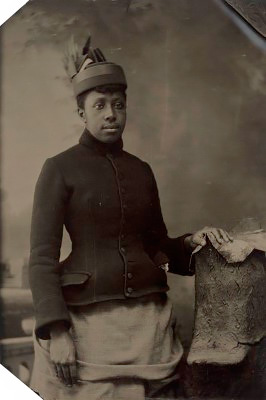
Creative Resistance Captured in Tintype: Immortalizing Art as Activism is on view from April 23 through May 31, 2026 at the Contemporary Arts Center. In this focused presentation, large-format photographer Alex Lippert turns to the historic wet plate collodion process to consider how artistic practice operates as a form of civic engagement. The exhibition situates portraiture within a lineage of social documentation while foregrounding the tactile, time-intensive nature of tintype photography. Originating in the mid-nineteenth century, the wet plate collodion method requires the artist to coat, sensitize, expose, and develop each plate by hand in a matter of minutes. The resulting metal images possess a singular presence: luminous highlights, velvety shadows, and surfaces that bear the trace of their making. Lippert embraces this deliberate pace as an analogue to creative resistance itself. Slowness becomes a refusal of disposability, and craft becomes a quiet assertion of value in an accelerated visual culture. The project centers on artists from Cincinnati and surrounding communities whose practices challenge injustice, question entrenched systems, and nurture alternative forms of belonging. Through extended interviews and collaborative sittings, Lippert records not only likeness but conviction. Musicians, performers, visual artists, and organizers appear before the camera with direct gazes and composed gestures, their portraits accompanied by narratives that reveal how personal histories intertwine with collective struggle. Each tintype stands as both document and declaration, merging individual agency with shared purpose. Rather than promising immediate political transformation, the exhibition reflects on art’s quieter capacities: to sustain memory, to cultivate empathy, and to articulate counter-narratives that endure beyond a single moment of protest. Within the galleries of the Contemporary Arts Center, these handcrafted images affirm that activism often begins in intimate spaces—studios, stages, neighborhoods—where imagination confronts constraint and creativity becomes a durable form of resistance. Image: Courtesy of the Contemporary Arts Center
Designing Power: The Black Panther Party
Tang Museum | Saratoga Springs, NY
From February 14, 2026 to May 31, 2026
Designing Power: The Black Panther Party, on view in the Atrium at the Tang Teaching Museum and Art Gallery from February 14 through May 31, explores how a political movement crafted one of the most enduring visual identities of the twentieth century. Emerging in the late 1960s under the leadership of Huey P. Newton and Bobby Seale, the Black Panther Party understood that imagery could mobilize communities as powerfully as rhetoric or policy. The exhibition examines how deliberate design choices helped translate radical ideas into a bold, accessible public presence. Drawing from archival materials in the museum’s collection, the presentation features newspapers, photographs, flyers, and printed ephemera that reveal a sophisticated visual strategy. The Party’s striking panther logo, strong graphic layouts, and commanding typography established a recognizable brand of resistance. Equally significant were embodied aesthetics: leather jackets, berets, natural hairstyles, and disciplined group portraits communicated unity, dignity, and self-determination. Through these choices, the Party forged a visual language that amplified its calls for community programs, self-sufficiency, and protection against systemic injustice. Photography played a central role in shaping this public image. Carefully staged portraits and documentary images circulated widely, projecting strength and solidarity while countering hostile media narratives. The interplay between image and message created a feedback loop in which design reinforced ideology and ideology informed design. By situating these materials within a museum context, the exhibition invites viewers to consider how visual culture operates as a form of political agency. Organized as a student-curated project, Designing Power also underscores the continuing relevance of the Party’s aesthetic innovations. Decades after the organization’s dissolution, its iconography endures in contemporary movements for racial justice and social change. The exhibition demonstrates how the deliberate crafting of symbols, language, and images can leave a lasting imprint—shaping not only how a movement is seen, but how it is remembered and reimagined for future generations. Image: Stephen Shames, Panthers line up at a Free Huey rally in DeFremery Park, Oakland, 1968, gelatin silver print, 12 ¼ x 19 inches, Tang Museum collection, The Jack Shear Collection of Photography at the Tang Teaching Museum, 2017.45.12
AWAKENING
Photoworks at Glen Echo Park | Glen Echo, MD
From April 25, 2026 to May 31, 2026
At Photoworks, the juried exhibition AWAKENING unfolds from April 25 to May 31, 2026, offering a seasonal reflection on renewal through the language of contemporary photography. Set within Glen Echo Park, the exhibition gathers a wide range of perspectives that engage with transformation, both in the natural world and within personal experience. The show emphasizes the enduring appeal of photography as a medium attuned to cycles of change, where light, time, and subject converge to suggest moments of transition. Juried by Sarah Hood Salomon, the selection reflects a thoughtful balance between formal exploration and emotional resonance. Salomon, whose own practice centers on trees and the environment, brings a sensitivity to themes of growth and interconnectedness. Her influence is evident in the exhibition’s cohesion, where diverse approaches—ranging from landscape to abstraction—coalesce around a shared interest in emergence and renewal. The works resist a singular narrative, instead offering a constellation of interpretations that invite reflection. The participating artists, including Felix Alvarado, Didier Cayre, Meredith Massey, and Tetiana Sulima, among others, contribute images that span geographies and sensibilities. Some photographs focus on the quiet reawakening of nature, capturing subtle shifts in light, texture, and color, while others turn inward, exploring psychological or symbolic dimensions of renewal. Across these works, the notion of awakening extends beyond the seasonal, suggesting moments of personal reckoning, resilience, and redefinition. As a juried exhibition, AWAKENING also highlights the role of Photoworks as a platform for emerging and established voices alike. The show underscores the value of collective presentation, where individual practices gain new meaning through proximity and dialogue. In this setting, photography becomes a space for contemplation, offering viewers an opportunity to engage with images that echo the rhythms of change shaping both the environment and contemporary life. Image: "Sunrise Walk" © Troy Hill
Jakian Parks: The Black Land
Oklahoma Contemporary Arts Center | Oklahoma City, OK
From November 06, 2025 to June 01, 2026
The Black Land unfolds as a layered meditation on memory, inheritance, and the enduring strength of Black equestrian culture in Oklahoma. Drawing upon a long arc of history, the exhibition traces a path from the hardships of captivity to the powerful expressions of independence embedded in today’s Black rodeo communities. The images presented form a living continuum, where past and present meet on the open terrain of the American West, a place that becomes both repository and stage for stories too often overlooked. In this narrative, the land itself becomes a vital character. It carries the weight of ancestral labor, the resilience of sharecropping families, and the complicated struggle for sovereignty that has shaped African American life for generations. Yet it also holds a legacy of knowledge—farming, herding, and healing practices sustained across centuries. Within the photographs, subtle gestures and visual rhythms hint at voices from earlier eras, guiding contemporary riders and ranchers toward deeper understanding of their connection to the earth. Rituals, blending African and Christian traditions, move quietly through the scenes, offering pathways toward restoration. These customs reinforce a sense of belonging that counters historical erasure and affirms community strength. The works in The Black Land challenge reductive narratives, presenting subjects not as symbols but as fully present individuals grounded in purpose and identity. Through Jakian Parks’s lens, riders, caretakers, and families are depicted with agency and reverence. Their presence marks a reclamation of heritage: a return to the soil that once constrained them, now transformed into a space of pride, fellowship, and cultural affirmation. Parks’s approach—deeply rooted in portraiture and community storytelling—builds an archive of continuity and remembrance, celebrating the beauty, resilience, and significance of Black equestrian life as a living tradition that carries forward with dignity and unwavering spirit. Image: Jakian Parks, Porch Principals, 2025. Digital photograph. © Jakian Parks
Glue Traps
Baxter Street | New York, NY
From April 16, 2026 to June 03, 2026
Glue Traps presents Spencer Vazquez’s first solo exhibition as a tactile meditation on grief, family, and the unstable life of photographs. At BAXTER ST, the artist treats images not as fixed records but as vulnerable objects that age, crack, shift, and absorb the traces of daily life. The exhibition gathers tape transfers, scans, family photographs, and digital fragments into a body of work that feels at once intimate and materially restless. Vazquez’s process grows from a personal archive shaped by his late father, a housepainter, and by the sheer abundance of images left behind in prints, negatives, and files. Rather than separating nostalgia from experimentation, he lets them coexist. His tape transfer method, revisited after first learning it in high school, turns a humble craft material into a vehicle for memory. The resulting surfaces carry a reversed image, a visible labor, and a sense of fragility that echoes the unstable way personal histories are preserved. Several works also draw from the artist’s phone, scanned directly onto a flatbed surface so that screen time becomes physical matter. The phone’s pixels, motion, and refresh rates leave behind moiré patterns, bands, and distortions, translating the digital image into something uneven and bodily. In these works, technology does not erase touch; it reveals another kind of touch, one shaped by repetition, friction, and delay. Blue painter’s tape, borrowed from the visual world of his father’s trade, threads through the exhibition as both material and metaphor. It links housework to image-making, ordinary labor to mourning, and repair to residue. Glue Traps holds all of this in tension: the photographs act as keepsakes and artifacts, but also as things still becoming, still vulnerable to time. Vazquez gives form to an archive of love and loss, where pixels, dust, hair, and memory remain inseparable. Image: © Spencer Vazquez
Advertisement
AAP Magazine #58 B&W
Win a Solo Exhibition in July
AAP Magazine #58 B&W
Call for Entries
AAP Magazine #58 B&W
Publish your work in our printed magazine and win $1,000 cash prizes

Related Articles

Belfast Photo Festival 2026: Horizons
The 2026 edition takes visitors towards new ‘Horizons’, a theme that positions photography at a critical threshold in an age of AI-generated imagery, automation and algorithmic seeing. The festival returns as the medium undergoes profound transformation and its claims to truth, trust, authorship and materiality are increasingly being questioned.
Meryl Meisler: Queer-Friendly Nightlife Now
Nearly five decades after documenting disco-era revelry, photographer Meryl Meisler returns with a bold new body of work capturing the pulse of contemporary queer nightlife—its grit, glamour, and enduring sense of community. Meryl Meisler: Queer-Friendly Nightlife Now premieres the CPW's inaugural Upstate Photography Biennial, a new exhibition series featuring 39 artists from across the region, opening May 30, 2026.
Prix Pictet Exhibition Makes U.S. Debut at MoCP
The Museum of Contemporary Photography at Columbia College Chicago (MoCP) will present Prix Pictet Storm from May 29 through August 22, 2026, marking the U.S. debut of the internationally touring exhibition dedicated to photography and sustainability. Organized in partnership with Prix Pictet — widely recognized as the world’s leading award focused on photography and sustainability — the exhibition brings together twelve exceptional contemporary photographers whose work explores environmental instability, political unrest, social tension, and the fragile state of the modern world.
Marilyn Monroe at 100: Landmark Exhibition Opens at National Portrait Gallery
Exploring Monroe’s life, career and legacy , the exhibition will include portraits created by many of the greatest photographers and artists of the 21th and 21st centuries , including Andy Warhol, Pauline Boty and Richard Avedon .
Posto 5: The Renaissance of Committed Photographic Narrative
The birth of an auteur collective dedicated to a sensitive inventory of the world, where the rigor of visual storytelling honors the standards of historical foundations.
Peckham 24: 10th Anniversary, The Eras Edition
Peckham 24, the acclaimed festival of contemporary photography, returns to Copeland Park in Peckham, South London, for its landmark 10th anniversary edition. Over the past decade, the festival has grown into a major cultural highlight, championing innovation while providing a global platform for emerging photographic talent.
The Nature of Hope: A Photo Project Supporting Roots & Shoots and Vital Impacts
Renowned photographer Ami Vitale unveils The Nature of Hope, a global photo project inspired by Jane Goodall. Featuring leading environmental photographers, the initiative supports conservation through Vital Impacts and celebrates storytelling as a force for planetary change and hope.
Tangerine Dreams by Sophie Green
British documentary photographer Sophie Green presents Tangerine Dreams, a vivid portrait of the communities, subcultures and social gatherings that shape contemporary Britain. For over a decade, she has documented how rituals and traditions build connection, belonging and shared identity. This celebratory and emotively kaleidoscopic work will be on show as a free exhibition at the Martin Parr Foundation, Bristol from 4 June - 6 September 2026.
Brussels Street Photography Festival honors Josef Koudelka with Lifetime Achievement Award
The Brussels Street Photography Festival (BSPF) is pleased to announce that Josef Koudelka, one of the most iconic photographers of our time, will be the guest of honor at this year’s 10th-anniversary celebration. Koudelka will receive the festival’s Lifetime Achievement Award in recognition of his extraordinary contributions to photography during a special evening at Brussels City Hall on May 30, 2026. The event will also feature an interview with the photographer and the announcement of this year’s competition winners.
Call for Entries
AAP Magazine #58 B&W
Publish your work in our printed magazine and win $1,000 cash prizes