All about photo.com: photo contests, photography exhibitions, galleries, photographers, books, schools and venues.
FINAL DAYS TO WIN A SOLO EXHIBITION IN MAY 2026
Sheila Metzner
Sheila Metzner

Sheila Metzner

Country: United States
Birth: 1939

Sheila Metzner (born 1939) is an American photographer. She was the first female photographer to collaborate with the Vogue magazine on an ongoing basis. Metzner lives in Brooklyn, New York.

Metzner graduated from the Higher School of Art and Design and the Faculty of Visual Communications of the Pratt Institute. After that, she was engaged in promotional activities. In the 1960s, she became the first woman to be promoted to art director by Doyle Dane Bernbach, an advertising agency. Thanks to this, she successfully collaborated with well-known photographers, including Richard Avedon, Melvin Sokolsky, Bob Richardson and Diane Arbus.

Inspired by the work of 19th-century English photographer Julia Margaret Cameron, who painted pictures of her family, Metzner photographed her husband, artist Jeffrey Metzner, and her children. In the first 10 years, she shot only her family without publishing photos. Her first show in New York was called Friends & Family. She decided to show part of the images to the director of the Museum of Modern Art in New York, John Sarkovsky. In 1978, he bought one and included in MoMA exhibition Mirrors and Windows: American Photography Since 1960.

A second exhibition – Photography (Spring 1981): Couches, Diamonds and Pie – took place there. After that, The New York Times and The Sunday Times published a photograph of Sheila's husband. In 2008 the School of Visual Arts presented the exhibition Time Line: Shelia Metzner at the Visual Arts Museum, New York.

Sheila Metzner lives in New York. She was married to the artist Jeffrey Metzner, with whom she had seven children.

Source: Wikipedia


Sheila Metzner's unique photographic style has positioned her as a contemporary master in the worlds of fine art, fashion, portraiture, still life and landscape photography. Born in Brooklyn, she attended Pratt Institute, where she majored in Visual Communications, and was then hired by Doyle Dane Bernbach advertising agency as its first female art director. She took pictures all the while, amassing them slowly over the next thirteen years, while raising five children. One of these photographs was included in a famous and controversial exhibition at the Museum of Modern Art - Mirrors and Windows: American Photography since 1960 - and became the dark horse hit of the exhibition. Gallery shows and commercial clients soon followed. Her first commercial client was Valentino, followed by Elizabeth Arden, Perry Ellis, Shiseido, Fendi, Saks Fifth Avenue, Paloma Picasso, Victoria's Secret, Revlon, and in recent years Levi's, Ralph Lauren, Club Monaco, Bergdorf Goodman and Neiman Marcus.

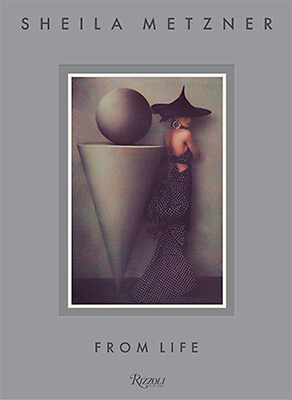
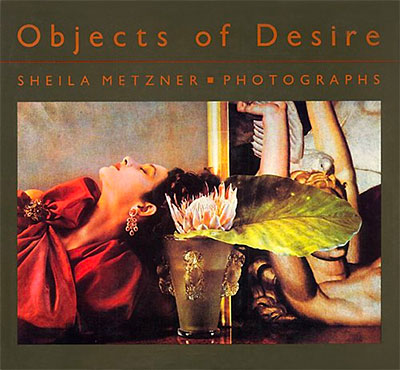
Sheila's fine art photographs are featured in the collections of The Metropolitan Museum of Art, The Museum of Modern Art, The J. Paul Getty Museum, The International Center of Photography, The Brooklyn Museum, The Museum of Fine Arts, Houston, The Chrysler Museum, The Art Institute of Chicago, Agfa and Polaroid Corporations, Saks Fifth Avenue, as well as many personal collections. She has published five monographs: Objects of Desire, which won the American Society of Magazine Photographers Ansel Adams Award for Book Photography; Sheila Metzner's Color; Inherit the Earth, a collection of landscapes shot during her travels, Form and Fashion, a collection of images culled from twenty years of her work in fine-art and fashion, and Sheila Metzner: From Life in 2017.

Source: sheilametzner.com



Sheila Metzner's Video

Selected Books

Inspiring Portfolios

Call for Entries
AAP Magazine #57 Portrait
Publish your work in our printed magazine and win $1,000 cash prizes
 
Stay up-to-date  with call for entries, deadlines and other news about exhibitions, galleries, publications, & special events.

More Great Photographers To Discover

Stéphan Gladieu
Stéphan Gladieu was born in 1969 and lives in Boulogne-Billancourt. He is represented by Olivier Castaing of the School Gallery in Paris and Artco Gallery in Germany, Cape Town and Joshua Tree. He began his career in 1989, covering war & social issues, travelling across Europe,Central Asia, the Middle East (Afghanistan, Iran, Iraq, Israel, Egypt, Pakistan) and Asia (India, Nepal, Vietnam, China, etc). Going back to his beginnings, he very quickly enriched his photographic writing by using portraiture to bear witness to the human condition in the world. His main focus is on his personal and artistic work through series of portraits in which DNA is colour and the play of contrast between subject and background in natural settings. Stéphan Gladieu plays on the iconic character of the frontal image and on the frontier between the real and the unreal. His portraiture has included covering the Saudi Princes, Princesses in Nepal, actors & directors behind the scenes at Cannes Film Festival, politicians, intellectuals, but also everyday people the world over. Stephan still realize international features and portraits series, for international magazines but he is mainly focused on is personal work: human story through colorful portrait collection. On the side of his journalist activity, Stephan is working with private company (LVMH, Danone, TOTAL…) and International institutions (World Bank, UNICEF) to work on their visual identity. Nowadays, Stephan Gladieu’s work is published in leading publications in France and internationally.Source: www.stephangladieu.fr Exclusive Interview with Stephan Gladieu
Gilles Nicolet
France
1960
I am a self-taught photographer who spent 35 years living and working in Africa, with long stays in Somalia, West Africa and Tanzania. I started out as an agricultural engineer but soon switched to photography in order to follow an old passion. I have since shot numerous stories for all sorts of magazines, including the Sunday Times Magazine, National Geographic Magazine, Geo, the Smithsonian and Paris-Match. I have a special interest in anthropology and ethnography, something that - I hope - has helped me capture the essence of my subjects. In the past most of my stories where about rare traditions that somehow linked man and wildlife, but Africa has changed a lot in the last few decades and unfortunately most of these traditions have now disappeared. My recent work has therefore been more personal and contemplative and less focused on narrative picture stories meant for magazines. In fact, today my interest lies in the convergence between art and documentary photography. I have also moved away from color photography and now only shoot in black and white. My work has received several major awards, including a World Press Photo Award and a Fuji Award. My latest project on the Swahili Coast also obtained the following recognitions: 2017 HIPA Hamdan International Photography Awards - 2nd Prize, Portfolio Category 2017 Elliott Erwitt Havana Fellowship - Nominee 2017 Seventh Annual Exposure Photography Awards - Winner 2017 IPA International Photography Awards - 2nd Prize, People/Culture Category 2017 Meitar Award - Nominee 2017 Monochrome Photography Awards - Photojournalism/Professional - Two Honorable Mentions 2017 Monochrome Photography Awards - People/Professional - Honorable Mention 2018 CAP Contemporary African Photography Prize - Finalist 2018 SIPA Contest - Honorable Mention 2019 SOPHOT Award - Winner This work on the Swahili Coast is featured in "Swahili", a book released by Contrejour Publishers in May 2019 (available on amazon.fr and amazon.co.uk). Six degrees south The Zanzibar archipelago, an highly evocative name even for those who are quite unable to locate it on a map, lies six degrees south of the Equator. It is also the exact geographical center of the Swahili Coast, a unique physical, historical and cultural entity running from Southern Somalia to Mozambique, which first grew in the 10th century through trade with the Arab world, India and China. Gold, coconut, ebony, mangrove wood, sisal, myrrh and the infamous slave trade helped make the wealth of this region, slowly shaping it and giving it its unique present character. For a thousand years now, wooden dhows have sailed these lonely shores, with their characteristic white cotton sails, using the monsoon winds to help traders move goods between Africa and Arabia. And for a thousand years too, fishermen have ploughed these rich seas for their bounty of fish, contributing with the traders to the emergence of rich city-ports like Stone Town or Mombasa. But all of this is changing now. A combination of overfishing by both local and foreign ships, population increase, changes in weather patterns as well as the recent discovery of huge gas fields in the region, is threatening this fragile equilibrium. The fishing communities that occupy these shores are particularly at risk, and it could be that we are now witnessing the last of fishing and sailing traditions that had remained largely unchanged since Ibn Battuta, the famous 12th Century Arab explorer, first described them in his travel memoirs. With this recent work I have tried to testify to the unique beauty and timelessness of the Swahili Coast, and to record it for generations to come. It is a personal, melancholic, sometimes dreamy vision of a place and a culture that are very dear to my heart but which, I now realise, may soon disappear.
Joseph Rafferty
United States
1976
Joseph Rafferty's projects are his artistic statements. When he was eight, his mother died. She went on vacation to Hawaii, and returned in a coffin. The boy was immediately uprooted from free and love-filled life, and forced to live with a freshly born-again Christian father, who became Joseph's newly self-appointed spiritual leader. An environmental lawyer who didn't ensure the safety of his own child's environment. Joseph's father silenced individuality, demanded polite compliance, and along with his stepmother, kept a still-grieving child tethered to linear thinking, Joseph did not develop the art of verbal expression. He quickly learned to swallow truth and hide pain. Photography became a powerful thread of connection to his emotion and spiritual ideas, laced with the harsh realities of a flawed culture, and the ironies within his family's worldview. Photography was an open window in his prison, giving fresh breath to a starving soul, and it became a pivotal foundation in his metamorphosis. It provided the theatre of the mind with a stage, creating space for growth and transformation beyond the stifling shell that threatened to entomb. Thriving on the sunshine of his bohemian mother's love. Joseph's nonlinear and free imprinting is counterculture's birthplace, San Francisco a land of a thousand languages, a thousand sexualities. This critical period of exposure deep seeded beliefs and values into the young child's subconsciousness he loved to see love. When his mom passed - her fashion colleagues & community sent words of condolences + small gifts of money. During his military enlistment Joseph would return to the photography store his mom frequented. With the small gifts of cash from letters of condolence he purchased large & medium format cameras and tripods. If I purchase cameras she's always with me. In doing so, he channels her instrumental spirit - a spirit guiding him from the pain and anger of his youth, and led to light. Through loving memory of her unconditional support, Joseph's found a peace and purpose in life, grounded in relationships with his partner and their children, mindful of certain pitfalls in our culture, and dedicated to the unedited, true expression of unique experience. Photography has been a life-line of expression during Joseph's stay on earth, feeling most grounded when his ideas materialize to visual imagery. Motivated by a passion for social justice, Joseph lives in a realm of beauty amongst pain. His visual linguistics are sculpted props and drawings, through which his visceral experiences emerge as a visual tapestry. Weaving images that provoke emotion and encourage empathy for others despite differences, Joseph's visuals are moments of "things as they are experienced psychologically, rather than things as they are scientifically" (William Mortensen). His body of work also influenced by early foundational years among the Redwood trees, his service in the United States Military, and his education at Art Center College of Design. Heavily inspired by Arnold Newman's manipulation of existing light, Joseph captures images with all formats of cameras. His photographic subjects begin with an idea explored through sketches further developed through research (literature, current events, locations, and style), and are materialized through intuitively sculpting of props. Each detail becomes a tool in building a landscape of meaning.
Richard Dweck
United States
Photography has been Richard Dweck's vehicle for expressing what he sees and feels when he moves through the world. He has been through some extraordinarily difficult experiences in life but has been able to use them to see and feel the world more acutely. For him there is no greater pleasure than having someone who is looking at his photograph understand the feelings that he felt when he took that photograph. He also enjoys hearing them express very different feelings and show him things in his own photographs that he might never have seen or felt. The Old City of Jerusalem Last year, for the first time, I photographed at the Western Wall and other sites in the Old City of Jerusalem. The impetus for my travel to this area to photograph was the interplay between my Arabian and Jewish roots combined with my own deep self-reflection following a tragic family loss. When I found that so many people were dressed in black and white it only seemed natural that my photographs should be B&W as well. I shot my pictures from the same level as my subjects (or even from below when that was possible) giving me the sense that I could look into them more deeply and imagine their thoughts. The Gaze shows both the deep reflection of the elder along with the reverence of the child. The child's focus and that of my camera are on the elder. The backdrop is the historic 2000+-year old wall. My landscape and architectural photographs tend to the more abstract, while my portraits are more representational. Nonetheless, geometry and textures still play a big part in portraits. The main focus for me is the emotions that I can capture that can resonate deeply within me and very hopefully with the viewers of my work. I definitely look forward to returning for another emotional and introspective journey there one day.
Alejandra Nowiczewski
Italy/Argentina
1966
Born in Buenos Aires and based in Madrid since 2022, Alejandra Nowiczewski is a sworn translator and a photographer specializing in philosophical, social and environmental issues. She obtained a Master’s Degree in Photographic Projects from PhotoESPAÑA and completed several photography workshops and mentorship programs in Argentina and Madrid. She has recently exhibited in Madrid Penumbra, a conceptual photobook dummy based on a book she wrote on the translation of legal metaphor and its social dimension. Addressing metaphor and symbol, she presents her photographic series as a visual and metaphorical reinterpretation of processes, concepts or essential texts. Within the framework of contemporary photography, she seeks to explore the ability of the photographic document to suggest something more than itself, to serve as a conduit to visualize social, philosophical or environmental topics. Her works were featured in Artdoc Magazine and in its online exhibition. She was also a nominee in the reFocus Awards 2022, Black & White Photo Contest, Minimalism, and was selected for PhotoESPAÑA’s Descubrimientos PHE25 portfolio review. She has exhibited her photographic work in Buenos Aires (Rolf Art, Ingõt Arte, Pinta BAphoto 2024 and 2022, and BAphoto 2021) and Madrid (PhotoESPAÑA, Centro de Arte Alcobendas, Museo Zapadores Ciudad del Arte and PhotoESPAÑA, Galería Nueva Las Letras). Her works are also in private collections in Argentina. Statement: I intend that my work, in its form of expression, should have the potential to add meaning and raise awareness. In line with my training in translation and its social dimension, I am interested in creating visual metaphors from linguistic metaphors, with the aim of bringing the cognitive into the visual universe and thus broadening its understanding. My work also explores a variety of themes, ranging from philosophical to climate change, biodiversity and sustainability issues. In the first case, I try to awaken intuition regarding the symbolic; in the second, I compose my images in such a way that, beyond their aesthetic component, they raise awareness about these critical global issues, which I consider priority for human and natural systems. I also accompany my projects with documentary archives that support the research on these topics.
Cedric Delsaux
France
1974
Cédric Delsaux was born in 1974. For almost 20 years, his oeuvre has sought to deconstruct our conventional view of the relationship between reality and photography. His aim is for the medium of photography to no longer directly express Reality, but rather the Fiction through which it is perceived. First known for his work as an advertising photographer, he has since made a name for himself through his personal long-term photo series. His first, Here To Stay/Nous resterons sur terre, was published in 2008 in France, and by Monacelli Press (Random House) in the US the following year. This series takes us on a subjective tour of symbolic places in our (post)modern world; these places are at once beautiful and ugly, conventional and crazy. His second, Dark Lens, was published in France in 2011 by Éditions Xavier Barral, distributed in the US by D.A.P., and translated into Japanese through publisher X-Knowledge. George Lucas wrote the foreword to the book. Dark Lens places characters from the Star Wars saga into real-world settings—like Dubai, Lille or the banlieue of Paris—and reveals the extent to which our perception of a city passes through the filter of fiction. In his next series, Échelle 1, he asked random passers-by to stand on a white wooden base, instantly transforming them into 1:1 scale figurines. For his 2014 book, Zone de repli, published by Éditions Xavier Barral, he spent three years reexploring an infamous news story, revisiting the haunts of a notorious imposter-murderer. The series he made with "France Territoire Liquide", a group co-founded with three other photographers, featured in an exhibition at the Bibliothèque nationale de France in 2017 (Paysages français: Une aventure photographique) and in a collected volume published by Éditions du Seuil ("Fiction&Cie" collection). Welcome to the Dark Corporation. It all began over 14 years ago with Dark Lens, Delsaux's initial series combining everyday places with the universe of Star Wars. Hailed an international success (...), it was honored by the Master himself, George Lucas.* After taking a break, Cédric Delsaux now reawakens the fantasy with this new opus, irreversibly breaking down the boundaries between Reality and Fiction... While the vehicles and characters of the famous Star Wars saga still haunt the real-world places he shoots—like Paris, Dubai, Marseilles, and Abu Dhabi—, this time Delsaux has worked with a full team (designer, 3D graphic artists, retouchers) to further tear back the veil between true and false, to the point that we begin to wonder if even the slightest frontier still remains. What was originally a simple confrontation between Reality and Science Fiction is finished; now the World and the "Dark Corporation" become one. It is as if the characters of the series have now permanently settled on Earth, bringing with them their ancient powers. These new residents have acquired their own vehicles, which are inspired by the Hollywood saga but recreated in the style of earthlings, borrowing design and techniques from the world that came before, the one that belonged to humankind... With this approach Cédric Delsaux combines two opposing states, reality and fantasy, as if to suggest that one can no longer be perceived without the other. The present of his photographs is no longer in the indicative, but is modified using some unknown conjugation to produce a sort of present of the conditional, distorting Roland Barthe's formula "this has been" into a puzzling "and if this was". Delsaux also uses his sets to suggest a looming, insidious threat. Each piece of land he captures depicts the latent conflict between human beings and the technology they have created... And he has an original way of exploiting the modern myth that is Star Wars to summon up all the anxieties and ambitions of a generation abandoned at the edge of the gaping chasm left by the disappearance of the Grand Narratives. Designer Vincent Gravière
Advertisement
AAP Magazine #57 Portrait
Win a Solo Exhibition in May
AAP Magazine #57 Portrait

Latest Interviews

Exclusive Interview with Matthew Finley
American photographer Matthew Finley turns inward, using photography as a way to explore identity, memory, and emotional truth. Based in Los Angeles, his practice moves between performance, gesture, and found imagery, creating a visual language that is both intimate and deeply personal
Exclusive Interview with Jan Janssen
Dutch photographer Jan Janssen explores universal human experiences through his long-term project It Matters, winner of the May 2025 Solo Exhibition. Begun in 2016, the series captures intimate moments of everyday life—love, loss, connection, and belonging—across Central and Eastern Europe. Working in countries such as Turkey, Azerbaijan, and Armenia, Janssen spends extended time within communities, building relationships based on trust and respect. His approach allows him to move beyond observation, revealing deeply human and authentic moments. Rooted in travel and personal discovery, It Matters reflects Janssen’s search for what connects us all in an increasingly divided world. The project is ongoing and will culminate in a photobook scheduled for publication in 2026.
Exclusive Interview with Henk Kosche
German photographer Henk Kosche turns his lens toward the streets of Halle an der Saale, capturing everyday life in the late years of the former German Democratic Republic. At the time, Kosche was studying design and exploring the city with his camera, drawn to the atmosphere of its industrial landscape and the quiet rhythms of daily life. His series Street Photography at the End of the 80s, selected as the Solo Exhibition for July 2025, revisits a body of work created just before a period of profound change. Rediscovered decades later in a small box of 35mm negatives, these photographs offer glimpses of a city and its people at a moment suspended between the familiar and the unknown.
Exclusive Interview with Anastasia Samoylova
Anastasia Samoylova is an American artist whose photographic practice is shaped by close observation and a deep attentiveness to place. Working between documentary and formal exploration, she photographs landscapes, architecture, and everyday scenes with a sensitivity to light, structure, and atmosphere. Since relocating to Miami in 2016, her work has increasingly focused on how environments—both natural and built—carry social, cultural, and emotional traces. We asked her a few questions about her practice and her way of seeing, to better understand the thoughts and experiences that shape her work—while allowing the images themselves to remain open and speak in their own time.
Exclusive Interview with Marijn Fidder
Marijn Fidder is a Dutch documentary photographer whose work powerfully engages with current affairs and contemporary social issues. Driven by a deep sense of social justice, she uses photography to speak on behalf of the voiceless and to advocate for the rights of those who are most vulnerable. Her images have been widely published in major international outlets including National Geographic, CNN Style, NRC Handelsblad, Volkskrant, GUP New Talent, and ZEIT Magazin. Her long-term commitment to disability rights—particularly through years of work in Uganda—culminated in her acclaimed project Inclusive Nation, which earned her the title of Photographer of the Year 2025 at the All About Photo Awards. She is also the recipient of multiple prestigious honors, including awards from World Press Photo and the Global Peace Photo Award. We asked her a few questions about her life and work.
Exclusive Interview with Josh S. Rose
Josh S. Rose is a multidisciplinary artist working across photography, film, and writing. His practice bridges visual and performing arts, with a strong focus on movement, emotion, and the expressive potential of the image. Known for his long-standing collaborations with leading dance companies and performers, Rose brings together authenticity and precise composition—a balance he describes as “technical romanticism.” His work has been commissioned and exhibited internationally, appearing in outlets such as Vogue, at the Super Bowl, in film festivals, and most recently as a large-scale installation for Lincoln Center for the Performing Arts. A sought-after collaborator, he has worked with major artists, cultural institutions, and brands, following a previous career as Chief Creative Officer at Interpublic Group and the founder of Humans Are Social. We asked him a few questions about his life and work.
Interview with Maureen Ruddy Burkhart
Photographer Maureen Ruddy Burkhart brings a quietly attentive and deeply human sensibility to her exploration of the world through images. Shaped by a life immersed in photography, film, and visual storytelling, her work is guided by intuition, observation, and an enduring interest in the emotional undercurrents of everyday life. With a practice rooted in both fine art traditions and documentary awareness, she approaches her subjects with sensitivity, allowing subtle moments to emerge naturally rather than be imposed. Her series Til Death, selected as the Solo Exhibition for February 2025, reflects this long-standing commitment to photography as a space for reflection rather than spectacle. Drawn to moments that exist just outside the expected frame, Burkhart’s images suggest narratives without resolving them, leaving room for ambiguity, humor, and quiet connection. We asked her a few questions about her life and work.
Exclusive Interview with Peter Ydeen
Winner of AAP Magazine #45 Travels, his series reflects this unique vision—capturing the spirit of place through subtle layers of light, color, and emotion. Whether traveling abroad or observing the rhythms of his own surroundings, Ydeen creates images that feel both grounded and enchanted, inviting viewers into a world where reality and reverie meet.
Exclusive Interview with Julie Wang
Chinese-born photographer Julie Wang brings a poetic, contemplative sensitivity to her visual exploration of the world. Having lived for nearly equal parts of her life in China, Europe, and the United States, she approaches her subjects with the nuanced perspective of someone shaped by many cultures. This blend of distance, curiosity, and emotional resonance infuses her work with a quiet depth, allowing her to reveal the fragile beauty and subtle tensions that often pass unnoticed.
Call for Entries
Win A Solo Exhibition in May
Get International Exposure and Connect with Industry Insiders