Tucson - 140 North Main Avenue - AZ 85701
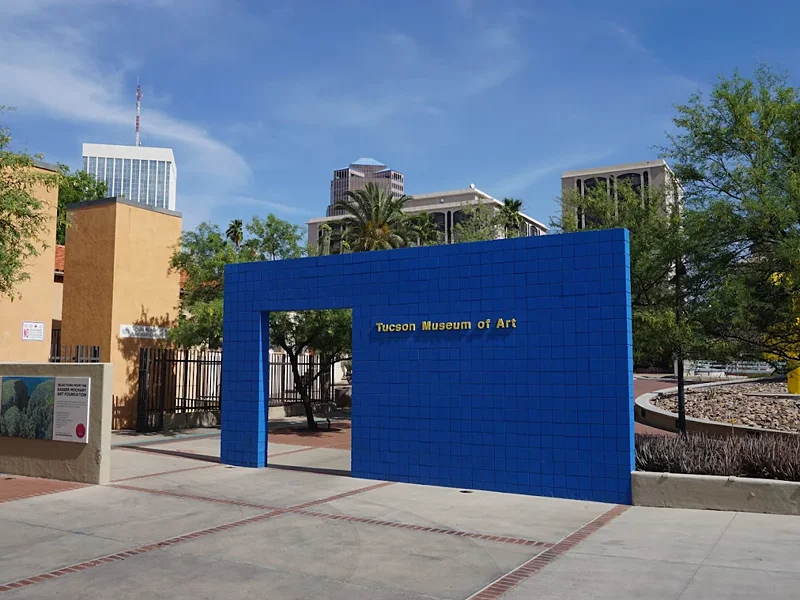
The Tucson Museum of Art and Historic Block stands as a vital cultural anchor in the American Southwest, where art, history, and community converge within a richly layered architectural setting. Occupying an entire city block in downtown Tucson, the institution grows from early twentieth-century civic initiatives into a dynamic museum environment that integrates historic homes with contemporary gallery spaces. This unique configuration offers visitors an immersive experience, where the textures of the past meet evolving artistic practices.
From its beginnings as the Tucson Fine Arts Association in 1924, the museum develops a strong commitment to education and public engagement. Lectures, exhibitions, and workshops shape a program that continues to expand in scope, reflecting both regional heritage and global perspectives. Today, its collection encompasses thousands of works spanning centuries, with particular strengths in the art of Latin America, the American West, and Indigenous traditions. Within this broader framework, photography occupies an increasingly significant role, bridging documentary insight and artistic experimentation.
The museum’s photography program highlights the medium’s ability to capture the complexity of Southwestern identity while engaging with wider contemporary dialogues. Exhibitions regularly present works by established and emerging photographers, often exploring themes such as landscape, migration, memory, and cultural resilience. Photographic works within the collection contribute to a nuanced understanding of place, offering visual narratives that complement painting, sculpture, and material culture. Through rotating displays, the museum ensures that these images remain in active conversation with audiences and other forms of artistic expression.
Education remains central to the institution’s mission, supported by dedicated facilities such as the Alice Chaiten Baker Center for Arts Education. Here, photography is integrated into workshops, lectures, and community programs that encourage both technical exploration and critical reflection. This approach reinforces the museum’s broader vision: to connect art to life, foster creativity, and deepen cultural understanding through meaningful encounters with visual culture in all its forms.
Website