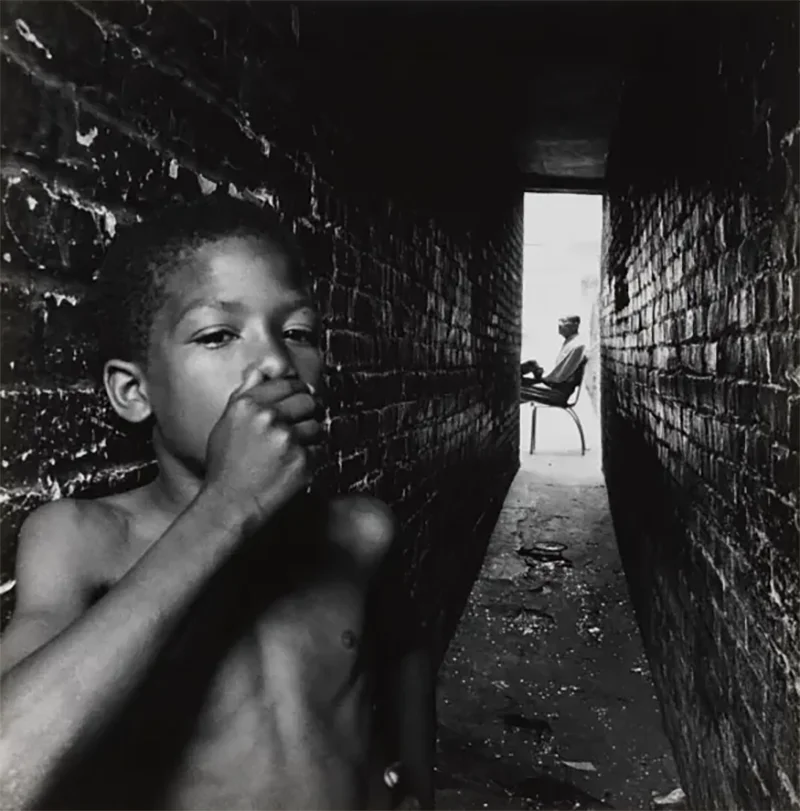
Flashback: Two Centuries of Baltimore Photography places Baltimore at the center of its own visual history, gathering more than 200 photographs made over roughly 185 years. Opening October 4, 2026 and running through February 21, 2027, the exhibition presents the city not simply as a backdrop, but as a force that has shaped how photographers have worked, what they have recorded, and how Baltimore has been seen over time.
The show brings together a wide range of images, from early photographs to contemporary work, tracing changing ideas about the city and the people who live there. It includes documentary views of neighborhoods, portraits, street scenes and images tied to major civic moments. Together, they offer a broad picture of Baltimore as a place marked by industry, migration, community life, hardship and artistic energy.
Among the featured photographers are A. Aubrey Bodine, Elinor B. Cahn, Carl Clark, Roland L. Freeman, Irving Henry Phillips, Devin Allen, SHAN Wallace, Elle Pérez, Gioncarlo Valentine and Connie Imboden. Their work spans different generations and approaches, from classic photojournalism to contemporary social documentation and more personal, experimental forms. That range gives the exhibition a layered view of how Baltimore has been described and interpreted through the camera lens.
The exhibition arrives as the first major museum project devoted to Baltimore’s role in the history and evolution of photography. Rather than treating the city as a single story, it presents it through shifting perspectives, showing how images of local life can also reflect broader questions about race, class, memory and representation. The result is a portrait of Baltimore that is both historical and current, built from photographs that register everyday life as well as moments of change.
Co-curated by Dr. Leslie Cozzi, Antoinette Roberts and Jenna Paper-Evers, with initial contributions by Andaleeb Badiee Banta, the exhibition positions Baltimore as a subject that has long shaped the city’s photographic identity as much as it has been recorded by it.
Image:
Untitled from 'The Other Baltimore Street'