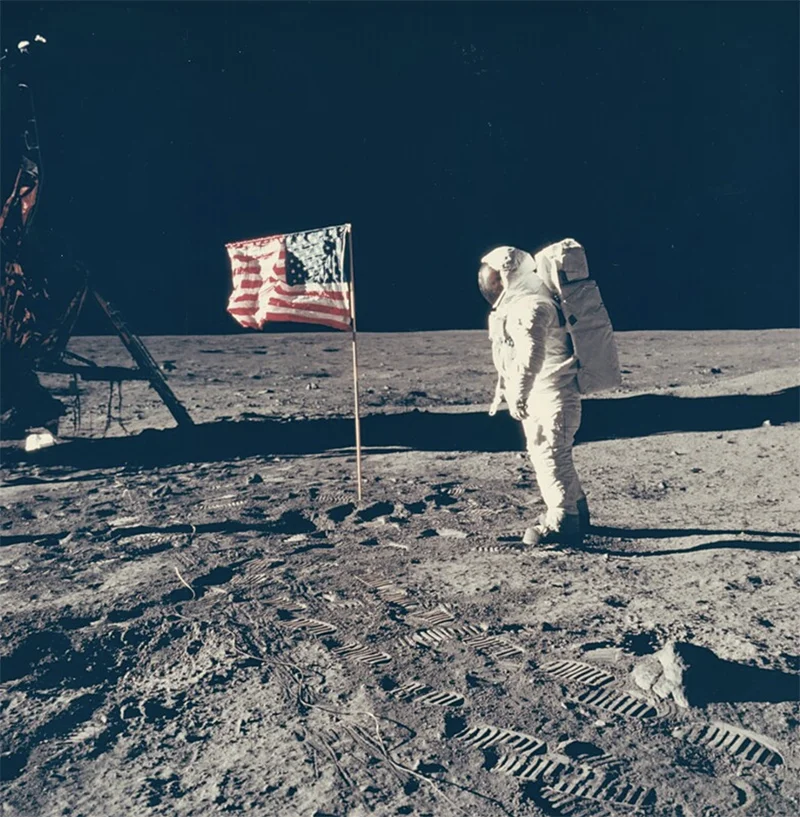
American Icon: The US Flag in Art opens at the National Gallery of Art on June 6, 2026, bringing together more than 30 works that trace how the Stars and Stripes has been used, questioned and reimagined from the late 1800s to the present. On view in the East Building Concourse Galleries through December 6, the exhibition shows how the flag has served as a symbol of pride, protest and national identity across generations.
The installation includes paintings, prints and photographs by some of the most recognized names in American art.
Gordon Parks and
Dorothea Lange appear with photographs that place the flag within social and historical contexts, while Childe Hassam contributes a more traditional, patriotic view rooted in early 20th-century painting. Jasper Johns brings his iconic flag paintings, which treat the stars and stripes as both subject and object, and Faith Ringgold offers work that reinterprets the flag through textile, narrative and issues of race and belonging.
The flag’s meaning shifts across the exhibition. In some works it appears as a straightforward emblem of the nation, linked to military service, independence or civic celebration. In others, it becomes a site of critique, resistance or reclamation, especially in contexts tied to civil rights, war, immigration and cultural change. The show does not present a single narrative but instead shows how different artists and moments have used the same image to express opposing ideas about the country.
The exhibition arrives at a time when the flag remains a frequent focus of public debate. By placing works from different eras side by side,
American Icon reveals how the flag functions as a flexible visual language, capable of carrying pride, anger, hope and dissent depending on who makes it, how it is shown and where it appears.
The installation frames the US flag not as a fixed symbol but as a living element in American art, continuously reshaped by the artists who engage with it and the histories they bring into view.
Image:
Buzz Aldrin Poses with Flag, July 20, 1969. Neil Armstrong, National Aeronautics and Space Administration