Designing Power: The Black Panther Party, on view in the Atrium at the Tang Teaching Museum and Art Gallery from February 14 through May 31, explores how a political movement crafted one of the most enduring visual identities of the twentieth century. Emerging in the late 1960s under the leadership of Huey P. Newton and Bobby Seale, the Black Panther Party understood that imagery could mobilize communities as powerfully as rhetoric or policy. The exhibition examines how deliberate design choices helped translate radical ideas into a bold, accessible public presence.
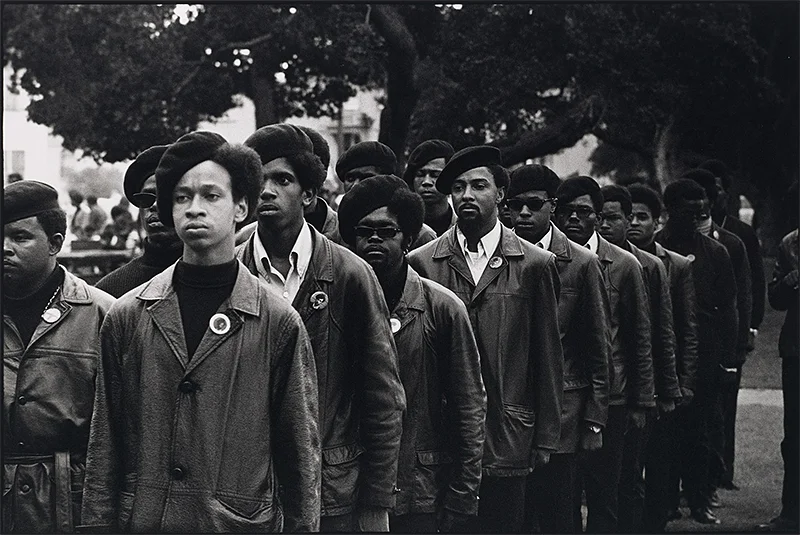
Drawing from archival materials in the museum’s collection, the presentation features newspapers, photographs, flyers, and printed ephemera that reveal a sophisticated visual strategy. The Party’s striking panther logo, strong graphic layouts, and commanding typography established a recognizable brand of resistance. Equally significant were embodied aesthetics: leather jackets, berets, natural hairstyles, and disciplined group portraits communicated unity, dignity, and self-determination. Through these choices, the Party forged a visual language that amplified its calls for community programs, self-sufficiency, and protection against systemic injustice.
Photography played a central role in shaping this public image. Carefully staged portraits and documentary images circulated widely, projecting strength and solidarity while countering hostile media narratives. The interplay between image and message created a feedback loop in which design reinforced ideology and ideology informed design. By situating these materials within a museum context, the exhibition invites viewers to consider how visual culture operates as a form of political agency.
Organized as a student-curated project,
Designing Power also underscores the continuing relevance of the Party’s aesthetic innovations. Decades after the organization’s dissolution, its iconography endures in contemporary movements for racial justice and social change. The exhibition demonstrates how the deliberate crafting of symbols, language, and images can leave a lasting imprint—shaping not only how a movement is seen, but how it is remembered and reimagined for future generations.
Image:
Stephen Shames, Panthers line up at a Free Huey rally in DeFremery Park, Oakland, 1968, gelatin silver print, 12 ¼ x 19 inches, Tang Museum collection, The Jack Shear Collection of Photography at the Tang Teaching Museum, 2017.45.12