Playing to Our Strengths: Highlights from the Permanent Collection, on view from January 31 to July 31, 2026, continues a thoughtful series that draws from the depth of the Addison’s American art holdings. This third chapter turns its focus to the late nineteenth and early twentieth centuries, a period marked by rapid change and internal contradiction. Across painting and photography, artists of this era wrestled with the promises and anxieties of modern life, producing works that oscillate between harmony and fracture, clarity and unease. With thousands of objects to draw from, the exhibition offers a carefully shaped journey through a moment when the American imagination was being fundamentally redefined.
The exhibition unfolds across four interconnected galleries, each proposing a distinct way of seeing a nation in transition. The first presents an idealized vision of American life at the turn of the twentieth century, pairing Impressionist and American Renaissance paintings with Pictorialist photographs. Soft tonalities, lyrical compositions, and an emphasis on atmosphere suggest a world of calm domestic scenes and pastoral landscapes. These works share a belief in beauty as a stabilizing force, capturing fleeting moments that feel suspended outside the pressures of modernization.
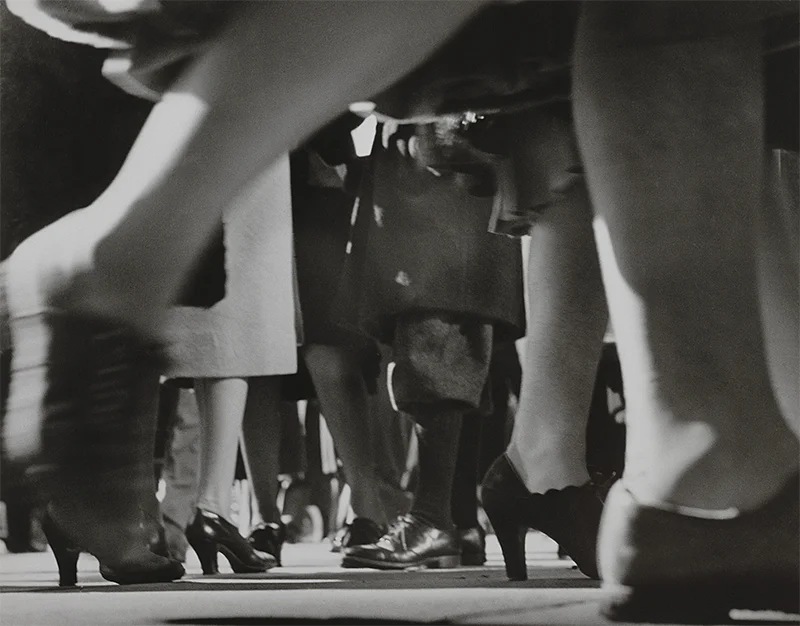
That sense of equilibrium is challenged in the second gallery, where Ashcan School artists and social realist photographers confront the realities of urban life head-on. Here, crowded streets, immigrant neighborhoods, and industrial labor replace serenity with urgency. These images reject nostalgia in favor of direct observation, insisting on visibility for lives shaped by economic struggle and social change. The city becomes a site of friction, energy, and unvarnished truth.
Across the rotunda, Precisionist works introduce a sharply different visual language. Influenced by European modernism yet distinctly American, these images reduce the world to clean lines and geometric forms, celebrating the machine age and its architectural ambitions. Skyscrapers and factories appear orderly and monumental. In contrast, the final gallery peels back this polished surface, revealing interwar New York as a place of psychological complexity and quiet alienation. Together, these galleries form a nuanced portrait of modern America—one defined not by a single narrative, but by the tension between what is promised and what is lived.
Image:
Lisette Model, Running Legs, NYC, 1940. Gelatin silver print, 10 11/16 x 13 11/16 inches. Museum purchase, 1985.31 © Lisette Model. Courtesy of the Addison Gallery of American Art.