American Bohemia: The Photographic Legacy of the Village Voice examines the radical visual culture that emerged from one of the most influential alternative newspapers in American history. On view at the California Museum of Photography from February 20 to August 1, 2027, the exhibition traces how the
Village Voice reshaped photographic practice by rejecting conventional newsroom aesthetics in favor of intimacy, experimentation, and personal vision. Founded in 1955 in Greenwich Village, the paper became a vital platform for voices operating outside the cultural mainstream.
Photography played a central role in shaping the Voice’s identity. Rather than functioning as mere illustration, images carried editorial weight, reflecting the paper’s commitment to challenging authority and documenting life as it unfolded on the streets of New York City. The exhibition brings together works by forty-eight photographers whose contributions captured urban unrest, political movements, nightlife, performance, and everyday encounters. Their photographs convey a city in flux and a nation grappling with shifting values, told through lenses unafraid of subjectivity or imperfection.
At the heart of the exhibition is the work of Fred W. McDarrah, the Voice’s first staff photographer and a tireless chronicler of the American counterculture of the 1950s and 1960s. His images of writers, artists, musicians, and activists helped define the visual memory of an era. Later generations of photographers, including Amy Arbus, James Hamilton, Hiroyuki Ito, and Sylvia Plachy, found in the Voice an environment that encouraged risk-taking and personal exploration. Their time at the paper proved formative, allowing distinct photographic voices to mature within a supportive yet uncompromising editorial framework.
Guest curated by Thomas McGovern and David Evans Frantz,
American Bohemia reveals how the
Village Voice functioned as both cultural mirror and instigator. The exhibition underscores the newspaper’s lasting impact on documentary and art photography, affirming its role as a training ground for independent vision and critical engagement. Together, these photographs testify to a tradition of looking closely, questioning openly, and embracing photography as a tool for cultural reckoning and creative freedom.
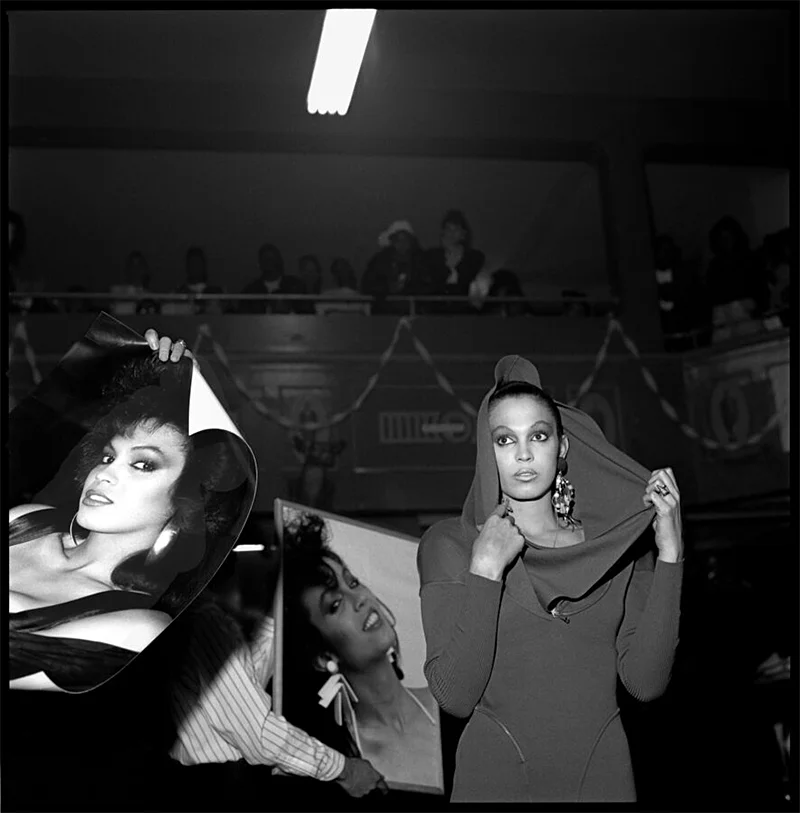
Image:
Sylvia Plachy, Carmen Xtravaganza, 1988. © Sylvia Plachy