All about photo.com: photo contests, photography exhibitions, galleries, photographers, books, schools and venues.
FINAL CHANCE to enter All About Photo Awards: $5,000 Cash Prizes - Juror Steve McCurry

Angela West: Persephone

From March 12, 2021 to May 15, 2021
Share
Angela West: Persephone
3115 East Shadowlawn Avenue
Atlanta, GA 30305
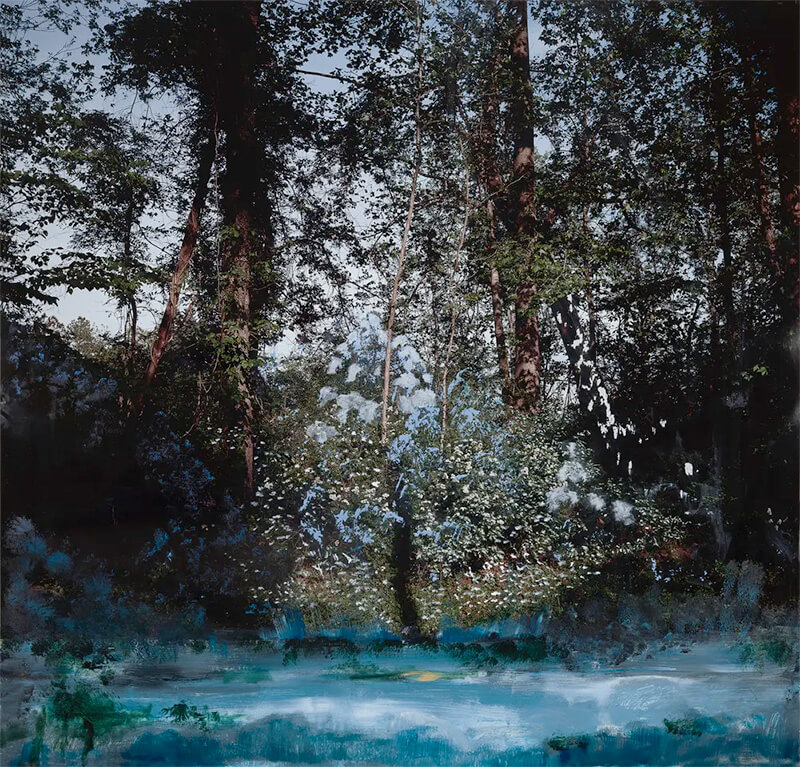
Jackson Fine Artis excited to celebrate the welcome approach of spring with Eat Flowers and Persephone, exhibitions of new work from Cig Harvey and Angela West. Both series are lush explorations of the changing seasons and celebrations of emotional rebirth from two of the most innovative female photographers working today. This is the gallery's first exhibition of Cig Harvey's work, and our fifth exhibition of Angela West, the first since 2010's Trigger. >

On Saturday, March 13th, we'll be accepting special opening weekend appointments from 11am –4pm, with Angela West in attendance from12-2pm. Appointments may be made by visiting our website.

On Saturday, May 8th, Cig Harvey will give a closing artist talk, followed by questions and a book signing in celebration of Harvey's forthcoming monograph, Blue Violet. Cig's previous books You Look At Me Like An Emergency, Gardening at Night, and You an Orchestra, You a Bomb have all sold out and have won numerous awards.

Eat Flowers, an exhibition of recent work by Cig Harvey, is a multi-sensory installation of photography and text that celebrates the artists' unique and contemplative approach to finding beauty in even the most mundane. Combining letterpress text, straight photography, and sculpture, Harvey provides an experience mirroring her celebrated photobooks, in which she offers viewers a glimpse into her artistic process through drawings, writings, and references.

In Persephone, an exhibition of new large-scale mixed media pieces from Angela West, the artist draws from her extensive archives, reimagining works from my 33rd Spring, a body of work she first presented 17 years ago following her MFA program at Yale. As the world stood still in 2020, West returned to these photographs, layering paint on top of her original landscapes to create a series of unique paintings that celebrate rebirth and the reemergence of West as a force in the photographic community.
Our printed edition showcases the winners of AAP Magazine call of entries
All About Photo Magazine
Issue #53
Stay up-to-date  with call for entries, deadlines and other news about exhibitions, galleries, publications, & special events.

Exhibitions Closing Soon

Arne Svenson: Sock Monkeys and Strays
Robert Klein Gallery | Boston, MA
From December 15, 2025 to January 31, 2026
Arne Svenson: Sock Monkeys and Strays, on view from December 15, 2025 through January 31, 2026 at Robert Klein Gallery, brings together two deeply evocative bodies of work by the New York–based photographer. Marking Svenson’s third solo presentation at the gallery, the exhibition highlights his enduring fascination with psychology, projection, and the subtle emotional charge embedded in acts of looking. Across both series, Svenson invites viewers into quiet encounters with subjects that sit at the margins of attention, asking us to reconsider how meaning is formed through photographic observation. In Sock Monkeys, Svenson transforms modest, handmade toys into compelling stand-ins for the human figure. Photographed with a large-format camera and lit with the restraint of nineteenth-century portraiture, these dolls are stripped of their playful context and rendered strangely sentient. Their stitched faces suggest temperament without story, individuality without history. Hovering between whimsy and disquiet, the images reveal how easily viewers project emotion, character, and vulnerability onto inert forms, exposing photography’s power to animate what would otherwise be dismissed as trivial or nostalgic. The series Strays extends this inquiry into empathy and marginality through portraits of kittens temporarily borrowed from a rescue facility. Rather than indulging in sentimentality, Svenson approaches these animals with the same formal seriousness applied to his inanimate subjects. Each photograph suggests an interior life shaped by displacement and uncertainty. The kittens’ gazes, gestures, and postures hint at stories beyond the frame, quietly asserting presence while resisting easy interpretation. Together, these works underscore Svenson’s long-standing interest in the ethics of seeing and the tension between observer and observed. Whether confronting a toy imbued with imagined personality or an animal negotiating its autonomy, the photographs slow the act of looking and demand attentiveness. An artist’s talk on January 10, 2026, offers further insight into these themes through conversation with photo historian Jennifer Stoots. Ultimately, Sock Monkeys and Strays is a meditation on attention itself. Svenson’s images remind us that intimacy in photography does not require narration, only patience—and a willingness to encounter the overlooked with care. Image: Arne Svenson. Strays 99, 2010 Archival pigment print © Arne Svenson
Nuclear Injustice
Pace University Art Gallery | New York, NY
From November 15, 2025 to January 31, 2026
Nuclear Injustice, on view at the Pace University Art Gallery from November 15, 2025 through January 31, 2026, confronts the enduring human, environmental, and political legacies of nuclear testing and bombings. This group exhibition brings together the work of Kathy Jetñil-Kijiner, Alan Nakagawa, Michael Wang, and Will Wilson, whose practices span photography, video, sound installation, sculpture, and conceptual interventions. Each artist interrogates the often unseen impacts of atomic history, from poisoned landscapes to Indigenous resistance and global campaigns for a nuclear-free world. Jetñil-Kijiner’s video poems poignantly reflect on the Marshall Islands, where decades of nuclear testing left both environmental devastation and intergenerational trauma. Her work entwines memory, culture, and place, foregrounding the resilience of Marshallese communities and the ongoing struggle to preserve identity in the face of ecological destruction. In a complementary approach, Nakagawa transforms sound into witness: field recordings from the Hiroshima Atomic Dome and the Wendover Hangar are sculpted into immersive audio spaces, prompting reflection on the reverberations of historical violence and the ethical weight of human choices. Will Wilson’s photography highlights the ongoing consequences of uranium mining on Indigenous lands, revealing the connection between nuclear extraction and broader systems of colonial exploitation. His images confront the legacies of displacement, contamination, and cultural erasure while honoring Indigenous resilience. Michael Wang engages scientific and ecological frameworks, exploring nuclear containment and exposure through conceptual installations that link contemporary concerns to the history of land art, emphasizing humanity’s moral responsibility toward the environment. Curated by Sarah Cunningham and Joel Wilson, with the guidance of Emily Welty, Nuclear Injustice challenges audiences to consider the physical, social, and ethical dimensions of nuclear technology. Together, the works transform sites of devastation into spaces for remembrance, renewal, and activism. By connecting history, environment, and culture, the exhibition invites viewers to reckon with past harms while envisioning a more just and nuclear-free future. Image: Will Wilson, Auto Immune Response: Confluence of Three Generations, photography, 2015 © Will Wilson
Lauren Grabelle: Deer Diary
Blue Sky, Oregon Center for the Photographic Arts | Portland, OR
From January 08, 2026 to January 31, 2026
Lauren Grabelle: Deer Diary unfolds as a quiet yet profound meditation on presence, place, and the porous boundary between the human and the wild. Set within the expansive landscapes of Montana, the project occupies a unique space where fine art, documentary observation, and wildlife photography intersect. Rather than positioning herself as a distant observer, Grabelle invites the land and its inhabitants into the act of authorship, allowing chance, movement, and time to shape the work. At the heart of Deer Diary is the trail camera, a humble tool transformed into a conduit for introspection. Hidden along game paths and fence lines, the camera records deer as they pass through their own routines, unbothered by the human gaze. These encounters become a form of spiritual self-portraiture, where Grabelle’s presence is implied rather than seen. The deer emerge as collaborators, their gestures and pauses echoing ancient narratives that have followed the animal through mythology, religion, and storytelling since humanity’s earliest image-making. The resulting photographs feel both intimate and timeless. Illuminated by infrared glow or soft ambient light, the deer appear suspended between worlds, at once corporeal and symbolic. They inhabit a space that feels ritualistic, recalling cave paintings, medieval allegories, and folktales in which animals serve as guides, messengers, or mirrors of human emotion. In this context, the Montana landscape is not a backdrop but an active participant, shaping the rhythm and mood of each image. Grabelle’s broader practice has long been rooted in honoring people, animals, and environments with empathy and restraint, and Deer Diary extends this ethos with particular clarity. Her sensitivity to place, honed through years of editorial and fine art work as well as solitary time in wilderness settings, lends the series an authenticity that resists spectacle. The images do not dramatize wildlife; they listen to it. Ultimately, Deer Diary is an invitation to slow down and reconsider how we look, not only at animals but at ourselves within the natural world. Through patience and humility, the project suggests that meaning emerges not from control, but from attentive coexistence, where observation becomes a form of reverence. Image: © Lauren Grabelle
Constance Jaeggi, Angelina Sáenz and ire’ne lara silva: Escaramuza, the Poetics of Home
Blue Sky, Oregon Center for the Photographic Arts | Portland, OR
From January 08, 2026 to January 31, 2026
Escaramuza, the Poetics of Home is an immersive collaboration that brings together photography, poetry, and lived testimony to illuminate a tradition shaped by precision, courage, and belonging. Centered on the women of escaramuza charra, the exhibition opens a window onto a world often glimpsed only through spectacle, revealing instead the intimate rituals, relationships, and emotional landscapes that sustain it. Here, pageantry gives way to presence, and performance becomes a language of identity. Through the lens of Constance Jaeggi, the bond between rider and horse emerges as a quiet dialogue of trust and power. Her photographs move beyond documentation, lingering on gestures, glances, and moments of pause that speak to autonomy within a historically male-dominated arena. Horses are not merely companions or symbols; they are collaborators, mirroring the riders’ strength, vulnerability, and resolve. Jaeggi’s imagery frames escaramuza as both a disciplined sport and a deeply personal act of self-definition. Poetry by Angelina Sáenz and ire’ne lara silva weaves through the visual work, adding rhythm and resonance to the exhibition. Their words echo themes of migration, family, inheritance, and memory, grounding escaramuza in the broader experience of home-making across borders and generations. The poems do not explain the images; they converse with them, offering texture and breath, and inviting viewers to listen as much as they look. Together, image and language create a space where cultural continuity and personal voice coexist. Interviews included in the project further deepen this exchange, allowing escaramuzas to speak for themselves about discipline, pride, and the labor behind elegance. These voices reveal how tradition adapts and endures, carried forward by women who claim visibility while honoring lineage. Escaramuza becomes not only a sport, but a living archive shaped by hands, hooves, and stories passed down with care. Ultimately, Escaramuza, the Poetics of Home is a meditation on belonging. It asks how home is formed through movement, community, and shared purpose, and how identity is affirmed through collective ritual. Lyrical yet grounded, the exhibition honors the women who ride at full speed while holding fast to history, imagination, and one another. Image: © Constance Jaeggi
Danny Lyon: The Texas Prison Photographs
Howard Greenberg Gallery | New York, NY
From December 05, 2025 to January 31, 2026
Danny Lyon: The Texas Prison Photographs at Howard Greenberg Gallery presents a compelling and historic exploration of incarceration in Texas during 1967-68. This exhibition, Lyon’s first with the gallery following its announcement of representation in April 2025, brings together photographs, films, drawings, and ephemeral materials that reveal the lived realities of prison life in vivid, unflinching detail. The show opens with a reception on December 5 from 5:30 to 7:30 p.m., with the artist in attendance, offering viewers a unique opportunity to engage directly with one of photography’s most influential documentarians. Danny Lyon’s work in Texas captures the complexities of the penal system through a participatory lens. Unlike traditional photojournalists, Lyon immersed himself in the communities he documented, living and interacting with his subjects to create intimate, authentic portrayals. His images in this exhibition convey both the harshness and humanity of prison life, from quiet moments of reflection to the stark architecture of confinement. Through these works, Lyon examines power, control, and resilience, offering a nuanced perspective that challenges viewers to reconsider notions of justice and social structures. Lyon’s approach to documentary photography was radical in the 1960s, informed by his involvement in the Civil Rights Movement and his groundbreaking book, The Bikeriders, which chronicled the Chicago Outlaws motorcycle club. His New Journalism style emphasized participation over observation, allowing him to capture the textures, emotions, and stories that might have been lost to an outsider. In his own words, “I was a participant who also happened to be a photographer,” highlighting his philosophy of deep engagement as the foundation of his practice. The Texas Prison Photographs not only documents a specific time and place but also marks an enduring exploration of the ethics, intimacy, and responsibility of documentary photography. By presenting these works alongside films, drawings, and ephemera, the exhibition offers a multidimensional view into Lyon’s method and vision, cementing his legacy as a pioneering voice in socially engaged visual storytelling. Image: © Danny Lyon, Courtesy of Howard Greenberg Gallery, New York
Elijah Gowin: Spirit and shadow
Robert Mann Gallery | New York, NY
From December 11, 2025 to January 31, 2026
Spirit and Shadow unfolds as a quiet meditation on the fleeting brilliance that inhabits the natural world, offering a space where brief illuminations linger like whispered memories. Fireflies rise and fall along the curve of a river, sketching trembling pathways of light that feel both ancient and newborn. Snowflakes drift with equal delicacy, each one a tiny, vanishing universe. Whether glowing or glistening, these small wanderers move through darkness as though guided by an unseen rhythm, their trails weaving together like strands of breath suspended in time. Presented by Robert Mann Gallery, Spirit and Shadow brings together the evocative work of Elijah Gowin, an artist whose photographs uncover the luminous pulse within nocturnal landscapes. Traveling to places as varied as Virginia, Malaysia, and Thailand, Gowin seeks the fireflies’ quiet radiance, capturing their shimmering presence at dusk. Against these summer scenes, he sets the winter hush of falling snow, the flakes’ pale blues and whites echoing the electric trails of lightning bugs. The exhibition becomes a meeting point of seasons, light sources, and states of being. Gowin’s approach invites chance and mystery into each frame. Working in complete darkness, he embraces unpredictable visual effects that blur edges, dissolve distinctions, and allow colors to erupt with surprising intensity. Lines of yellow sweep across the compositions while bright orbs shimmer like crystals in motion. Trees, riverbanks, and other natural forms emerge softly from the shadows, as if recalled from a dream. At times, the fireflies seem like stars loosened from the sky, drifting downward with the gentleness of falling snow. In this interplay of movement and stillness, light becomes both spirit and shadow—an emblem of transformation and reverence. Gowin aligns his practice with seasonal rhythms and lunar cycles, honoring the fragile ecosystems that give rise to such wonders. Each photograph invites viewers to pause, to dwell in the threshold between presence and disappearance, and to consider how even the smallest glimmer can reshape the darkness that surrounds it. Image: Tree 1, 2012 © Elijah Gowin
Raphael Avigdor:  Both Sides Now
Rebecca Hossack Art Gallery | Miami, FL
From December 01, 2025 to January 31, 2026
Raphael Avigdor’s newest body of work offers a contemplative journey through the quiet drama of the sky, where clouds become both subject and metaphor. In his forthcoming exhibition, the artist invites viewers to linger on the suspended moments he has gathered during his travels, transforming shifting atmospheric forms into reflections on time, movement, and perception. Each image carries the sense of an encounter—an instant when the world seems to pause just long enough for memory to take shape. The title of the exhibition, Both Sides Now, resonates with the spirit of duality at the heart of these works. Like the song that inspired it, the photographs navigate the tension between what is seen and what is felt. Avigdor captures clouds not simply as meteorological formations but as emotional landscapes, places where observation and introspection meet. Light drifts across the images with a soft authority, shaping contours that echo both fleeting impressions and long-held recollections. Through these shifting skies, the artist suggests that every view is layered: outer vision blending naturally with inner response. Avigdor’s longstanding engagement with photography underpins the clarity and purpose of this series. Having spent decades documenting cultures and environments around the world, he brings the same sensitivity to these quiet skyscapes that he has applied to the people and places encountered throughout his career. The clouds become a universal subject, yet they retain a sense of personal dialogue—fragments of experience gathered from journeys across continents. Although rooted in the present, the work reflects the breadth of Avigdor’s practice, one shaped by curiosity, travel, and an ever-deepening attention to the nuances of visual storytelling. The photographs in Both Sides Now express a simple yet profound truth: that in watching the sky, one observes not only the world above but also the shifting landscapes of one’s own interior life. Image: Raphael Avigdor Courageous I, 2025 archival print 101.6 x 152.4 cm 40 x 60 in (RA029) © Raphael Avigdor
Yamamoto Masao
Robert Koch Gallery | San Francisco, CA
From December 04, 2025 to January 31, 2026
Robert Koch Gallery presents a contemplative exhibition devoted to the poetic universe of Yamamoto Masao, offering a rare opportunity to trace the breadth of his vision across several of his most celebrated series. Rooted in a Zen-infused understanding of the world, Yamamoto’s work invites viewers to slow down and rediscover the quiet marvels hidden in daily life. His photographs remind us that attentive looking can reveal moments of grace that often pass unnoticed. Working primarily with small-format toned silver gelatin prints, Yamamoto turns his lens toward the natural world that surrounds him: a fleeting shadow across a stone, a bird poised in mid-flight, the texture of aging bark, or the gentle shift of light along a rural path. These subtle images carry a sense of stillness, yet they also feel alive, as though the air around them continues to move. Some prints bear hand coloring or traces of intentional wear—creases, soft abrasions, or delicate surface treatments—that echo the passage of time and lend each work a sense of intimate history. Animals appear throughout his photographs with a quiet but striking presence. They rarely dominate the scene; instead, they seem to drift into the frame as companions or messengers. Their calm gaze and understated gestures create a bridge between the physical world and a more spiritual realm, offering a reminder of our shared place within the natural order. Yamamoto considers each photograph an autonomous object, yet he is equally attentive to the relationships that form when images are arranged together. In groupings or installations, one picture subtly extends into the next, creating visual rhythms that behave like layered musical notes. The exhibition embraces this approach, allowing works from different series to converse across time and theme, revealing harmonies that might otherwise remain unseen. Born in Gamagori City in 1957 and now living in Yamanashi, Yamamoto has exhibited widely around the world. His photographs, celebrated for their meditative depth and refined simplicity, are held in major museum collections and continue to inspire viewers to search for meaning in life’s smallest gestures. Image: Kawa=Flow #1674, 2016, Gelatin silver print with mixed media 5 7/8 x 8 3/4 in. © Yamamoto Masao
John Akomfrah: The Hour Of The Dog
The Baltimore Museum of Art | Baltimore, MD
From November 16, 2025 to February 01, 2026
The Baltimore Museum of Art and the Menil Collection unite to present a major new commission by acclaimed British artist and filmmaker Sir John Akomfrah. Premiering at the BMA in November 2025 before traveling to the Menil Collection in April 2026, this immersive multichannel video installation invites viewers into a poetic dialogue between history and the present. Through layered imagery and evocative sound, Akomfrah brings together multiple perspectives of young activists from the U.S. Civil Rights Movement of the 1960s. By weaving together archival footage, still photographs, and newly filmed scenes, he creates a visual symphony that questions how societies remember struggle, resilience, and transformation. The installation is not merely a historical document—it is a living conversation about justice, hope, and the enduring need for social change. Akomfrah’s new work will be accompanied by a range of public programs that spotlight the local stories of Baltimore’s own activists and movements. These initiatives aim to unearth voices that history has too often overlooked, linking the global reverberations of the Civil Rights era to the present-day pursuit of equality and representation. Renowned for his profound reflections on memory, migration, and post-colonial identity, Sir John Akomfrah has spent decades exploring the intersections of image, sound, and time. A founding member of the Black Audio Film Collective, his collaborations with David Lawson and Lina Gopaul continue today through Smoking Dogs Films. His works have graced major institutions around the world—from Tate and Centre Pompidou to MoMA and the Venice Biennale—earning him the 2017 Artes Mundi Prize and a Knighthood for services to the arts in 2023. This new commission promises to be both visually stunning and intellectually stirring, reaffirming Akomfrah’s place as one of the most vital voices in contemporary art. Image: John Akomfrah: Listening All Night to the Rain was commissioned by the British Council for the 60th International Art Exhibition – La Biennale di Venezia, 2024. © Smoking Dogs Films, Courtesy Lisson Gallery. Photography by Jack Hems
William Harper: Fugue
Perspective Gallery | Evanston, IL
From January 02, 2026 to February 01, 2026
William Harper: Fugue presents a striking meditation on movement, rhythm, and the visual structure of time. On view from January 2 to February 1, 2026, the exhibition brings together a series of works in which Harper translates musical ideas into photographic form, shaping images that unfold with the layered resonance of a fugue. Each photograph functions like a musical line — distinct, expressive, and interwoven — creating a complex visual counterpoint that invites viewers to look, pause, and follow the motion contained within each frame. Harper’s practice embraces motion-intensive techniques such as timelapse, burst sequencing, and aerial imaging. These approaches allow him to map the pathways of clouds, tides, birds, traffic, and shifting light. Rather than isolating a single instant, he constructs compositions made from dozens or even hundreds of frames, combining them into unified works that reveal patterns the human eye might otherwise miss. In his hands, landscapes become dynamic scores, where elements slip, collide, diverge, and resolve in intricate harmony. Many works in the exhibition expand on Harper’s long-standing interest in the connections between photography and music. Whether capturing the slow drift of fog across a mountain ridge or the rapid flicker of wings in migration, he approaches each subject as a composer might approach a theme — shaping variation, echo, rhythm, and tension. The resulting images show not only movement, but relationships: between foreground and distance, between stillness and change, between human perception and natural flux. The exhibition also includes several pieces created using drone-based cameras, allowing Harper to trace the choreography of rivers, fields, and coastlines from above. These aerial works highlight broader geometric structures — arcs, spirals, crossings — that echo the formal logic of polyphonic music. Through Fugue, Harper invites viewers to consider time as something layered rather than linear. Each image becomes a visual composition, a place where multiple trajectories converge into a single, resonant whole. Image: William Harper: Mergansers © William Harper
Charles Gaines: Night/Crimes
Art Institute of Chicago | Chicago, IL
From August 09, 2025 to February 01, 2026
Since the 1970s, artist Charles Gaines has worked with numeric systems and repeating visual structures to investigate representation. His subjects have ranged from race theory and language theory to objects in the natural world. This exhibition focuses on Night/Crimes, a series Gaines created from 1994 to 1997, in which he paired archival photographs of violent crime scenes, victims, and indicted murderers with images of constellations that could have been seen in the night sky when the crimes occurred. Written onto the Plexiglas covering each pair of photographs are the location and date of the crime, the astronomical position of the pictured constellation, and lastly, a date 50 years after the first one. While the paired photographs of Night/Crimes suggest narrative cycles of violence, justice, astrology, and fate, there is no causal connection between the artworks’ various elements. “The murderers pictured in the mug shot-type photographs are not the ones who have committed the crimes you see in the crime scene,” says Gaines. “Nevertheless, it seems compelling to people to override the fact that this relationship is completely made up.” As viewers, our instinct is to assume the role of detective: What is the relationship between the chaos of violence and the tranquility of the night sky? How does the injustice of the past influence the present? Are our fates written in the stars? This will be the first museum exhibition of Night/Crimes since it was first shown in 1995. The future dates Gaines etched into each of the works have all passed, inviting a new consideration of the 50-year arc of history that the series addresses. Gaines is also revisiting the series and has made two new Night/Crimes works for this presentation. On September 18, in conjunction with this exhibition, the performance version of Gaines’s Manifestos 4 will be presented by an ensemble of seven musicians—a woodwind quintet, a pianist, and a tenor—in the museum’s Rubloff Auditorium. For his Manifestos series, which comprises both gallery installations and performances, Gaines took the text of the 1857 Dred Scott v. Sandford Supreme Court decision that proclaimed Black people, whether enslaved or free, were not citizens, and translated each letter into a note or rest according to a set of rules. In Manifestos 4 as in Night/Crimes, Gaines has created a systematic construction that invites visceral response while also questioning their validity.
Man Ray: When Objects Dream
The Metropolitan Museum of Art | New York, NY
From September 14, 2025 to February 01, 2026
American artist Man Ray (1890–1976) was a visionary known for his radical experiments that pushed the limits of photography, painting, sculpture, and film. In the winter of 1921, he pioneered the rayograph, a new twist on a technique used to make photographs without a camera. By placing objects on or near a sheet of light-sensitive paper, which he exposed to light and developed, Man Ray turned recognizable subjects into wonderfully mysterious compositions. Introduced in the period between Dada and Surrealism, the rayographs’ transformative, magical qualities led the poet Tristan Tzara to describe them as capturing the moments “when objects dream.” The exhibition will be the first to situate this signature accomplishment in relation to Man Ray’s larger body of work of the 1910s and 1920s. Drawing from the collections of The Met and more than 50 U.S. and international lenders, the exhibition will feature approximately 60 rayographs and 100 paintings, objects, prints, drawings, films, and photographs—including some of the artist’s most iconic works—to highlight the central role of the rayograph in Man Ray’s boundary-breaking practice. “Before my eyes an image began to form, not quite a simple silhouette of the objects as in a straight photograph, but distorted and refracted … In the morning I examined the results, pinning a couple of the Rayographs—as I decided to call them—on the wall. They looked startlingly new and mysterious.” — Man Ray The exhibition is made possible by the Barrie A. and Deedee Wigmore Foundation. Major funding is provided by Linda Macklowe, the Horace W. Goldsmith Foundation, The Daniel and Estrellita Brodsky Foundation, The International Council of The Metropolitan Museum of Art, Andrea Krantz and Harvey Sawikin, and Schiaparelli. Additional support is provided by the Vanguard Council. The catalogue is made possible by the Mellon Foundation. Additional support is provided by James Park, the Carol Shuster-Polakoff Family Foundation, and Sharon Wee and Tracy Fu.
Advertisement
All About Photo Awards 2026
Win a Solo Exhibition in March
All About Photo Awards 2026
Call for Entries
All About Photo Awards 2026
$5,000 Cash Prizes! Juror: Steve McCurry

Related Articles

The Gordon Parks Foundation Celebrates 20 Years
The Gordon Parks Foundation is celebrating its 20th anniversary with a yearlong series of exhibitions, publications, fellowships and events, all of which will highlight how the legacy of Gordon Parks (1912–2006) continues to inform contemporary artistic practice in new and innovative ways. Since its founding in 2006 to steward Parks’ multifaceted work as a photographer, musician, writer and filmmaker, the Foundation has steadily grown and expanded its capacity to provide crucial support to emerging, mid-career and late-career artists across a wide variety of disciplines. This focus on interdisciplinarity is at the heart of both the Foundation and the legacy of Parks himself, who believed unreservedly in the power of art to be a catalyst for social change and to illuminate the human condition.
Eugène Atget: The Making of a Reputation
The International Center of Photography (ICP) is proud to present Eugène Atget: The Making of a Reputation, an exhibition that examines how Eugène Atget (1857–1927) came to be regarded as one of the forefathers of modern photography through the timely and tireless advocacy of Berenice Abbott. Featuring historic prints from ICP’s collection alongside landmark publications and other printed ephemera, the exhibition reconsiders the role that Abbott played in establishing Atget’s now-canonical status, sometimes to the detriment of her own remarkable career as a photographer. Though Atget didn’t live to see it, Abbott became the ideal steward, proving that every photographer needs a champion.
Zhang Kechun: The Yellow Desert
Huxley-Parlour is pleased to present The Yellow Desert, a photography exhibition by contemporary Chinese photographer Zhang Kechun. Featuring eleven new large-format works from his latest series, begun in August 2025, the exhibition explores the Gobi Desert across Northern China and Southern Mongolia. Through landscape photography that bridges history, culture, and human presence, Zhang Kechun examines the complex relationship between desolation, memory, and modern life in this vast and evolving terrain.
All About Photo Presents ’Fay and Gay’ by Samantha Yancey
The project Fay and Gay by Samantha Yancey, on view throughout January 2026, offers an intimate and deeply human portrait of devotion, routine, and shared identity. This compelling body of work centers on Fay and Gay, twin sisters born in 1936 near Pelahatchie, Mississippi, whose lives have unfolded side by side for nearly nine decades.
Alia Ali
Gilman Contemporary presents a striking introduction to the work of Alia Ali, an artist whose multicultural background spanning Yemen, Bosnia, and the United States deeply informs her visual language. Her photographs, rich in pattern and color, navigate the complex terrain of identity, migration, and belonging. Rather than offering conventional portraiture, Ali envelops her subjects in boldly patterned textiles, allowing fabric itself to become both veil and voice. These coverings obscure familiar markers of identity, inviting viewers to question how much of what we think we know about a person is shaped by what we see—or what we assume.
Bigaignon x rhinoceros gallery - Act 2/3: Col Tempo
In Rome, rhinoceros gallery, the art space founded by Alessia Caruso Fendi within Palazzo Rhinoceros, presents “Act 2/3: Col Tempo (With Time)”,the second chapter of a trilogy of exhibitions developed in collaboration with the Paris-based gallery Bigaignon. On view from November 26, 2025 to January 14, 2026, this new exhibition is dedicated to the essential element of time,marking the continuation of a three-part project that will unfold through March 2026.
Yamamoto Masao
Robert Koch Gallery unveils a rare and essential exhibition dedicated to Japanese photographer Yamamoto Masao, bringing together works from several of his most celebrated series, including A Box of Ku, Nakazora, Kawa=Flow, Bonsai, and Tomasu. This presentation offers a profound immersion into one of contemporary photography’s most poetic and contemplative voices—an artist whose practice invites viewers to slow down, breathe, and rediscover the hidden beauty embedded in everyday life.
All About Photo Presents ’Notes From The Edge’ by Antonio Denti
All About Photo is proud to announce Antonio Denti as the winner of the December Solo Exhibition Contest, selected by internationally acclaimed photographer Ed Kashi. His long-term project, “Notes from the Edge,” offers a striking and poetic exploration of what it means to live in a world caught between collapse and rebirth.
My Circus by Ellen von Unwerth
Fotomuseum aan het Vrijthof in Maastricht presents an exhibition by famous Paris-based German fashion and fine art photographer Ellen von Unwerth from 31 January until 13 September 2026. The high-profile exhibition My Circus features 160 iconic photographs of models and pop musicians in which femininity, playfulness, eroticism, and fashion take center stage. The stylish images were created for fashion brands, publications, and her own inspiring VON magazine and books.
Call for Entries
All About Photo Awards 2026
$5,000 Cash Prizes! Juror: Steve McCurry