West Hollywood - 835 North Kings Road - CA 90069
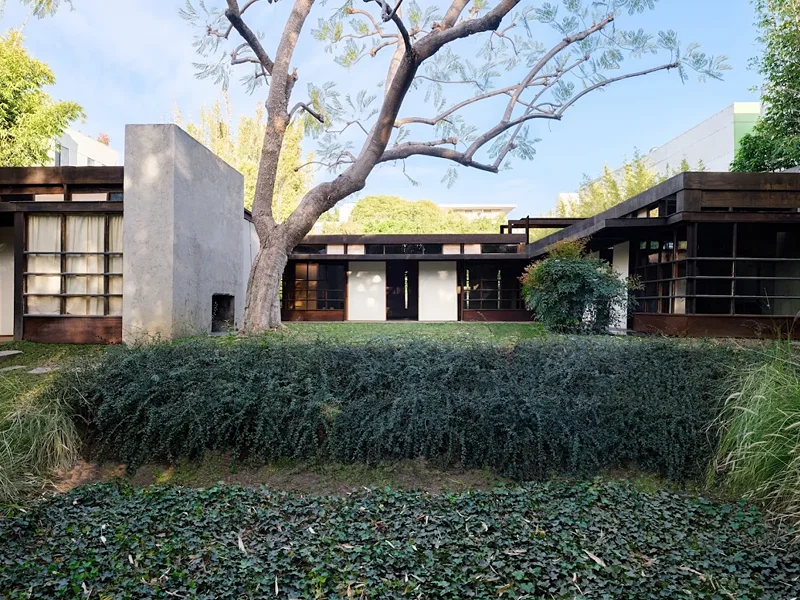
The MAK Center for Art and Architecture occupies a distinctive place within Los Angeles' cultural landscape by bringing together architecture, contemporary art, design, and critical research in a series of historically significant buildings designed by pioneering modernist architect Rudolph M. Schindler. Serving as the California satellite of Vienna's MAK – Museum of Applied Arts, the Center presents an ambitious year-round program of exhibitions, residencies, lectures, performances, publications, and public events that explore the evolving relationship between artistic disciplines and the built environment. Anchored by the iconic Schindler House in West Hollywood and complemented by the Mackey Apartments and Fitzpatrick-Leland House, the institution transforms Schindler's architectural masterpieces into living laboratories for creative experimentation and interdisciplinary exchange.
Photography has become an important component of the MAK Center's exhibition program, both as an artistic medium and as a vital tool for documenting architecture, urban space, and cultural history. While the institution does not maintain a traditional photography collection, photographic practice is regularly integrated into exhibitions that examine architecture, landscape, design, performance, and social space. Contemporary photographers are frequently invited to engage directly with Schindler's buildings, producing new commissions and site-specific projects that explore light, materiality, memory, and the changing experience of modern architecture. Historical photographs, architectural documentation, and archival imagery also play a significant role in interpreting Schindler's legacy and revealing the evolution of these landmark structures over the past century.
The MAK Center's curatorial approach encourages dialogue across disciplines, creating exhibitions where photography interacts with sculpture, installation, film, architecture, and experimental design. Artists and architects are invited to challenge conventional exhibition formats while responding directly to the unique character of each historic site. Through artist residencies, collaborative research, publications, and public conversations, the Center fosters new perspectives on the relationship between visual culture and the built environment. Photography often serves as both documentation and artistic investigation, capturing the subtle interactions between architecture, landscape, and human experience that define Schindler's visionary spaces.
The Schindler House itself remains one of the Center's greatest inspirations. Since its completion in 1922, it has served as a gathering place for artists, writers, musicians, architects, and intellectuals, continuing the experimental spirit established by Rudolph and Pauline Schindler. Today, the MAK Center extends that tradition by supporting innovative artistic practices that question the boundaries between architecture and contemporary art. Through thoughtfully curated exhibitions, photographic commissions, educational programming, and international collaborations, the institution continues to demonstrate how photography can deepen our understanding of architectural space while contributing to broader conversations about creativity, history, and cultural identity in the twenty-first century.
Website