Winchester - 901 Amherst Street - VA 22601
The Museum of the Shenandoah Valley stands on land first claimed in 1735 by Winchester founder James Wood, a site layered with personal legacy and regional history. Over generations, the property passed through the Wood and Glass families before being shaped into a refined country estate by Julian Wood Glass Jr. and R. Lee Taylor in the mid-twentieth century. At its heart is the Glen Burnie House, built in 1794, surrounded by formal gardens that reflect decades of careful cultivation. Today, this historic estate forms the foundation of a larger institution devoted to sharing the art, history, and culture of Virginia’s Shenandoah Valley.
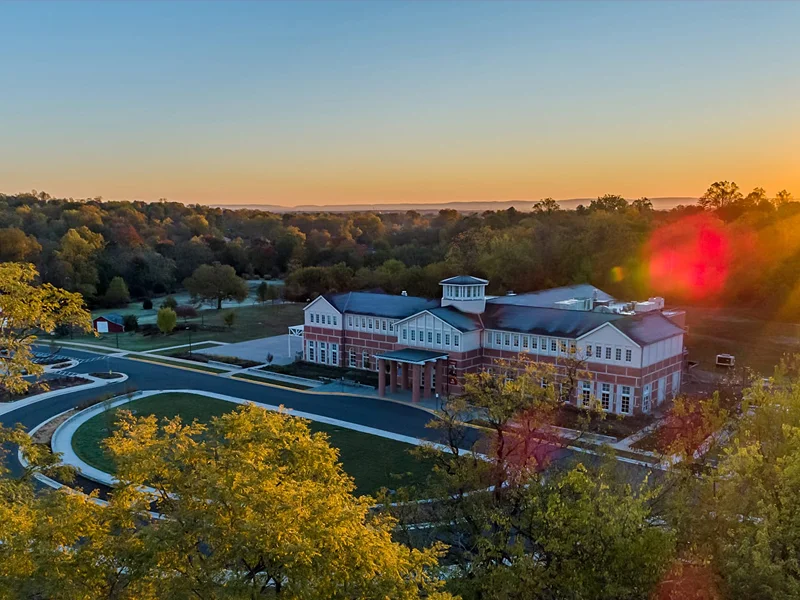
Opened as a public museum in 2005 and designed by architect Michael Graves, the 50,000-square-foot facility anchors a 214-acre landscape that includes galleries, gardens, and The Trails at the MSV, a free-admission art park. The Museum’s collections are wide-ranging, encompassing fine and decorative arts, regional artifacts, and works that illuminate the Valley’s social and cultural development. Through rotating exhibitions and long-term displays, the institution connects local narratives with broader American artistic traditions.
Photography plays an increasingly important role in the Museum’s exhibitions and interpretation of regional history. Historic photographs from the Valley offer invaluable documentation of community life, architecture, agriculture, and changing landscapes, serving as visual records that complement archival materials and decorative arts. Contemporary photography exhibitions further expand this dialogue, presenting artists who examine themes such as memory, environment, and identity within the Appalachian and Mid-Atlantic context. By placing historical and contemporary photographs in conversation, the Museum underscores the medium’s enduring power to capture transformation over time.
Educational programming strengthens this focus, with lectures, workshops, and family activities that encourage close looking and critical engagement with photographic images. Whether displayed within the galleries, integrated into historical narratives at Glen Burnie, or encountered along the art-filled trails, photography at the Museum of the Shenandoah Valley bridges past and present. In doing so, it reinforces the institution’s broader mission: to preserve heritage, foster creativity, and offer a space where history and art remain vividly connected to the community they represent.
Website