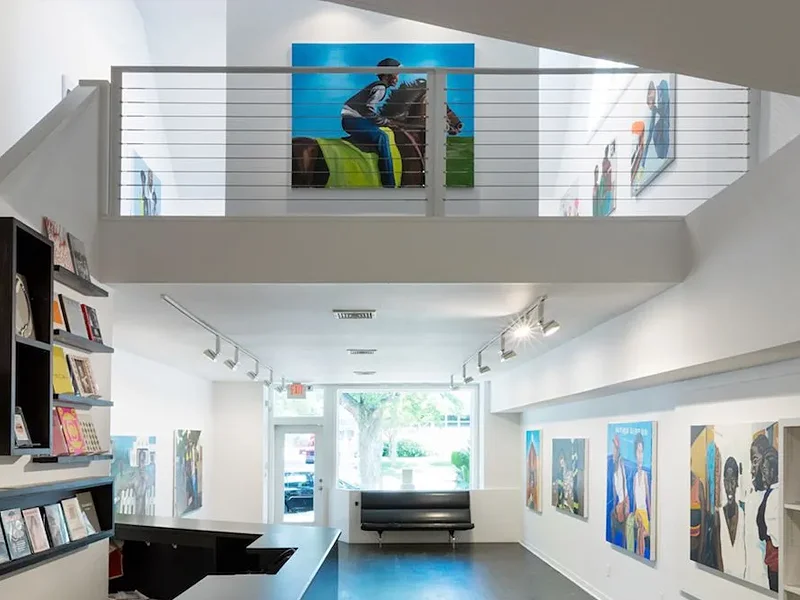
East Hampton - East End - 87 Newtown Lane - NY 11937
Founded in 1997 by rare book dealer Harper Levine, Harper's developed from a distinctive intersection between contemporary art, publishing culture, and the world of printed matter. The gallery’s original East Hampton space quickly established itself as a destination for collectors, artists, writers, and curators interested in the dialogue between visual art and the material history of books, photographs, posters, and ephemera. Levine’s longstanding expertise in rare publications and artist editions shaped the gallery’s identity from the outset, giving Harper’s a program that often blurs the boundaries between exhibition space, archive, and cultural salon.
Photography occupies an important place within the gallery’s evolving program. While Harper’s represents artists working across painting, sculpture, installation, and conceptual practices, the gallery has consistently embraced photographic work that explores memory, narrative, media culture, and the physicality of the printed image. Its exhibitions frequently investigate how photography circulates through magazines, artist books, archival documents, and contemporary publishing formats, reinforcing the gallery’s longstanding engagement with print culture. This approach positions photography not simply as a standalone medium, but as part of a broader visual language connected to literature, graphic design, and contemporary image-making.
The expansion of Harper’s into multiple locations has allowed the gallery to broaden both its international visibility and curatorial ambitions. Harper’s Apartment on the Upper East Side introduced a more intimate environment dedicated to contemporary experimentation, while the Chelsea spaces opened opportunities for large-scale installations and ambitious multidisciplinary exhibitions. The gallery’s arrival in Bangkok marked another important chapter, extending its network into Southeast Asia and creating new possibilities for cross-cultural exchange between artists working in different regions and traditions.
Throughout its evolution, Harper’s has maintained a program distinguished by intellectual curiosity and careful attention to artistic context. Exhibitions regularly feature artists whose practices engage with archives, reproduction, cinematic imagery, and documentary traditions, making photography and lens-based work a recurring thread within the gallery’s identity. Whether presenting contemporary photographers, mixed-media installations, or edition-based projects, Harper’s continues to cultivate conversations between historical materials and contemporary artistic production, reinforcing the enduring relationship between fine art and the printed image in contemporary culture.
Website