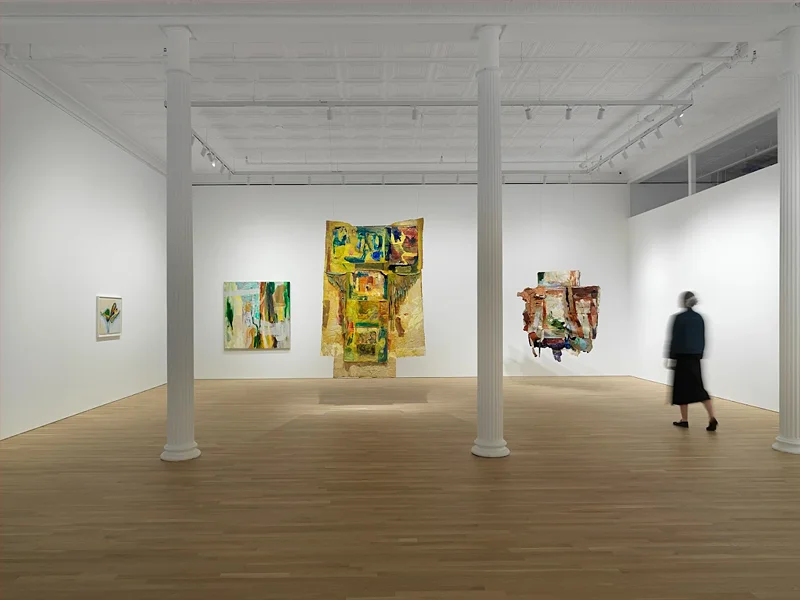
New York - 5 White Street - NY 10013
Ortuzar, founded in 2018 by Ales Ortuzar, has quickly established a distinct presence within the cultural landscape of New York City. The gallery is driven by a rigorous, research-oriented approach, focusing on artists and estates whose work has played a meaningful role in shaping twentieth- and twenty-first-century art. Its program reflects a careful balance between historical depth and contemporary relevance, positioning exhibitions as sites of both scholarship and discovery.
Central to Ortuzar’s identity is its commitment to reexamining established narratives and bringing renewed attention to artists whose contributions deserve further recognition. Within this framework, photography occupies an important, if often understated, position. Whether through vintage works, archival material, or contemporary photographic practices, the medium is integrated into exhibitions that explore broader questions of modernity, memory, and visual culture. Photography is not isolated as a category, but rather woven into a larger conversation about how images shape and reflect artistic movements.
The gallery’s activities extend beyond exhibitions to include work in the secondary market, where historically significant pieces are placed within major collections. This aspect of the program reinforces its role in preserving and contextualizing photographic works alongside painting, sculpture, and works on paper. By facilitating these placements, Ortuzar contributes to the ongoing visibility and scholarly reassessment of artists whose practices intersect with photography, whether directly or conceptually.
Project exhibitions form another essential component of the gallery’s vision. These focused presentations often highlight specific moments, themes, or dialogues between artists, allowing photography to emerge as a critical lens through which art history can be reconsidered. Such exhibitions emphasize the medium’s capacity to bridge temporal and stylistic boundaries, offering new perspectives on both past and present.
Through its thoughtful programming and dedication to research, Ortuzar continues to expand the understanding of modern and contemporary art. Its engagement with photography—subtle yet significant—underscores the medium’s enduring relevance within a broader art-historical context, where images remain central to the way artistic legacies are constructed and interpreted.
Website