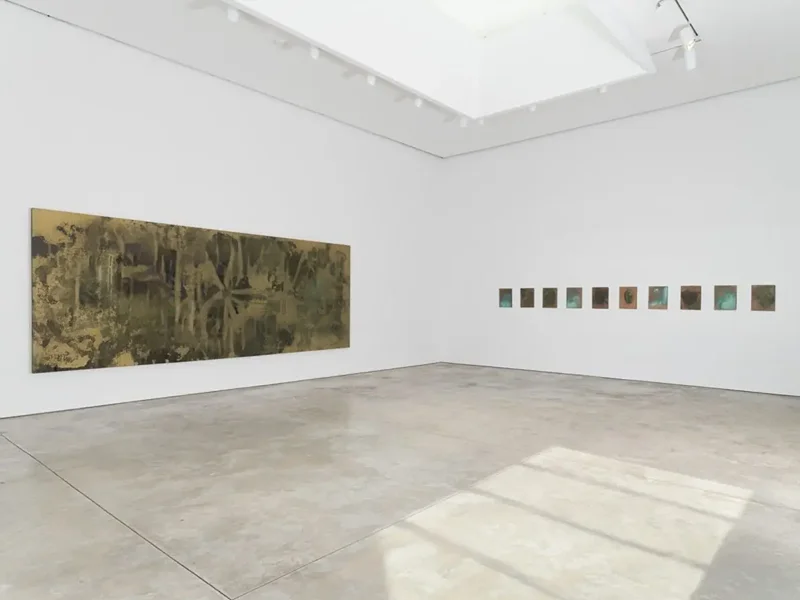
New York - 547 West 25th Street - NY 10001
Skarstedt Gallery, founded in 1992 by Per Skarstedt, has established itself as a key institution for museum-quality exhibitions that bring together both historical and contemporary practices. While the gallery is widely known for its groundbreaking surveys of European and American masters, photography has consistently played an important role in its program, enriching its dialogue on identity, media, and cultural critique.
From early on, Skarstedt recognized the power of photography not just as documentation but as a medium that challenges perception and societal norms. Artists such as Cindy Sherman, Richard Prince, and Barbara Kruger—whose work occupies a central place in the gallery’s program—have redefined the boundaries of photography by using it as a tool for deconstruction and commentary. Sherman’s staged self-portraits, Prince’s re-photographed advertising imagery, and Kruger’s bold, text-laden photographs all speak to the ways in which Skarstedt supports artists who investigate representation, consumerism, and the construction of identity.
The gallery’s exhibitions often juxtapose photography with painting, sculpture, and conceptual art, allowing viewers to trace the medium’s profound impact across multiple disciplines. By uniting seminal photographic works with those of artists like Warhol, Koons, or Wool, Skarstedt underscores how photography has shaped dialogues around appropriation, mass culture, and the blurred line between high and low art.
With locations in New York, London, and Paris, Skarstedt not only champions established artists but also offers younger photographers opportunities to situate their work within this rich historical lineage. Its photography-focused exhibitions reaffirm the gallery’s commitment to showing work that is both visually striking and conceptually rigorous.
Through these efforts, Skarstedt has become a vital space for the appreciation of photography as a critical art form—one that continues to expand conversations about image-making and its place in contemporary culture.
Website