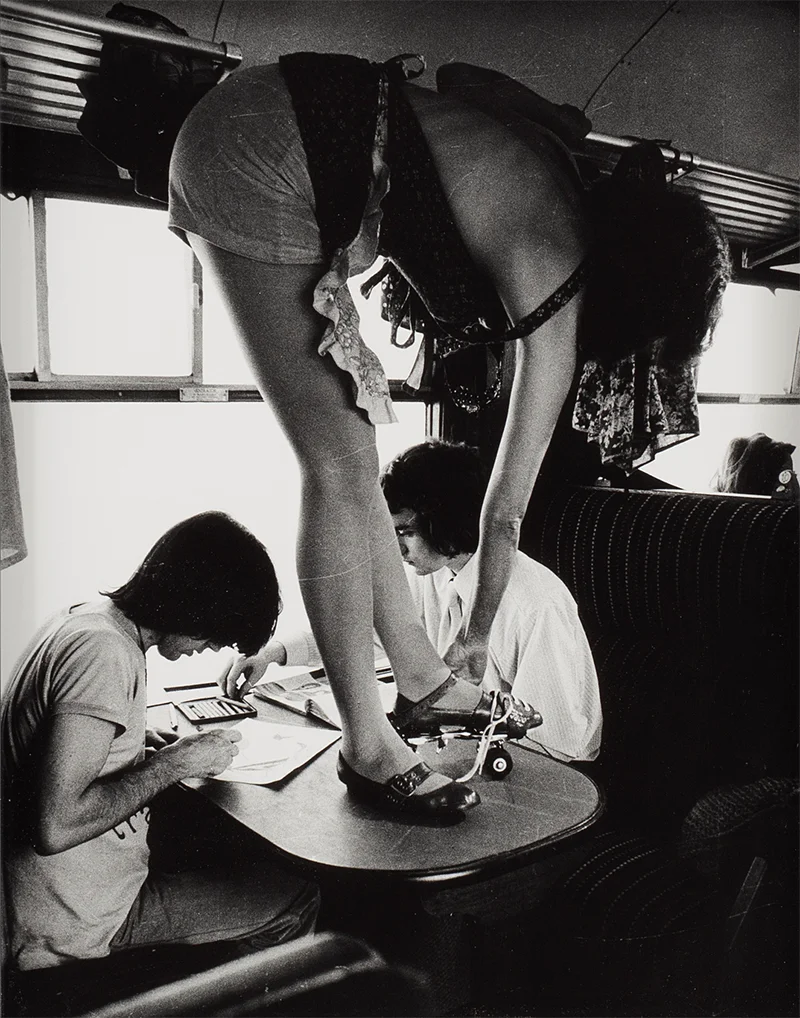
Strip: Jimmy DeSana, Carolee Schneemann, and Martha Wilson brings together three artists who used photography, text and performance to test the limits of the body in the early 1970s. On view from June 12 to July 31, 2026 at P·P·O·W in New York, the exhibition focuses on works made between 1972 and 1973, a period marked by political backlash, cultural restraint and growing pressure around questions of gender and sexuality.
The three works in the show — Jimmy DeSana’s
101 Nudes, Carolee Schneemann’s
ICES STRIP / ISIS TRIP, and Martha Wilson’s
Transformance: Claudia — use the body as both subject and material. Each artist approached photography as more than documentation. The images carry the logic of performance, repetition and staged identity, with dressing up, stripping down and role-play all used to challenge the visual codes of authority.
DeSana, who moved from Atlanta to New York in the early 1970s, built a practice that mixed erotic charge with conceptual structure. Schneemann, already known for work that joined painting, film and performance, treated the body as a site of action and self-definition. Wilson, who went on to found Franklin Furnace in 1976, turned to video and photo/text works that tested institutional norms and public expectations. Together, their work reflects a moment when artists were pressing directly against the conservative climate surrounding civil rights, feminism and gay liberation.
What gives the exhibition its force is the way these works turn exposure into strategy. They do not simply show bodies. They use pose, text, sequence and theatricality to question who gets to appear, how identity is read and where artistic freedom begins. The tone is campy at times, but the political edge remains clear.
Seen together, the three projects still feel sharp because they treat the image as a place of resistance. In
Strip, photography becomes a way to undermine fixed roles and to claim autonomy in public view.
Image:
Carolee Schneemann, ICES STRIP / ISIS TRIP, 1972 © Carolee Schneemann