At the Carnegie Museum of Art, the 59th edition of the Carnegie International arrives with an expansive vision that reaches far beyond the museum’s walls. Titled
If the word we, the exhibition runs from May 2, 2026, to January 3, 2027, continuing a tradition that began in 1896 and remains the longest-running international survey of contemporary art in North America. This latest edition places collaboration at its center, rethinking how art can reflect shared experience in a world shaped by movement, uncertainty, and interconnected lives.
Rather than treating “we” as a fixed or unified identity, the exhibition approaches it as something fluid—formed through listening, translation, and contradiction. Inspired in part by a commissioned essay by writer Haytham El-Wardany, the project examines collective life as an evolving condition rather than a settled idea. Across painting, photography, sculpture, installation, performance, theater, and video, the participating artists explore the tensions between individuality and community, asking how belonging is created and how it changes across cultural and political boundaries.
Organized by Ryan Inouye, Danielle A. Jackson, and Liz Park, the exhibition extends across Pittsburgh through a network of institutional partnerships. In addition to the museum, works appear at venues including the Children's Museum of Pittsburgh, Mattress Factory, and the Thelma Lovette YMCA, embedding the International within the daily life of the city. This decentralized structure reinforces the curatorial premise, positioning art not as something contained within a single building but as part of a broader civic and social landscape.
Featuring new and existing works by 61 artists from around the world,
If the word we reflects the scale and complexity of contemporary artistic practice today. The exhibition’s multi-site format encourages visitors to move between institutions, neighborhoods, and perspectives, making the act of viewing itself part of the experience. In doing so, the Carnegie International continues its long-standing role as both a reflection of its moment and a platform for imagining new forms of connection across place, language, and community.
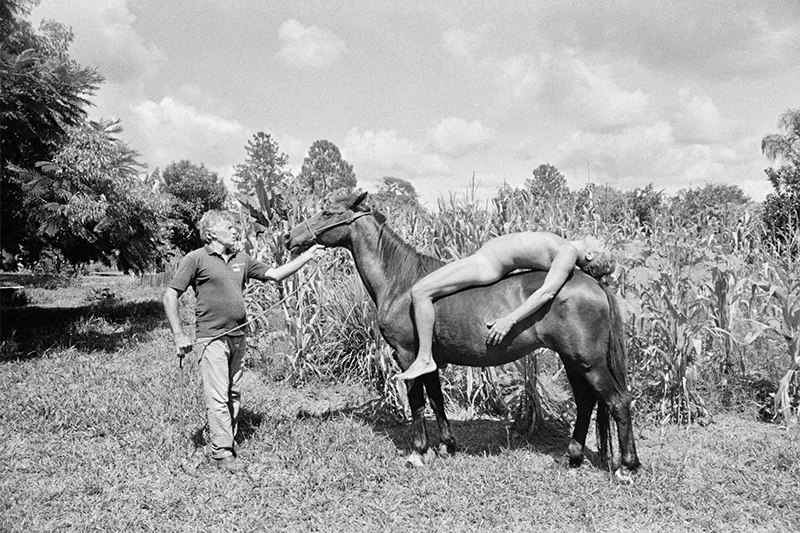
Image:
Fe Avila, “Auto-retrato Anti-Édipo,” com Nélson Avila, Boituva-SP, 2021 © Fe Avila