Photography and the Black Arts Movement, 1955–1985, on view at the Getty Center from February 24 through June 14, 2026, examines the vital role photography played in shaping a distinctly Black visual culture during a period of profound social transformation. Installed in the Museum’s West Pavilion, the exhibition traces how artists across the United States and the Afro-Atlantic diaspora used the camera as a tool for self-definition, political assertion, and community building amid the civil rights era and the rise of Pan-African thought.
Organized by the National Gallery of Art, the exhibition brings together approximately 150 works spanning photography, video, collage, and other lens-based practices. It marks the first major museum presentation to center photography within the broader Black Arts Movement, a cultural force often compared in scope and ambition to the Harlem Renaissance. Studio portraits, street scenes, experimental compositions, and activist graphics reveal how images circulated through newspapers, posters, community centers, and independent publications, forging connections between art and lived experience.
Works by artists such as Roy DeCarava,
Gordon Parks,
Dawoud Bey,
Carrie Mae Weems, and Lorna Simpson underscore the diversity of approaches that defined the period. Some photographers documented protests and neighborhood life with lyrical intensity; others constructed conceptual works that interrogated representation itself. Together, they articulated a Black aesthetic grounded in pride, resilience, and cultural memory.
By situating American practices alongside works from Africa, the Caribbean, and Great Britain, the exhibition highlights a global exchange of ideas about liberation and identity. Presented in both English and Spanish,
Photography and the Black Arts Movement, 1955–1985 affirms the enduring power of images to galvanize dialogue and preserve histories shaped by struggle and creativity. In revisiting this pivotal era, the exhibition illuminates foundations that continue to inform socially engaged art today.
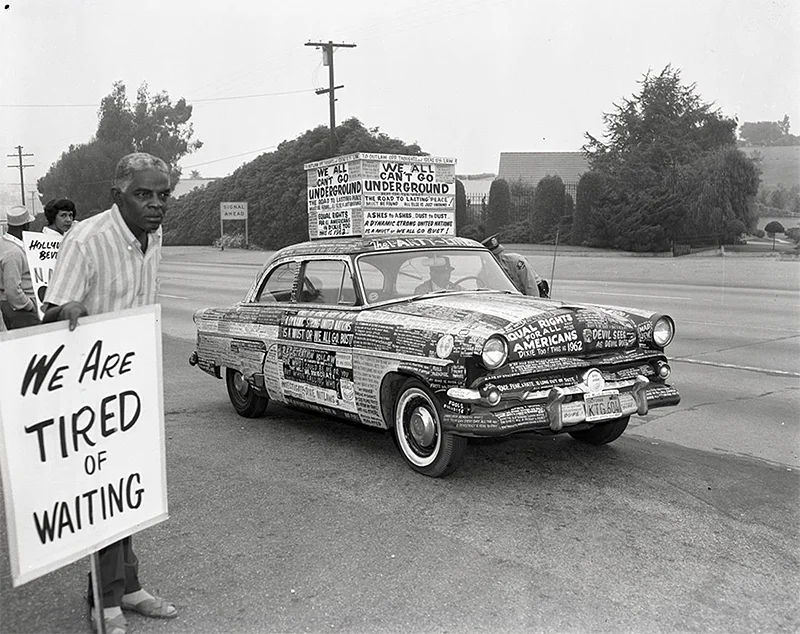
Image:
Protest Car, Los Angeles
1962; printed 2024, Harry Adams. Inkjet print. Harry Adams Archive, Tom & Ethel Bradley Center at California State University, Northridge. © Harry Adams. All rights reserved and protected