All about photo.com: photo contests, photography exhibitions, galleries, photographers, books, schools and venues.
PUBLICATION AND $1,000 CASH PRIZES: Black and White ends Friday

Picturing Isabella

From February 19, 2026 to June 21, 2026
Share
Picturing Isabella
25 Evans Way
Boston, MA 02115
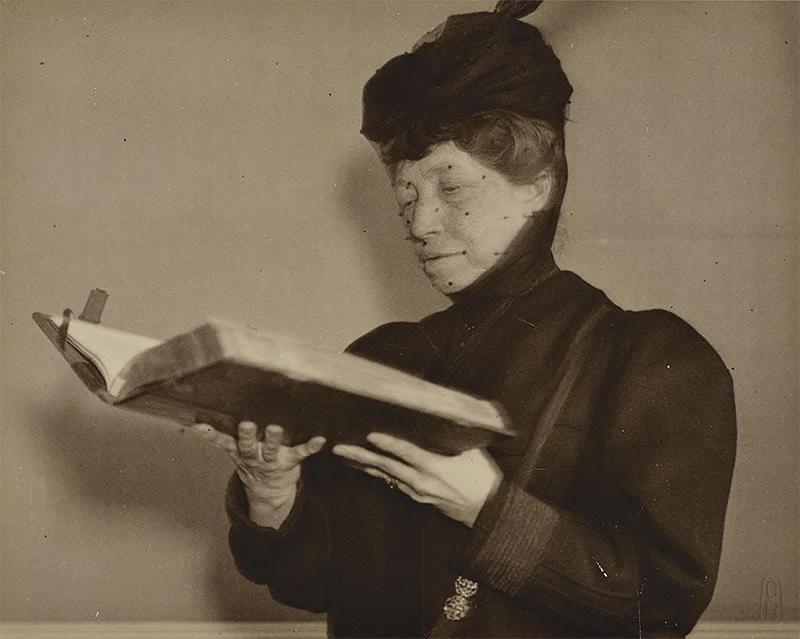
Picturing Isabella, on view at the Fenway Gallery from February 19 to June 21, 2026, offers a nuanced exploration of Isabella Stewart Gardner’s lifelong negotiation with visibility, celebrity, and self-invention. Living at a moment when photography was becoming central to modern life, Gardner simultaneously benefited from and resisted its power. This exhibition reveals how her reluctance to be photographed was not simply shyness, but a deliberate strategy—one that allowed her to maintain control over how she was seen, remembered, and ultimately mythologized.

Early photographs show Gardner as a young woman shaped by the conventions of late nineteenth-century portraiture: formal poses, composed expressions, and a clear assertion of social standing. As her influence grew and her public profile expanded, her relationship to the camera shifted. She became increasingly selective, choosing when and how she would appear, often obscured by veils, shadows, or turned profiles. These gestures transformed photography into a performative space where absence and suggestion carried more weight than direct representation.

The exhibition brings together an evocative range of materials, including personal snapshots, travel photographs, newspaper images, and candid moments shared with friends and animals. Rather than constructing a single definitive portrait, these fragments accumulate into a layered and sometimes contradictory image of Gardner—private yet theatrical, guarded yet expressive. Each photograph hints at a woman keenly aware of the power of images, and equally aware of their limitations. In resisting the camera, Gardner shaped a public persona that thrived on mystery and contradiction.

Ultimately, Picturing Isabella suggests that Gardner’s most enduring self-portrait is not found in any photograph, but in the museum she built. Carefully staged, deeply personal, and intentionally enigmatic, the Gardner Museum stands as an extension of her identity—an architectural and curatorial statement that replaced the traditional portrait. Through this lens, the exhibition invites viewers to reconsider how legacy is constructed, and how the act of withholding can be as powerful as the act of display.

Image: Isabella Stewart Gardner Museum, Boston (P33w35) Otto Rosenheim (German, 1871–1955), Isabella Stewart Gardner, 1906. Gelatin silver print

Our printed edition showcases the winners of AAP Magazine call of entries
All About Photo Magazine
Issue #56
Stay up-to-date  with call for entries, deadlines and other news about exhibitions, galleries, publications, & special events.

Exhibitions Closing Soon

Daniel Gordon: Objects at Hand
Olney Gleason | New York, NY
From May 07, 2026 to June 06, 2026
Objects at Hand, on view at Olney Gleason from May 7 through June 6, 2026, presents a new body of photographs by Daniel Gordon that further complicates the relationship between image, object, and illusion. Known for transforming printed source material into handmade sculptural constructions before photographing them, Gordon has spent the last two decades dismantling photography’s claim to realism. In this latest exhibition, however, the artist moves into notably restrained territory, abandoning the vivid color palette that has long defined his work in favor of black-and-white compositions focused on light, shadow, and surface. The exhibition coincides with the release of Gordon’s fifth monograph and arrives at a moment of increasing institutional recognition, including his inclusion in the Guggenheim Museum’s upcoming exhibition Guggenheim Pop: 1960 to Now. Yet rather than expanding outward, Objects at Hand turns inward, concentrating on ordinary domestic items—glasses, scissors, combs, kitchen utensils, and stationery—arranged in tightly framed still lifes that recall the precision of early modernist photography. Gordon’s process remains deliberately transparent. Images sourced online or photographed by the artist himself are printed, cut apart, folded, glued, and reconstructed into fragile three-dimensional objects. Seams, tape marks, and torn edges remain visible, emphasizing the handmade quality of the constructions. Once photographed, however, these imperfect paper assemblages take on an uncanny visual coherence. Some objects appear translucent despite being entirely opaque in reality, creating subtle perceptual contradictions that destabilize the viewer’s trust in the image. The resulting photographs engage a broad lineage of photographic experimentation, echoing the sculptural still lifes of Edward Weston, the surreal arrangements of Man Ray, and the perceptual investigations of artists such as Barbara Kasten and Jan Groover. Yet Gordon’s work remains distinctly contemporary in its negotiation between digital imagery and physical craft. The photographs originate in screens and printers, but arrive as carefully staged objects existing somewhere between sculpture, collage, and illusion. In Objects at Hand, Gordon strips photography down to its essential deceptions. Through the quiet choreography of paper, light, and shadow, he transforms familiar objects into visual puzzles that reward slow, sustained attention. Image: Light Study (Scissors and Hand), 2024 © Daniel Gordon, courtesy of Olney Gleason gallery.
Robert Maxwell: Visionary
Southeast Museum of Photography | Daytona Beach, FL
From April 22, 2026 to June 06, 2026
At the Southeast Museum of Photography, Robert Maxwell: Visionary assembles more than a hundred images tracing a career shaped by careful observation and a sustained interest in the human figure. The exhibition moves between early work produced in Paris and later commissions for international publications, outlining a trajectory that shifts from intimate, personal studies to highly controlled portraiture associated with the worlds of fashion and culture. Maxwell’s early photographs, many rooted in his immediate surroundings, establish a visual language grounded in restraint. Still life compositions occupy a central place here. In works such as Forêt de Champignons, a cluster of enoki mushrooms appears almost architectural, arranged against a dark field that emphasizes their pale, sculptural surfaces. Across these images, everyday materials—flowers, utensils, organic fragments—are reorganized into precise arrangements where light defines volume and texture. The result sits somewhere between observation and construction, where natural forms take on an almost symbolic charge. Portraiture, however, remains the axis of Maxwell’s practice. The exhibition highlights both early figurative studies and more recent series, including images of women dressed in traditional Japanese kimonos. These photographs focus less on costume as spectacle than on the ritual embedded in its preparation. The layered process of dressing becomes visible through posture, gesture and gaze, with each subject asserting a distinct presence. Maxwell’s approach avoids overt dramatization, relying instead on stillness and attention to detail to convey individuality. Alongside these bodies of work, Visionary includes a wide selection of editorial assignments produced for titles such as Vogue, Vanity Fair and GQ. These commissions, often centered on prominent cultural figures, reveal Maxwell’s ability to navigate between artistic intent and the demands of publication. Seen together, the images suggest a consistent preoccupation: how light, surface and expression can be arranged to construct a lasting image, whether in the studio or on assignment. Image: Forêt de Champignons © Robert Maxwell
Bruce Weber: Try a Little Tenderness
Fahey/Klein Gallery | Los Angeles, CA
From April 09, 2026 to June 06, 2026
Bruce Weber: Try a Little Tenderness, on view from April 9 through June 6, 2026 at Fahey/Klein Gallery, unfolds as an intimate reflection on the formation of an artist. Bringing together photographs produced across several decades, the exhibition reveals how personal relationships, early experiences, and creative encounters shape the visual language of Bruce Weber. Rather than presenting a chronological survey, the selection moves through moments of influence and memory, offering a portrait of artistic growth rooted in lived experience. Weber’s early years in Greensburg play a defining role in this narrative. Introduced to image-making through family life, he experiments with drawing and filmmaking before receiving his first camera, an Argus C3, at a young age. His later studies at New York University and his encounter with influential figures such as Diane Arbus and Lisette Model deepen his commitment to a photography grounded in emotional immediacy and human connection. By the late 1970s, Bruce Weber establishes a distinctive voice within fashion photography, collaborating with major houses such as Calvin Klein and Ralph Lauren. His images, often bathed in natural light and infused with a sense of nostalgia, depart from the rigid aesthetics of the era. Instead, they evoke a cinematic atmosphere where youth, beauty, and vulnerability coexist. Whether working for magazines or advertising campaigns, Weber maintains a consistent sensitivity to gesture and presence, allowing his subjects to appear both staged and spontaneous. The exhibition also reflects Weber’s engagement with film, notably through Let’s Get Lost, his portrait of jazz musician Chet Baker. This cross-disciplinary practice reinforces the narrative quality of his photography, where each image suggests a fragment of a larger story. His work moves fluidly between commercial and personal contexts, blurring the boundaries between assignment and expression. Accompanying the exhibition, the publication Bruce Weber: My Education gathers images and reflections that echo the themes presented in the gallery. Together, they form a meditation on influence, memory, and the enduring role of tenderness in shaping an artistic vision. Image: Bruce Weber | Kate Moss and friends, Miami, Florida, 2003 © Bruce Weber, courtesy of FaheyKlein Gallery, Los Angeles
Ruth Thorne-Thomsen
Gitterman Gallery | New York, NY
From April 14, 2026 to June 06, 2026
Ruth Thorne-Thomsen, on view at Gitterman Gallery from April 14 through June 6, presents a focused selection of vintage gelatin silver prints that trace the singular vision of an artist who moved fluidly between photography, mythology, and psychological inquiry. Spanning several key series, the exhibition offers a rare opportunity to encounter work that resists straightforward categorization, instead inviting viewers into carefully constructed worlds where reality and imagination converge. Thorne-Thomsen’s practice centers on staging images within landscapes, then rephotographing them to produce seamless, often disorienting compositions. Using techniques such as pinhole apertures and handmade setups, she blurs distinctions between foreground and background, object and environment. The resulting photographs carry a dreamlike coherence, where symbolic elements—figures, stones, water, fragments of architecture—appear suspended in spaces that feel both ancient and internal. Several series included in the exhibition highlight the breadth of her approach. Expeditions draws on the visual language of early archaeological photography, evoking the wonder associated with nineteenth-century encounters with distant civilizations. In Views from the Shoreline, the influence of Renaissance portraiture becomes apparent, though reinterpreted through a surreal lens that compresses space and shifts meaning toward the psychological. Other bodies of work, such as Songs of the Sea and Proverbs, deepen her engagement with myth, combining narrative suggestion with introspective symbolism. Underlying these varied explorations is a consistent interest in the human psyche. Thorne-Thomsen often returns to recurring motifs—particularly the head and the figure—as vessels for universal experience. Her imagery suggests that personal memory and collective mythology remain intertwined, forming a visual language that speaks across time and culture. This sensibility reflects her broader engagement with literature, dream analysis, and symbolic systems. Though her work resides in major museum collections, it has often remained less visible within broader photographic discourse. This exhibition underscores its enduring relevance, presenting an artist who approaches photography not as documentation, but as a means of constructing inner landscapes—spaces where perception, memory, and imagination quietly intersect. Image: Levitating Man, Wisconsin, 1983 © Ruth Thorne-Thomsen, courtesy of the Gitterman Gallery
Mao Ishikawa: ROGUE
Alison Bradley Projects | New York, NY
From April 16, 2026 to June 06, 2026
Mao Ishikawa: ROGUE, presented at Alison Bradley Projects from April 16 to June 6, 2026, brings the work of the Okinawan photographer to a United States audience in her first solo exhibition in the country. Gathering more than 30 vintage prints spanning three decades, the exhibition offers a focused look at a practice shaped by proximity, trust, and an unflinching engagement with lived experience. Ishikawa’s photographs emerge from a deeply personal approach that rejects distance between photographer and subject. Her early series Red Flower (Akabanaa), produced in the years following Okinawa’s reversion to Japan in 1972, captures the social environments surrounding U.S. military bases. Rather than observing from the outside, Ishikawa immersed herself in these communities, working alongside women employed in bars and documenting their relationships with African American servicemen. The resulting images convey a sense of immediacy and shared presence, where intimacy and complexity replace simplified narratives of occupation. This relational method continues in Life in Philly, created during her time in Philadelphia. There, Ishikawa photographs the everyday lives of people connected to her earlier experiences in Okinawa, tracing bonds that extend across geography. Scenes of domestic life, gatherings, and quiet moments reveal a continuity of connection shaped by migration and memory. In A Port Town Elegy, her attention returns to Okinawa, focusing on laborers and marginal communities in Naha. These photographs highlight both the precarity of their conditions and the resilience found within shared spaces. Later works, including My Family, shift inward. Following significant medical procedures, Ishikawa turns the camera on herself, producing self-portraits that maintain the same directness present in her earlier work. The body becomes both subject and site, confronting vulnerability without mediation. Across all series, her images resist categorization, moving between documentation and personal narrative while remaining grounded in long-term relationships. Presented alongside her inclusion in the Whitney Biennial, ROGUE underscores Ishikawa’s enduring relevance. Her work offers a perspective rooted in Okinawa’s complex geopolitical reality, while speaking more broadly to themes of identity, power, and human connection that continue to resonate across borders. Image: © Mao Ishikawa. Courtesy of the artist and Alison Bradley Projects
Sebastiaan Bremer: Super Modern Things
Edwynn Houk Gallery | New York, NY
From April 16, 2026 to June 06, 2026
Sebastiaan Bremer: Super Modern Things, on view from April 16 to June 6, 2026 at Edwynn Houk Gallery, presents a new body of work that continues the artist’s distinctive dialogue between photography and painting. Known for his meticulous interventions on photographic surfaces, Bremer revisits the still life tradition, using it as a framework to examine enduring questions around beauty, time, and cultural value. The works originate from historical imagery, often drawn from seventeenth-century Dutch botanical catalogues and still life paintings. These sources, already dense with symbolic meaning, are rephotographed by Bremer, who then transforms them through a labor-intensive process of drawing and painting directly onto the surface. Layers of ink and acrylic—dots, lines, and fluid marks—accumulate across the image, creating a visual rhythm that both obscures and reveals. The result is neither purely photographic nor painterly, but a hybrid form that unfolds gradually, inviting prolonged attention. Bremer’s engagement with the Dutch still life tradition brings forward its historical associations with trade, colonial expansion, and the commodification of nature. Flowers, once emblematic of wealth and mortality, are recontextualized here within contemporary concerns about ecology and global exchange. The works suggest that the symbolic language embedded in these images remains active, raising questions about how beauty operates within systems of power and consumption. In this sense, the exhibition bridges past and present, linking early modern visual culture to current debates. At the same time, the artist’s process introduces a deeply personal dimension. Each mark functions as a trace of time and attention, transforming the image into a record of sustained looking. The surfaces carry a sense of intimacy, as if the act of embellishment becomes a form of meditation or annotation. References to language, musical notation, or even celestial patterns emerge through these interventions, expanding the interpretive possibilities of the work beyond its original source material. With Super Modern Things, Bremer offers a contemplative reconsideration of the still life, positioning it not as a static genre but as a living field of inquiry. The exhibition underscores how historical images continue to resonate, shaped by contemporary perspectives and the artist’s own evolving relationship to time, memory, and visual meaning. Image: Cunning stunts, 2025. Unique hand-painted chromogenic print with mixed media © Sebastiaan Bremer
Robert Giard: Particular Voices, Portraits of LGBTQ+ Writers & Artists, 1985 - 2002
Daniel Cooney Fine Art | Santa Fe, NM
From May 09, 2026 to June 06, 2026
Robert Giard: Particular Voices, Portraits of LGBTQ+ Writers & Artists, 1985–2002, on view from May 9 to June 6, 2026 at Daniel Cooney Fine Art, brings renewed attention to a landmark photographic project that documented a vital chapter in cultural history. Presented in conjunction with the Santa Fe International Literary Festival, the exhibition gathers approximately 40 portraits selected from Giard’s extensive archive, offering a focused view into a much larger body of work created over nearly two decades. Beginning in 1985, Giard embarked on an ambitious effort to photograph LGBTQ+ writers, artists, and activists across the United States. The project emerged at a pivotal moment, shaped by both the aftermath of the Stonewall era and the unfolding AIDS crisis. Rather than approaching his subjects as distant figures, Giard sought to create images grounded in respect and presence. His portraits often situate individuals in environments that reflect their personal or creative lives, allowing each image to function as both representation and conversation. The exhibition highlights figures whose contributions have shaped literary and artistic discourse, while also emphasizing voices that have historically remained underrecognized. Writers such as Margaret Randall, Judy Grahn, and Gloria Anzaldúa appear within a broader constellation of cultural producers whose work expanded the boundaries of identity, language, and community. Giard’s photographs do not impose a singular narrative; instead, they reveal a diverse and evolving network of individuals connected through shared experience and creative expression. Visually, the portraits are marked by clarity and restraint. Giard avoids theatricality, favoring a direct approach that allows subtle gestures and expressions to carry meaning. This consistency across the series underscores his commitment to the project’s documentary dimension, while also acknowledging the individuality of each sitter. The cumulative effect is one of quiet intensity, where the weight of history is conveyed through personal presence rather than overt symbolism. More than a retrospective selection, Particular Voices stands as an enduring record of a community that navigated profound social and political challenges while continuing to produce influential work. In revisiting these images today, the exhibition underscores the importance of visibility and the role of photography in preserving cultural memory across generations. Image: Robert Giard Alison Bechdel, Grand Isle, VT, 1995 Gelatin silver print © Robert Giard, courtesy of Daniel Cooney | Fine Art
Lynn Adler: And So We Moved To Petaca
Obscura Gallery | Santa Fe, NM
From May 08, 2026 to June 06, 2026
Lynn Adler: And So We Moved To Petaca, on view from May 8 through June 6, 2026 at Obscura Gallery, presents a remarkable photographic record of a brief yet meaningful cultural convergence in northern New Mexico. Featuring images made by Lynn Adler between 1970 and 1974, the exhibition accompanies the release of her recent book and offers an intimate look at a rural community undergoing subtle but profound change. Adler arrived in the small village of Petaca at a moment when its long-established Hispano population encountered an influx of newcomers seeking an alternative way of life. Rooted in traditions that stretched back generations, the local community lived with modest means, sustained by agriculture, faith, and close family ties. Into this environment came young families from urban centers such as San Francisco and New York City, drawn by the promise of self-sufficiency and a deeper connection to land and community. Using a simple 35mm camera, Adler documented daily life with clarity and sensitivity. Her black-and-white photographs reveal scenes of labor and routine: tending animals, cultivating fields, building homes, and raising children. At the same time, her images capture moments of encounter between cultures—shared gestures, cautious interactions, and evolving relationships that reflect both curiosity and tension. Rather than imposing a narrative, Adler allows these moments to unfold naturally, creating a nuanced portrait of coexistence. The modest scale of the prints reinforces their intimacy, encouraging close viewing and quiet reflection. Faces, gestures, and landscapes emerge with a sense of immediacy, preserving a way of life that might otherwise have faded from memory. Over time, the village has changed, and many of those pictured have passed on, giving the photographs an added resonance as documents of both presence and absence. Curated by Bill Shapiro, the exhibition situates Adler’s work within a broader tradition of documentary photography while highlighting its singular perspective. And So We Moved To Petaca stands as a testament to the enduring power of photography to record fragile histories and to illuminate the complexities of community, identity, and belonging. Image: Lynn Adler. Louella at Sundown, 1971 © Lynn Adler
Erica Baum: the bite in the ribbon—a paper show
George Eastman Museum | Rochester, NY
From November 22, 2025 to June 07, 2026
Erica Baum: The Bite in the Ribbon—A Paper Show invites viewers into a world where text and image converge in unexpected ways. Through the careful selection, transformation, and reinterpretation of printed materials, Baum constructs a poetic interplay of language and form, encouraging both deep looking and reading. This exhibition presents a dynamic juxtaposition of her early and ongoing projects alongside her latest work, including never-before-seen pieces. At the heart of the show, Dog Ear, displayed in the Potter Peristyle, exemplifies Baum’s signature method of repurposing found books. By folding pages at precise angles, she creates surprising interactions between words and images, generating new narratives and abstract compositions from existing texts. This simple yet radical intervention challenges traditional notions of reading, inviting fresh interpretations with every fold. In the Project Gallery, Baum’s recent series, Patterns and Fabrications, explore the aesthetics of fashion and craft through printed media. Patterns focuses on the striking geometries, colors, and textual fragments found in mid-century sewing pattern designs, while Fabrications expands this investigation to include materials from magazines, catalogs, and books on fashion and craft. By incorporating advertisements and coupons, Baum reframes the domestic and commercial imagery embedded in these everyday objects, offering a meditation on material culture and visual storytelling. Through these interwoven series, The Bite in the Ribbon—A Paper Show highlights Baum’s ongoing fascination with the interplay between print, language, and image, revealing the hidden beauty and meaning within overlooked materials. Image: Erica Baum (American, b. 1961), Wrought Iron, from Fabrications, 2024. Inkjet print. Courtesy of the artist and Bureau, New York. © Erica Baum
Graciela Iturbide: Photographs from Colecciones Fundación MAPFRE
MOPA - Museum of Photographic Arts | San Diego, CA
From February 14, 2026 to June 07, 2026
Graciela Iturbide, one of Latin America’s most celebrated photographers, has spent more than fifty years capturing the essence of human life through a lens that merges poetry, observation, and emotion. Born in Mexico City in 1942, she developed a visual language rooted in curiosity—a desire to understand how tradition, ritual, and belief continue to shape modern existence. This exhibition offers a sweeping view of her career, featuring her most iconic works created in Mexico as well as photographs taken in India, Italy, Panama, and the United States. Iturbide began her artistic journey in the late 1960s while studying film at the National Autonomous University of Mexico. Her apprenticeship with the legendary Manuel Álvarez Bravo profoundly influenced her early vision, instilling a respect for the interplay between the everyday and the mystical. Like her mentor, she explored Mexico’s diverse cultural landscape but infused her imagery with a deeply personal symbolism. Her photographs often focus on women—powerful, enigmatic figures who embody strength and continuity within Indigenous and rural communities. Through her lens, cultural identity becomes a dialogue between past and present, resilience and change. In later decades, Iturbide’s work evolved toward greater abstraction. Her attention shifted from portraiture and ritual to landscapes, objects, and the silent presence of the natural world. These images—spare yet evocative—reflect her ongoing fascination with transformation, mortality, and the traces of human existence within the environment. Organized by Fundación MAPFRE in collaboration with The San Diego Museum of Art, the exhibition presents approximately 150 photographs spanning the full breadth of Iturbide’s career. Together, they reveal an artist whose vision transcends borders and decades, offering a lyrical meditation on the enduring beauty and complexity of life. Image: Graciela Iturbide, La Nuestra Señora de las Iguanas, Juchitán, Oaxaca, México (Our Lady of the Iguanas, Juchitán, Oaxaca, Mexico) (detail), 1979. Gelatin silver print. Museum of Photographic Arts at The San Diego Museum of Art; Gift of Walter Pomeroy, M.2018.003.003. © Graciela Iturbide.
From Shadow to Substance: Grand-Scale Portraits During Photography´s Formative Years
National Portrait Gallery | Washington, DC
From June 20, 2025 to June 07, 2026
“Secure the shadow, ere the substance fade”—this early photography slogan captured the promise and allure of a new medium: the ability to preserve a fleeting moment, a face, or a memory before it disappeared forever. In the early decades of photography, ambitious studios offered grand, whole-plate portraits measuring 8 ½ × 6 ½ inches, presenting the public with striking images that combined technical innovation, aesthetic refinement, and cultural significance. This exhibition draws from the National Portrait Gallery’s extensive early photography collection to explore the evolution of the whole-plate format, tracing its journey from the high-end daguerreotype through the mid-range ambrotype to the widely accessible tintype. Each format reflects changes in technology, social trends, and economic accessibility, revealing how photography moved from an elite luxury to a medium available to broader audiences. Visitors will encounter remarkable examples from each stage of this evolution. Daguerreotypes include portraits of notable figures such as U.S. Senators Daniel Webster and John C. Calhoun, emphasizing the medium’s role in shaping public memory and documenting national leaders. The ambrotype collection features an image of landscape artist John Frederick Kensett, capturing not only the likeness of the subject but also the artistic ambitions of early photographers. A tintype of an unidentified African American woman illustrates the democratization of portraiture, showing how ordinary people could now participate in visual culture and claim a place in history. Through these images, the exhibition highlights photography’s dual nature: as both a technical achievement and a deeply human endeavor. By preserving faces, gestures, and expressions in enduring form, these early portraits invite viewers to reflect on the passage of time, the impermanence of life, and the enduring power of photography to anchor memory. In this way, the whole-plate portrait stands not only as an artifact of photographic innovation but as a testament to our universal desire to remember and be remembered. Image: ‘Daniel Webster’ (c. 1845), by Southworth & Hawes. National Portrait Gallery, Smithsonian Institution
Ming Smith: Jazz Requiem – Notations in Blue
Portland Museum of Art | Portland, OR
From February 06, 2026 to June 07, 2026
Ming Smith: Jazz Requiem – Notations in Blue offers an intimate journey into the early artistic path of Ming Smith, focusing on the shaping forces of place, identity, and creative freedom that marked her emergence in the 1970s and 80s. At a time when many Black artists sought opportunities beyond the United States, Smith found in Europe a space that welcomed experimentation and allowed her to refine her vision. This exhibition reflects on those formative travels and how they continue to echo through her work today. The selected photographs, many newly printed, reveal Smith’s nuanced approach to depicting the Black experience—capturing fleeting gestures, shadows of movement, and the quiet poetry found in daily life. Her images resist the traditional documentary expectations once imposed on photographs of Black communities. Instead, she expands the medium toward a more expressive, introspective language. By challenging the assumptions surrounding the photographic gaze, Smith both acknowledges and subverts the medium’s history, offering images that feel at once personal and universal. Central to the exhibition is the influence of music and dance, especially jazz, whose improvisational rhythms have long guided Smith’s approach behind the camera. Her encounters with the atmospheric works of Brassaï and Henri Cartier-Bresson during her time in Paris deepened her interest in mood, motion, and the lyrical possibilities of the photograph. These early influences merge with her own instincts, resulting in a style defined by blur, abstraction, and a sensitivity to the ephemeral. Smith’s legacy is anchored in her groundbreaking achievements and unwavering dedication to portraying the depth of Black life. From her early days in New York—balancing modeling with photographing city streets and intimate cultural spaces—to her historic milestones with the Kamoinge Workshop and major museum collections, she has continually expanded what photography can express. Her images, alive with emotion and spontaneity, function as both memory and meditation, honoring the complexity of lived experience while inviting viewers to feel its resonance. Image: Ming Smith (United States, born 1950), Judith Jamison, 1981, archival pigment print, 36 x 24 inches. Courtesy of the artist and The Gund at Kenyon College © Ming Smith
Advertisement
AAP Magazine #58 B&W
Win a Solo Exhibition in July
AAP Magazine #58 B&W
Call for Entries
AAP Magazine #58 B&W
Publish your work in our printed magazine and win $1,000 cash prizes

Related Articles

CPW Upstate Photography Biennial
This summer, CPW (Center for Photography at Woodstock) will debut the inaugural Upstate Photography Biennial, a major new exhibition celebrating the thriving photographic arts scene across upstate New York. Bringing together the work of 39 artists, the landmark exhibition offers a compelling snapshot of the region’s creative vitality and its growing influence on contemporary photography.
Beneath the Surface: Mining and American Photography
Beneath the Surface to feature some 150 photographs by 100 artists spanning 185 years of society and industry in the United States
photo basel 2026 Celebrates the Expanding Language of Photography
Switzerland’s Premier Photography Event Returns for Its 11th Edition. Shifting Frames: Photo Basel 2026 Redefines the Limits of Fine Art Photography A Convergence of Legends: Curating 450 Masterworks
All About Photo Presents ’Fading Shehuo’ by Chris Yan
All About Photo is proud to present Chris Yan as the featured artist of our upcoming solo exhibition with his project Fading Shehuo, showcased exclusively on All About Photo. A project preserving the Spirit of Rural China Through Street Photography.
Belfast Photo Festival 2026: Horizons
The 2026 edition takes visitors towards new ‘Horizons’, a theme that positions photography at a critical threshold in an age of AI-generated imagery, automation and algorithmic seeing. The festival returns as the medium undergoes profound transformation and its claims to truth, trust, authorship and materiality are increasingly being questioned.
Meryl Meisler: Queer-Friendly Nightlife Now
Nearly five decades after documenting disco-era revelry, photographer Meryl Meisler returns with a bold new body of work capturing the pulse of contemporary queer nightlife—its grit, glamour, and enduring sense of community. Meryl Meisler: Queer-Friendly Nightlife Now premieres the CPW's inaugural Upstate Photography Biennial, a new exhibition series featuring 39 artists from across the region, opening May 30, 2026.
Prix Pictet Exhibition Makes U.S. Debut at MoCP
The Museum of Contemporary Photography at Columbia College Chicago (MoCP) will present Prix Pictet Storm from May 29 through August 22, 2026, marking the U.S. debut of the internationally touring exhibition dedicated to photography and sustainability. Organized in partnership with Prix Pictet — widely recognized as the world’s leading award focused on photography and sustainability — the exhibition brings together twelve exceptional contemporary photographers whose work explores environmental instability, political unrest, social tension, and the fragile state of the modern world.
Marilyn Monroe at 100: Landmark Exhibition Opens at National Portrait Gallery
Exploring Monroe’s life, career and legacy , the exhibition will include portraits created by many of the greatest photographers and artists of the 21th and 21st centuries , including Andy Warhol, Pauline Boty and Richard Avedon .
Posto 5: The Renaissance of Committed Photographic Narrative
The birth of an auteur collective dedicated to a sensitive inventory of the world, where the rigor of visual storytelling honors the standards of historical foundations.
Call for Entries
AAP Magazine #58 B&W
Publish your work in our printed magazine and win $1,000 cash prizes