All about photo.com: photo contests, photography exhibitions, galleries, photographers, books, schools and venues.
FINAL CALL TO ENTER AAP MAGAZINE SHADOWS: PUBLICATION AND $1,000 CASH PRIZES

Mercy, Give and Take

From November 23, 2024 to January 25, 2025
Share
Mercy, Give and Take
1275 Minnesota Street, #102
San Francisco, CA 94107
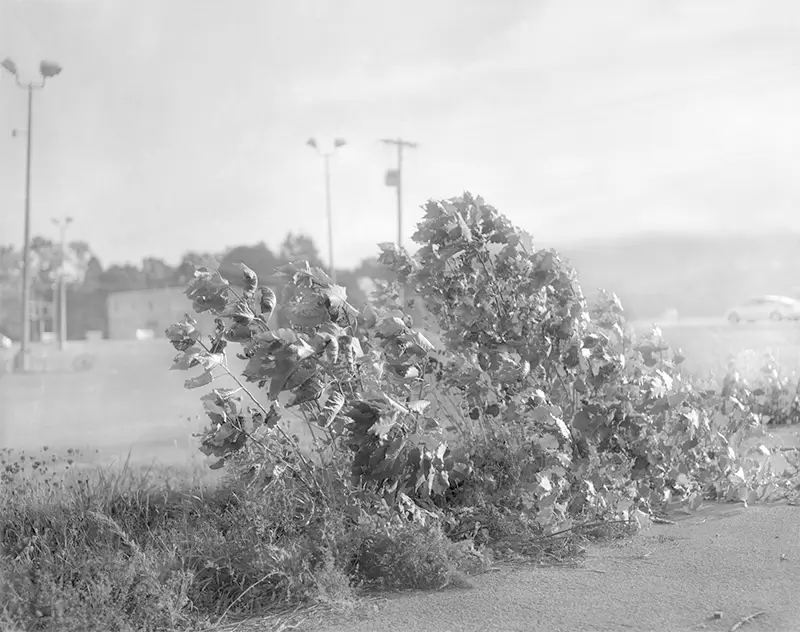
Casemore Gallery is pleased to present "Mercy, Give and Take", a group exhibition that explores the idea of opposition in the photographic works of John Gossage, Raymond Meeks, Awoiska van der Molen, Sean McFarland, and Aspen Mays.

The show pairs works from each of the included artists, with each pairing sharing common visual elements—buildings, landscapes, photographic tools—but in markedly juxtaposed states, whether life or death, turmoil or serenity, idyll or menace, pushing up or giving way, or even transposal of space. In doing so, the viewer has the opportunity to look beyond the idea of opposition as having two parts, and ponder all that lies between.

John Gossage (b. 1946) Staten Island, New York is an artist who has, more than most contemporary photographers, become noted for his intellectually engaging, subversive and well-crafted artist books and other publications. In them, the artist utilizes under-recognized elements of the urban environment—unused and abandoned patches of land, refuse and detritus, barbed wire, graffiti, and other disruptions—to explore themes as disparate as surveillance, memory and the relationship between architecture and power.

Gossage was the recipient of a Guggenheim Fellowship in 2012. His photographs have been featured in numerous solo and group exhibitions over the past 45 years. His many one-person exhibitions have included The Better Neighborhoods of Greater Washington, Corcoran Gallery of Art, Washington, DC (1976); Photographs of Berlin, Cleveland Museum of Art, (1989); LAMF, Sprengel Museum, Hannover (1990); One Work in 39 Parts, The Saint Louis Museum of Art, (1994); There and Gone, Sprengel Museum, Hannover, (1998); The Romance Industry, Comune di Venezia, Venice (2003); Berlin in the Time of the Wall, Gallerie Zulauf, Freinsheim (2005); The Pond, National Museum of American Art, Washington, DC (2001); and Three Routines, Art Institute of Chicago (2014).

Aspen Mays (b. 1980) received her MFA in photography from the School of the Art Institute of Chicago in 2009. Solo exhibitions of her work have been mounted by the Museum of Contemporary Art, Chicago; Hyde Park Art Center, Chicago; Light Work, Syracuse; and the Center for Ongoing Projects and Research, Columbus. Mays was recently included in the exhibition Anna Atkins Refracted: Contemporary Works at the New York Public Library (2019). Mays was the recipient of a 2006 Rotary Fellowship and was a 2009 Fulbright Fellow. She lives and works in the San Francisco Bay Area, California, where she is Assistant Professor at California College of the Arts.

Raymond Meeks (Ohio, 1963) has been recognized for his books and pictures centered on memory and place, the way in which a landscape can shape an individual and, in the abstract, how a place possesses you in its absence.

Raymond Meeks lives and works in the Hudson Valley (New York). He is the sixth laureate of Immersion, a French-American photography commission sponsored by Fondation d’entreprise Hermès. Exhibitions from this commission were presented in New York (ICP September, 2023) and currently in Paris (Fondation Henri Cartier-Bresson September, 2024). The Inhabitants, a book made in collaboration with writer George Weld, was published in August 2023 by MACK

Awoiska van der Molen (1972) is a Dutch photographer known for her monumental black-and-white analogue images that represent her experience of the primordial and psychological space in the world she photographs.

In 2019 van der Molen was shortlisted for the Prix Pictet, the global award in photography and sustainability. In 2017 she was both shortlisted for the Deutsche Börse Photography Foundation Prize and the recipient of the Larry Sultan Photography Award. Van der Molens' work has been shown at Foam Fotografiemuseum, Amsterdam; Huis Marseille, Amsterdam; Kousei-Inn, Kyoto; Les Rencontres d’Arles, France; Pier 24 Photography, San Francisco; Victoria & Albert Museum, London; The Photographers’ Gallery, London; FoMu, Antwerp; and Fotomuseum, Den Haag.

Sean McFarland (b. California, 1976) creates work that explores the relationship between photography and the history and representation of landscape, particularly western landscapes and the skies above. With a focus on experimentation, the artist joins aspects of other mediums with photography to uncover the experience of seeing, the passing of time, and the knowledge that we and what we know cannot live forever.

McFarland received a MFA from California College of the Arts, Oakland (2004) and a BS from Humboldt State University, Arcata, California (2002). His solo exhibitions include the San Francisco Museum of Modern Art, San Francisco, CA (2017); Visual Studies Workshop, Rochester, New York (2015); San Francisco Camerawork, San Francisco (2009), and White Columns, New York (2004). His work has been included in group exhibitions at the Berkeley Art Museum and Pacific Film Archive, Berkeley, CA (2018); George Eastman Museum, Rochester (2016); Aperture, New York (2014-15); and Bay Area Now 6, Yerba Buena Center for the Arts, San Francisco (2011). His work is in the permanent collections of the San Francisco Museum of Modern Art; Berkeley Art Museum and Pacific Film Archive; National Gallery of Art, Washington DC; George Eastman Museum; and the Milwaukee Art Museum. Francisco, and teaches at San Francisco State University.

Image: Raymond Meeks, Halfstory #955 Canajaharie NY 2016, 2019

Our printed edition showcases the winners of AAP Magazine call of entries
All About Photo Magazine
Issue #54
Stay up-to-date  with call for entries, deadlines and other news about exhibitions, galleries, publications, & special events.

Exhibitions Closing Soon

Winter Group Exhibition
C+C Photography Gallery Palm Beach | Palm Beach, FL
From January 15, 2026 to March 31, 2026
Winter Group Exhibition, on view from January 15 through March 31, 2026 at C+C Photography Gallery, ushers in the height of the Palm Beach season with a vibrant survey of classic and contemporary photography. Located at 313 1/2 Worth Avenue, the gallery presents a dynamic installation that bridges eras, genres, and perspectives, offering collectors and visitors an opportunity to engage with masterworks alongside compelling new voices in the medium. The exhibition brings together a distinguished roster of artists whose images have shaped the visual language of fashion, portraiture, documentary, and conceptual photography. Iconic works by Horst P. Horst and George Hoyningen-Huene evoke the elegance and sculptural refinement of twentieth-century fashion imagery, while photographs by Norman Parkinson capture a spirit of movement and modern glamour. In dialogue with these historic figures, contemporary practitioners such as Steve McCurry and Dean West expand the narrative through richly colored storytelling and meticulously staged scenes. The selection further explores portraiture and constructed identity through the satirical lens of Alison Jackson, as well as evocative landscape and wildlife studies by Guadalupe Laiz. Architectural fantasies by Laurent Chéhère introduce an element of surreal transformation, while documentary and street perspectives add immediacy and human connection. Together, these works reveal photography’s enduring capacity to oscillate between observation and invention. Installed with an eye toward visual rhythm and thematic resonance, the Winter Group Exhibition celebrates photography as both historical record and evolving art form. By presenting a range of styles—from silver gelatin prints to bold contemporary color compositions—the exhibition reflects the gallery’s commitment to honoring tradition while embracing innovation. In the refined setting of Worth Avenue, this seasonal presentation offers a compelling reminder of photography’s power to define cultural memory and contemporary vision alike. Image: Nathan Coe, Breaking the Rules Again, 2019 © Nathan Coe, courtesy of the C+C Photography Gallery
Frederic Weber: Revenants
Klompching Gallery | New York, NY
From January 12, 2026 to March 31, 2026
Frederic Weber: Revenants, presented at Klompching Gallery from January 12, 2016 through March 31, 2026, brings newly revealed works from the artist’s archive into the present, offering a contemplative meditation on memory, materiality, and time. Long known for his meticulous table-top still lifes, Weber constructs intimate photographic worlds from fragments—ephemera drawn from magazines, journals, newspapers, and his own personal archive. These carefully assembled sets are then photographed full-frame on medium-format film, preserving a tactile richness that resists the speed and disposability of contemporary image culture. At first glance, the photographs are visually seductive, defined by lush color, layered surfaces, and precise compositional balance. Yet beneath this formal beauty lies a deeper tension. The images feel suspended between documentation and invention, as if each object carries a second life shaped by context, memory, and displacement. By re-photographing photographs and printed matter, Weber collapses distinctions between original and reproduction, presence and trace, turning the still life into a site of quiet psychological inquiry. The genesis of Revenants emerged from an act of rediscovery. While searching his archive for a single negative, Weber encountered images long forgotten—photographs that resurfaced unexpectedly, carrying emotional weight that had gone unrecognized at the time of their making. Digitally scanning these analog negatives years later, he found them transformed by distance, both personal and temporal. They appeared like apparitions, familiar yet estranged, speaking not only of the past but of what remained unseen within it. This body of work unfolds as an exploration of the unconscious, imagined as a darkened house filled with hidden rooms. Each photograph offers a brief illumination—an emotion, a longing, a fleeting thought—before receding again into shadow. Together, these images form a subtle dialogue between who the artist was and who he has become, between loss and recovery, forgetting and recognition. Revenants ultimately invites viewers to reflect on their own archives of memory, and on the quiet power of images to return, transformed, when we least expect them. Image: Revenants, Untitled No. 6 (2025) Archival Pigment Print on Canson Platine Fibre Rag © Frederic Weber
Dean Majd: Hard Feelings
Baxter Street | New York, NY
From February 04, 2026 to April 02, 2026
Dean Majd: Hard Feelings, presented at BAXTER ST at the Camera Club of New York from February 4 to April 2, 2026, marks the debut solo exhibition of Queens-based, Palestinian-American artist Dean Majd. Rooted in lived experience and personal loss, the exhibition unfolds as an intimate meditation on friendship, grief, and masculinity. What begins as a response to the sudden death of a childhood friend evolves into a profound visual archive of a tightly knit circle navigating pain, loyalty, and survival within the ever-shifting landscape of New York City. Photographed largely at night using point-and-shoot cameras, Majd’s images move fluidly between moments of tenderness and confrontation. The work captures rituals of belonging alongside flashes of volatility, revealing masculinity not as a fixed posture but as a fragile, emotional state shaped by trauma and love. Majd’s camera does not observe from a distance; it participates. As trust deepens, the boundary between artist, subject, and witness collapses, allowing moments of raw vulnerability to surface without spectacle or judgment. Drawing on the visual gravity of Baroque tenebrism, Majd employs deep shadows and sudden illumination to heighten emotional intensity. This interplay of darkness and light mirrors the psychological terrain of the images themselves, where violence and care coexist. His approach aligns with a diaristic photographic tradition that favors proximity and emotional risk over detached documentation. The result is a body of work that resists romanticization while remaining deeply compassionate, shaped by empathy rather than voyeurism. Created across years marked by personal upheaval and the collective rupture of the COVID-19 pandemic, Hard Feelings mythologizes everyday lives often overlooked or misunderstood. Scars, bruises, and exhaustion become quiet testaments to endurance, while moments of connection suggest the possibility of healing. Majd’s photographs insist on presence—on seeing fully—and offer space for emotions typically suppressed in the name of survival. In doing so, the exhibition becomes both an elegy and an offering: a call to confront pain honestly, and to recognize vulnerability as an essential act of humanity. Image: © Dean Majd
Zainab Aliyu: A litany for past suns
Baxter Street | New York, NY
From February 04, 2026 to April 02, 2026
Zainab Aliyu: A litany for past suns, on view at BAXTER ST at the Camera Club of New York from February 4 to April 2, 2026, presents a deeply considered meditation on memory, technology, and the fragile architecture of archives. Through reimagined stereographic images and an immersive installation, Aliyu interrogates how systems designed to preserve knowledge often distort or silence lived experience, particularly within Black communal and familial histories. The exhibition unfolds as both an act of remembrance and a refusal of inherited modes of seeing. Drawing from photographs found in her late grandmother’s home in Nigeria alongside images shared by members of a wider community, Aliyu creates paired works that resist linear narratives. Historically rooted in colonial observation, stereoscopy is reclaimed here as a relational tool, linking images across generations, geographies, and emotional registers. Viewers are asked to lean in, to look slowly and attentively, countering the distant, extractive gaze that has long shaped photographic archives. In this closeness, gaps in memory and meaning become palpable rather than resolved. The exhibition space itself echoes domestic interiors shaped by absence and recollection. Everyday materials—rugs, curtains, fragments of gates, cupboards, and jewelry—appear subtly displaced, their familiar functions interrupted. Earth-toned surfaces and patterned floors evoke kitchens, courtyards, and studio backdrops, while symbolic motifs frame access as something negotiated rather than granted. These spatial gestures extend stereoscopy beyond images, encouraging movement through memory as a layered, bodily experience. Aliyu’s engagement with technology is equally critical and intimate. Early experiments with computational sorting and automated captions revealed the inability of such systems to register emotional depth or historical nuance. Rather than discarding these failures, she incorporates them, allowing misreadings and erasures to surface alongside speculative texts drawn from oral history and personal recollection. This tension stages a dialogue between machine logic and embodied knowledge, underscoring the limits of technological objectivity. Grounded in a lineage of Black feminist archival thought, A litany for past suns offers no definitive record. Instead, it affirms memory as porous, contested, and alive. The exhibition becomes a quiet invocation—honoring what has been lost, questioning how it has been framed, and inviting viewers to imagine futures shaped by care, attention, and shared responsibility. Image: © Zainab Aliyu
Evidence II
Gail Severn Gallery | Ketchum, ID
From February 27, 2026 to April 02, 2026
Evidence II is presented from February 27 through April 2, 2026 at Gail Severn Gallery, bringing together large-format photographs by Laura McPhee and Luis González Palma. Though distinct in subject and atmosphere, their works share a quiet investigation of the traces left by human presence. Landscapes, portraits, and fragments of everyday life reveal how memory, history, and environment intertwine, creating images that invite contemplation rather than quick conclusions. McPhee’s photographs consider the land as a layered record of time. Working primarily in the deserts and remote regions of the American West, she documents environments where geological processes and human intervention intersect. Rivers carve slow pathways through ancient rock while mines, roads, and scattered objects testify to more recent histories. With the clarity of large-format photography, her images reveal minute details: rusted machinery, fragments of glass, discarded toys, and other remnants that quietly narrate stories of labor, settlement, and abandonment. These scenes function as visual chronicles of how landscapes absorb and reflect human ambition, resilience, and ecological consequence. In contrast, González Palma turns his attention toward the human face. His portraits, often rooted in the cultural history of Guatemala, possess a meditative stillness that emphasizes gaze and presence. Faces appear luminous against darkened backgrounds, suggesting both intimacy and mystery. For the artist, the act of looking becomes a psychological exchange in which viewer and subject confront one another across time and experience. Through subtle tonal variations and carefully constructed compositions, the photographs explore themes of identity, memory, and the enduring weight of social and political histories. Seen together, the works in Evidence II form a dialogue between place and person. McPhee’s landscapes reveal environments marked by human action, while González Palma’s portraits reflect the inner worlds shaped by culture and history. Both approaches consider what photographs hold beyond the visible surface: gestures, absences, and unresolved narratives that linger long after the shutter closes. Image: Laura McPhee Evening (Bent Lodgepole), Fourth of July Creek Canyon, Custer County, Idaho, 2011 1/5 Archival pigment print © Laura McPhee
Rachel Phillips: Not a Cloud in the Sky
Catherine Couturier Gallery | Houston, TX
From February 28, 2026 to April 04, 2026
Rachel Phillips: Not a Cloud in the Sky, on view from February 28 through April 4, 2026 at the Catherine Couturier Gallery, examines the uneasy poetry linking the natural world to the vast digital systems that increasingly shape contemporary life. In this new body of work, Phillips turns her attention to the skies above discreet, windowless data centers—the hidden infrastructures that sustain cloud computing and artificial intelligence. Her photographs present expanses of atmosphere that appear serene and untouched, even as they hover over facilities humming with unseen activity. Phillips approaches the cloud not merely as a meteorological phenomenon but as a contested metaphor. The term has become shorthand for a boundless digital realm, suggesting weightlessness and immateriality. Yet the artist reminds us that the so-called cloud is grounded in servers, cables, and cooling systems—solid, energy-intensive structures embedded in specific landscapes. By photographing the air above these sites, she subtly collapses the distance between the organic sky and the engineered network it names, revealing a tension between what we imagine and what physically exists. Material experimentation deepens this inquiry. Phillips embellishes selected prints with pearlescent paint, allowing light to shift across their surfaces like vapor or circuitry. In a more fragile gesture, she creates monoprints from ink sprayed directly onto discarded spider webs, transferring their intricate filaments onto paper. The spider’s web, a structure of patience and instinct, becomes an analogue for the World Wide Web—an echo of nature’s architecture repurposed to describe our digital condition. These delicate impressions carry both beauty and vulnerability, suggesting how easily such systems, natural or technological, can unravel. Through Not a Cloud in the Sky, Phillips invites viewers to reconsider the language that shapes their understanding of technology. By holding the image of the sky alongside the knowledge of the data it conceals, she proposes that remembering the textures of the physical world offers a necessary counterbalance to the abstractions of the digital age. Image: Rachel Phillips, Not a Cloud 044, 2026 © Rachel Phillips, courtesy of the Catherine Couturier Gallery
Larry Clark & James Gilroy: Bedtime Stories for Bad Boys and Girls
Dashwood Projects | New York, NY
From March 25, 2026 to April 04, 2026
Bedtime Stories for Bad Boys and Girls at Dashwood Projects unfolds as a raw and unfiltered journey through memory, friendship, and excess. Presented from March 25 to April 4, 2026, the exhibition brings together photographs by Larry Clark and drawings by James Gilroy, forming a layered narrative that drifts between image and recollection. Rooted in decades of shared experience, the project captures the restless energy of lives shaped by risk, experimentation, and a refusal of restraint. Clark’s photographs carry the immediacy and confrontational honesty that define his practice. Known for chronicling youth culture and its entanglements with desire, addiction, and rebellion, his images here feel less like documentation and more like fragments pulled from a lived intensity. Paired with Gilroy’s drawings—loose, expressive, and often darkly humorous—the exhibition creates a visual rhythm that echoes the unpredictability of the stories themselves. Together, they construct a space where memory does not settle but continues to shift and distort. At the core of the project lies a series of spoken stories, recalled in a single sitting and preserved in their original, unpolished form. These narratives move across decades, from the postwar years into the turbulent atmosphere of 1970s downtown New York. Rather than smoothing over time, the exhibition embraces its inconsistencies, allowing contradictions and exaggerations to coexist. The result feels closer to oral history than autobiography, where truth emerges through repetition, embellishment, and the act of telling itself. There is a sense of humor running through Bedtime Stories for Bad Boys and Girls, though it remains inseparable from moments of danger and vulnerability. The work lingers in the space between recklessness and reflection, where youthful bravado meets the weight of experience. In revisiting these stories, Clark and Gilroy do not attempt to resolve the past; instead, they animate it, allowing its chaos, intimacy, and absurdity to remain vividly present. Image: © Larry Clark, Image courtesy of Luhring Augustine
Ideas of Africa: Portraiture and Political Imagination
The Museum of Modern Art - MoMA | New York, NY
From December 14, 2024 to April 04, 2026
Can a photographic portrait inspire political imagination? Ideas of Africa: Portraiture and Political Imagination examines how photographers and their sitters contributed to the proliferation of Pan-African solidarity during the mid-20th century. Embracing the international spirit of the time, the exhibition gathers striking pictures by photographers working in Central and West African cities. They created images of everyday citizens, dazzling music scenes, and potent manifestations of youth culture that reflected emerging political realities. Photographs by Jean Depara, Seydou Keïta, Malick Sidibé, and Sanlé Sory portray residents across Bamako, Bobo-Dioulasso, and Kinshasa at a time when the winds of decolonial change swept the African continent in tandem with the burgeoning US Civil Rights movement. The exhibition also spotlights James Barnor and Kwame Brathwaite—photographers living in Europe and North America who contributed to the construction of Africa as a political idea. Contemporary works by artists such as Samuel Fosso, Silvia Rosi, and Njideka Akunyili Crosby show the enduring relevance of these themes. Brimming with possibility, Ideas of Africa: Portraits and Political Imagination embraces the creative potential of the photographic portrait and its political resonance across the globe. Image: Sanlé Sory. Traveller (Le Voyageur). 1970–85.
Records of the Past: Lewis Hine Child Labor Photographs
The Margulies Collection at the Warehouse | Miami, FL
From November 12, 2025 to April 04, 2026
Lewis Hine (1874–1940) remains one of the most influential documentary photographers of the early twentieth century. Between 1908 and 1924, while working for the National Child Labor Committee (NCLC), he used his camera as a tool for truth and reform, documenting the harsh realities of child labor across the United States. His photographs reveal the everyday lives of children in factories, fields, mills, and mines—young faces marked by fatigue and resilience, standing as silent witnesses to an era of industrial expansion and social inequality. Through his lens, Hine gave visibility to the invisible. He captured not only the children at work but also the families and communities that shaped their existence. His images, often accompanied by detailed captions naming individuals, locations, and workplaces, form an extraordinary record of labor conditions and public life during a transformative period in American history. These photographs are invaluable for the study of social reform, education, public health, and the evolution of working-class life in both rural and urban settings. Hine’s work also offers a poignant view of America’s diverse population. Though the ethnicity of his subjects is not always noted, his photographs document immigrants from across Europe as well as African American families striving for dignity and survival amid the nation’s growing industrialization. Each image serves as a fragment of a broader human story—of perseverance, displacement, and hope. Today, the NCLC collection stands as a cornerstone of American visual history. More than a chronicle of injustice, it is a testament to photography’s power to awaken conscience and inspire change. In capturing the humanity of his subjects, Hine transformed the photograph from mere documentation into an instrument of empathy and social progress—an enduring mirror of a nation’s moral awakening. Image: Lewis Hine Noon Hour in an Indianapolis Cannery. Aug. 1908. Location: Indianapolis, Indiana., 1908 4 ½ x 5 ¾
Telling of the Bees: Jake Eshelman
Turchin Center for the Visual Arts | Boone, NC
From November 07, 2025 to April 04, 2026
In Telling of the Bees, Jake Eshelman invites viewers to consider a world in which our lives are inseparable from those of the creatures that sustain us. Bees, with their delicate labor and ancient wisdom, stand at the center of this evolving body of work. Long before science charted their ecological importance, communities recognized their presence as essential—both materially and spiritually. Eshelman builds on this lineage, turning his lens toward the fragile connections that have shaped human existence for millennia. What began as a childhood fear has transformed, over time, into a deep reverence. As threats to bee populations grow, Eshelman’s work becomes a meditation on responsibility: what do we owe these tireless pollinators, and what do their struggles reveal about our own place within the natural world? Through photography and scent, he examines the ways bees move through agriculture, medicine, conservation, and myth, offering a multisensory reflection on interdependence. Central to the exhibition is the ancient custom of “telling the bees,” a tradition in which families informed their hives of births, marriages, and deaths. Bees were treated not as livestock but as companions capable of carrying messages across realms. Eshelman reimagines this ritual for the present, expanding it into a broader conversation about kinship. If we speak to the bees, he suggests, we must also listen for what they may tell us in return. Eshelman’s images, grounded in research yet shaped by intuition, ask viewers to look beyond human-centered narratives. Each photograph becomes an invitation to reconsider long-held assumptions and to imagine possibilities for shared survival. By weaving together ecology, spirituality, and cultural memory, Telling of the Bees becomes not only an exhibition but a call to rekindle our attentiveness to the living world—and to all the beings with whom we share it. Image: An Offering © Jake Eshelman
Martine Gutierrez: Lottery
RYAN LEE | New York, NY
From February 26, 2026 to April 04, 2026
From February 26 to April 4, 2026, RYAN LEE presents Lottery, an exhibition of photographs and a video installation by Martine Gutierrez that pushes her ongoing inquiry into authorship, identity, and spectacle into volatile new terrain. Known for constructing elaborate self-portraits in which she performs every role—from model to director to brand—Gutierrez here dismantles her own command of the image, placing herself at the mercy of chance and the crowd. The project originated as a live performance at Paris Photo, staged at the Grand Palais on November 15, 2025. Drawing inspiration from the radical gestures of 1970s feminist performance art, Gutierrez transformed the photo shoot into a participatory theater of power. Audience members holding randomly selected numbers were invited to direct her portrait sessions. Each “winner” assumed total authority: pose, expression, framing, implication. Gutierrez complied without negotiation, exposing the mechanics of control that often remain invisible in both art production and everyday image culture. The event was halted after sixty minutes out of concern for the artist’s safety, a decision that underscored the work’s central tension. What begins as playful delegation quickly reveals the fragility of consent and the thin line between collaboration and coercion. In relinquishing authorship, Gutierrez tests the limits of spectatorship—who looks, who commands, and who bears the consequences of representation. The resulting 755 photographs form an archive of unpredictable desire and projection. From this mass of imagery, Gutierrez selected sixteen works for the exhibition, reframing them within the controlled space of the gallery. The accompanying video installation reconstructs a fleeting, restricted environment, serving as both prologue and counterpoint to the photographs. Together, they examine how systems of chance mirror broader structures of power. In Lottery, Gutierrez wagers her own image to reveal how easily authority shifts hands—and how urgently it must be questioned. Image: Martine Gutierrez Lottery, image 635, “Can you run,” from The Lottery, 2026 © Martine Gutierrez, Courtesy of the Monroe Gallery of Photography
Mary Enoch Elizabeth Baxter: Epilogues of the Black Madonna
The Print Center | Philadelphia, PA
From January 23, 2026 to April 04, 2026
Mary Enoch Elizabeth Baxter: Epilogues of the Black Madonna, on view at The Print Center from January 23 to April 4, 2026, marks a significant homecoming for the Philadelphia-based artist. This exhibition extends Baxter’s acclaimed photographic series Consecration to Mary into a richly layered installation that merges photography, sculpture, and devotional architecture. Drawing from Christian ritual objects, medieval Marian imagery, and early photographic practices, the exhibition transforms the gallery into a contemplative space where history, memory, and resistance converge. At the heart of Baxter’s practice is a careful reckoning with the visual legacy of representation and power. Her work responds to 19th-century photographs by Thomas Eakins that depict an unidentified Black girl, images now widely recognized as exploitative and deeply troubling. Baxter intervenes in this historical violence by inserting her own body into the frame, positioning herself as both witness and protector. Through this act, she reframes the narrative, rejecting the harmful mischaracterizations of Black girlhood that have long persisted in Western art and social structures. The exhibition’s physical arrangement reinforces its conceptual intent. Daguerreotypes are displayed within prayer kneelers that double as vitrines, inviting viewers into a posture of reflection rather than passive observation. Nearby, large-scale self-portraits form a triptych reminiscent of medieval altarpieces, aligning personal testimony with sacred tradition. This blending of formats underscores Baxter’s interest in devotion as an ethical stance—one rooted in care, refusal, and endurance rather than sacrifice or martyrdom. Grounded in Black feminist thought and transformative justice, Epilogues of the Black Madonna proposes art-making as a practice of protection and repair. Baxter reimagines the Black Madonna not as a distant symbol, but as an active guardian whose presence challenges inherited narratives of harm. Through reverent gestures and deliberate reconfiguration of history, the exhibition opens space for collective healing, remembrance, and the reclamation of sanctity for Black girlhood. Images: Mary Enoch Elizabeth Baxter, Consecration to Mary, from the series of the same name, 2021-present, digital print on metallic paper in a velour, leather and metal frame © Mary Enoch Elizabeth Baxter
Advertisement
AAP Magazine #56 Shadows
Win a Solo Exhibition in May
AAP Magazine #56 Shadows
Call for Entries
AAP Magazine #56 Shadows
Publish your work in our printed magazine and win $1,000 cash prizes

Related Articles

Magnum Square Print Sale in Partnership with The Photographers’ Gallery: Odyssey
Odyssey is more than a journey. It is a search for meaning, a crossing of thresholds, a story of growth and resilience. Bringing together a wide range of work from over 100 photographers, this Square Print Sale traces the paths we take across borders, through memory, and into the unknown. Presented in collaboration with The Photographers’ Gallery, the collection off ers works by artists including Martin Parr, Daidō Moriyama, Eve Arnold, Nadav Kander, Steve McCurry, Juno Calypso, Karen Knorr and more.
Elements of Wonder: When Nature Becomes Art by Jon McCormack
To coincide with Earth Day, CENTER, the nonprofit photography organization based in Santa Fe, NM, presents Elements of Wonder: When Nature Becomes Art, a photographic exhibition by Jon McCormack. The exhibition will be on view at CENTER from April 17 through May 17, 2026, with an Opening Reception on Friday, April 17, 5:00 – 7:00 PM, and an Artist Talk on April 30, from 5:30 – 6:30 PM (MT).
Gordon Parks: The South in Color
Jackson Fine Art is delighted to announce our spring exhibition Gordon Parks: The South in Color organized in partnership with The Gordon Parks Foundation. The exhibition is timed to commemorate two important milestones - the 70th anniversary of the landmark publication of Parks’ images of the segregated South in Life magazine and the 20th anniversary of the founding of The Gordon Parks Foundation. The South in Color will present more than thirty photographs from the artist’s Segregation Story series and debut a brand-new portfolio published by the Foundation. The exhibition brings together many of Parks’ images not previously shown in the gallery, alongside some of his most recognized such as At Segregated Drinking Fountain, Mobile, Alabama, to offer a fresh look at the series, and deepen its emotional and historical resonance.
Marilyn Stafford, Lee Miller, Colin Jones for UNSEEN at Art Rotterdam
The Albumen Gallery programme for UNSEEN at Art Rotterdam 2026 brings together three iconic names of mid-20th century photography. At a first glance the works of Marilyn Stafford, Lee Miller and Colin Jones cover quite a wide spectrum of photography. Notwithstanding that there are shared aspects across their respective bodies of work that invite interesting comparison with respect to thematic and artistic approach.
Circulation(s) Festival of young European photography
For its sixteenth edition, the Circulation(s) Festival continues to champion emerging European photography and its intersections with contemporary art. Founded in 2009 at the CENTQUATRE-PARIS, the festival has grown into a key platform for young creators, highlighting plural perspectives and experimental practices.
Colour Me Modern: Claire Aho and the New Woman
Colour Me Modern: Claire Aho and the New Woman, celebrates the vibrant photography of the pioneering Finnish artist, Claire Aho (1925-2015) who brought wit, colour and cinematic flair to postwar image-making across her work in fashion, advertising and editorial. Presented by Hundred Heroines, the UK’s only museum dedicated to women in photography, this free exhibition, split over two sites, highlights how Aho, known as ‘the Grand Old Lady of Finnish Photography,’ helped shape a new visual language for Finland, presenting confi dent, contemporary women and transforming everyday scenes into carefully staged moments of style.
Fragilities & Resilience by Thibault Gerbaldi at the Jardin du Luxembourg
From March 21 to July 19, 2026, the French Senate will host Fragilities & Resilience, the first solo exhibition in France of internationally acclaimed photographer Thibault Gerbaldi. Presented outdoors on the iconic grilles of the Jardin du Luxembourg in Paris 6ème, the exhibition features 80 striking photographs captured across five continents, offering a breathtaking exploration of the fragile yet enduring connections between humans and nature. Entry is free, making this a rare opportunity for the public to experience Gerbaldi’s work on a monumental scale.
All About Photo Presents ’ Civilization’ by Damien Aubin
In Civilization, Damien Aubin turns his lens toward environments shaped not by nature, but by ambition. These are places engineered at a scale that exceeds the individual — infrastructures, industrial complexes, vast architectural systems that dwarf the human body and often eclipse it entirely. There are no protagonists here. No narratives unfolding in real time. Instead, Aubin photographs what remains when activity recedes: structures that continue to stand, operate, or simply endure.
Elliott Erwitt: Gold Standard
Weinstein Hammons Gallery is pleased to present Elliott Erwitt: Gold Standard, the third exhibition of photographs by Elliott Erwitt (1928–2023), one of the most influential photographers of the twentieth and twenty-first centuries.
Call for Entries
AAP Magazine #56 Shadows
Publish your work in our printed magazine and win $1,000 cash prizes