All about photo.com: photo contests, photography exhibitions, galleries, photographers, books, schools and venues.
LAST CALL PORTRAIT: Get Published in print and win $1,000 CASH PRIZES

Marlene McCarty and Donald Moffett: ONE DAY

From March 01, 2025 to May 24, 2025
Share
Marlene McCarty and Donald Moffett: ONE DAY
2 Hylan Boulevard
Staten Island, NY 10305
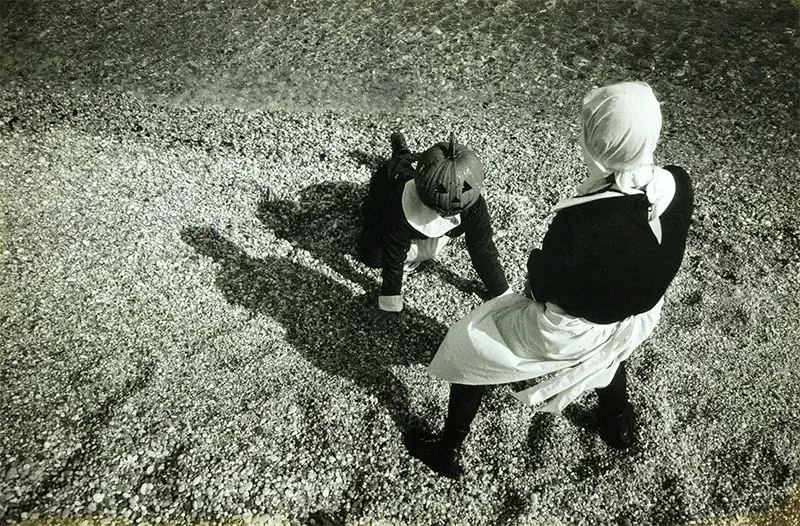
Renowned artists Marlene McCarty and Donald Moffett present a previously unseen photo series from the early 1990s at the Alice Austen House.

McCarty and Moffett's creative partnership began within the AIDS activist collective Gran Fury, which was the graphic arm of ACTUP (AIDS Coalition to Unleash Power). The collective’s public art interventions used the language of advertising and art to expose the AIDS epidemic as both a health crisis and a political disaster. This shared experience sparked the duo to establish Bureau, a cross-disciplinary design studio in New York City that operated from 1989 to 2001. Bureau's work spanned print design, film titles, and educational initiatives.

In 1992, McCarty and Moffett were invited by Princeton University School of Architecture to design the university's Lecture Series Calendar. Princeton's long history, dating back to 1746 and its status as one of the original colonial colleges, inspired the artists to reconsider and queer early American history. For their project, McCarty and Moffett, dressed as pilgrims and women, ventured to the North Fork of Long Island with Bureau colleagues for a photo session, using unstable Polaroid 35mm positive film. While only two images were selected for the Princeton calendar, the remainder of the photos, hundreds of slides in total, were stored away. Over time, the film emulsion naturally deteriorated, becoming a dynamic participant in the artwork itself.

For the first time since that 1992 photoshoot, new archival pigment prints of ten performative tableaux from the series will be on display at the Alice Austen House Museum, offering a unique glimpse into McCarty and Moffett’s visionary work.

Marlene McCarty and Donald Moffett: One Day is supported by New York State Council on the Arts with the support of the Office of the Governor and the New York State Legislature, and public funds from the New York City Department of Cultural Affairs, in partnership with the City Council, Lily Auchincloss Foundation and the Teiger Foundation.

Image: © Marlene McCarty and Donald Moffett
Our printed edition showcases the winners of AAP Magazine call of entries
All About Photo Magazine
Issue #55
Stay up-to-date  with call for entries, deadlines and other news about exhibitions, galleries, publications, & special events.

Exhibitions Closing Soon

A Question of Matter By Morgan Post
Penumbra Foundation | New York, NY
From March 11, 2026 to May 01, 2026
A Question of Matter, on view from March 11 through May 1, 2026 at Penumbra Foundation, presents a striking body of work by photographer and educator Morgan Post. Drawing from an extensive archive of documentary images, Post revisits landscapes marked by radiological contamination, transforming them into meditations on time, materiality, and the invisible forces that shape the modern world. The exhibition reflects on how photography can engage with phenomena that exceed human perception, rendering the imperceptible both tangible and unsettling. Post’s images traverse a wide geography of nuclear history, from sites of uranium extraction in the American Southwest to research facilities in the Midwest and energy infrastructures in the Northeast. His work also considers the global impact of events such as the Fukushima Daiichi nuclear disaster, situating these locations within a broader narrative of technological ambition and environmental consequence. Rather than presenting these places as static documents, he approaches them as evolving terrains shaped by processes that extend far beyond human timescales. Through experimental darkroom techniques—including inversion, solarization, and tonal manipulation—Post disrupts the descriptive clarity traditionally associated with documentary photography. The resulting images appear unstable, as if altered by the very forces they depict. Shades of deep black dissolve into luminous fields, while surfaces seem to flicker between presence and disappearance. These visual transformations evoke the concept of half-life, where matter never fully resolves but continues to shift and mutate, existing in a state of perpetual transition. Despite the vastness of his subject, Post presents his photographs in an intimate scale reminiscent of contact prints. This physical proximity encourages viewers to move closer, engaging with each image as a quiet yet charged encounter. The works recall earlier photographic responses to nuclear events, while forging a contemporary visual language attuned to ongoing ecological and political concerns. In A Question of Matter, photography becomes a tool for contemplating a world shaped by unseen energies and enduring consequences. Post’s images suggest that these altered landscapes are not distant anomalies, but part of a shared condition—one that continues to unfold across generations and across the surface of the earth.
What Photographs Look Like
Princeton University Art Museum - Art on Hulfish | Princeton, NJ
From October 31, 2025 to May 01, 2026
In an age where photographs drift seamlessly through digital space—appearing on screens, detached from any sense of material presence—it is easy to forget that photographs were once tangible things. They were objects to be held, exchanged, and cherished, carrying the physical weight of memory. Early photographs were not only images but also artifacts: mounted on card stock, encased in lockets, or assembled in albums that told personal histories. This tactile connection between image and object shaped how people experienced photography, granting it intimacy and permanence. The exhibition What Photographs Look Like revisits this layered understanding of the medium, taking inspiration from the words of Peter Bunnell, a pioneering historian of photography and longtime Princeton scholar. In the 1970s, Bunnell used the phrase to challenge his students’ assumptions about photography as flat or purely visual. For him, photographs could take on unexpected forms—drawings, collages, assemblages, or sculptural constructions—each expanding the definition of what a photograph could be. His teaching and curatorial work invited a more playful, exploratory relationship with the medium, one that celebrated its elasticity and inventiveness. Today, photography continues to evolve in ways Bunnell might have admired. Artists manipulate light-sensitive materials, experiment with chemical reactions, or build three-dimensional installations that bridge the physical and digital. Even in a time dominated by screens, many photographers return to the physical print as a way to restore presence and touch. Through a rich selection of works drawn from Princeton’s collection, What Photographs Look Like reveals photography’s enduring capacity to surprise. Whether fragile or monumental, ephemeral or lasting, each work invites viewers to look again—beyond the image—to the photograph as an object shaped by time, process, and imagination. Image: Dora Maar, Photogram of woman in profile, ca. 1935. Princeton University Art Museum. Museum purchase, gift of Robert J. Fisher, Class of 1975, and Mrs. Fisher. © 2013 Artists Rights Society (ARS), New York / ADAGP, Paris
FIERCE: Pittsburgh
Silver Eye Center for Photography | Pittsburgh, PA
From March 05, 2026 to May 02, 2026
FIERCE: Pittsburgh unfolds as a powerful affirmation of presence, dignity, and self-definition, presented at the Silver Eye Center for Photography in collaboration with Rainbow Serpent. Situated within a city shaped by layered histories of labor, migration, and cultural resilience, the exhibition places portraiture at the center of a broader conversation about visibility and belonging. Through photography, the work insists on recognition—not as spectacle, but as a fundamental human right grounded in empathy and mutual regard. At the heart of the exhibition is the practice of Ajamu X, whose decades-long commitment to Black LGBTQ+ lives has reshaped the possibilities of photographic representation. Working with historic darkroom processes such as platinum printing, he creates images that feel both timeless and urgent. These techniques slow down the act of looking, allowing sensuality, vulnerability, and strength to surface without compromise. By reclaiming materials historically associated with exclusion, Ajamu X confronts photography’s past while forging space for more expansive futures. FIERCE: Pittsburgh is part of an evolving global archive that has taken form in cities such as London, Bristol, and Toronto, each iteration shaped by local voices and lived realities. The Pittsburgh portraits honor individuals whose contributions span creative practice, education, civic engagement, and health advocacy. Their images resonate beyond the frame, offering a sense of kinship that connects personal narratives to a wider, international continuum of Black queer experience. Dedicated to the memory of Christopher Smith, the exhibition carries an added layer of reflection and care. It acknowledges loss while emphasizing continuity, joy, and the transformative power of community. In dialogue with Rainbow Serpent’s commitment to healing, technology, and African cosmologies, FIERCE: Pittsburgh becomes more than an exhibition—it is a living testament. It celebrates those who insist on being seen, and in doing so, expand the visual and cultural record for generations to come. Image: Ajamu X, Michael Tikili, 2025. Courtesy of the artist © Ajamu X
Roger A. Deakins: Still Light
The Hulett Collection | Tulsa, OK
From February 28, 2026 to May 02, 2026
Roger A. Deakins: Still Light, on view from 28 February to 2 May 2026 at The Hulett Collection, offers a rare opportunity to encounter the photographic work of one of cinema’s most influential visual artists. Running parallel to his legendary film career, Deakins’ still photographs are grounded in attentiveness rather than drama, favoring quiet encounters shaped by light, rhythm, and an acute sense of place. These images resist spectacle, instead revealing how patience and restraint can transform the ordinary into something quietly resonant, echoing principles long central to classical photographic practice. Seen together, the works in Still Light reveal a consistent visual philosophy that bridges Deakins’ cinematic eye and his roots in still photography. Landscapes, interiors, and fleeting details are rendered with a sensitivity to tonal balance and spatial clarity that feels both deliberate and unforced. Whether drawn from travels prompted by film productions or from his enduring fascination with the English seaside, these photographs function as visual pauses—moments of reflection shaped by observation rather than narrative. They underscore Deakins’ belief that meaning often emerges not through excess, but through careful looking and time spent with a scene. Deakins’ presence in Tulsa extends the exhibition beyond the gallery walls, transforming it into a city-wide cultural moment. A week of public programs with Roger and James Deakins (Team Deakins) brings photography, film, and conversation into dialogue across multiple venues, including talks, screenings, and educational engagements. Together, the exhibition and events reflect Tulsa’s growing role as a place where artists, institutions, and audiences converge. Still Light ultimately celebrates not only a master image-maker, but also a way of seeing—one rooted in experience, continuity, and a deep respect for the expressive power of light. Image: Courtesy of the Hulett Collection. After Tea, Margate, 2021. Archival pigment print. 20 x 30" matted to 30 x 40" © Roger A. Deakins.
Álvaro Alejandro López: De Natura Libris
Viewpoint Photographic Art Center | Sacramento, CA
From April 08, 2026 to May 02, 2026
Álvaro Alejandro López: De Natura Libris, on view from April 8 to May 2, 2026 in the Step Up Gallery at Viewpoint Photographic Art Center, is a contemplative photographic meditation on books as living objects. Rather than focusing solely on texts or authors, López turns his attention to the physical and emotional relationships that form between readers and the printed page. The series invites viewers to consider books not only as vessels of knowledge, but as tactile companions shaped by time, touch, and memory. In De Natura Libris, the body of the book takes center stage. Spines bend, pages crease, margins bear the marks of repeated handling. Texture, weight, and wear become expressive elements, suggesting the intimate rituals of reading. López’s images evoke the quiet sensations that accompany these encounters—the scent of paper, the sound of a turning page, the visual rhythm of type and binding. Each photograph operates as an open invitation, allowing viewers to project their own experiences and associations onto the forms depicted. The project unfolds in dialogue with a constellation of writers from across cultures and generations. Their words and ideas resonate through the images, reinforcing the notion that reading is both solitary and shared. While the photographs remain visually restrained, they carry layers of meaning shaped by literature, philosophy, and personal memory. In this way, López bridges the abstract world of thought with the material presence of books, revealing how inner and outer landscapes intersect through acts of reading. Based in Mexico City, López brings a multidisciplinary sensibility to his photographic practice, informed by studies in philosophy and literature and years spent working in publishing. His background in bookmaking and visual culture is deeply embedded in this work, as is a lineage of photographic curiosity passed down through family. With De Natura Libris, López offers a quiet yet resonant reflection on the enduring power of books—objects that continue to shape identity, imagination, and connection in an increasingly dematerialized world. Image: © Álvaro Alejandro López
Arlene Gottfried | Young & Old
Clamp | New York, NY
From March 06, 2026 to May 02, 2026
Arlene Gottfried | Young & Old is on view from March 6 through May 2, 2026 at CLAMP. The exhibition marks the gallery’s first solo presentation dedicated to the late photographer Arlene Gottfried, drawing from an archive that remained carefully stored in her Westbeth studio. Within a portfolio box labeled “Young & Old,” Gottfried gathered portraits that reflect her enduring curiosity about how age inhabits the body and the face, not as a fixed marker but as a shifting condition. Children and elders appear throughout the selection, sometimes sharing the same frame, sometimes standing alone before the camera with direct and unguarded presence. Gottfried approached her subjects with proximity and trust, cultivating encounters that feel collaborative rather than observational. Youth carries gravity in a child’s steady gaze; advanced age reveals flashes of mischief or theatrical flair. In these photographs, time registers in subtle details—creased hands, confident posture, exuberant dress—yet never confines the individual to stereotype. Gottfried’s practice forms an essential chapter in the visual history of late twentieth-century New York. Her images, often described as souvenirs of lived experience, convey the texture of neighborhoods, families, and cultural communities with candor and empathy. A recent exhibition at The New York Historical underscored her capacity to narrate the city through intimate portraiture. Books such as The Eternal Light and Bacalaitos & Fireworks trace parallel threads of spirituality, nightlife, and everyday ritual, weaving autobiography with social observation. Works by Gottfried reside in numerous public collections, including the Brooklyn Museum and the Maison Européenne de la Photographie, affirming the breadth of her influence. In Young & Old, her portraits emphasize that age unfolds as dialogue rather than division—an exchange between vitality and reflection, recorded with warmth, humor, and unwavering respect. Image: Isabel Croft Jumping Rope, Brooklyn, NY, 1972-9. Artist label with name, address, and telephone number, verso; “© Gottfried, 1979” in artist’s handwriting, verso. © Arlene Gottfried, courtesy of Clamp.
Binh Danh & Renee Royale
Rose Gallery | Santa Monica, CA
From March 14, 2026 to May 02, 2026
Binh Danh & Renee Royale brings together two distinct yet deeply interconnected artistic voices in a compelling exhibition presented at ROSEGALLERY from March 14 through April 25, 2026. Through photography and material experimentation, both artists investigate how histories of colonialism, labor, and environmental transformation continue to shape contemporary understandings of identity and place. Their works reveal the ways memory persists within objects, landscapes, and cultural narratives, encouraging viewers to reflect on the enduring impact of historical power structures. Binh Danh’s series All I Asking for Is My Body offers a thoughtful meditation on the legacy of plantation labor in the United States and the Pacific. Drawing inspiration from Milton Murayama’s novel of the same name, Danh revisits archival photographs depicting the lives of immigrant laborers—Japanese, Chinese, Filipino, Korean, Portuguese, and African workers who formed the backbone of agricultural industries during the late nineteenth and early twentieth centuries. Using the historic daguerreotype process, Danh transfers these images onto antique silver platters reminiscent of colonial dining culture. The reflective surfaces transform the objects into mirrors that subtly include the viewer within the frame, linking present observation with the overlooked histories of labor and displacement embedded in these scenes. Renee Royale approaches similar questions of history and belonging through ecological processes and ritual. In her series Landscapes of Matter, photographs made with a Polaroid camera depict locations in Louisiana affected by environmental degradation tied to long histories of extraction and exploitation. Royale subjects the prints to a deliberate transformation, submerging them in water, soil, and plant matter during the course of a lunar cycle. The images absorb the marks of time and environment, producing surfaces that appear both fragile and elemental. Through this process, the land itself becomes an active participant in the creation of the photograph. Royale continues this exploration in Rituals of Belonging, a body of work created along the shoreline of Lake Michigan. By returning repeatedly to the same vantage point and allowing lake water to alter the images, she develops a meditative inquiry into the meaning of belonging and exclusion. Together, the works of Danh and Royale reveal how landscapes, materials, and bodies carry traces of unresolved histories, offering photography as a space where memory and reflection converge. Image: Bridalveil Falls, Yosemite, (May 31), 2012 © Binh Danh, courtesy of the ROSE Gallery
CHROMAZONE: Catherine DeLattre and Fred Herzog
OSMOS | New York, NY
From March 26, 2026 to May 02, 2026
CHROMAZONE: Catherine DeLattre and Fred Herzog brings together the work of two photographers who embraced color long before it became widely accepted within artistic photography. Presented at OSMOS in New York, the exhibition highlights how both artists explored the expressive possibilities of color film at a time when black-and-white imagery still dominated the medium. On view through May 2, 2026, the exhibition invites visitors to experience two distinct yet complementary visions shaped by patience, curiosity, and an enduring fascination with everyday life. Catherine DeLattre began photographing in the late 1960s, a period when most photography programs emphasized monochrome techniques. Rather than following convention, she chose to work with color negative film using a twin-lens reflex Mamiya camera. Growing up near the industrial landscapes of western Pennsylvania, DeLattre developed an attentive eye for subtle details in ordinary surroundings. Her images frequently explore quiet corners of American life, capturing subtle atmospheres rather than dramatic spectacle. While she is widely recognized for her series Shoppers, made on New York’s Upper West Side between 1979 and 1980, the exhibition also includes landscapes from northeastern Pennsylvania that reveal expansive rural spaces, modest homes, and the calm solitude of overlooked places. Fred Herzog approached color photography with a similar sense of independence. Born in Germany and later settling in Vancouver, he spent decades documenting the city’s streets using Kodachrome slide film. During the 1950s and 1960s, when color photography was often dismissed as commercial or amateur, Herzog wandered through working-class neighborhoods such as Chinatown and East Hastings with his camera. Storefronts, hand-painted signs, buses, pedestrians, and small businesses formed a vibrant urban tapestry. His images convey the rhythms of daily life while celebrating the richness of color found in ordinary streets. Both artists only produced many of their final prints years later, once digital printing technologies allowed color photographs to be reproduced with greater depth and fidelity. This delayed materialization adds another layer to their work, bridging the era in which the images were captured with contemporary methods of presentation. CHROMAZONE reveals how DeLattre and Herzog each cultivated a deeply personal relationship with color, transforming familiar environments into vivid records of place, memory, and observation. Image: New World Confectionary, 1965 Archival pigment print © Fred Herzog, courtesy of OSMOS Gallery
Helmut Newton x Steven Klein on the dark side
Staley-Wise Gallery | New York, NY
From March 19, 2026 to May 02, 2026
Helmut Newton x Steven Klein: on the dark side, presented at Staley-Wise Gallery from March 19 through May 2, 2026, brings together the work of two photographers whose images redefine the visual language of fashion. Through a selection of striking photographs, the exhibition places the work of Helmut Newton in dialogue with that of Steven Klein, revealing how both artists explore glamour, sexuality, power, and performance with fearless intensity. Their images move beyond the conventions of editorial photography, constructing cinematic scenes where elegance and provocation coexist. Helmut Newton emerges as one of the most influential fashion photographers of the late twentieth century. Born in Berlin in 1920, he begins his career assisting the photographer Yva before leaving Germany as the political climate darkens in the late 1930s. After settling in Australia, Newton develops a distinctive photographic voice that eventually finds an international stage in fashion magazines such as Vogue. His images from the 1970s and 1980s challenge expectations of fashion imagery through bold compositions, dramatic lighting, and narratives that openly address themes of authority, desire, and theatricality. Decades later, Steven Klein emerges as a major figure in contemporary image-making, continuing a similarly audacious approach while reflecting the evolving aesthetics of modern culture. Educated at the Rhode Island School of Design, Klein initially studies painting before turning fully toward photography in the 1990s. His work becomes widely recognized for its stylized visual storytelling and collaborations with leading figures in fashion, music, and cinema. Through editorial commissions and advertising campaigns, Klein constructs images that blend surreal narrative, psychological tension, and high-fashion spectacle. Seen together, the photographs reveal a shared fascination with the theatrical potential of the camera. Models appear as protagonists within carefully staged environments where luxury, fantasy, and danger intertwine. Humor and irony frequently surface within these compositions, offsetting their darker undertones. By placing the work of Newton and Klein side by side, the exhibition highlights how fashion photography evolves across generations while maintaining a powerful capacity to challenge social conventions and expand the boundaries of visual storytelling. Image: Helmut Newton Woman examining man, Calvin Klein, American VOGUE, Saint-Tropez, 1975 (© Helmut Newton Foundation)
Elliot Ross: A Question of Balance
Blue Sky, Oregon Center for the Photographic Arts | Portland, OR
From April 02, 2026 to May 02, 2026
A Question of Balance, presented at Blue Sky Gallery from April 2 through May 2, 2026, unfolds as a quiet yet urgent meditation on water, access, and inequality in the American Southwest. Through a restrained and attentive photographic language, Elliot Ross approaches a subject often reduced to abstraction—drought—and restores to it a human scale. His images trace the lived reality of communities navigating scarcity, where water is not merely a resource but a daily negotiation shaped by geography, infrastructure, and history. Working over several years, Ross builds a body of work grounded in proximity and trust. His photographs linger on gestures and environments: containers filled and carried, improvised systems of storage, landscapes marked by absence. These scenes stand in stark contrast to neighboring areas where water flows with ease, revealing a disparity that is both visible and systemic. Rather than dramatizing crisis, Ross adopts a measured tone, allowing the imbalance to emerge through observation and accumulation. The project situates the current drought—considered among the most severe in over a millennium—within a broader context of land use, policy, and historical displacement. In regions such as the Navajo Nation, access to clean water remains inconsistent despite shared proximity to vital sources. Ross’s work does not isolate these conditions as anomalies but instead frames them as consequences of long-standing structural divisions, where environmental and social realities intertwine. Visually, the photographs balance intimacy and expanse. Portraits and details draw the viewer close, while wide landscapes emphasize scale and fragility. This duality reflects the central tension of the exhibition: the coexistence of abundance and deprivation within the same terrain. Ross resists easy conclusions, instead inviting a deeper consideration of responsibility and stewardship in a changing climate. A Question of Balance ultimately extends beyond documentation. It becomes a reflective space where questions of equity, belonging, and sustainability remain open, urging viewers to reconsider not only how resources are distributed, but how communities are valued within the environments they inhabit. Image: © Elliot Ross
View Finding: Selections from The Walther Collection
The Metropolitan Museum of Art | New York, NY
From October 28, 2025 to May 03, 2026
The Metropolitan Museum of Art announces a significant promised gift from Artur Walther and the Walther Family Foundation, recognized worldwide for their commitment to advancing the study of photography. This extraordinary collection of approximately 6,500 works includes photographs, albums, and time-based media spanning continents and centuries. It encompasses modern and contemporary art from Africa, China, Japan, and Germany, as well as vernacular photographs from the 19th and 20th centuries taken in the United States, Europe, Colombia, and Mexico. Together, these works trace the evolution of photography as both an artistic language and a cultural mirror, revealing how image-making shapes our understanding of the world. Selections from the collection will debut in the Michael C. Rockefeller Wing when it reopens in May 2025, featuring iconic African photographers such as Seydou Keïta and Samuel Fosso. A subsequent exhibition in fall 2025 will present a broader international overview, while a comprehensive survey of the collection is planned for 2028. The Met also intends to integrate photographs and video works from the gift into future installations in the Tang Wing, the museum’s new home for modern and contemporary art opening in 2030. These presentations will explore how artists use the camera to capture changing social, cultural, and physical landscapes—moments where observation becomes both record and reflection. Artur Walther’s vision was to challenge and expand the boundaries of photographic practice. Over more than three decades, he assembled a collection that brings together celebrated masters and lesser-known voices, forming a dialogue across geography and history. The exhibition View Finding: Selections from The Walther Collection introduces this transformative gift, celebrating the diversity of global perspectives. From city streets to intimate interiors, these images reveal photography’s enduring ability to question, connect, and redefine how we see ourselves and the world around us. Image: Luo Yongjin (Chinese, born 1960), Oriental Plaza, Beijing (detail), 1998–2002. Inkjet print. The Metropolitan Museum of Art, New York, Promised gift of The Walther Family Foundation © Luo Yongjin
(Re)Constructing History
San Francisco Museum of Modern Art - SFMOMA | San Francisco, CA
From October 04, 2025 to May 03, 2026
(Re)Constructing History invites viewers to consider how photographs do more than capture fleeting moments—they also carry the weight of histories that continue to shape the present. Taking its title from Carrie Mae Weems’s powerful series Constructing History, the exhibition encourages reflection on how images can both document and reinterpret the narratives that define our collective memory. Through the lens of contemporary photography, the show reveals how the past remains alive within every frame, layered into the visual and emotional fabric of today’s world. Spread across three galleries, the exhibition unfolds as a journey through time, power, and representation. The first gallery turns its gaze toward Wall Street, a longstanding emblem of American ambition and authority. Here, photographs old and new reveal how the imagery of finance and architecture has served to both glorify and critique national ideals. The second gallery presents artists who reimagine and reclaim visual traditions, transforming inherited imagery through acts of reference, appropriation, and subversion. Their work asks how the repetition of images—when reworked with intention—can shift meaning and open new spaces for cultural dialogue. The final gallery explores the capacity of photography to uncover the invisible forces that shape landscapes and social environments. From the erosion of natural sites to the evolution of urban structures, these works make visible the continuous process of change and reconstruction. At the heart of this installation are contemporary Black artists such as Nona Faustine, Carla Williams, Dawoud Bey, and Carrie Mae Weems, whose practices challenge the boundaries between history and imagination. Their images transcend the role of mere documentation, offering poetic and political reinterpretations of the past. Through their vision, (Re)Constructing History becomes an invitation to see photography not as static memory, but as an ongoing act of reimagining what has been and what might yet be. Image: Carla Williams, Side (detail), from the series How to Read Character, 1990, printed 2024; San Francisco Museum of Modern Art, Accessions Committee purchase, by exchange, through a gift of Michael D. Abrams; © Carla Williams
Advertisement
AAP Magazine #57 Portrait
Win a Solo Exhibition in June
AAP Magazine #57 Portrait
Call for Entries
AAP Magazine #57 Portrait
Publish your work in our printed magazine and win $1,000 cash prizes

Related Articles

Brussels Street Photography Festival honors Josef Koudelka with Lifetime Achievement Award
The Brussels Street Photography Festival (BSPF) is pleased to announce that Josef Koudelka, one of the most iconic photographers of our time, will be the guest of honor at this year’s 10th-anniversary celebration. Koudelka will receive the festival’s Lifetime Achievement Award in recognition of his extraordinary contributions to photography during a special evening at Brussels City Hall on May 30, 2026. The event will also feature an interview with the photographer and the announcement of this year’s competition winners.
Tangerine Dreams by Sophie Green
British documentary photographer Sophie Green presents Tangerine Dreams, a vivid portrait of the communities, subcultures and social gatherings that shape contemporary Britain. For over a decade, she has documented how rituals and traditions build connection, belonging and shared identity. This celebratory and emotively kaleidoscopic work will be on show as a free exhibition at the Martin Parr Foundation, Bristol from 4 June - 6 September 2026.
All About Photo Presents ’Passing Through’ by Olivia Vivanco
Passing Through is a solo exhibition by Mexican photographer Olivia Vivanco exploring migration in Mexico through abandoned objects, transit spaces, and visual traces of displacement. The project offers an ethical, human-centered perspective on migrant journeys, memory, and resilience.
Mike Brodie Joins Casemore Gallery Ahead of First Solo Exhibition
Casemore Gallery announces its representation of Mike Brodie, marking a significant new chapter in the artist’s career. The collaboration launches with Brodie’s debut solo exhibition at the gallery, opening Saturday, May 2, from 5–7 pm.
Ecstatic Time: The Alchemy of Photography
Opening July 29, 2026, at Phoenix Art Museum in Phoenix, Arizona, Ecstatic Time: The Alchemy of Photography is a major photography exhibition featuring nearly 100 works from the Center for Creative Photography. The exhibition explores how photography transforms reality, perception, and time through surreal, astronomical, and experimental imagery.
Film: Steve Schapiro: Being Everywhere
Shot shortly before his passing in 2022, Steve Schapiro: Being Everywhere is a loving tribute to one of the most important photographers of the mid-20th century.
All About Photo Presents ’Alpine Hiatus’ by Filippo Poli
In Alpine Hiatus: The Snow No Longer Tastes Like Snow, Italian photographer and architect Filippo Poli turns his camera toward a landscape caught between memory and mutation. The project unfolds as both personal archaeology and ecological reflection — an inquiry into what remains when the snow, once a symbol of purity and permanence, becomes an artifact of artifice. Winner of the April 2026 All About Photo Solo Exhibition contest, Poli’s work traces the dissonance between remembrance and reality, offering a haunting meditation on disappearance.
Magnum Square Print Sale in Partnership with The Photographers’ Gallery: Odyssey
Odyssey is more than a journey. It is a search for meaning, a crossing of thresholds, a story of growth and resilience. Bringing together a wide range of work from over 100 photographers, this Square Print Sale traces the paths we take across borders, through memory, and into the unknown. Presented in collaboration with The Photographers’ Gallery, the collection off ers works by artists including Martin Parr, Daidō Moriyama, Eve Arnold, Nadav Kander, Steve McCurry, Juno Calypso, Karen Knorr and more.
Elements of Wonder: When Nature Becomes Art by Jon McCormack
To coincide with Earth Day, CENTER, the nonprofit photography organization based in Santa Fe, NM, presents Elements of Wonder: When Nature Becomes Art, a photographic exhibition by Jon McCormack. The exhibition will be on view at CENTER from April 17 through May 17, 2026, with an Opening Reception on Friday, April 17, 5:00 – 7:00 PM, and an Artist Talk on April 30, from 5:30 – 6:30 PM (MT).
Call for Entries
AAP Magazine #57 Portrait
Publish your work in our printed magazine and win $1,000 cash prizes