All about photo.com: photo contests, photography exhibitions, galleries, photographers, books, schools and venues.
Win a Solo Exhibition in June 2026 + An Exclusive Interview!

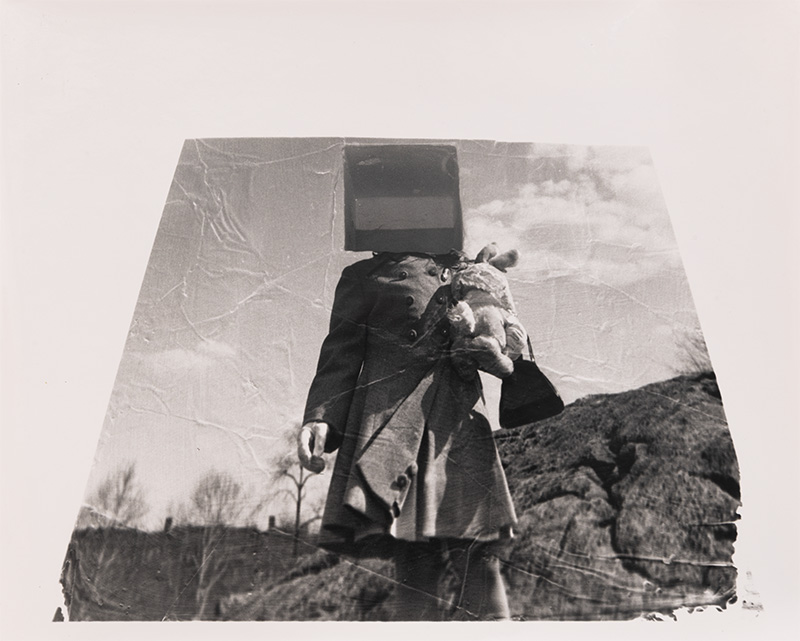
Darrel Ellis: Regeneration

From November 20, 2022 to April 23, 2023
Share
Darrel Ellis: Regeneration
10 Art Museum Drive
Baltimore, MD 21218
Co-organized with The Bronx Museum of the Arts, this is the first comprehensive museum exhibition of the profoundly moving and complex work of Darrel Ellis (1958–1992).

Ellis created a multifaceted body of work that merges painting, printmaking, photography, and drawing before he died of AIDS-related causes at age 33. During his lifetime, his work was included in important contemporary surveys but only now is garnering the posthumous attention it deserves.

The exhibition includes works from major public and private collections, as well as loans from artists for whom Ellis’s work serves as a crucial influence. Among the most poignant and historically significant works are a group of portraits that demonstrate how Ellis documented the experience of living with the AIDS virus. The largest body of work in the exhibition encompass variations on portraits of family members that he pictured and re-pictured in varied media.

Ellis’s approach to appropriation was unique among contemporaries as he often used his deceased father’s photographic archives as primary source material. The exhibition also features a selection of ephemera that provides insights into the artist’s interventions in the art historical canon as well as technical models that reconstruct his complex working processes.

This exhibition is organized by Leslie Cozzi, BMA Associate Curator of Prints, Drawings, and Photographs.

Image: Darrel Ellis. Untitled (Self‑Portrait after Allen Frame Photograph). c. 1990. Collection of Spaghetti Western. © Darrel Ellis Estate
Our printed edition showcases the winners of AAP Magazine call of entries
All About Photo
Awards 2026
Stay up-to-date  with call for entries, deadlines and other news about exhibitions, galleries, publications, & special events.

Exhibitions Closing Soon

Roger Ballen: Ballenesque
Throckmorton Fine Art Gallery | New York, NY
From April 16, 2026 to May 16, 2026
At Throckmorton Fine Art, Roger Ballen: Ballenesque unfolds as a striking retrospective that traces more than five decades of one of photography’s most singular voices. Bringing together nearly 40 works produced between 1969 and 2025, the exhibition maps a trajectory that moves from documentary observation to a deeply personal visual language where fiction, performance, and psychological inquiry converge. Roger Ballen’s early images, rooted in the rural landscapes of South Africa, carry the weight of classic documentary traditions. Stark portraits and scenes of marginal communities reveal a direct, unembellished engagement with reality. Yet even within these early works, there is a sense of unease, a subtle tension that foreshadows the artist’s later shift toward more constructed and ambiguous imagery. Over time, Ballen departs from strict documentation, embracing a hybrid practice that integrates drawing, sculpture, and collage into the photographic frame. The exhibition highlights key series that define this evolution, including Dorps, Platteland, and Outland, before moving into the increasingly complex worlds of Shadow Chamber and Asylum of the Birds. In these later works, the photograph becomes a stage where fragments of bodies, animals, and objects interact within claustrophobic interiors. The boundaries between reality and invention dissolve, replaced by a visual language that probes the subconscious and confronts viewers with unsettling, often absurd scenarios. Ballen’s imagery resists easy interpretation. Instead, it invites a confrontation with what he has often described as the “shadow side” of human existence. His compositions, meticulously arranged yet seemingly chaotic, suggest that meaning emerges not from clarity but from contradiction. The absence or fragmentation of the human figure further intensifies this effect, turning the viewer into an active participant in decoding the scene. In Ballenesque, the cumulative force of this work becomes evident. What begins as a documentary impulse transforms into a broader meditation on perception, control, and the fragile boundary between order and disorder. The exhibition stands as both a survey and an immersion, offering a rare opportunity to engage with an artist who continuously challenges the limits of photographic expression. Image: Roger Ballen, Tommy, Samson and a Mask (30/35), 2000 - Silver Gelatin Print, 15.74 x 15.74 in © Roger Ballen - Courtesy Throckmorton Fine Art
Making a Life in Photography: Rollie McKenna
Center for Creative Photography | Tucson, AZ
From January 31, 2026 to May 16, 2026
Making a Life in Photography: Rollie McKenna offers the first comprehensive survey of the remarkable career of Rosalie (Rollie) Thorne McKenna, on view at the Center for Creative Photography from January 31 to May 16, 2026. Spanning decades of work, the exhibition brings long-overdue recognition to an artist whose photographs quietly shaped American modernism while remaining largely outside the spotlight. Through architecture, portraiture, and documentary images, McKenna’s work reveals a photographer deeply attuned to form, intellect, and lived experience. After graduating from Vassar College in 1940, McKenna forged an independent path as a professional photographer at a time when few women were able to do so. She became widely respected for her architectural photography, capturing modern buildings with a clarity and sensitivity that emphasized structure, rhythm, and human scale. Her images were included in influential publications and exhibitions, notably the Museum of Modern Art’s landmark 1955 exhibition on Latin American architecture, placing her work within an international dialogue on modern design and visual culture. Equally compelling are McKenna’s portraits, which form an extraordinary record of twentieth-century literary and artistic life. She photographed writers, poets, and artists not as distant icons, but as thoughtful, complex individuals. Her portraits of figures such as W. H. Auden, Elizabeth Bishop, Truman Capote, Sylvia Plath, and Henry Moore convey an uncommon intimacy, shaped by trust and intellectual kinship. McKenna’s camera becomes a tool of encounter, revealing inner lives through gesture, posture, and gaze rather than theatrical pose. More than a retrospective, Making a Life in Photography frames McKenna’s practice as a means of personal and creative self-determination. Photography allowed her to navigate professional ambition, independence, and emotional depth in mid-twentieth-century America. This exhibition illuminates a body of work that is rigorous yet humane, modern yet deeply personal, offering a fuller understanding of an artist who used photography not only to document the world around her, but to actively shape a life of curiosity, freedom, and sustained creative purpose. Image: Rollie McKenna, "Lever House, New York City," 1956, Gelatin silver print, Frances Lehman Loeb Art Center, Vassar College, Gift of the artist, 1987.53.105. © The Rosalie Thorne McKenna Foundation, Courtesy Center for Creative Photography, The University of Arizona Foundation
MoCP at 50: Collecting Through the Decades
Museum of Contemporary Photography (MOCP) | Chicago, IL
From January 22, 2026 to May 16, 2026
The fiftieth anniversary of the Museum of Contemporary Photography marks a moment to reflect on a collection that has grown and shifted alongside the broader cultural landscape. Since its founding in 1976, and the beginning of its collecting program a few years later, the museum has assembled an expansive archive of images and objects from a wide spectrum of artistic approaches and photographic technologies. This variety has allowed the institution to foster conversations that extend far beyond aesthetics, reaching into political, social, and cultural realms where photography continues to play a defining role. MoCP at 50 brings together a thoughtful selection of rarely seen works and recent acquisitions, inviting visitors to consider how a collection evolves and what it reveals about the values of its time. Each gallery in the exhibition represents a decade of collecting, beginning with the present and moving backward, creating a reverse chronology that highlights shifting priorities and widening perspectives. Seen in this way, the collection becomes not only an artistic record but also a reflection of changing institutional viewpoints and societal awareness. The exhibition underscores how the early decades of the collection reveal notable omissions, especially the limited presence of women and artists of color. These absences speak to the broader challenges of the period rather than a lack of creative activity, and they illuminate how cultural institutions once viewed artistic value through narrower lenses. Over time, the museum’s focus expanded beyond post-1959 American work, opening the door to global voices, conceptual practices, and projects that stretch the definition of photography itself. By presenting this layered history, MoCP at 50 celebrates collecting as a dynamic, intentional, and educational act. It affirms the museum’s commitment to preserving diverse photographic narratives while embracing new ideas, ensuring that the medium remains vibrant, relevant, and in dialogue with the world it reflects. Image: Raul Corrales, Maria and Mario. Dos Fotografos, Dos Epocas, Dos Estados, 1980. 2006:296
Urban Forms
Juan Carlos Maldonado Collection | Miami, FL
From December 03, 2025 to May 16, 2026
Urban Forms brings together a newly acquired selection of photographs and the longstanding commitment of the Juan Carlos Maldonado Collection to geometric abstraction, creating a dialogue between image, architecture, and modernist aspiration. With this exhibition, JCMC highlights the conceptual and formal currents that connect Paolo Gasparini’s visual investigations to the broader legacy of 20th-century abstract thought. Gasparini, the Italian-Venezuelan photographer whose career spans more than six decades, is celebrated for his incisive reflections on Latin American urban life. In these photographs, he turns his attention to the monumental modernist projects that reshaped Brazil and Venezuela during the mid-century. His images, rich in contrast and rhythmic structure, reveal striking affinities between architectural innovation and the language of geometric abstraction. The exhibition positions these photographs not simply as documentary records, but as visual essays that echo the principles of Bauhaus, Neoplasticism, and the early Soviet avant-garde. By placing Gasparini’s work in conversation with the abstract-geometric masterpieces within the collection, Urban Forms underscores how artists and architects across continents pursued similar visions: the activation of surfaces through line and pattern, the intelligent modulation of light, and the creation of spaces capable of conveying emotional as well as functional clarity. These shared pursuits transformed cities into dynamic environments, where concrete and color could coexist with texture, shadow, and human presence. The show ultimately invites viewers to retrace this intertwined history of modern creativity. From late-19th-century formal experiments to the ambitious urban programs of the mid-20th century, visual artists and architects—sometimes unwittingly, sometimes in close alliance—imagined new ways of shaping the modern city. Their work sought to humanize expanding urban landscapes and to infuse them with aesthetic vitality. In this way, Urban Forms is more than an exhibition: it is an opportunity to reflect on the cultural ideals that animated modernity and the enduring connection between the built environment and the abstract visions that helped define it. Image: © Paolo Gasparini
William Klein: In Your Face!
Peter Fetterman Gallery | Los Angeles, CA
From January 10, 2026 to May 16, 2026
William Klein: In Your Face! marks a long-awaited return of one of photography’s most disruptive voices to Los Angeles, presented at Peter Fetterman Gallery from January 10 to May 16, 2026. This major exhibition revisits Klein’s radical vision with fresh urgency, offering audiences an unfiltered encounter with an artist who refused refinement in favor of truth, movement, and confrontation. Born in New York and creatively forged between America and postwar Paris, William Klein developed a visual language that rejected polite distance. His photographs surge forward with abrasive closeness, fractured compositions, and a sense of lived immediacy. Rather than imposing order, Klein welcomed disorder, allowing the unpredictability of the street to shape the image. Faces collide with the lens, gestures blur, and grain becomes a form of expression, mirroring the pulse of modern life. The exhibition traces Klein’s break from traditional photographic elegance and his embrace of the raw spectacle of everyday existence. Long dismissed by American publishers for being too aggressive and too honest, his work instead found resonance among those who recognized photography as a living, breathing act. Klein photographed not what society aspired to be, but what it was—loud, contradictory, restless, and alive. Klein’s influence extends far beyond the gallery wall. His revolutionary photobooks reshaped how images could be sequenced and experienced, transforming the book into a cinematic, immersive object. This same rebellious spirit carried into his fashion photography, where models stepped into the street and couture met chaos. In doing so, Klein forever altered the visual grammar of magazines, proving that elegance could coexist with friction. William Klein: In Your Face! brings together decades of visual audacity, reminding viewers that photography’s power lies in its ability to confront rather than comfort. In an age of polished surfaces and curated realities, Klein’s work feels more relevant than ever—an enduring call to look harder, step closer, and accept the world in all its unruly intensity. Image: William Klein 1928-2022 Gun 1, New York, 1955 © The Estate of William Klein, Courtesy of Peter Fetterman Gallery
April in Paris
Duncan Miller Gallery | Los Angeles, CA
From April 04, 2026 to May 16, 2026
April in Paris at Duncan Miller Gallery presents a distinctly photographic love letter to the French capital, assembling images that span much of the twentieth century and reflect Paris as both subject and symbol. The exhibition gathers work by Eugène Atget, Henri Cartier-Bresson, Robert Doisneau, Martine Franck, Willy Ronis, Marc Riboud, Jeanloup Sieff, and others whose pictures helped shape the visual memory of the city. Each photographer approaches Paris differently, yet all treat it as a living place of passing gestures, private exchanges, and public theater. Atget’s views of old streets and fading façades establish a quiet foundation, preserving a Paris on the edge of modernization. Cartier-Bresson introduces speed and precision, finding structure in a glance, a stride, a moment of urban coincidence. Doisneau and Ronis bring warmth and human scale, turning cafés, sidewalks, and neighborhood corners into scenes of wit and tenderness. Franck and Riboud extend that attention to atmosphere, balancing documentary clarity with a sense of lyric movement. What emerges is not a postcard version of Paris, but a layered portrait of daily life. The city appears in lovers leaning together, workers crossing a square, children in motion, and anonymous figures who carry the pulse of the streets. These photographs also reflect the wider history of French humanist photography, a tradition that valued observation, empathy, and the poetry of ordinary life. In that sense, April in Paris captures not only the architecture and elegance of the capital, but also its changing social rhythm, where memory and modernity remain in constant conversation. By bringing together such canonical voices, the exhibition underlines how Paris became one of photography’s most enduring subjects. It is a city seen again and again, yet never exhausted, always rediscovered through the patient eye of those who walked its streets with a camera and a way of seeing. Image: Cafe on rue Mouffetard, Paris, 1952, Henri Cartier-Bresson, courtesy of the Duncan Miller Gallery
New York City Never Sleeps
Peter Fetterman Gallery | Los Angeles, CA
From January 10, 2026 to May 16, 2026
New York City Never Sleeps unfolds as a vivid meditation on a metropolis that has long existed as both subject and stage for photographers drawn to its restless energy. Presented at the Peter Fetterman Gallery from January 10th to May 16th, 2026, the exhibition brings together a constellation of 20th-century voices who navigate the city’s shifting surfaces and hidden depths. Rather than offering a singular narrative, the show traces a layered portrait of New York as an ever-changing organism, where anonymity and intimacy collide on every corner. Emerging from the lineage of street photography that flourished in mid-century America, these images reveal a city defined as much by atmosphere as by architecture. Light cuts sharply between skyscrapers, carving fleeting geometries across sidewalks and faces. In these moments, photographers such as Ruth Bernhard, Louis Faurer, and Bruce Davidson capture not only what is visible, but what hovers just beyond perception. Their work transforms ordinary encounters into charged visual fragments, where a glance, a gesture, or a pause becomes a narrative in itself. The exhibition also reflects the evolving language of photography during a period when New York acted as a laboratory for experimentation. From the lyrical abstraction of Harry Callahan to the humanist sensitivity of Sabine Weiss, each artist approaches the city as both witness and participant. Subway platforms, crowded avenues, and quiet interiors become sites of observation where time feels suspended, even as the city pulses relentlessly around them. New York City Never Sleeps ultimately reveals a place defined by contradiction: harsh yet poetic, chaotic yet composed. Through these photographs, the city emerges not simply as a location, but as a state of mind—an enduring symbol of movement, tension, and possibility that continues to resonate far beyond its streets. Image: Sabine Weiss Switzerland, 1924-2021, New York, 1962 © Sabine Weiss, Courtesy of Peter Fetterman Gallery
A Fearless Eye – The Photography of Barbara Ramos
Harvey Milk Photography Center | San Francisco, CA
From March 06, 2026 to May 16, 2026
A Fearless Eye – The Photography of Barbara Ramos, presented at the Harvey Milk Photo Center in San Francisco from March 6 through May 16, 2026, unveiling a remarkable body of work hidden for nearly half a century. Created in the early-to-mid 1970s, Ramos’s photographs trace a California suspended between countercultural aftershocks and suburban expansion. Printed for the first time from recently digitized negatives, these images carry the clarity of youth and the resonance of time passed, offering a rare encounter with a vision once set aside but never extinguished. Ramos moved to San Francisco in 1969 to attend the San Francisco Art Institute, immersing herself in a city alive with experimentation and social change. With camera in hand, she navigated both the shifting streets of San Francisco and the sprawling terrain of the San Fernando Valley where she had grown up. Gas stations at dusk, vacant lots, passing strangers, fragments of signage and shadow—her photographs dwell in transitional spaces. There is no nostalgia here, no mythic California of sunlit promise. Instead, she reveals the understated tension and quiet poetry of ordinary places, observing with a directness that feels instinctive and unguarded. Ramos has described the act of photographing as requiring complete presence, a state she found impossible to reconcile with the responsibilities of work and raising children. Choosing family, she stored her negatives away, unseen even by those closest to her. The stillness of the pandemic decades later prompted a return to those boxes, initiating a dialogue between her younger and present selves. What emerges is not simply an archive rediscovered, but a living body of work entering public view at last. These photographs exist in a compelling double register: they are documents of a transformative era and contemporary prints shaped by reflection and renewed commitment. In bringing them forward, Ramos resumes a conversation interrupted by circumstance. The result affirms photography’s enduring capacity to hold time in suspension—proof that a fearless eye, once opened, never fully closes. Image: Cotton candy, Los Angeles © Barbara Ramos
Phil Penman: Street Scenes
Leica Gallery New York | New York, NY
From April 02, 2025 to May 17, 2026
Phil Penman: Street Scenes, presented at Leica Gallery New York from April 2 through May 17, 2026, highlights the work of British-born photographer Phil Penman, whose images capture the rhythm and unpredictability of life in major cities around the world. Bringing together photographs from his acclaimed book New York Street Diaries alongside images from his more recent publication Street Scenes, the exhibition reveals a visual journey shaped by decades of observation, persistence, and curiosity. Penman’s photography grows out of a deep engagement with the streets of New York City, where he has documented the daily theater of urban life for more than twenty-five years. His signature black-and-white style emphasizes dramatic light, strong contrasts, and fleeting human gestures that often unfold in a fraction of a second. Pedestrians caught in a sudden shaft of sunlight, reflections bouncing across wet sidewalks, or solitary figures framed by towering architecture become the building blocks of his visual language. Through patience and intuition, Penman transforms everyday scenes into images that feel both spontaneous and carefully composed. Although New York remains central to his work, the photographs in Street Scenes also extend beyond the city. Images taken in places such as Tokyo and Paris reveal how Penman responds to the character of different urban environments while maintaining a consistent photographic sensibility. Neon-lit avenues, quiet cafés, crowded intersections, and fleeting encounters between strangers all become part of a larger portrait of contemporary city life. Each image reflects the photographer’s instinct to remain attentive to moments that might otherwise pass unnoticed. Before focusing primarily on personal street photography, Penman built a career as a photojournalist whose work appeared in international publications such as The Guardian and National Geographic. His reportage documenting the aftermath of the September 11 attacks forms part of the historical archive of the National September 11 Memorial & Museum. Across all phases of his career, Penman’s photographs demonstrate a commitment to witnessing the world as it unfolds, preserving fragments of urban life that together form an enduring visual chronicle of the modern metropolis. Image: © Phil Penman
Ruben Natal-San Miguel: Welcome to Harlem USA
Taller Boricua Gallery | New York, NY
From March 12, 2026 to May 17, 2026
Ruben Natal-San Miguel: Welcome to Harlem USA, presented from March 12 through May 17, 2026 at the Taller Boricua Gallery, offers a vivid photographic portrait of Harlem’s streets, communities, and cultural expressions. The exhibition gathers images created over more than two decades by photographer Ruben Natal-San Miguel, whose attentive eye records the daily rhythms of neighborhoods stretching from El Barrio to West Harlem. Through scenes of storefronts, murals, and street encounters, the photographs reveal a living urban environment shaped by migration, resilience, and creativity. Natal-San Miguel approaches photography with a journalistic discipline, carefully noting the exact place, date, and even weather conditions surrounding each image. This meticulous practice transforms the photographs into a detailed visual archive of Harlem’s evolving identity. Small businesses, barbershops, bodegas, and colorful signage appear as essential markers of local life, reflecting the presence and entrepreneurial spirit of immigrant communities. These images capture both the vitality of the streets and the gradual transformations that accompany urban development and gentrification. The exhibition also reflects the deep cultural legacy of the Puerto Rican diaspora in Harlem. Portraits of residents proudly displaying the Puerto Rican flag evoke the neighborhood’s long connection to the island and to celebrations such as the annual Puerto Rican Day Parade. Some images highlight fashion, jewelry, and personal style as forms of cultural affirmation, while others portray activists, artists, and performers whose presence contributes to Harlem’s reputation as a dynamic center of artistic expression. Throughout the series, the photographer approaches his subjects with empathy and respect, allowing individuality and community pride to emerge naturally within the frame. Founded in 1970, Taller Boricua remains a vital cultural space dedicated to Puerto Rican and Latinx artistic voices. Within this context, Welcome to Harlem USA resonates as both a celebration and a historical document. Natal-San Miguel’s photographs preserve fleeting moments—murals that later disappear, storefronts that close, and gatherings that mark everyday life—ensuring that the visual memory of Harlem’s diverse communities continues to endure through the language of photography. Image: “ Welcome To Harlem USA “ ( Victoria Theater) 2010 Harlem, NYC ©️Ruben Natal-San Miguel
Lewis Hine Pictures America
The Frick Pittsburgh | Pittsburgh, PA
From February 21, 2026 to May 17, 2026
Lewis Hine Pictures America, on view from February 21 through May 17, 2026 at the The Frick Art Museum, revisits the legacy of a photographer who helped define the social conscience of American image-making. Through more than seventy rare vintage prints drawn from the private collection of Michael Mattis and Judith Hochberg, the exhibition traces how Lewis Wickes Hine transformed the camera into an instrument of civic engagement during a period of dramatic industrial expansion. At the turn of the twentieth century, the United States was reshaped by steel mills, factories, and soaring skyscrapers. Hine’s photographs reveal the human presence within these vast systems. His portraits of newly arrived immigrants at Ellis Island present individuals poised between uncertainty and hope. In images of child laborers—captured in textile mills, coal mines, and canneries—he confronted viewers with the moral cost of economic progress. These pictures were neither abstract nor distant; they were precise, frontal, and insistent. Hine’s connection to Pittsburgh runs deep. In 1907, he contributed to the landmark Pittsburgh Survey, documenting the demanding conditions faced by workers in the city’s steel industry. His photographs, paired with investigative reports, shaped public understanding of industrial life and strengthened calls for reform. Later, his celebrated images of men constructing the Empire State Building would frame labor not only as hardship but also as courage and skill, suspended high above New York City’s streets. Trained in sociology and committed to progressive education at New York’s Ethical Culture School, Hine believed that seeing could prompt change. His work circulated widely in magazines and exhibitions, influencing debates about immigration, labor laws, and social responsibility. Lewis Hine Pictures America underscores how documentary photography, grounded in clarity and empathy, became a force capable of shaping policy and public imagination alike—an enduring testament to the belief that careful observation can help build a more just society. Image: Lewis Wickes Hine, American, 1874-1940. Sadie, a cotton mill spinner, Lancaster, South Carolina, 1908. Gelatin silver print, 10.75 x 13.75 in. (27.3 x 34.9 cm).
Elements of Wonder: When Nature Becomes Art
CENTER Santa Fe | Santa Fe, NM
From April 17, 2026 to May 17, 2026
Elements of Wonder: When Nature Becomes Art, presented at CENTER in Santa Fe from April 17 through May 17, 2026, gathers a series of photographs by Jon McCormack that reveal the quiet artistry of the natural world. Moving across vastly different scales—from delicate organic details to expansive landscapes—the exhibition reflects on the visual languages embedded within nature itself. Through careful observation, McCormack uncovers patterns, textures, and subtle variations that transform familiar environments into images that feel both abstract and deeply rooted in the physical world. McCormack’s relationship with nature begins in the remote environments of the Australian Outback, where he grows up surrounded by wide plains, livestock, and the shifting rhythms of rural life. As a teenager he begins photographing the bush, focusing on moments that often escape casual attention: wind shaping the surface of sand, the intricate geometry of plants, or the shifting light that moves across rugged terrain. These early experiences shape a photographic approach defined by patience and attentiveness, qualities that remain central to his practice. In Elements of Wonder, the camera becomes a tool for revealing the subtle structures that animate living ecosystems. Close views of mineral surfaces, plant forms, and weathered landscapes dissolve into intricate compositions where line, color, and rhythm dominate the frame. The resulting images move between documentation and abstraction, encouraging viewers to recognize how artistic qualities already exist within natural systems. By isolating these details, McCormack invites a renewed awareness of the environment’s complexity and interconnectedness. Beyond their visual impact, the photographs also carry an ecological resonance. Many of the environments McCormack documents belong to fragile ecosystems increasingly affected by environmental change. His work frequently appears in projects supporting conservation initiatives, where imagery plays a role in fostering public awareness and appreciation for threatened landscapes. Within the exhibition space, these photographs encourage a slower pace of looking, allowing viewers to experience moments of contemplation while reflecting on the delicate balance that sustains the living world. Image: © Jon McCormack
Advertisement
AAP Magazine #58 B&W
Win a Solo Exhibition in June
AAP Magazine #58 B&W
Call for Entries
AAP Magazine #58 B&W
Publish your work in our printed magazine and win $1,000 cash prizes

Related Articles

Meryl Meisler: Queer-Friendly Nightlife Now
Nearly five decades after documenting disco-era revelry, photographer Meryl Meisler returns with a bold new body of work capturing the pulse of contemporary queer nightlife—its grit, glamour, and enduring sense of community. Meryl Meisler: Queer-Friendly Nightlife Now premieres the CPW's inaugural Upstate Photography Biennial, a new exhibition series featuring 39 artists from across the region, opening May 30, 2026.
Prix Pictet Exhibition Makes U.S. Debut at MoCP
The Museum of Contemporary Photography at Columbia College Chicago (MoCP) will present Prix Pictet Storm from May 29 through August 22, 2026, marking the U.S. debut of the internationally touring exhibition dedicated to photography and sustainability. Organized in partnership with Prix Pictet — widely recognized as the world’s leading award focused on photography and sustainability — the exhibition brings together twelve exceptional contemporary photographers whose work explores environmental instability, political unrest, social tension, and the fragile state of the modern world.
Marilyn Monroe at 100: Landmark Exhibition Opens at National Portrait Gallery
Exploring Monroe’s life, career and legacy , the exhibition will include portraits created by many of the greatest photographers and artists of the 21th and 21st centuries , including Andy Warhol, Pauline Boty and Richard Avedon .
Posto 5: The Renaissance of Committed Photographic Narrative
The birth of an auteur collective dedicated to a sensitive inventory of the world, where the rigor of visual storytelling honors the standards of historical foundations.
Peckham 24: 10th Anniversary, The Eras Edition
Peckham 24, the acclaimed festival of contemporary photography, returns to Copeland Park in Peckham, South London, for its landmark 10th anniversary edition. Over the past decade, the festival has grown into a major cultural highlight, championing innovation while providing a global platform for emerging photographic talent.
The Nature of Hope: A Photo Project Supporting Roots & Shoots and Vital Impacts
Renowned photographer Ami Vitale unveils The Nature of Hope, a global photo project inspired by Jane Goodall. Featuring leading environmental photographers, the initiative supports conservation through Vital Impacts and celebrates storytelling as a force for planetary change and hope.
Brussels Street Photography Festival honors Josef Koudelka with Lifetime Achievement Award
The Brussels Street Photography Festival (BSPF) is pleased to announce that Josef Koudelka, one of the most iconic photographers of our time, will be the guest of honor at this year’s 10th-anniversary celebration. Koudelka will receive the festival’s Lifetime Achievement Award in recognition of his extraordinary contributions to photography during a special evening at Brussels City Hall on May 30, 2026. The event will also feature an interview with the photographer and the announcement of this year’s competition winners.
Tangerine Dreams by Sophie Green
British documentary photographer Sophie Green presents Tangerine Dreams, a vivid portrait of the communities, subcultures and social gatherings that shape contemporary Britain. For over a decade, she has documented how rituals and traditions build connection, belonging and shared identity. This celebratory and emotively kaleidoscopic work will be on show as a free exhibition at the Martin Parr Foundation, Bristol from 4 June - 6 September 2026.
All About Photo Presents ’Passing Through’ by Olivia Vivanco
Passing Through is a solo exhibition by Mexican photographer Olivia Vivanco exploring migration in Mexico through abandoned objects, transit spaces, and visual traces of displacement. The project offers an ethical, human-centered perspective on migrant journeys, memory, and resilience.
Call for Entries
Win A Solo Exhibition in June
Get International Exposure and Connect with Industry Insiders