All about photo.com: photo contests, photography exhibitions, galleries, photographers, books, schools and venues.
FINAL CALL TO ENTER AAP MAGAZINE SHADOWS: PUBLICATION AND $1,000 CASH PRIZES

Picture Man: Portraits by Polo Silk

From July 16, 2022 to January 08, 2023
Share
Picture Man: Portraits by Polo Silk
One Collins C. Diboll Circle, City Park
New Orleans, LA 70124
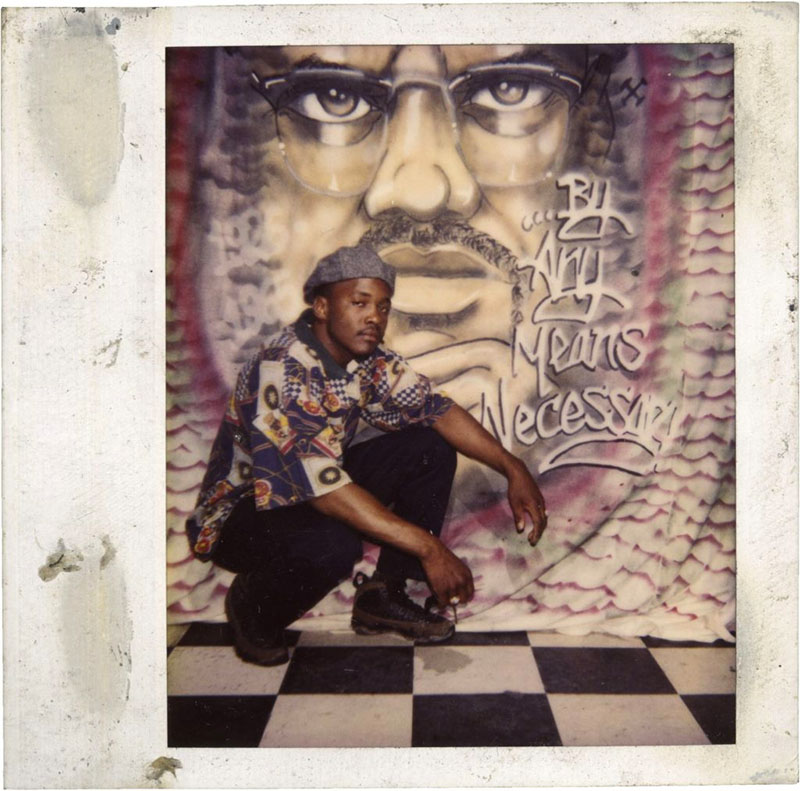
For more than three decades, Selwhyn Sthaddeus “Polo Silk” Terrell (American, born 1964) has been photographing Black New Orleans, creating a unique body of work that blends elements of portraiture, fashion, performance, and street photography. This exhibition explores how Polo Silk successfully blends all of those elements, while illustrating his role as an important part of photographic history.

Polo Silk mobilized the traditional portrait studio, taking it to the streets and clubs of New Orleans and transforming it into an adaptable, on-the-spot method of picture making. In the course of his career, Polo perfected the use of instant-photo technology, making dynamic, one of a kind portraits that capitalized on the vibrant color range and immediacy that is a hallmark of Polaroid and other instant films. Sold on demand to clients who wanted a record of an event like Super Sunday, or to show off their carefully planned outfit on any given Saturday night, Polo’s pictures have become an integral part of how many Black New Orleanians have used photography to represent themselves.

Polo’s pictures are often taken in front of the colorful airbrushed backdrops painted by his cousin Otis Spears (American, born 1969) that feature figures from hip-hop and bounce music, fashion brands, sports logos, and the hot songs of the day. In bringing photography out of the studio and directly to the people, Polo made it a truly accessible phenomenon. While traditional portrait photographs were often designed to appear timeless and placeless, Polo’s pictures are absolutely fixed in time, and rooted in New Orleans. Together, Polo and his subjects have created one of the most important visual archives of this time and place, an important set of pictures that highlight Black expression, individuality, and ultimately, a collective community identity.
Our printed edition showcases the winners of AAP Magazine call of entries
All About Photo Magazine
Issue #54
Stay up-to-date  with call for entries, deadlines and other news about exhibitions, galleries, publications, & special events.

Exhibitions Closing Soon

Evidence II
Gail Severn Gallery | Ketchum, ID
From February 27, 2026 to April 02, 2026
Evidence II is presented from February 27 through April 2, 2026 at Gail Severn Gallery, bringing together large-format photographs by Laura McPhee and Luis González Palma. Though distinct in subject and atmosphere, their works share a quiet investigation of the traces left by human presence. Landscapes, portraits, and fragments of everyday life reveal how memory, history, and environment intertwine, creating images that invite contemplation rather than quick conclusions. McPhee’s photographs consider the land as a layered record of time. Working primarily in the deserts and remote regions of the American West, she documents environments where geological processes and human intervention intersect. Rivers carve slow pathways through ancient rock while mines, roads, and scattered objects testify to more recent histories. With the clarity of large-format photography, her images reveal minute details: rusted machinery, fragments of glass, discarded toys, and other remnants that quietly narrate stories of labor, settlement, and abandonment. These scenes function as visual chronicles of how landscapes absorb and reflect human ambition, resilience, and ecological consequence. In contrast, González Palma turns his attention toward the human face. His portraits, often rooted in the cultural history of Guatemala, possess a meditative stillness that emphasizes gaze and presence. Faces appear luminous against darkened backgrounds, suggesting both intimacy and mystery. For the artist, the act of looking becomes a psychological exchange in which viewer and subject confront one another across time and experience. Through subtle tonal variations and carefully constructed compositions, the photographs explore themes of identity, memory, and the enduring weight of social and political histories. Seen together, the works in Evidence II form a dialogue between place and person. McPhee’s landscapes reveal environments marked by human action, while González Palma’s portraits reflect the inner worlds shaped by culture and history. Both approaches consider what photographs hold beyond the visible surface: gestures, absences, and unresolved narratives that linger long after the shutter closes. Image: Laura McPhee Evening (Bent Lodgepole), Fourth of July Creek Canyon, Custer County, Idaho, 2011 1/5 Archival pigment print © Laura McPhee
Dean Majd: Hard Feelings
Baxter Street | New York, NY
From February 04, 2026 to April 02, 2026
Dean Majd: Hard Feelings, presented at BAXTER ST at the Camera Club of New York from February 4 to April 2, 2026, marks the debut solo exhibition of Queens-based, Palestinian-American artist Dean Majd. Rooted in lived experience and personal loss, the exhibition unfolds as an intimate meditation on friendship, grief, and masculinity. What begins as a response to the sudden death of a childhood friend evolves into a profound visual archive of a tightly knit circle navigating pain, loyalty, and survival within the ever-shifting landscape of New York City. Photographed largely at night using point-and-shoot cameras, Majd’s images move fluidly between moments of tenderness and confrontation. The work captures rituals of belonging alongside flashes of volatility, revealing masculinity not as a fixed posture but as a fragile, emotional state shaped by trauma and love. Majd’s camera does not observe from a distance; it participates. As trust deepens, the boundary between artist, subject, and witness collapses, allowing moments of raw vulnerability to surface without spectacle or judgment. Drawing on the visual gravity of Baroque tenebrism, Majd employs deep shadows and sudden illumination to heighten emotional intensity. This interplay of darkness and light mirrors the psychological terrain of the images themselves, where violence and care coexist. His approach aligns with a diaristic photographic tradition that favors proximity and emotional risk over detached documentation. The result is a body of work that resists romanticization while remaining deeply compassionate, shaped by empathy rather than voyeurism. Created across years marked by personal upheaval and the collective rupture of the COVID-19 pandemic, Hard Feelings mythologizes everyday lives often overlooked or misunderstood. Scars, bruises, and exhaustion become quiet testaments to endurance, while moments of connection suggest the possibility of healing. Majd’s photographs insist on presence—on seeing fully—and offer space for emotions typically suppressed in the name of survival. In doing so, the exhibition becomes both an elegy and an offering: a call to confront pain honestly, and to recognize vulnerability as an essential act of humanity. Image: © Dean Majd
Zainab Aliyu: A litany for past suns
Baxter Street | New York, NY
From February 04, 2026 to April 02, 2026
Zainab Aliyu: A litany for past suns, on view at BAXTER ST at the Camera Club of New York from February 4 to April 2, 2026, presents a deeply considered meditation on memory, technology, and the fragile architecture of archives. Through reimagined stereographic images and an immersive installation, Aliyu interrogates how systems designed to preserve knowledge often distort or silence lived experience, particularly within Black communal and familial histories. The exhibition unfolds as both an act of remembrance and a refusal of inherited modes of seeing. Drawing from photographs found in her late grandmother’s home in Nigeria alongside images shared by members of a wider community, Aliyu creates paired works that resist linear narratives. Historically rooted in colonial observation, stereoscopy is reclaimed here as a relational tool, linking images across generations, geographies, and emotional registers. Viewers are asked to lean in, to look slowly and attentively, countering the distant, extractive gaze that has long shaped photographic archives. In this closeness, gaps in memory and meaning become palpable rather than resolved. The exhibition space itself echoes domestic interiors shaped by absence and recollection. Everyday materials—rugs, curtains, fragments of gates, cupboards, and jewelry—appear subtly displaced, their familiar functions interrupted. Earth-toned surfaces and patterned floors evoke kitchens, courtyards, and studio backdrops, while symbolic motifs frame access as something negotiated rather than granted. These spatial gestures extend stereoscopy beyond images, encouraging movement through memory as a layered, bodily experience. Aliyu’s engagement with technology is equally critical and intimate. Early experiments with computational sorting and automated captions revealed the inability of such systems to register emotional depth or historical nuance. Rather than discarding these failures, she incorporates them, allowing misreadings and erasures to surface alongside speculative texts drawn from oral history and personal recollection. This tension stages a dialogue between machine logic and embodied knowledge, underscoring the limits of technological objectivity. Grounded in a lineage of Black feminist archival thought, A litany for past suns offers no definitive record. Instead, it affirms memory as porous, contested, and alive. The exhibition becomes a quiet invocation—honoring what has been lost, questioning how it has been framed, and inviting viewers to imagine futures shaped by care, attention, and shared responsibility. Image: © Zainab Aliyu
Franka Gabler: Echoes of Nature
Viewpoint Photographic Art Center | Sacramento, CA
From March 11, 2026 to April 04, 2026
Franka Gabler: Echoes of Nature, on view from March 11 to April 4, 2026 at the Main Gallery of the Viewpoint Photographic Art Center in Sacramento, invites visitors into the quiet, reflective spaces of the natural world through the lens of award-winning landscape photographer Franka Gabler. Her work is less about sweeping panoramas and more about the intimate details, subtle moods, and fleeting moments that reveal the essence of a place. Gabler’s photographs capture the lingering impressions left by the natural world—the soft haze of a misty morning, the delicate interplay of light and shadow on a snow-laden forest floor, or the quiet stillness of a lakeshore at dusk. These are moments that calm the mind, steady the breath, and evoke a sense of connection to the rhythms of the environment. In her approach, intuition guides the eye: she follows what calls to her, allowing the subtle and overlooked to emerge as subjects of quiet power and beauty. Born in Croatia and now residing in California’s Sierra Nevada foothills near Yosemite, Gabler has spent decades exploring the interplay between light, atmosphere, and emotional resonance in the landscape. Her work often balances abstraction and documentation, presenting scenes that are at once specific and universal, intimate yet expansive. Whether in color or black-and-white, her images convey mood, depth, and the sensory experience of being present in nature. Recognized internationally for her contributions to landscape photography, Gabler has received top awards including the 2022 Landscape Photography World Awards overall prize and accolades from the Natural Landscape Photography Awards. Her portfolio “Expressive Yosemite” was featured in Lens Work Photography Magazine, reflecting her ability to translate the Sierra’s fleeting moments into lasting, meditative experiences. Echoes of Nature offers viewers a chance to slow down, witness the quiet poetry of natural spaces, and reconnect with the inner landscapes shaped by time spent outdoors. Gabler’s work reminds us that even the briefest encounters with nature can leave enduring impressions that inspire reflection, balance, and wonder. Image: © Franka Gabler
Mary Enoch Elizabeth Baxter: Epilogues of the Black Madonna
The Print Center | Philadelphia, PA
From January 23, 2026 to April 04, 2026
Mary Enoch Elizabeth Baxter: Epilogues of the Black Madonna, on view at The Print Center from January 23 to April 4, 2026, marks a significant homecoming for the Philadelphia-based artist. This exhibition extends Baxter’s acclaimed photographic series Consecration to Mary into a richly layered installation that merges photography, sculpture, and devotional architecture. Drawing from Christian ritual objects, medieval Marian imagery, and early photographic practices, the exhibition transforms the gallery into a contemplative space where history, memory, and resistance converge. At the heart of Baxter’s practice is a careful reckoning with the visual legacy of representation and power. Her work responds to 19th-century photographs by Thomas Eakins that depict an unidentified Black girl, images now widely recognized as exploitative and deeply troubling. Baxter intervenes in this historical violence by inserting her own body into the frame, positioning herself as both witness and protector. Through this act, she reframes the narrative, rejecting the harmful mischaracterizations of Black girlhood that have long persisted in Western art and social structures. The exhibition’s physical arrangement reinforces its conceptual intent. Daguerreotypes are displayed within prayer kneelers that double as vitrines, inviting viewers into a posture of reflection rather than passive observation. Nearby, large-scale self-portraits form a triptych reminiscent of medieval altarpieces, aligning personal testimony with sacred tradition. This blending of formats underscores Baxter’s interest in devotion as an ethical stance—one rooted in care, refusal, and endurance rather than sacrifice or martyrdom. Grounded in Black feminist thought and transformative justice, Epilogues of the Black Madonna proposes art-making as a practice of protection and repair. Baxter reimagines the Black Madonna not as a distant symbol, but as an active guardian whose presence challenges inherited narratives of harm. Through reverent gestures and deliberate reconfiguration of history, the exhibition opens space for collective healing, remembrance, and the reclamation of sanctity for Black girlhood. Images: Mary Enoch Elizabeth Baxter, Consecration to Mary, from the series of the same name, 2021-present, digital print on metallic paper in a velour, leather and metal frame © Mary Enoch Elizabeth Baxter
Nasim Moghadam: And Yet, We See
SF Camerawork | San Francisco, CA
From January 21, 2026 to April 04, 2026
SF Camerawork presents Nasim Moghadam: And Yet, We See, an exhibition that transforms acts of looking into gestures of resistance. Installed as a series of sculptural and photographic environments, the work confronts the mechanisms through which power controls visibility, particularly in relation to women’s bodies and voices. Moghadam does not treat photography as a fixed image but as a material language—one that can be carried, fragmented, and reassembled to challenge erasure and reclaim agency. At the heart of the exhibition is a sustained response to the 2022 Iranian protests and the survivors who were blinded by state violence. In Fallen Eyes, images of their eyes are transferred onto magnolia leaves gathered and prepared by hand. As the leaves dry and curl, they retain these gazes, creating an installation that is both fragile and unyielding. Nature becomes a witness, and the collective field of eyes returns the look, reversing the direction of power and refusing disappearance. Questions of visibility continue in Black Bars, a series of veiled self-portraits in which Moghadam places her own body at stake. Layers of fabric obscure her face, not as an act of concealment imposed from outside, but as a choice that asserts control over what can and cannot be seen. The veil functions as a surface of transformation, complicating assumptions about exposure, legibility, and identity. Looking here becomes an ethical encounter rather than a consumptive act. In Noose, Moghadam confronts the physical and psychological threat of oppression through a fabric-based installation incorporating women’s hair and black textiles. What might read as a symbol of violence is reconfigured into a space of mourning, solidarity, and vigilance. Grief is acknowledged without surrender, and vulnerability is held alongside resilience. Throughout And Yet, We See, Moghadam dismantles the imperial gaze by insisting that vision is reciprocal. Her works occupy the space between refuge and exposure, echoing strategies of survival shaped under surveillance. In returning the gaze, the exhibition affirms that to see—and to insist on being seen—is an enduring act of courage. Image: © Nasim Moghadam
Migration Patterns: Brandon Ruffin
Leica Gallery San Francisco | San Francisco, CA
From January 26, 2026 to April 04, 2026
Migration Patterns: Brandon Ruffin, presented from January 26 to April 4, 2026 at the Gallery at Leica Store San Francisco, marks Brandon Ruffin’s first solo exhibition at the space. The project unfolds as a quiet yet resonant reflection on the enduring presence of Southern Black culture in Northern California, tracing how histories of movement continue to shape identity, place, and belonging in cities such as Oakland, San Francisco, and Richmond. Rooted in Ruffin’s own family lineage, the work draws from the legacy of the Great Migration, when generations of Black Americans journeyed west carrying language, customs, faith, and memory with them. Rather than presenting a linear historical narrative, Migration Patterns moves poetically, allowing culture to surface through gesture, atmosphere, and lived experience. The exhibition is accompanied by a poem and critical writing that frame the images as a lyrical meditation on home—how it is formed, remembered, and redefined over time. Throughout the series, Ruffin explores a subtle tension between arrival and departure, life and loss. Moments of stillness—both celebratory and mournful—invite viewers to consider migration not only as a physical act, but as a spiritual passage. The photographs linger in spaces where memory resides: in quiet rooms, communal rituals, and fleeting expressions that suggest what endures even as communities evolve. Ruffin’s use of light and color creates an emotional cadence, echoing the rhythms of transition and resilience. Based in Oakland, Brandon Ruffin is a multidisciplinary artist working across photography and film, known for visual storytelling that examines identity and collective experience. His practice bridges personal reflection with communal history, offering images that function as both testimony and mirror. In Migration Patterns, Ruffin contributes a thoughtful voice to contemporary Black photography, honoring lineage while embracing the responsibility of carrying cultural stories forward with care, sensitivity, and imagination. Image: Sunny, 2023 © Brandon Ruffin
Wendell Minshew: Vignettes
Viewpoint Photographic Art Center | Sacramento, CA
From March 11, 2026 to April 04, 2026
Wendell Minshew: Vignettes, presented from March 11 to April 4, 2026 in the Step Up Gallery at Viewpoint Photographic Art Center, invites viewers into a series of quiet, concentrated encounters. Each work offers a fragment—an isolated moment drawn from a broader architectural and cultural landscape—where small visual stories emerge from the surrounding noise of the world. These images do not aim to describe entire places, but rather to distill their essence through intimacy and restraint. Created during and following the pandemic, this body of work reflects a period of slowed observation and material exploration. Minshew turned inward, experimenting with alternative printing surfaces and processes that could hold both fragility and depth. Translucent vellum, parchment, and tracing tissue become active participants in the image, not merely supports. Gilded with whisper-thin layers of gold, silver, copper, and aluminum leaf, the prints glow subtly, transforming familiar man-made structures into meditative visual objects suspended between presence and memory. The small scale of the photographs encourages close viewing. Warm-toned black-and-white imagery emphasizes line, geometry, and tonal nuance, while white gold leaf applied to the reverse side of the vellum introduces reflected light that shifts as the viewer moves. Without glazing to separate image from observer, the works respond to changing angles and ambient light, creating a dynamic viewing experience that feels almost tactile. Each piece becomes less a fixed photograph and more a living surface, shaped by time, motion, and perception. Minshew’s decades-long engagement with photographic printmaking is evident in the precision and confidence of these works. Drawing from a deep knowledge of both historical and experimental processes, he bridges traditional craftsmanship with contemporary curiosity. His images carry the weight of experience while remaining open, exploratory, and quietly innovative—proof that mastery can coexist with ongoing discovery. Vignettes ultimately asks viewers to slow down and look closely. In these modestly scaled, carefully constructed works, light becomes narrative and surface becomes space. What at first appears minimal unfolds into something richly layered, offering moments of contemplation where the ordinary is transformed into something quietly luminous and enduring. Image: © Wendell Minshew
Cary Silverman: The Antisocialization Project
Viewpoint Photographic Art Center | Sacramento, CA
From March 11, 2026 to April 04, 2026
Cary Silverman: The Antisocialization Project, on view from March 11 to April 4, 2026 in the Main Gallery at Viewpoint Photographic Art Center, presents a quietly unsettling portrait of contemporary social life. Through a series of black-and-white photographs made in public and communal spaces, Silverman captures moments where people are physically together yet emotionally elsewhere, absorbed by glowing screens rather than the human presence beside them. The images reveal a transformation so gradual it has become nearly invisible. Friends share tables without conversation, families sit together in practiced silence, and couples occupy the same space while living parallel digital lives. These scenes feel familiar, even mundane, yet collectively they point to a deeper shift in how attention, intimacy, and connection are negotiated today. The photographs do not condemn; instead, they observe with clarity and restraint, allowing viewers to recognize themselves within these moments of distracted togetherness. Working exclusively in black and white, Silverman strips away visual excess to focus on gesture, posture, and distance. A bowed head, a glowing phone reflected in a face, the empty space between bodies—these subtle details become the emotional core of the work. Without color to soften or distract, the images emphasize the tension between proximity and isolation, revealing how easily presence can be replaced by perpetual elsewhere-ness in the digital age. Silverman’s dual life as a physician and photographer informs his approach. As an ophthalmologist, he is dedicated to restoring physical vision; as an artist, he turns his attention to what we choose not to see. His camera becomes a diagnostic tool, examining habits that shape modern relationships and social instincts. Each photograph feels precise and deliberate, guided by patience, observation, and an understanding of human behavior. The Antisocialization Project ultimately functions as both documentation and invitation. It asks viewers to pause, to notice their own reflexes, and to consider what is lost when attention drifts away from the immediate and the real. In these quiet, unguarded scenes, Silverman offers a mirror of contemporary life—and a gentle reminder of the power and vulnerability of genuine human connection. Image: © Cary Silverman
Martine Gutierrez: Lottery
RYAN LEE | New York, NY
From February 26, 2026 to April 04, 2026
From February 26 to April 4, 2026, RYAN LEE presents Lottery, an exhibition of photographs and a video installation by Martine Gutierrez that pushes her ongoing inquiry into authorship, identity, and spectacle into volatile new terrain. Known for constructing elaborate self-portraits in which she performs every role—from model to director to brand—Gutierrez here dismantles her own command of the image, placing herself at the mercy of chance and the crowd. The project originated as a live performance at Paris Photo, staged at the Grand Palais on November 15, 2025. Drawing inspiration from the radical gestures of 1970s feminist performance art, Gutierrez transformed the photo shoot into a participatory theater of power. Audience members holding randomly selected numbers were invited to direct her portrait sessions. Each “winner” assumed total authority: pose, expression, framing, implication. Gutierrez complied without negotiation, exposing the mechanics of control that often remain invisible in both art production and everyday image culture. The event was halted after sixty minutes out of concern for the artist’s safety, a decision that underscored the work’s central tension. What begins as playful delegation quickly reveals the fragility of consent and the thin line between collaboration and coercion. In relinquishing authorship, Gutierrez tests the limits of spectatorship—who looks, who commands, and who bears the consequences of representation. The resulting 755 photographs form an archive of unpredictable desire and projection. From this mass of imagery, Gutierrez selected sixteen works for the exhibition, reframing them within the controlled space of the gallery. The accompanying video installation reconstructs a fleeting, restricted environment, serving as both prologue and counterpoint to the photographs. Together, they examine how systems of chance mirror broader structures of power. In Lottery, Gutierrez wagers her own image to reveal how easily authority shifts hands—and how urgently it must be questioned. Image: Martine Gutierrez Lottery, image 635, “Can you run,” from The Lottery, 2026 © Martine Gutierrez, Courtesy of the Monroe Gallery of Photography
Larry Clark & James Gilroy: Bedtime Stories for Bad Boys and Girls
Dashwood Projects | New York, NY
From March 25, 2026 to April 04, 2026
Bedtime Stories for Bad Boys and Girls at Dashwood Projects unfolds as a raw and unfiltered journey through memory, friendship, and excess. Presented from March 25 to April 4, 2026, the exhibition brings together photographs by Larry Clark and drawings by James Gilroy, forming a layered narrative that drifts between image and recollection. Rooted in decades of shared experience, the project captures the restless energy of lives shaped by risk, experimentation, and a refusal of restraint. Clark’s photographs carry the immediacy and confrontational honesty that define his practice. Known for chronicling youth culture and its entanglements with desire, addiction, and rebellion, his images here feel less like documentation and more like fragments pulled from a lived intensity. Paired with Gilroy’s drawings—loose, expressive, and often darkly humorous—the exhibition creates a visual rhythm that echoes the unpredictability of the stories themselves. Together, they construct a space where memory does not settle but continues to shift and distort. At the core of the project lies a series of spoken stories, recalled in a single sitting and preserved in their original, unpolished form. These narratives move across decades, from the postwar years into the turbulent atmosphere of 1970s downtown New York. Rather than smoothing over time, the exhibition embraces its inconsistencies, allowing contradictions and exaggerations to coexist. The result feels closer to oral history than autobiography, where truth emerges through repetition, embellishment, and the act of telling itself. There is a sense of humor running through Bedtime Stories for Bad Boys and Girls, though it remains inseparable from moments of danger and vulnerability. The work lingers in the space between recklessness and reflection, where youthful bravado meets the weight of experience. In revisiting these stories, Clark and Gilroy do not attempt to resolve the past; instead, they animate it, allowing its chaos, intimacy, and absurdity to remain vividly present. Image: © Larry Clark, Image courtesy of Luhring Augustine
Ideas of Africa: Portraiture and Political Imagination
The Museum of Modern Art - MoMA | New York, NY
From December 14, 2024 to April 04, 2026
Can a photographic portrait inspire political imagination? Ideas of Africa: Portraiture and Political Imagination examines how photographers and their sitters contributed to the proliferation of Pan-African solidarity during the mid-20th century. Embracing the international spirit of the time, the exhibition gathers striking pictures by photographers working in Central and West African cities. They created images of everyday citizens, dazzling music scenes, and potent manifestations of youth culture that reflected emerging political realities. Photographs by Jean Depara, Seydou Keïta, Malick Sidibé, and Sanlé Sory portray residents across Bamako, Bobo-Dioulasso, and Kinshasa at a time when the winds of decolonial change swept the African continent in tandem with the burgeoning US Civil Rights movement. The exhibition also spotlights James Barnor and Kwame Brathwaite—photographers living in Europe and North America who contributed to the construction of Africa as a political idea. Contemporary works by artists such as Samuel Fosso, Silvia Rosi, and Njideka Akunyili Crosby show the enduring relevance of these themes. Brimming with possibility, Ideas of Africa: Portraits and Political Imagination embraces the creative potential of the photographic portrait and its political resonance across the globe. Image: Sanlé Sory. Traveller (Le Voyageur). 1970–85.
Advertisement
AAP Magazine #56 Shadows
Win a Solo Exhibition in May
AAP Magazine #56 Shadows
Call for Entries
AAP Magazine #56 Shadows
Publish your work in our printed magazine and win $1,000 cash prizes

Related Articles

All About Photo Presents ’Alpine Hiatus’ by Filippo Poli
In Alpine Hiatus: The Snow No Longer Tastes Like Snow, Italian photographer and architect Filippo Poli turns his camera toward a landscape caught between memory and mutation. The project unfolds as both personal archaeology and ecological reflection — an inquiry into what remains when the snow, once a symbol of purity and permanence, becomes an artifact of artifice. Winner of the April 2026 All About Photo Solo Exhibition contest, Poli’s work traces the dissonance between remembrance and reality, offering a haunting meditation on disappearance.
Magnum Square Print Sale in Partnership with The Photographers’ Gallery: Odyssey
Odyssey is more than a journey. It is a search for meaning, a crossing of thresholds, a story of growth and resilience. Bringing together a wide range of work from over 100 photographers, this Square Print Sale traces the paths we take across borders, through memory, and into the unknown. Presented in collaboration with The Photographers’ Gallery, the collection off ers works by artists including Martin Parr, Daidō Moriyama, Eve Arnold, Nadav Kander, Steve McCurry, Juno Calypso, Karen Knorr and more.
Elements of Wonder: When Nature Becomes Art by Jon McCormack
To coincide with Earth Day, CENTER, the nonprofit photography organization based in Santa Fe, NM, presents Elements of Wonder: When Nature Becomes Art, a photographic exhibition by Jon McCormack. The exhibition will be on view at CENTER from April 17 through May 17, 2026, with an Opening Reception on Friday, April 17, 5:00 – 7:00 PM, and an Artist Talk on April 30, from 5:30 – 6:30 PM (MT).
Gordon Parks: The South in Color
Jackson Fine Art is delighted to announce our spring exhibition Gordon Parks: The South in Color organized in partnership with The Gordon Parks Foundation. The exhibition is timed to commemorate two important milestones - the 70th anniversary of the landmark publication of Parks’ images of the segregated South in Life magazine and the 20th anniversary of the founding of The Gordon Parks Foundation. The South in Color will present more than thirty photographs from the artist’s Segregation Story series and debut a brand-new portfolio published by the Foundation. The exhibition brings together many of Parks’ images not previously shown in the gallery, alongside some of his most recognized such as At Segregated Drinking Fountain, Mobile, Alabama, to offer a fresh look at the series, and deepen its emotional and historical resonance.
Marilyn Stafford, Lee Miller, Colin Jones for UNSEEN at Art Rotterdam
The Albumen Gallery programme for UNSEEN at Art Rotterdam 2026 brings together three iconic names of mid-20th century photography. At a first glance the works of Marilyn Stafford, Lee Miller and Colin Jones cover quite a wide spectrum of photography. Notwithstanding that there are shared aspects across their respective bodies of work that invite interesting comparison with respect to thematic and artistic approach.
Circulation(s) Festival of young European photography
For its sixteenth edition, the Circulation(s) Festival continues to champion emerging European photography and its intersections with contemporary art. Founded in 2009 at the CENTQUATRE-PARIS, the festival has grown into a key platform for young creators, highlighting plural perspectives and experimental practices.
Colour Me Modern: Claire Aho and the New Woman
Colour Me Modern: Claire Aho and the New Woman, celebrates the vibrant photography of the pioneering Finnish artist, Claire Aho (1925-2015) who brought wit, colour and cinematic flair to postwar image-making across her work in fashion, advertising and editorial. Presented by Hundred Heroines, the UK’s only museum dedicated to women in photography, this free exhibition, split over two sites, highlights how Aho, known as ‘the Grand Old Lady of Finnish Photography,’ helped shape a new visual language for Finland, presenting confi dent, contemporary women and transforming everyday scenes into carefully staged moments of style.
Fragilities & Resilience by Thibault Gerbaldi at the Jardin du Luxembourg
From March 21 to July 19, 2026, the French Senate will host Fragilities & Resilience, the first solo exhibition in France of internationally acclaimed photographer Thibault Gerbaldi. Presented outdoors on the iconic grilles of the Jardin du Luxembourg in Paris 6ème, the exhibition features 80 striking photographs captured across five continents, offering a breathtaking exploration of the fragile yet enduring connections between humans and nature. Entry is free, making this a rare opportunity for the public to experience Gerbaldi’s work on a monumental scale.
All About Photo Presents ’ Civilization’ by Damien Aubin
In Civilization, Damien Aubin turns his lens toward environments shaped not by nature, but by ambition. These are places engineered at a scale that exceeds the individual — infrastructures, industrial complexes, vast architectural systems that dwarf the human body and often eclipse it entirely. There are no protagonists here. No narratives unfolding in real time. Instead, Aubin photographs what remains when activity recedes: structures that continue to stand, operate, or simply endure.
Call for Entries
AAP Magazine #56 Shadows
Publish your work in our printed magazine and win $1,000 cash prizes