All about photo.com: photo contests, photography exhibitions, galleries, photographers, books, schools and venues.
FINAL DAYS TO WIN A SOLO EXHIBITION IN MAY 2026

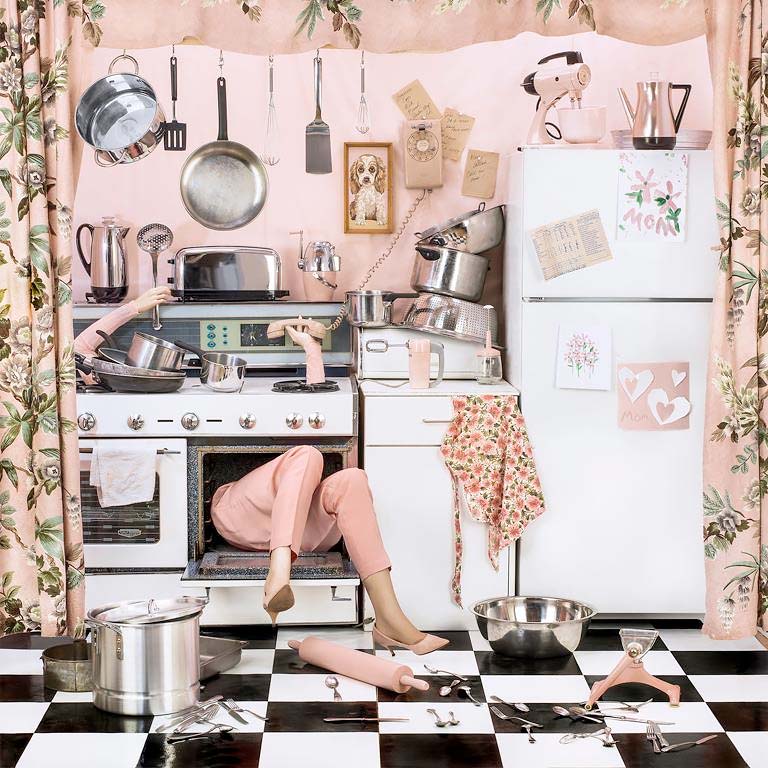
Patty Carroll: Anonymous Women, Domestic Demise

From November 20, 2021 to February 12, 2022
Share
Patty Carroll: Anonymous Women, Domestic Demise
154 Glass St. #104
Dallas, TX 75207
PDNB Gallery features two solo exhibitions by gallery artists, Patty Carroll and Bill Owens. This will be the first solo show for Patty Carroll, who is based in Chicago, Illinois.

In recent years, Patty Carroll (b. 1946, Chicago, Illinois) has explored the traditional and contemporary “housewife" role, by creating scenes of exaggerated chaos that often consumes the subject, which is a woman. Pots and pans, shoes and flowers, excessively colorful drapery, cakes and pies, 1950's furniture and decorative objects overwhelm the female subject in the scene. The series is appropriately titled, Anonymous Women: Domestic Demise. Patty states, "She is both a victim of her obsessions, activities and circumstances as well as the invisible creator of such; both satisfying and problematic, pathetic and humorous."

The images are mostly humorous, but sometimes terrifying. Overall, we reflect on the past and current defined roles of the Suburban woman.
Our printed edition showcases the winners of AAP Magazine call of entries
All About Photo Magazine
Issue #55
Stay up-to-date  with call for entries, deadlines and other news about exhibitions, galleries, publications, & special events.

Exhibitions Closing Soon

Family Forms
Tang Museum | Saratoga Springs, NY
From November 15, 2025 to April 12, 2026
Family Forms, presented in the Winter Gallery at the Tang Museum from November 15, 2025 through April 12, 2026, brings together art and archival photography to consider one of the most intimate and enduring structures of human life: the family. Drawing largely from the museum’s own holdings, the exhibition reflects on kinship, caregiving, and belonging, inviting visitors to look beyond convention and recognize the many ways people come together to create support systems and shared histories. While the nuclear household has long dominated American cultural narratives, the works assembled here propose a broader and more nuanced understanding. Photographs by artists such as Milton Rogovin and Mike Disfarmer capture multigenerational bonds and working-class resilience, emphasizing continuity across time. In contrast, staged and conceptual approaches by Laurie Simmons and Yinka Shonibare CBE probe the constructed nature of domestic ideals, revealing how identity, race, gender, and power shape the image of family in both subtle and overt ways. The exhibition also highlights collaborative and collective practices. Works by For Freedoms underscore the political dimensions of care and community, while projects by Jesse Freidin foreground chosen families and LGBTQ+ kinship networks. Historical materials, including pieces by the mid-century collective PaJaMa, situate contemporary conversations within a longer lineage of artists who have reimagined domestic space as a site of experimentation and solidarity. Curated by Corinne Moss-Racusin, Skidmore Professor of Psychology, alongside Rebecca McNamara, the Frances Young Tang ’61 Associate Curator, Family Forms bridges scholarship and visual culture. By placing documentary images, vernacular photographs, and contemporary artworks in dialogue, the exhibition encourages reflection on how families are shaped—by choice, by circumstance, and by care—and how these evolving forms continue to define personal and collective experience. Image: contributors: Stanley Acosta ’27, Unrecorded artist, title unknown, 1970. This photograph shows a very quiet yet powerful moment. A Black newly married couple’s closeness, matching outfits, and casual attitude draw the audience into the private moment of two people who are just about to start their lives together. The image seems to be simple, but it also gives the opportunity to think more deeply about the concepts of place and belonging. In the 1970s, towns with the name Stillwater were, for the most part, inhabited by White people and thus this couple and their home take on a greater significance. They may have faced hardships in building a stable life in a neighborhood where daily life could be determined by race or class barriers both visible and hidden. The living room is no longer just a setting; it is proof of strength, pride, and silent persistence in the struggle to create a life in an area that might have been discriminatory. Psychological studies on social justice tell us that family life has the power to shield people from discriminatory stress, but, at the same time, social boundaries can have great influence on daily life. The couple’s love story may be one such case. Their apparent bond implies emotional stabilization and assistance while the environment (Stillwater) drives us to think about how families cope with racially segregated places and assert their right of belonging there. The photograph does not provide one unambiguous meaning, however: in what ways does this scene reflect on the interplay of love, home, and identity within the world of social inequality?
Site Lines: Photographing Historic Spaces
Minneapolis Institute of Arts | Minneapolis, MN
From November 15, 2025 to April 12, 2026
Photography has long served as a bridge between place and memory, offering a way to both record and interpret the spaces that define human history. When capturing a landmark, a photographer might move in close to isolate a single detail—the texture of a wall, the curve of a column—or step back to encompass the vastness of a landscape. Sometimes a figure is included, giving scale and human presence to the monumental. Each choice reflects a way of seeing, a dialogue between the photographer, the subject, and the viewer. Site Lines: Photographing Historic Spaces draws entirely from Mia’s collection and traces how artists from the 19th century to the present have approached the documentation of historical sites. Through a range of techniques, from early albumen prints to contemporary digital compositions, these works reveal how photographers have shaped our understanding of built environments—those spaces that carry the weight of time, culture, and memory. The exhibition underscores how photography does more than preserve a site; it interprets it. A photograph can emphasize grandeur or decay, permanence or transformation. It can highlight human craftsmanship or the slow reclaiming power of nature. Across regions and eras, certain visual languages emerge—shared ways of framing, composing, and revealing—that transcend borders. These images, taken together, suggest that the act of photographing historic spaces is as much about perception as preservation. By inviting viewers to look closely at these images, Site Lines offers an opportunity to reconsider how photography participates in shaping the stories we tell about place and history. Each photograph stands not only as a record of architecture or geography, but as a meditation on time itself—how we remember, reinterpret, and remain connected to the traces of our shared past. Image: Francis Frith, British, 1822–1898. The Great Pyramid and the Great Sphinx, Egypt, 1858. Mammoth albumen print. Minneapolis Institute of Art, The Alfred and Ingrid Lenz Harrison Fund. 2004.24
Boren Banner Series: Camille Trautman
Frye Art Museum | Seattle, WA
From October 15, 2025 to April 12, 2026
Every photograph carries with it a decision—what to include, what to exclude, and how to shape what is seen. In their first solo museum exhibition in Seattle, Duwamish artist Camille Trautman reclaims that act of framing as a tool of resistance. Through photography and video, Trautman interrogates the ways colonial narratives have obscured Indigenous presence, offering instead images that assert identity, memory, and visibility. The exhibition centers on selections from Trautman’s ongoing series The North American LCD, a haunting body of work that merges the personal and the political. Each photograph presents a spectral self-portrait of the artist set within varied natural landscapes. Their form—partially hidden behind luminous LCD screens—speaks to the tension between self-revelation and concealment, a reflection of the artist’s journey through gender transition and self-recognition. In these works, the screen becomes both barrier and mirror, a metaphor for how technology and representation can simultaneously empower and distort. Trautman’s images challenge the conventions of landscape photography, exposing how the genre has long served as a colonial tool while offering new ways to envision connection with land and self. Part of the Frye Art Museum’s Boren Banner Series, this exhibition extends Trautman’s practice beyond the gallery walls. A monumental 16-by-20-foot vinyl banner faces Boren Avenue, transforming public space into a site of encounter and reflection. This gesture, emblematic of the museum’s ongoing support for Pacific Northwest artists, brings Trautman’s work into dialogue with the urban landscape of their hometown. In The North American LCD, the act of framing becomes a form of reclamation—a way to rewrite visibility on one’s own terms. Through layered imagery and embodied presence, Camille Trautman invites viewers to consider how identity, land, and history intertwine within the ever-shifting lens of representation. Image: Camille Trautman. The North American LCD no. 26, 2025. Archival pigment print. 30 x 40 in. Courtesy of the artist
How to Be a Guerrilla Girl
J. Paul Getty Museum | Los Angeles, CA
From November 18, 2025 to April 12, 2026
How to Be a Guerrilla Girl offers an unprecedented look inside one of the most influential and enduring feminist art collectives of the past four decades. Presented by the Getty Research Institute, the exhibition reveals both the process and the purpose behind the Guerrilla Girls’ unmistakable blend of activism, humor, and design. Drawing from the group’s extensive archive, it reconstructs the behind-the-scenes methods that fueled their iconic posters and public campaigns—works that continue to challenge gender and racial inequality across the cultural landscape. Founded in 1985, the Guerrilla Girls emerged at a moment of deep frustration within the art world, when women and artists of color were systematically excluded from exhibitions, collections, and critical discourse. By adopting anonymity and gorilla masks, the collective transformed protest into performance, blending wit and statistics to expose the biases of major institutions. This exhibition situates their most recognizable works—posters, billboards, and flyers—within the broader ecosystem of their practice: data gathering, direct action, and inventive modes of distribution that redefined how art could intervene in public life. The archival materials on view trace the evolution of the group’s voice from early campaigns targeting museum inequities to their later engagements with global politics, media culture, and theater. Drafts, notes, and correspondence reveal a complex collaborative process marked by debate, dissent, and solidarity. Each poster was not only a statement but also the outcome of collective authorship and shared conviction. Coinciding with the Guerrilla Girls’ 40th anniversary, How to Be a Guerrilla Girl celebrates their enduring commitment to truth-telling through satire and resistance. It illuminates how their work, born in protest, has become part of the very history it critiques—reminding viewers that art can still be a mask, a weapon, and a call to action all at once. Image: Overleaf, foreground: Do Women Have To Be Naked To Get Into The Met Museum? (detail), 1989, Offset print; background: Contact Sheets (details), ca. 1987, Gelatin silver prints. Guerrilla Girls (American, active since 1985). Getty Research Institute, 2008.M.14. Courtesy Guerrilla Girls. © Guerrilla Girls. Design © 2025 J. Paul Getty Trust
Bill Bamberger: Boys Will Be Men
Ackland Art Museum | Chapel Hill, NC
From January 30, 2026 to April 12, 2026
Bill Bamberger: Boys Will Be Men offers an intimate and thought-provoking look into the lives of young men standing at the threshold between adolescence and adulthood. Through a series of powerful portraits by Durham-based photographer Bill Bamberger (born 1956), the exhibition captures the uncertainty, vulnerability, and quiet strength of male-identifying high school students as they navigate identity, expectation, and belonging in a rapidly changing world. Complementing the photographs is an audio program featuring the students’ own reflections on the pressures they face, allowing their voices to deepen the visual narrative with honesty and nuance. The project began in 1984 at Deerfield Academy in Massachusetts and continued in 2000 during Bamberger’s residency at Flint Central High School in Michigan. In 2023, the Ackland Art Museum invited the artist to expand the series at the Durham School of the Arts (DSA), marking a significant new chapter in this decades-long exploration. Over two years, Bamberger immersed himself in the school community—photographing students in classrooms, hallways, and extracurricular spaces—building trust and collaboration that shaped the spirit of the project. The resulting portraits are both direct and tender, offering glimpses into the complexities of youth at a time when societal definitions of masculinity are being reexamined. Some subjects appear confident and defiant; others seem introspective, even uncertain—but all are united by an unfiltered authenticity that characterizes Bamberger’s documentary approach. The inclusion of the students’ recorded voices invites visitors to encounter their thoughts and experiences firsthand, transforming the gallery into a space of dialogue and empathy. Bill Bamberger: Boys Will Be Men is not merely a portrait series—it is a meditation on growing up, on what it means to become, and on how photography can help us see one another more clearly in moments of change. Image: Bill Bamberger, American, born 1956, Jorden, 2023, digital photograph. © Bill Bamberger
60 Miles East: Riverside’s Underground Punk Rock, Hardcore & Ska Scene, from the late 1980s to early 2000
Riverside Art Museum | Riverside, CA
From November 01, 2025 to April 12, 2026
60 Miles East: Riverside’s Underground Punk Rock, Hardcore & Ska Scene, from the late 1980s to early 2000, on view at the Riverside Art Museum from November 1, 2025 through April 12, 2026, revisits a fiercely independent chapter in Southern California music history. Set against the backdrop of a rapidly expanding suburb at the edge of open land, the exhibition captures a community that thrived just beyond the dominant pull of Los Angeles and Orange County’s celebrated scenes. Riverside, sixty miles east, cultivated its own sound and identity—unpolished, urgent, and defiantly local. In the late 1980s and throughout the 1990s, the region’s punk, hardcore, and ska bands forged a culture rooted in self-reliance. Shows were organized in modest venues and improvised spaces. Photocopied flyers circulated by hand. Music traveled through cassette tapes, record দোক, and stapled fanzines. Long before digital platforms reshaped promotion and distribution, discovery depended on word of mouth and physical presence. The photographs gathered here echo that immediacy: grainy stages, crowded rooms, bodies in motion, moments seized rather than staged. Distance played a defining role. Close enough to feel the influence of larger metropolitan scenes yet far enough to remain distinct, Riverside embraced its outsider status. The images reveal not only performances but friendships, skate culture, and the everyday rituals that sustained the scene. Faces glow under dim lights; amplifiers tower in tight spaces; audiences press forward with collective intensity. The camera becomes witness to a self-contained ecosystem built on loyalty and shared passion. Curated by Zach Cordner and Ken Crawford—former Riverside Poly High School classmates who later reconnected through Riversider Magazine—the exhibition is both historical record and personal homage. Drawing on decades-old connections and archives, they reconstruct a world defined by energy and commitment. 60 Miles East stands as a testament to a time before algorithms and feeds, when community was forged in garages, small clubs, and late-night drives, and when being sixty miles away meant building something entirely your own. Image: Travis Barker at his original Famous Stars & Straps store in Riverside, 1999, Photo by Zach Cordner. © Zach Cordner
Sinan Tuncay, Sarp Kerem Yavuz: Soft Spaces
Leslie-Lohman Museum of Art | New York, NY
From February 20, 2026 to April 12, 2026
Soft Spaces, on view from February 20 to April 12, 2026, brings together installation works by alumni of the Leslie-Lohman Museum of Art Fellowship, an international and intergenerational program dedicated to centering LGBTQIA+ artists of color. Conceived as an evolving exhibition, the project reflects the Fellowship’s ethos of collective learning, care, and experimentation. Rather than presenting a single narrative, Soft Spaces unfolds as a constellation of voices shaped by mentorship, dialogue, and the shared pursuit of sustainable, self-determined artistic practices. The notion of “softness” here is not synonymous with fragility, but with intention. It points to environments where vulnerability is possible and where process is valued as much as outcome. Across works by 38 artists from the 2019–20, 2020–21, and 2021–22 cohorts, the exhibition foregrounds practices that resist rigidity and fixed identity. Painting, photography, performance, film, digital media, and installation intersect to create spaces that invite pause, reflection, and emotional attunement. These works offer shelter while remaining politically and socially engaged. Within this session, the work of photographer and visual artist Sarp Kerem Yavuz stands out for its incisive engagement with gender, power, religion, and violence. Born in Paris and raised in Istanbul, Yavuz brings a transnational sensibility to his practice, working across photography, neon, projection, and video. His images often balance beauty and unease, using light and symbolism to explore how bodies and beliefs are shaped by cultural and political forces. His presence within Soft Spaces underscores the exhibition’s commitment to complexity rather than comfort alone. Collectively, Soft Spaces proposes softness as a radical strategy. It suggests that care, slowness, and mutual support can be modes of resistance in a world that often demands hardness and speed. By foregrounding process, community, and lived experience, the exhibition affirms art-making as both a personal and communal act. These installations do not seek to resolve tension, but to hold it—creating room for identities, histories, and futures to exist with nuance, dignity, and openness. Image: Sarp Kerem Yavuz, Şefik, 2023. AI-Generated image on Polaroid film, 9 x 9 in. (framed). Collection of the Leslie-Lohman Museum of Art. Museum purchase, O’Neal Fund, 2023.20.3. © Sarp Kerem Yavuz
Broad Strokes 4
Leica Gallery Los Angeles | Los Angeles, CA
From March 05, 2026 to April 13, 2026
Broad Strokes 4 on view at the Leica Gallery Los Angeles from March 5 through April 13, celebrating International Women’s Month with a dynamic gathering of four distinct voices: Mandy Walker, Ruby Bell, Katarina Benzova, and Eva Woolridge. Rather than adhering to a single curatorial thread, the exhibition thrives on contrast—cinematic spectacle alongside intimate portraiture, backstage luminosity beside communal ritual. Together, these artists demonstrate how women continue to redefine visual storytelling across disciplines and generations. Walker, the first woman president of the American Society of Cinematographers, presents still images gathered during global scouting journeys for major motion pictures. Known for her work on films such as Elvis and Hidden Figures, she translates the language of cinema into singular frames. Mountains seen from improbable vantage points, cities alive with movement, and atmospheric horizons reveal how location itself shapes narrative. These photographs are less about production than perception—moments of quiet observation carved from the scale of epic filmmaking. Bell’s series Glow turns to the charged spaces behind the scenes of music videos, fashion editorials, and cultural events. Her lens isolates the shimmer of a subject against enveloping shadow, preserving fleeting instants of anticipation and release. Working fluidly between Los Angeles, New York, and Australia, she captures a contemporary image culture where performance and authenticity constantly intersect. Benzova’s Presence strips portraiture to its essentials through black and white clarity. Long associated with iconic musicians, she moves beyond spectacle here, seeking stillness over celebrity. Each portrait becomes an encounter, grounded in mutual attention rather than persona. Woolridge’s This Is the Sapphic Way pulses with community and defiance. Documenting queer nightlife and intimacy in New York, she frames joy and resistance as inseparable forces. Across the gallery, these varied approaches converge in a shared assertion: photography remains a powerful instrument for claiming space, shaping identity, and honoring lived experience. Image: © Mandy Walker
Landscapes of Wonder: National Parks
Griffin Museum of Photography | Winchester, MA
From January 23, 2026 to April 15, 2026
Landscapes of Wonder: National Parks, on view from January 23 to April 15, 2026, invites viewers into a rich visual meditation on the enduring power of the American landscape. Drawing from a national call that yielded hundreds of submissions, the exhibition brings together a carefully curated selection of photographs that reflect the diversity, scale, and emotional resonance of protected lands across the United States. Presented collectively, these images honor places shaped long before human presence and entrusted to future generations. The exhibition moves through deserts and coastlines, forests and wetlands, mountains and plains, revealing ecosystems that are both familiar and awe-inspiring. National parks have long occupied a central place in the American imagination, standing as symbols of freedom, discovery, and natural abundance. Yet these landscapes are not static backdrops. The photographs reveal subtle traces of time, weather, and seasonal change, reminding us that even the most seemingly immutable terrain is alive and continually evolving. Each artist contributes a distinct way of seeing. Some images emphasize vastness and solitude, using scale to underscore humanity’s smallness within the natural world. Others draw the viewer closer, focusing on intimate details—light on stone, mist in trees, water carving its patient path. Together, the works form a visual dialogue about permanence and fragility, suggesting that wonder and responsibility are inseparable. To admire these places is also to recognize the care required to sustain them. Landscapes of Wonder encourages a slower form of looking, one rooted in observation and respect. In an era defined by speed and constant mediation, the exhibition recalls older traditions of landscape photography that valued patience, craft, and attentiveness to place. At the same time, it speaks forward, urging renewed stewardship of environments that cannot be replicated once lost. These photographs do more than document scenery; they ask viewers to reflect on their own relationship to the land, and to consider how preservation ensures that such wonder endures beyond our own moment in time. Image: © Kylie Harrigan
An Impossibly Normal Life
Colorado Photographic Arts Center CPAC | Denver, CO
From February 27, 2026 to April 18, 2026
An Impossibly Normal Life, on view at the Colorado Photographic Arts Center from February 27 to April 18, 2026, unfolds as a tender visual fiction built from fragments of the past and hopes for a gentler future. In this imagined archive, Matthew Finley constructs an alternate world where queerness is ordinary, unremarkable, and fully embraced—a place where love needs no explanation and family expands with ease rather than resistance. At the heart of the project is the fictional life of Uncle Ken, a character inspired by a late family revelation that arrived decades too late. Rather than revisiting the silence, fear, or erasure that shaped many queer lives in the mid-twentieth century, Finley offers a radical reimagining. Using vintage found snapshots gathered from across the world, he assembles scenes of youthful swagger, intimate friendships, weddings, and quiet domestic moments. These images feel familiar and universal, suggesting that joy was always possible, even if history failed to record it. Finley deepens this invented biography through handwritten letters, ephemera, and subtle interventions into the photographs themselves. Glitter, rhinestones, and hand-applied color animate the images, drawing on the visual language of queer nightlife, drag, and celebration. These embellishments do not overwrite the past; instead, they gently insist on pleasure, visibility, and pride. The work balances humor and sincerity, fantasy and longing, honoring both what was denied and what can still be claimed. Rooted in personal experience, An Impossibly Normal Life speaks broadly to the power of images to heal, revise, and connect. Finley’s practice transforms the archive into a space of care, where chosen stories replace inherited silences. The exhibition invites viewers to imagine how ordinary life might look if acceptance were assumed rather than earned—and how close that world might still be, waiting to be built through empathy, creativity, and love. Image: Mom (bottom right), as a teen, with her family outside Lucca, Italy, 2024, ©Matthew Finley
Parting Gift: Fitting in America
Colorado Photographic Arts Center CPAC | Denver, CO
From February 27, 2026 to April 18, 2026
Parting Gift: Fitting in America, on view at the Colorado Photographic Arts Center from February 27 to April 18, 2026, presents a vivid and quietly radical rethinking of family portraiture. In this ongoing project, Leonard Suryajaya constructs richly staged photographs made between the United States and Indonesia, using the familiar format of the family portrait to examine who is permitted visibility, legitimacy, and care within the American social frame. Shaped by the artist’s own transnational life, the work is sustained through cycles of departure and return. While Suryajaya has settled in the United States, much of his family remains in Indonesia, and the images reflect the effort required to maintain intimacy across borders. Family appears not as a stable or inherited structure, but as something continuously rehearsed and protected—an accumulation of gestures, time, and commitment. Distance becomes a defining presence, underscoring the labor involved in belonging. America, in these photographs, is neither neutral nor symbolic. It operates as a regulating system, structured by immigration law, race, religion, and legal definitions of marriage and kinship. By placing his family in relation to unexpected counterparts—Amish households, gun-owning Americans, neighbors, and chosen family—the artist expands the portrait to include community as an active force. These juxtapositions expose the uneven distribution of recognition and protection, asking whose bonds are affirmed and whose remain provisional. Queerness functions here as both identity and strategy, opening space for alternative models of care that resist fixed hierarchies. Suryajaya’s images are playful, meticulous, and deeply sincere, holding tension between humor and vulnerability. Together, they challenge inherited assumptions about what family should look like and what must be altered, translated, or surrendered to be legible in America. Parting Gift: Fitting in America ultimately invites viewers to reconsider family not as a closed unit, but as an evolving relationship shaped by persistence, negotiation, and love across difference. Image: Diego and Friends from Church, 2024, ©Leonard Suryajaya
Robert Mapplethorpe
Gladstone Gallery New York 24th Street | New York, NY
From March 05, 2026 to April 18, 2026
Robert Mapplethorpe, on view from March 5 through April 18, 2026 at Gladstone Gallery, revisits the powerful visual language of one of the most influential photographers of the late twentieth century. Organized in collaboration with the Robert Mapplethorpe Foundation, the exhibition presents a selection of the artist’s most iconic images in newly produced large-scale prints. Many appear in a striking 60 × 60 inch square format, echoing Mapplethorpe’s long-held fascination with scale and the technical possibilities of photographic printing. Throughout his career, Robert Mapplethorpe pursued a singular balance between classical beauty and provocative subject matter. His photographs combine sculptural precision with an almost obsessive attention to form, light, and tonal contrast. Working primarily with the square format of a Hasselblad camera, he created compositions defined by symmetry, geometry, and dramatic chiaroscuro. The images presented in the exhibition highlight recurring motifs that shaped his work: elegant studies of flowers, classical sculpture, nude bodies, and striking portraits of cultural figures who helped define the creative energy of New York during the 1970s and 1980s. Portraiture played a particularly important role in Mapplethorpe’s practice. His camera captured artists, performers, and musicians with an intensity that blended glamour, intimacy, and theatrical presence. Among the figures he photographed were close collaborators such as Patti Smith, whose iconic portrait later appeared on the cover of the album Horses, and the magnetic performer Grace Jones. These images documented a vibrant cultural moment while reflecting the photographer’s fascination with identity, style, and self-presentation. Mapplethorpe also turned the camera toward himself throughout his life, creating a sequence of self-portraits that range from playful experimentation to solemn confrontation with mortality. In later works, the artist addressed themes of vulnerability and endurance with stark clarity. Alongside these personal images, the exhibition includes some of his most recognizable photographs, including a powerful depiction of a torn American flag illuminated by sunlight—an image that resonates with both beauty and tension. More than three decades after his death, Mapplethorpe’s work continues to shape conversations about photography, aesthetics, and artistic freedom. This exhibition emphasizes the lasting force of his vision, revealing how precision, daring subject matter, and a relentless pursuit of perfection combined to redefine the possibilities of photographic art. Image: Robert Mapplethorpe, Self Portrait, 1980 Silver gelatin print. © Robert Mappplethorpe Foundation
Advertisement
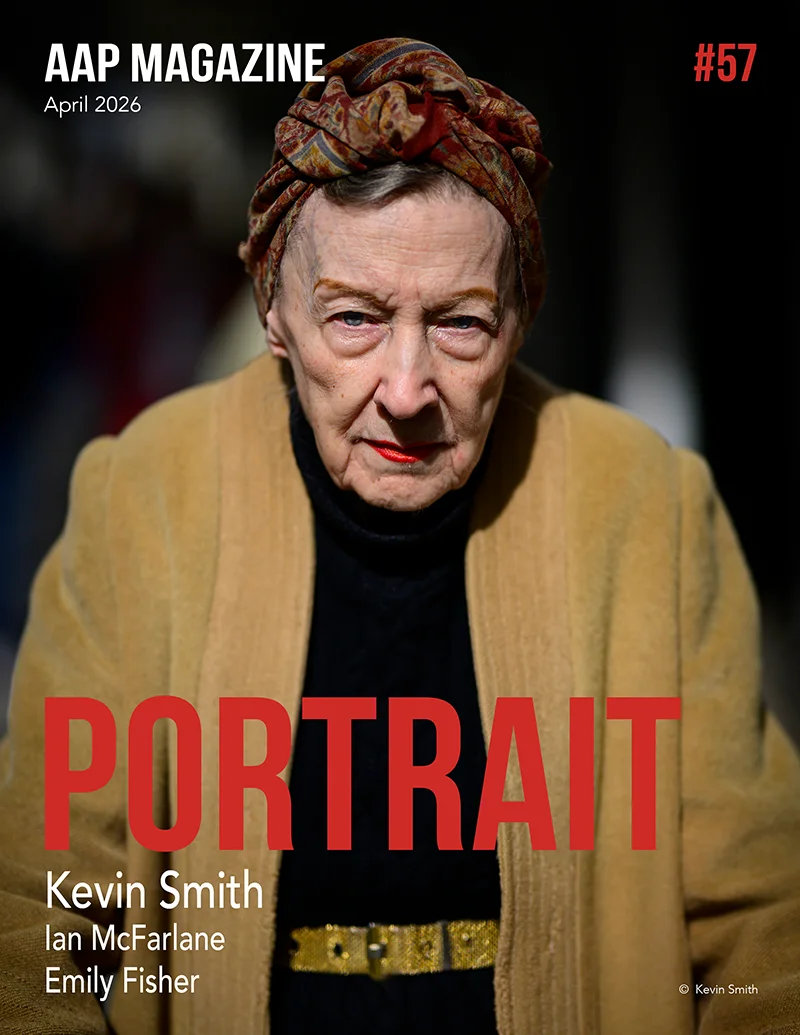
AAP Magazine #57 Portrait
Win a Solo Exhibition in May
AAP Magazine #57 Portrait
Call for Entries
AAP Magazine #57 Portrait
Publish your work in our printed magazine and win $1,000 cash prizes

Related Articles

Film: Steve Schapiro: Being Everywhere
Shot shortly before his passing in 2022, Steve Schapiro: Being Everywhere is a loving tribute to one of the most important photographers of the mid-20th century.
All About Photo Presents ’Alpine Hiatus’ by Filippo Poli
In Alpine Hiatus: The Snow No Longer Tastes Like Snow, Italian photographer and architect Filippo Poli turns his camera toward a landscape caught between memory and mutation. The project unfolds as both personal archaeology and ecological reflection — an inquiry into what remains when the snow, once a symbol of purity and permanence, becomes an artifact of artifice. Winner of the April 2026 All About Photo Solo Exhibition contest, Poli’s work traces the dissonance between remembrance and reality, offering a haunting meditation on disappearance.
Magnum Square Print Sale in Partnership with The Photographers’ Gallery: Odyssey
Odyssey is more than a journey. It is a search for meaning, a crossing of thresholds, a story of growth and resilience. Bringing together a wide range of work from over 100 photographers, this Square Print Sale traces the paths we take across borders, through memory, and into the unknown. Presented in collaboration with The Photographers’ Gallery, the collection off ers works by artists including Martin Parr, Daidō Moriyama, Eve Arnold, Nadav Kander, Steve McCurry, Juno Calypso, Karen Knorr and more.
Elements of Wonder: When Nature Becomes Art by Jon McCormack
To coincide with Earth Day, CENTER, the nonprofit photography organization based in Santa Fe, NM, presents Elements of Wonder: When Nature Becomes Art, a photographic exhibition by Jon McCormack. The exhibition will be on view at CENTER from April 17 through May 17, 2026, with an Opening Reception on Friday, April 17, 5:00 – 7:00 PM, and an Artist Talk on April 30, from 5:30 – 6:30 PM (MT).
Gordon Parks: The South in Color
Jackson Fine Art is delighted to announce our spring exhibition Gordon Parks: The South in Color organized in partnership with The Gordon Parks Foundation. The exhibition is timed to commemorate two important milestones - the 70th anniversary of the landmark publication of Parks’ images of the segregated South in Life magazine and the 20th anniversary of the founding of The Gordon Parks Foundation. The South in Color will present more than thirty photographs from the artist’s Segregation Story series and debut a brand-new portfolio published by the Foundation. The exhibition brings together many of Parks’ images not previously shown in the gallery, alongside some of his most recognized such as At Segregated Drinking Fountain, Mobile, Alabama, to offer a fresh look at the series, and deepen its emotional and historical resonance.
Marilyn Stafford, Lee Miller, Colin Jones for UNSEEN at Art Rotterdam
The Albumen Gallery programme for UNSEEN at Art Rotterdam 2026 brings together three iconic names of mid-20th century photography. At a first glance the works of Marilyn Stafford, Lee Miller and Colin Jones cover quite a wide spectrum of photography. Notwithstanding that there are shared aspects across their respective bodies of work that invite interesting comparison with respect to thematic and artistic approach.
Circulation(s) Festival of young European photography
For its sixteenth edition, the Circulation(s) Festival continues to champion emerging European photography and its intersections with contemporary art. Founded in 2009 at the CENTQUATRE-PARIS, the festival has grown into a key platform for young creators, highlighting plural perspectives and experimental practices.
Colour Me Modern: Claire Aho and the New Woman
Colour Me Modern: Claire Aho and the New Woman, celebrates the vibrant photography of the pioneering Finnish artist, Claire Aho (1925-2015) who brought wit, colour and cinematic flair to postwar image-making across her work in fashion, advertising and editorial. Presented by Hundred Heroines, the UK’s only museum dedicated to women in photography, this free exhibition, split over two sites, highlights how Aho, known as ‘the Grand Old Lady of Finnish Photography,’ helped shape a new visual language for Finland, presenting confi dent, contemporary women and transforming everyday scenes into carefully staged moments of style.
Fragilities & Resilience by Thibault Gerbaldi at the Jardin du Luxembourg
From March 21 to July 19, 2026, the French Senate will host Fragilities & Resilience, the first solo exhibition in France of internationally acclaimed photographer Thibault Gerbaldi. Presented outdoors on the iconic grilles of the Jardin du Luxembourg in Paris 6ème, the exhibition features 80 striking photographs captured across five continents, offering a breathtaking exploration of the fragile yet enduring connections between humans and nature. Entry is free, making this a rare opportunity for the public to experience Gerbaldi’s work on a monumental scale.
Call for Entries
Win A Solo Exhibition in May
Get International Exposure and Connect with Industry Insiders