All about photo.com: photo contests, photography exhibitions, galleries, photographers, books, schools and venues.
Win a Solo Exhibition in April 2026 + An Exclusive Interview!

The Kids Are Alright

From March 28, 2020 to August 09, 2020
Share
The Kids Are Alright
1 South High
Akron, OH 44308
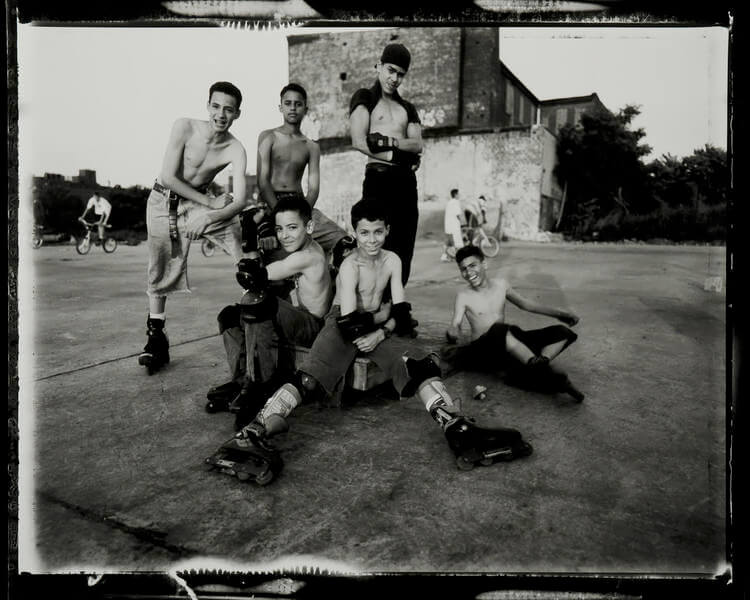
Drawn entirely from the Akron Art Museum collection, the photographs in The Kids Are Alright examine both the dark side and the joy of teenage subcultures and countercultures. Four photographers-Vincent Cianni, Larry Clark, Ken Heyman and Dylan Vitone-record private moments in their subjects' everyday lives, giving viewers access to spontaneous, candid scenes. The hanging out, goofing off and rule breaking the artists document may seem aimless, but these activities can be important steps between youth and adulthood.

Ken Heyman's scenes of hippies congregating in San Francisco's Haight-Ashbury district capture the bohemian movement at its height in the late 1960s. Drawn together by politics, music and a desire to escape the mainstream, these young people became America's quintessential teenage nonconformists. Larry Clark's grainy black-and-white photographs of his friends and fellow adolescent drug users in Oklahoma gained attention for their raw, confessional style when they were first published in the early 1970s. His honest and compassionate documentation of drug addiction remains vital today during the midst of America's wide-reaching opioid crisis. Vincent Cianni's series We Skate Hardcore focuses on the lives of Latinx rollerbladers in Brooklyn's Williamsburg neighborhood in the mid-1990s. Through the sport, the teens found an outlet for their energy and a way to stay out of trouble. Dylan Vitone's panoramic photographs of Skatopia, an anarchist skatepark near Rutland, Ohio, record the antics of skateboarders who make pilgrimages from across the country to skate homemade ramps and other features.
Our printed edition showcases the winners of AAP Magazine call of entries
All About Photo Magazine
Issue #54
Stay up-to-date  with call for entries, deadlines and other news about exhibitions, galleries, publications, & special events.

Exhibitions Closing Soon

Texas Women Artists: 1946 - 2025
PDNB | Denton, TX
From February 14, 2026 to March 21, 2026
From February 14 through March 21, 2026, PDNB Gallery presents Texas Women Artists: 1946 – 2025, a sweeping exhibition honoring nearly eight decades of creative production by women working across the Lone Star State. Expanding on the gallery’s earlier survey of regional art, this focused presentation brings together photography, painting, and works on paper, underscoring the breadth and continuity of artistic voices that have shaped Texas’ cultural landscape since the postwar years. The exhibition bridges generations, from modernist pioneer Carlotta Corpron to contemporary innovators such as Dornith Doherty and Delilah Montoya. Corpron, long associated with Texas Woman’s University and counted among the so-called “Forgotten Nine,” brought abstraction into photographic practice with luminous experiments in light and form; her archive now resides at the Amon Carter Museum of American Art. Doherty’s sustained engagement with global seed banks translates scientific research into ethereal images, including her study of Acacia pycnantha, the national flower of Australia, rendered as a delicate constellation against white ground. Montoya’s collotype print El Aborto in Homage to Frida Kahlo resonates with histories of resistance and identity, echoing the enduring symbolism of Frida Kahlo while affirming Chicana perspectives. New work by Marcy Palmer debuts from her Seeds of Strength & Resilience series, employing nineteenth-century print processes and botanical chemistry to elevate medicinal plants with gold leaf. Meanwhile, Elaine Pawlowicz offers surreal inflections of suburban life, and Carroll Swenson-Roberts revisits pastoral storytelling with layered, almost medieval exuberance. By assembling figures such as Joan Winter, Debora Hunter, Loli Kantor, Jeanine Michna-Bales, and others alongside emerging and mid-career artists, Texas Women Artists: 1946 – 2025 affirms a lineage grounded in craft, experimentation, and regional commitment. The result is not merely a survey, but a testament to endurance and reinvention—proof that Texas’ artistic narrative has long been written, in large measure, by women. Image: Marcy Palmer, Cloud of Relief, 2025 © Marcy Palmer
Elliott Erwitt: Gold Standard
Weinstein Hammons Gallery | Minneapolis, MN
From February 14, 2026 to March 21, 2026
Elliott Erwitt: Gold Standard, on view at Weinstein Hammons Gallery, honors the legacy of one of photography’s most perceptive and beloved observers. The exhibition title echoes Erwitt’s own reverence for Henri Cartier-Bresson, whom he once called the “gold standard” of photography, and turns that phrase back toward Erwitt himself. Across decades of work, his images have quietly shaped how generations understand the poetic potential of the everyday, revealing how wit, empathy, and timing can transform the ordinary into something enduring. Erwitt’s photographs are rooted in a profound attentiveness to life as it unfolds without spectacle. Whether capturing a fleeting human gesture, an expressive canine glance, or a moment of political theater, his work consistently privileges observation over orchestration. Carrying separate cameras for professional assignments and personal curiosity, Erwitt cultivated a visual language that felt effortless yet deeply considered. His images suggest that meaning is not imposed on the world but discovered within it, often where one least expects it. Spanning sixty years, the works presented in Gold Standard trace the remarkable breadth of Erwitt’s vision. Iconic photographs sit alongside lesser-known images, together revealing a sensibility attuned to both intimacy and historical weight. Humor plays a central role, not as punchline but as insight—a way of exposing the absurdities and tenderness that coexist in daily life. Even in moments of geopolitical significance, Erwitt’s lens remains human-centered, attentive to nuance rather than proclamation. Born in Europe and shaped by displacement before settling in the United States, Elliott Erwitt understood photography as a tool for navigating culture, language, and belonging. His membership in Magnum Photos and inclusion in landmark exhibitions helped define the course of modern documentary and street photography, yet his work never lost its personal tone. Elliott Erwitt: Gold Standard celebrates a career devoted to looking closely and generously, reminding us that photography’s lasting power often lies not in grandeur, but in the grace of noticing what is already there. Image: Elliott Erwitt, New York City, 1953, 30 x 40 inches. © Elliott Erwitt LLC. All rights reserved. / Magnum Photos
Shellburne Thurber: Full Circle
Bates College Museum of Art | Lewiston, ME
From October 24, 2025 to March 21, 2026
Full Circle brings together the lifelong photographic exploration of Shellburne Thurber, an artist whose work probes the subtle connection between human presence and the spaces we inhabit. For decades, Thurber has been captivated by the ways architecture absorbs emotion, history, and memory—how rooms can become extensions of the body and repositories of lived experience. From her earliest portraits of family and friends in their homes to later series featuring roadside motels, abandoned hospitals, and sacred interiors, her camera reveals the traces of life imprinted upon built environments that exist somewhere between public and private realms. The works presented in Full Circle trace this ongoing meditation on interiority, intimacy, and psychological space. The exhibition reaches back to Thurber’s first photographs in the 1970s—images of her grandmother’s home in southern Indiana—and extends to her recent series documenting psychoanalytic offices, published as a monograph by Kehrer Verlag in 2023. For Thurber, these interiors function as portraits in another form, representing both the visible and unseen dimensions of those who once occupied them. Through her lens, light filtering through a window, a worn chair, or the quiet geometry of a room becomes a witness to time and emotional residue. Conceived in collaboration with the Bates Museum of Art and curated by Samantha Sigmon, Full Circle serves as a focused retrospective that connects recurring themes across Thurber’s practice—from domestic to institutional, sacred to derelict spaces. Each photograph stands as a silent monument to lives once lived, to the unseen narratives embedded within walls and objects. By revisiting these spaces across her career, Thurber not only documents the passage of time but also reflects her own evolving circle of relationships, memory, and artistic inquiry. Shellburne Thurber’s work is held in major collections including the Museum of Fine Arts, Boston; the Addison Gallery of American Art; and the Worcester Art Museum. She has taught widely across New England and has received numerous honors, including a Radcliffe Institute fellowship and an Anonymous Was a Woman grant. Image: Aunt Anna Sitting in Her Study, archival pigment print, 1978, 20 x 20 in., courtesy of the artist. © Shellburne Thurber
Deb Leal: Abre Camino
OSMOS | New York, NY
From February 12, 2026 to March 21, 2026
Deb Leal: Abre Camino, on view from February 12 to March 21, 2026 at OSMOS, marks the first solo exhibition in New York by Mexican-American photographer Deb Leal. Bringing together works created between 2020 and 2023, the exhibition unfolds as a deeply personal yet broadly resonant exploration of cultural memory, devotion, and transformation within the United States, viewed through a Chicano lens. Leal’s photographs draw from lived experience, family ritual, and inherited visual languages. Road trips stretching across vast Midwestern landscapes, shared meals eaten on the move, and the quiet endurance of migration become foundational narratives in her work. Cars, religious symbols, household objects, and roadside details are not treated as static icons, but as vessels carrying memory and meaning across generations. These familiar forms are reimagined as living markers of identity, shaped by movement, labor, and belief. Color plays a central role in Abre Camino. Saturated hues, layered imagery, and subtle double exposures mirror the way memory operates—fragmented, nonlinear, and emotionally charged. Influenced by syncretic spiritual traditions such as Curanderismo, Leal blends the everyday with the sacred, creating images that feel both intimate and ceremonial. Her photographs hover between past and present, documentation and offering, asking how cultural symbols endure as technologies shift and landscapes change. At its core, the exhibition reflects on persistence. Leal considers how Chicano expression continues to adapt in the face of acceleration, surveillance, and obsolescence, proposing photography as a tool for sustaining cultural continuity. The images function simultaneously as an archive of lived experience and as gestures of care toward collective memory, opening space for reflection, recognition, and resilience. Based in Brooklyn, Deb Leal has exhibited widely in the United States and internationally, with work appearing in major publications and institutions. With Abre Camino, she invites viewers to consider how identity is carried forward—not only through images, but through ritual, devotion, and the ongoing act of remembering. Image: A Sinclair Story (Lizard on Rock), 2020 Color Negative Photograph, Archival Inkjet Print 16 x 24 inches © Deb Leal
Cooper & Gorfer: Altered Gaze
Jackson Fine Art | Atlanta, GA
From January 22, 2026 to March 21, 2026
Jackson Fine Art presents Altered Gaze, a new exhibition of collages and photographs by the Stockholm-based duo Cooper & Gorfer, whose collaborative practice has steadily redefined contemporary portraiture. Built on nearly two decades of shared work, the exhibition continues their sustained exploration of female identity, asking viewers to reconsider how images are read and how meaning is formed. The works unfold as a collective self-portrait, shaped through relationships with women and guided by the tension between what is revealed and what remains concealed. At the center of the exhibition are monumental, myth-inflected female figures who appear both commanding and introspective. In newly created collages, these women function as guardians of inner worlds shaped by memory, heritage, and lived experience. Collage remains essential to Cooper & Gorfer’s method, not simply as a technique but as a conceptual framework. Fragments are layered, removed, and reassembled, echoing the way identities are formed over time. The surfaces of the works bear traces of construction, allowing vulnerability and strength to coexist within the same image. The portraits operate on multiple levels at once. They are deeply personal, reflecting emotional states, fears, and desires, yet they also carry broader cultural and political resonances. By merging photography with textiles, painterly gestures, and digital manipulation, Cooper & Gorfer blur distinctions between the physical and the imagined. The fragmentation visible in the works mirrors the complexity of contemporary identity, where contradictions are not resolved but held in balance. Rather than presenting fixed representations, the artists create visual spaces where transformation feels ongoing. Founded by Sarah Cooper and Nina Gorfer, the duo has developed a practice that moves fluidly between still images and moving pictures, consistently expanding the possibilities of portraiture. Their work, exhibited internationally and held in major collections, reflects a deep respect for tradition while actively reshaping it. In Altered Gaze, Cooper & Gorfer invite viewers into layered narratives that resist easy interpretation, offering portraits that function less as likenesses and more as sites of reflection, where identity is understood as something assembled, fractured, and continually becoming. Image: Cooper & Gorfer Maryan Clouds, 2025 Mixed media processed collage mounted to Dibond © Cooper & Gorfer
Andrew Moore: Theater
Jackson Fine Art | Atlanta, GA
From January 22, 2026 to March 21, 2026
Jackson Fine Art presents Theater, a selection of photographs by Andrew Moore that brings sustained attention to the architectural spaces where collective imagination once gathered. Known for his exacting compositions and patient approach, Moore turns his lens toward theaters in varying states of use, repair, and abandonment. These interiors, once filled with voices and applause, now appear hushed and reflective, offering a record of cultural spaces shaped by time. The photographs honor theaters not simply as buildings, but as repositories of shared memory and artistic ambition. Moore’s images are marked by a careful balance between grandeur and fragility. Ornate balconies, worn velvet curtains, and peeling plaster are rendered with a clarity that borders on reverence. Light enters these spaces gently, tracing architectural details and settling into empty rows of seats, as if pausing before the next performance. The absence of people is central to the work, allowing the viewer to sense what remains rather than what has been lost. Each photograph functions as a still frame, suspended between past spectacle and uncertain future. Throughout his career, Moore has been drawn to environments that reflect broader social and historical shifts, and theaters offer a particularly resonant subject. Built as centers of ritual and entertainment, they mirror the aspirations of the communities that sustained them. In documenting their decay or renewal, Moore avoids nostalgia, instead creating images that invite contemplation. Viewers are encouraged to bring their own associations, recalling personal encounters with performance, gathering, and anticipation. The theaters become stages upon which individual memory quietly unfolds. At the heart of Theater is an understanding of photography as an open-ended experience. Moore’s images do not instruct or narrate; they provide space. Within these carefully observed interiors, beauty and deterioration coexist, underscoring the passage of time and the persistence of human creativity. The exhibition ultimately reflects on why such spaces continue to matter. In preserving their presence through photography, Moore affirms the enduring human need for ritual, storytelling, and places where imagination can briefly take center stage. Image: Andrew Moore Palace Theater, Gary Indiana, 2008 © Andrew Moore
Yasumasa Morimura & Charles Atlas
Luhring Augustine Chelsea | New York, NY
From January 30, 2026 to March 21, 2026
Luhring Augustine presents Yasumasa Morimura & Charles Atlas at its Chelsea location from January 30 through March 21, 2026, bringing together two artists whose practices have long challenged fixed ideas of gender, identity, and representation. While working in different mediums and cultural contexts, both Morimura and Atlas share a commitment to reinvention, using performance, masquerade, and self-fashioning as critical tools. The exhibition unfolds across the gallery’s spaces as a dialogue between still image and moving image, past and present, self and role. In the main gallery, Yasumasa Morimura presents a selection of works spanning more than four decades, alongside recent pieces that reaffirm the enduring relevance of his approach. By inserting himself into iconic images drawn from Western art history, cinema, and popular culture, Morimura collapses distinctions between original and copy, male and female, East and West. His self-transformations, often meticulous and theatrical, disrupt the authority of canonical imagery and unsettle the conventions of self-portraiture. Through the embodiment of female figures in particular, Morimura actively reframes the dynamics of looking, questioning who is seen, who is seeing, and under what terms. In the back gallery, Charles Atlas presents a new 30-minute program of portraits centered on drag and gender play. Drawn from footage shot during the 1980s and 1990s, the work highlights performers who were central to Atlas’s artistic universe, including long-standing collaborators from the worlds of dance, performance, and underground culture. Atlas’s camera captures moments of vulnerability, bravado, and transformation, treating performance not as spectacle but as a form of lived identity. His pioneering role in video art is evident in the way movement, music, and presence are woven into an intimate visual language. Together, the works of Morimura and Atlas reveal how identity can be constructed, dismantled, and reimagined through art. Presented within Luhring Augustine’s Chelsea galleries, the exhibition underscores the continuing power of performance-based practices to question cultural norms, while honoring the artists’ lasting influence on contemporary discussions of gender, visibility, and self-representation. Image: Yasumasa Morimura Doublonnage (Marcel) Color photograph © Yasumasa Morimura
Steve Schapiro: Being Everywhere
Fahey/Klein Gallery | Los Angeles, CA
From January 22, 2026 to March 21, 2026
Steve Schapiro: Being Everywhere offers a sweeping and deeply human portrait of America seen through the lens of one of its most perceptive witnesses. Presented from January 22 through March 21, the exhibition reflects a life spent moving instinctively toward moments of significance, often before history itself had fully formed around them. Schapiro’s photographs carry the quiet authority of someone who understood that presence, patience, and empathy are as vital as timing. Emerging in the early 1960s, Steve Schapiro quickly became a defining visual voice of the Civil Rights Movement. His photographs from the American South capture not only marches and protests, but also the private exchanges, exhaustion, courage, and tenderness that sustained the struggle. Traveling closely with James Baldwin, Schapiro documented a movement from the inside, balancing the gravity of injustice with scenes of solidarity and shared resolve. These images endure because they do more than describe events; they convey lived experience. As his career expanded, Schapiro brought the same sensitivity to cultural life beyond the streets. His behind-the-scenes photographs on legendary film sets reveal cinema not as spectacle, but as a collaborative human endeavor. Whether observing actors between takes or directors lost in concentration, Schapiro remained unobtrusive, allowing moments to unfold naturally. His Hollywood images feel remarkably intimate, shaped by the same documentary instincts that guided his social work. Across decades and subjects, Schapiro’s photography resists dramatization. His images are clear-eyed yet compassionate, grounded in a belief that truth emerges through attention rather than intrusion. Each photograph holds a narrative charge, inviting viewers to linger and reflect rather than consume and move on. This balance between objectivity and emotional resonance defines his enduring relevance. Steve Schapiro: Being Everywhere stands as a testament to a photographer who understood that bearing witness is an ethical act. His work reminds us that history is not only shaped by iconic moments, but by the countless human gestures surrounding them. In looking closely, Schapiro preserved not just what happened, but how it felt to be there. Image: "Steve Schapiro Warhol, Edie et Henry", New York, 1965 © Steve Schapiro, courtesy of FaheyKlein Gallery, Los Angeles
Between Order and Chaos: André Kertész and M. C. Escher
Bruce Silverstein Gallery | New York, NY
From January 22, 2026 to March 21, 2026
Bruce Silverstein Gallery presents Between Order and Chaos: André Kertész and M. C. Escher, an exhibition that stages a compelling dialogue between two visionaries who transformed how reality is perceived. Though working in different media—photography and printmaking—Kertész and Escher each pursued a deeply personal investigation into structure, illusion, and the fragile balance between logic and disruption. Seen together, their works reveal how order and chaos are not opposing forces, but intertwined conditions through which the world becomes visible and meaningful. Both artists came of age during periods of profound social and geographic upheaval, experiences that shaped their independent ways of seeing. Kertész’s migrations across Europe and the United States fostered a poetic sensitivity to fleeting moments and subtle visual anomalies, while Escher’s travels through Italy and Spain sharpened his fascination with geometry, repetition, and spatial paradox. Each cultivated the perspective of an observer slightly removed from the center, attentive to patterns others overlooked and receptive to instability as a source of insight rather than confusion. Escher’s meticulously constructed prints transform natural phenomena and architectural forms into systems of mesmerizing complexity. Ripples, reflections, and recursive spaces become vehicles for visual logic pushed to its breaking point, where certainty dissolves into wonder. His images make visible the hidden structures underlying perception, while simultaneously undermining their reliability. Order appears precise and mathematical, yet always on the verge of collapse into contradiction and impossibility. Kertész achieves a parallel tension through the camera, extracting moments of visual dissonance from everyday life. Through reflection, distortion, and unexpected framing, familiar scenes subtly unravel. Puddles, windows, and bodies become sites where reality bends, revealing poetry within constraint. Unlike Escher’s invented worlds, Kertész’s images remain anchored in lived experience, their quiet disruptions unfolding within ordinary surroundings. Together, Between Order and Chaos invites viewers to reconsider the act of seeing itself. By juxtaposing these two practices, the exhibition reveals how perception is shaped as much by uncertainty as by structure. In the space between precision and instability, Kertész and Escher offer a shared reminder that reality is not fixed, but continually reorganized through the act of looking. Image: André Kertész (1894-1985) December 15, 1979 SX-70 Polaroid 4 1/4 x 3 1/2 in (10.8 x 8.9 cm) © André Kertész
The Intimacy of Seeing: A Photographic Survey of Jean-Baptiste Huynh
Holden Luntz Gallery | Palm Beach, FL
From February 21, 2026 to March 21, 2026
The Intimacy of Seeing: A Photographic Survey of Jean-Baptiste Huynh brings together a body of work shaped by patience, restraint, and an unwavering trust in light. Presented at Holden Luntz Gallery, the exhibition reveals Huynh’s ability to suspend subjects outside of time, allowing faces, forms, and surfaces to emerge with quiet intensity. His photographs resist immediacy; instead, they invite prolonged looking, where subtle shifts of shadow and luminosity become vehicles for contemplation rather than description. Born to a French mother and a Vietnamese father, Huynh’s vision is informed by a dialogue between cultures and philosophies. Early guidance from Irving Penn helped refine a language that is both rigorous and deeply personal, grounded in technical mastery yet open to metaphysical inquiry. Neutral backgrounds strip away context, leaving only presence. Whether portraying a human face, an animal, or a mineral form, Huynh treats each subject with equal gravity, suggesting that meaning arises not from hierarchy but from attention. Over nearly three decades, Huynh has constructed an expansive atlas of gazes, traveling across continents to explore how individuality and universality coexist within the human face. His portraits do not explain; they listen. This approach extends to his still lifes and studies of nature, where the material world becomes a site of reflection on impermanence and renewal. Light, in Huynh’s work, functions as both physical phenomenon and metaphor—an agent of revelation that shapes how we see and how we remember. Recent photographic and cinematic projects have deepened this inquiry, expanding his practice into immersive environments and long-form observation. From sacred architecture to remote landscapes, Huynh continues to explore how images can become spaces of encounter rather than mere representations. The Intimacy of Seeing offers a rare opportunity to experience this trajectory as a cohesive whole, affirming Huynh’s belief that photography, at its most resonant, is not about capturing the world, but about entering into a sustained, reflective relationship with it. Image: Christian III 2004, printed 2025 Archival pigment photograph on baryta paper © Jean-Baptiste Huynh
Picturing the American Experience
Holden Luntz Gallery | Palm Beach, FL
From February 21, 2026 to March 21, 2026
Picturing the American Experience, on view at Holden Luntz Gallery from March 28 to May 2, 2026, is a visual journey through the unfolding story of the United States. Spanning landscapes, portraits, and iconic moments, the exhibition brings together photographs that both document and define how artists have seen, shaped, and recorded America’s nearly 250 years of history. In this collection, the camera becomes a tool of observation and empathy, capturing the rhythms of everyday life alongside moments of national significance. The exhibition features works by photographers whose images have become part of the country’s visual memory. Early photographers such as Arthur Rothstein, Dorothea Lange, and Walker Evans harnessed the power of documentary photography to reveal social landscapes often hidden from public view. Their photographs of rural hardship, migration, and economic struggle during the Great Depression remain resonant, reminding us of the resilience and vulnerability that have long defined the American story. Alongside these seminal figures are photographers who turned their lenses toward the cultural and civic life of the nation. Margaret Bourke-White and Harry Benson captured iconic personalities and pivotal events, from industrial powerhouses to political stages. Their images bridge public and private life, presenting leaders and ordinary citizens alike with clarity and immediacy. Bruce Davidson’s street photography and Hy Peskin’s dynamic compositions emphasize movement and presence, showing how people and places evolve across time. Together, these photographers offer more than a record of sights; they present a tapestry of experiences that embody the complexities of American life. Picturing the American Experience is a reminder that photography, at its best, shapes not only what we see, but how we see ourselves and our collective past. Through these images, history becomes palpable, lived, and continually reimagined. Image: A young couple on their new farm, Douglas County, Nebraska Silver Gelatin Photograph © Arthur Rothstein
Fragmentary Glimpses:  Alfred Stieglitz and David Vestal in New York
Robert Mann Gallery | New York, NY
From February 05, 2026 to March 21, 2026
Fragmentary Glimpses: Alfred Stieglitz and David Vestal in New York, on view at Robert Mann Gallery from February 5 to March 21, 2026, brings together two distinct yet resonant visions of a city defined by perpetual change. New York has long been a proving ground for photographers, a place where speed, density, ambition, and reinvention collide. Through the eyes of Stieglitz and Vestal, the city emerges not as a fixed portrait but as a series of fleeting impressions—moments suspended between permanence and disappearance. Alfred Stieglitz’s photographs capture New York at a pivotal moment in the early twentieth century, when industrial progress reshaped both the skyline and the rhythm of daily life. His images from Camera Work No. 36 reveal a city in motion: ferries slicing through fog, crowds dissolving into rain, iron structures rising against shifting skies. Often described as “snapshots,” these works are anything but casual. Through daring compositions and tonal subtlety, Stieglitz transformed modern infrastructure and urban weather into expressive forces, positioning photography as a medium capable of poetic insight as well as documentation. David Vestal’s New York, photographed decades later, reflects a quieter yet no less charged atmosphere. Working in the postwar period, Vestal turned his attention to the city’s inhabitants and overlooked corners, where light grazes faces and architecture bears the weight of recent history. His background in painting and his association with the Photo League informed a practice rooted in observation and restraint. While less overtly celebratory than Stieglitz’s work, Vestal’s images register the psychological texture of urban life, revealing beauty and unease in equal measure. Together, these photographs trace a lineage of modern vision. The exhibition’s title, drawn from a 1911 essay describing New York as a vision that briefly glimmers before fading, feels especially apt. Stieglitz and Vestal understood that the city can never be fully grasped—only encountered in fragments. Their work reminds us that photography does more than record change; it shapes how change is remembered, offering lasting glimpses of a city forever becoming itself. Image: David Vestal Flatiron Building, 1963 Vintage silver print © David Vestal
Advertisement
AAP Magazine #56 Shadows
Win a Solo Exhibition in April
AAP Magazine #56 Shadows
Call for Entries
AAP Magazine #56 Shadows
Publish your work in our printed magazine and win $1,000 cash prizes

Related Articles

Gordon Parks: The South in Color
Jackson Fine Art is delighted to announce our spring exhibition Gordon Parks: The South in Color organized in partnership with The Gordon Parks Foundation. The exhibition is timed to commemorate two important milestones - the 70th anniversary of the landmark publication of Parks’ images of the segregated South in Life magazine and the 20th anniversary of the founding of The Gordon Parks Foundation. The South in Color will present more than thirty photographs from the artist’s Segregation Story series and debut a brand-new portfolio published by the Foundation. The exhibition brings together many of Parks’ images not previously shown in the gallery, alongside some of his most recognized such as At Segregated Drinking Fountain, Mobile, Alabama, to offer a fresh look at the series, and deepen its emotional and historical resonance.
Marilyn Stafford, Lee Miller, Colin Jones for UNSEEN at Art Rotterdam
The Albumen Gallery programme for UNSEEN at Art Rotterdam 2026 brings together three iconic names of mid-20th century photography. At a first glance the works of Marilyn Stafford, Lee Miller and Colin Jones cover quite a wide spectrum of photography. Notwithstanding that there are shared aspects across their respective bodies of work that invite interesting comparison with respect to thematic and artistic approach.
Circulation(s) Festival of young European photography
For its sixteenth edition, the Circulation(s) Festival continues to champion emerging European photography and its intersections with contemporary art. Founded in 2009 at the CENTQUATRE-PARIS, the festival has grown into a key platform for young creators, highlighting plural perspectives and experimental practices.
Colour Me Modern: Claire Aho and the New Woman
Colour Me Modern: Claire Aho and the New Woman, celebrates the vibrant photography of the pioneering Finnish artist, Claire Aho (1925-2015) who brought wit, colour and cinematic flair to postwar image-making across her work in fashion, advertising and editorial. Presented by Hundred Heroines, the UK’s only museum dedicated to women in photography, this free exhibition, split over two sites, highlights how Aho, known as ‘the Grand Old Lady of Finnish Photography,’ helped shape a new visual language for Finland, presenting confi dent, contemporary women and transforming everyday scenes into carefully staged moments of style.
Fragilities & Resilience by Thibault Gerbaldi at the Jardin du Luxembourg
From March 21 to July 19, 2026, the French Senate will host Fragilities & Resilience, the first solo exhibition in France of internationally acclaimed photographer Thibault Gerbaldi. Presented outdoors on the iconic grilles of the Jardin du Luxembourg in Paris 6ème, the exhibition features 80 striking photographs captured across five continents, offering a breathtaking exploration of the fragile yet enduring connections between humans and nature. Entry is free, making this a rare opportunity for the public to experience Gerbaldi’s work on a monumental scale.
All About Photo Presents ’ Civilization’ by Damien Aubin
In Civilization, Damien Aubin turns his lens toward environments shaped not by nature, but by ambition. These are places engineered at a scale that exceeds the individual — infrastructures, industrial complexes, vast architectural systems that dwarf the human body and often eclipse it entirely. There are no protagonists here. No narratives unfolding in real time. Instead, Aubin photographs what remains when activity recedes: structures that continue to stand, operate, or simply endure.
Elliott Erwitt: Gold Standard
Weinstein Hammons Gallery is pleased to present Elliott Erwitt: Gold Standard, the third exhibition of photographs by Elliott Erwitt (1928–2023), one of the most influential photographers of the twentieth and twenty-first centuries.
FotoFocus Announces Big Tent Opening of FotoFocus Center
This summer, FotoFocus will expand on their vision and embark on a new chapter with the launch of Big Tent, the inaugural exhibition at the new FotoFocus Center, a 14,700 square foot, purpose-built structure to house photographic exhibitions and year-round programs. Bringing together work by over fifty artists (including An-My Lê, Catherine Opie, Dawoud Bey, Gordon Parks, Justine Kurland, Mitch Epstein, RaMell Ross, Sky Hopinka, Tina Barney and many more), the exhibition (on view May 29-August 22) reflects upon the current state of American democracy while also considering the efficacy of photography to be a catalyst for meaningful change.
 The Queering of Photography by Asa Johannesson
Stills are delighted to announce their spring exhibition: The Queering of Photography by Åsa Johannesson; the artist’s first solo exhibition in Scotland. The Queering of Photography takes place from 1 May – 27 June 2026, Preview: Thursday 30 April, 6–8pm. Åsa Johannesson is an artist working across photography and writing. Over the past two decades she has explored the possibilities of queer visual vocabulary within photographic portraiture – a practice that intertwines queer documentary approaches with performative formalist aesthetics.
Call for Entries
Solo Exhibition April 2026
Get International Exposure and Connect with Industry Insiders