All about photo.com: photo contests, photography exhibitions, galleries, photographers, books, schools and venues.
Win a Solo Exhibition in June 2026 + An Exclusive Interview!

Black Is Beautiful The Photography of Kwame Brathwaite

From December 04, 2019 to March 01, 2020
Share
Black Is Beautiful The Photography of Kwame Brathwaite
685 Mission St
San Francisco, CA 94105
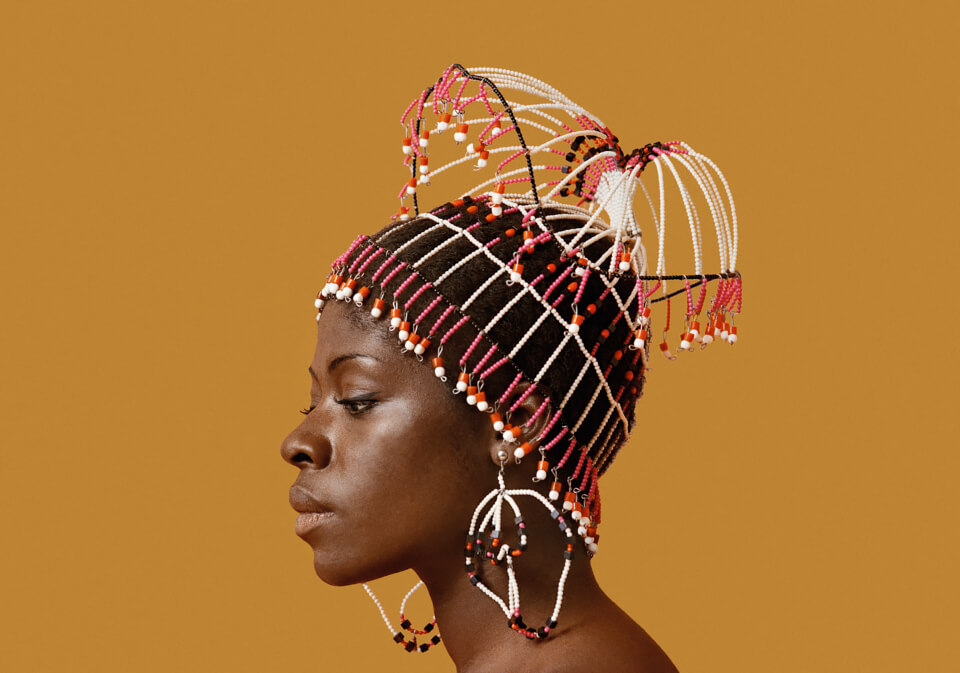
Featuring over forty photographs of black women and men with natural hair and clothes that reclaimed their African roots, Black Is Beautiful: The Photography of Kwame Brathwaite, organized by Aperture Foundation, New York, is the first-ever major exhibition dedicated to this key figure of the second Harlem Renaissance.

Inspired by the writings of activist and black nationalist Marcus Garvey, Brathwaite (b. 1938) combined his political vision with the medium of photography to effect social change. Along with his brother Elombe Brath (1936–2014), Brathwaite founded two organizations that were instrumental in realizing his vision: African Jazz-Art Society and Studios, a collective of artists, playwrights, designers, and dancers, in 1956; and Grandassa Models, a modeling group for black women, in 1962. Working with AJASS and Grandassa Models, Brathwaite organized fashion shows featuring clothing designed by the models themselves, created stunning portraits of jazz luminaries, and captured behind-the-scenes photographs of the black arts community.

During an era when segregation still prevailed across the United States, Brathwaite's work challenged mainstream beauty standards that excluded women of color. His photographs celebrated black beauty and instilled a sense of pride throughout the community. Black Is Beautiful: The Photography of Kwame Brathwaite demonstrates how the medium of photography is an essential cultural tool in the dissemination of new visual paradigms and political ideas.
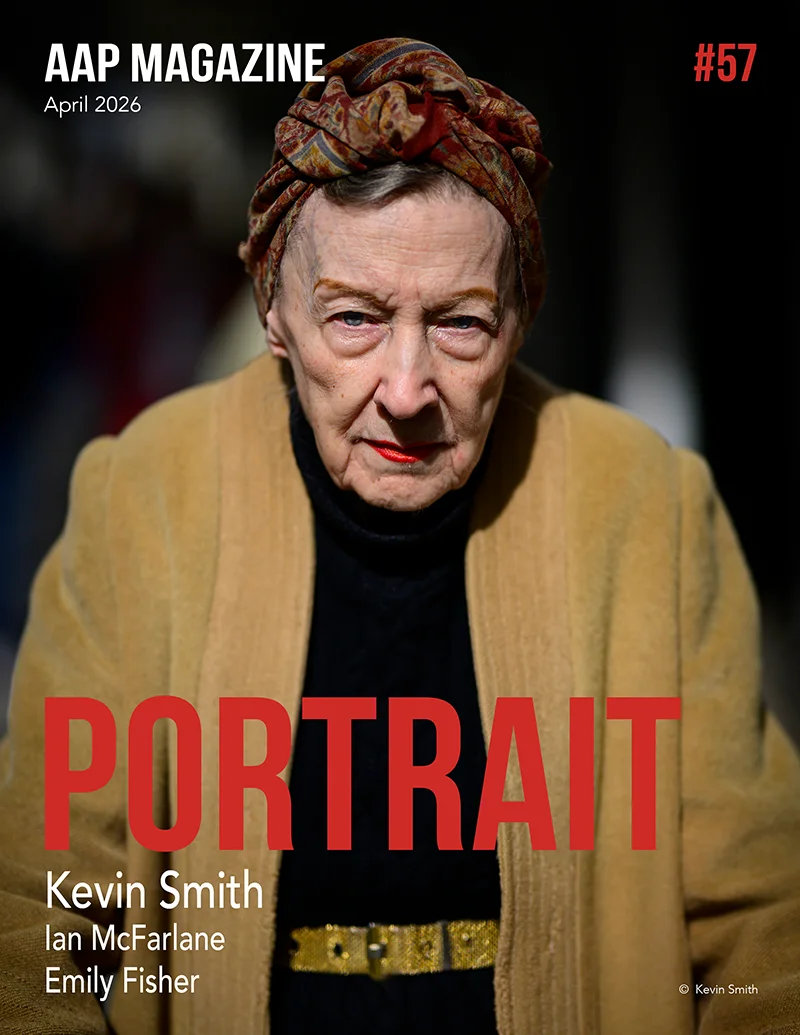
Our printed edition showcases the winners of AAP Magazine call of entries
All About Photo Magazine
Issue #55
Stay up-to-date  with call for entries, deadlines and other news about exhibitions, galleries, publications, & special events.

Exhibitions Closing Soon

Eugène Atget The Making of a Reputation
ICP Museum | New York, NY
From January 29, 2026 to May 04, 2026
Eugène Atget’s legacy continues to resonate through the history of photography, and a new exhibition invites visitors to reconsider how his reputation was shaped long after his lifetime. Centered on the remarkable influence of Berenice Abbott, the presentation reveals how her dedication, scholarship, and advocacy helped secure Atget’s place as a major figure in modern photography. Through carefully selected prints and archival material, the exhibition traces how Abbott’s efforts brought renewed attention to a body of work that might otherwise have remained overlooked. Atget’s photographs, created between the late nineteenth and early twentieth centuries, capture a Paris caught between tradition and transformation. He wandered the city with his cumbersome equipment, recording storefronts, courtyards, gardens, and tradespeople in images characterized by quiet clarity and atmospheric light. His scenes often appear suspended in time, offering a visual record of districts soon swept away by modernization. Architects, painters, and designers once relied on his pictures as references, yet today viewers find in them a poetic evocation of a Paris that no longer exists. The exhibition places special emphasis on Atget’s singular way of looking. His views, expansive yet attentive to detail, reveal the subtle rhythms of daily life. Whether depicting modest workshops or elegant façades, his compositions suggest both the charm and fragility of a city in transition. It was this sensitivity that captivated avant-garde artists such as Man Ray, who recognized in Atget’s images an unexpected affinity with emerging modernist ideas. After Atget’s death, Abbott recognized the significance of his archive and devoted years to preserving, cataloging, and promoting it. Her writings, exhibitions, and unwavering commitment ensured that Atget’s work reached museums, scholars, and the wider public. Thanks to her efforts, he is now celebrated as a foundational figure whose vision shaped the course of twentieth-century photography. Image: Eugène Atget, Hôtel du Marquis de Lagrange, 4 et 6 Rue de Braque, 1901 (printed 1901–27). International Center of Photography, Gift of Caryl and Israel Englander, 2008 (2008.111.20)
HARD COPY NEW YORK
ICP Museum | New York, NY
From January 29, 2026 to May 04, 2026
HARD COPY NEW YORK brings renewed attention to the tactile qualities of photographic reproduction, inviting viewers to reflect on the material presence of the copied image. Expanding on Aaron Stern’s ongoing project, the exhibition revisits the visual language of the photocopier—a tool once central to countless creative pursuits. By highlighting the grain, contrast, and imperfections inherent in this process, the show evokes a time when making an image required intention, patience, and direct engagement with physical materials. In an era defined by instant digital circulation, the exhibition serves as a gentle reminder of photography’s enduring strength as a tangible medium. As curators David Campany and Aaron Stern suggest, the flood of screen-based imagery can obscure the unique resonance of an object held in the hand. Through a diverse selection of works, the show underscores how copies, far from being secondary or disposable, can carry their own sense of intimacy and immediacy. These photocopied images reveal how artists continue to experiment with form, surface, and repetition, transforming simple technology into a tool for expression. Central to this presentation is Stern’s commitment to fostering a renewed appreciation for photography as a democratic art form. The copy machine—accessible, imperfect, and unpretentious—has long allowed creators of all backgrounds to distribute their work widely. In spotlighting this device, the exhibition honors a tradition of making that values resourcefulness and authenticity over polish. It also challenges visitors to consider how the physical act of reproduction can shape meaning and memory. Aaron Stern’s broader career reflects a deep engagement with photography and its communities. Known for moving fluidly between roles as curator, writer, and image-maker, he has contributed to exhibitions, publications, and fairs across the Americas and Europe. His collaborations with institutions and magazines reinforce his commitment to exploring how images circulate, endure, and continue to inspire. HARD COPY NEW YORK stands as a testament to that ongoing pursuit. Image: Thirty-Six Views of Mount Fuji, 2023/2024. Photocopy by Aaron Stern, © Takashi Homma
Latitudes: Nuits Balnéaires and François-Xavier Gbré
ICP Museum | New York, NY
From January 29, 2026 to May 04, 2026
Latitudes arrives at the International Center of Photography as a vivid testament to cultural exchange and the widening of global photographic dialogue. Created in partnership with the Fondation d’entreprise Hermès and the Fondation Henri Cartier-Bresson, the exhibition’s newest chapter turns its attention to Côte d’Ivoire, presenting fresh work by laureates Nuits Balnéaires and François-Xavier Gbré. Together, their projects offer distinct yet complementary visions shaped by memory, landscape, and the enduring pull of personal history. Established in 2024, the Latitudes program extends the spirit of the former Immersion initiative by embracing a broader international lens. Each cycle focuses on a single country, inviting local photographers to propose new work. A jury selects one laureate, who receives support to produce a series that will travel from Paris to New York before returning home. This structure not only amplifies underrepresented artistic scenes but also reaffirms the value of geographic and cultural perspective in contemporary photography. Côte d’Ivoire, the program’s inaugural focus, sets the tone for a deeply engaged, globally connected approach. Nuits Balnéaires brings to the exhibition a practice shaped by poetry, spirituality, and the ever-changing waters of the Gulf of Guinea. His work traces the rhythms of life, death, and the unseen spaces in between, creating images that feel suspended in a realm both real and imagined. With water as a recurring element, his photographs and films become meditations on ancestry, connection, and transition. His path—from fashion photography to international exhibitions—reflects an artist continually expanding the boundaries of his visual language. François-Xavier Gbré approaches image-making through the lens of architecture and its layered histories. His work examines buildings and territories as living archives, revealing how political, social, and environmental forces shape collective memory. Whether documenting remnants of colonial eras or contemporary shifts in urban space, he constructs narratives grounded in place yet resonant far beyond it. His presence in major museum collections and global exhibitions underscores the breadth of his vision. Together, these two artists embody the guiding principle of Latitudes: a commitment to elevating voices that broaden our understanding of the world through images rooted in their own histories and landscapes. Image: François-Xavier Gbré, Rubino, from the series Radio Ballast, 2024. © François-Xavier Gbré, ADAGP, Paris, 2025
Orange Crush
Gray Loft Gallery | Jingletown, Oakland, CA
From March 14, 2026 to May 09, 2026
Orange Crush, on view from March 14 through May 9, 2026 at Gray Loft Gallery, celebrates the expressive potential of a single color through a vibrant juried photography exhibition. Now in its eighth edition, the annual show invites photographers to explore the symbolic and visual power of orange across a wide range of photographic approaches. The result is an energetic collection of contemporary images that reveal how a single hue can evoke warmth, urgency, playfulness, and reflection. Presented in partnership with the regional photography festival PhotoCarmel, the exhibition features work by eighty photographers from across the San Francisco Bay Area. Juried by Ann Jastrab, Executive Director of the Center for Photographic Art, alongside gallery founder Jan Watten, the selection reflects a broad spectrum of artistic practices. Participants interpret the theme through traditional color photography, experimental techniques, mixed media works, and hand-colored images, each contributing a distinct visual perspective. The color orange carries a complex set of associations within visual culture. It appears in nature through autumn leaves, sunsets, and desert landscapes, while also functioning as a bold signal in urban environments, signage, and contemporary design. The photographs in Orange Crush explore this wide symbolic range. Some images emphasize the warmth and luminosity of the color, while others highlight its intensity or ambiguity. In many cases, the color becomes the central narrative element, guiding the viewer’s attention through striking contrasts, unexpected textures, or carefully balanced compositions. Beyond its thematic focus, the exhibition also celebrates the vitality of the Bay Area photography community. By bringing together established artists and emerging voices, the show reflects the collaborative spirit that has long defined the region’s creative landscape. Within the intimate setting of Gray Loft Gallery, Orange Crush invites visitors to experience photography as both visual exploration and sensory encounter, where a single color becomes the catalyst for a wide range of artistic interpretations and emotional responses.
Carrie Mae Weems: Something Grander Still
Art Galleries at Black Studies, UT Austin | Austin, TX
From January 30, 2026 to May 09, 2026
Carrie Mae Weems: Something Grander Still is presented at the Art Galleries at Black Studies at the University of Texas at Austin from January 30 through May 9, 2026. Centered in the Christian-Green Gallery, the exhibition revisits Family Pictures and Stories (1978–84), the foundational body of work through which Carrie Mae Weems first articulated her enduring concerns with self-definition, memory, and power. Drawn from photographs, text, and audio rooted in her own family archive, the installation traces how these early images continue to inform her evolving practice. The title, borrowed from Weems’s 1984 artist statement, underscores her conviction that understanding how we construct personal history is itself a profound creative act. Rather than staging a retrospective, the exhibition follows the afterlives of these pictures across decades of artistic and intellectual exchange. Family photographs—among them the tintype of her maternal grandfather—appear not as static relics but as active agents in an ongoing inquiry. Weems’s work moves between intimacy and structural critique, linking domestic interiors to broader histories of race, labor, and representation in the United States. Through careful sequencing of image and text, she reveals how personal narrative intersects with institutional power, insisting that private memory carries public consequence. A complementary study room in the Idea Lab expands this dialogue, situating Weems within conversations among Black photographers, feminist thinkers, and media activists of the 1980s and early 1990s. Works by contemporaries who challenged dominant visual paradigms appear alongside publications and archival materials, illuminating the cultural landscape in which her practice took shape. Photography and video emerge here as tools of resistance—means of countering erasure and reframing visibility. Across more than four decades, Weems has built a multidisciplinary oeuvre spanning photography, installation, and film, earning recognition from institutions including the Metropolitan Museum of Art and the Guggenheim Museum. Yet Something Grander Still emphasizes process over accolade. By returning deliberately to formative material, the exhibition proposes revisitation as method: a way to deepen research, refine questions, and claim authority over one’s own story. In doing so, it affirms the enduring power of images to shape how history is known—and who has the right to tell it. Image: Carrie Mae Weems, Van and Vera with kids in the kitchen, from Family Pictures and Stories, 1978-84. Gelatin silver print, size variable. Courtesy the artist and Gladstone Gallery © Carrie Mae Weems
Helmut Newton x Steven Klein on the dark side
Staley-Wise Gallery | New York, NY
From March 19, 2026 to May 09, 2026
Helmut Newton x Steven Klein: on the dark side, presented at Staley-Wise Gallery from March 19 through May 2, 2026, brings together the work of two photographers whose images redefine the visual language of fashion. Through a selection of striking photographs, the exhibition places the work of Helmut Newton in dialogue with that of Steven Klein, revealing how both artists explore glamour, sexuality, power, and performance with fearless intensity. Their images move beyond the conventions of editorial photography, constructing cinematic scenes where elegance and provocation coexist. Helmut Newton emerges as one of the most influential fashion photographers of the late twentieth century. Born in Berlin in 1920, he begins his career assisting the photographer Yva before leaving Germany as the political climate darkens in the late 1930s. After settling in Australia, Newton develops a distinctive photographic voice that eventually finds an international stage in fashion magazines such as Vogue. His images from the 1970s and 1980s challenge expectations of fashion imagery through bold compositions, dramatic lighting, and narratives that openly address themes of authority, desire, and theatricality. Decades later, Steven Klein emerges as a major figure in contemporary image-making, continuing a similarly audacious approach while reflecting the evolving aesthetics of modern culture. Educated at the Rhode Island School of Design, Klein initially studies painting before turning fully toward photography in the 1990s. His work becomes widely recognized for its stylized visual storytelling and collaborations with leading figures in fashion, music, and cinema. Through editorial commissions and advertising campaigns, Klein constructs images that blend surreal narrative, psychological tension, and high-fashion spectacle. Seen together, the photographs reveal a shared fascination with the theatrical potential of the camera. Models appear as protagonists within carefully staged environments where luxury, fantasy, and danger intertwine. Humor and irony frequently surface within these compositions, offsetting their darker undertones. By placing the work of Newton and Klein side by side, the exhibition highlights how fashion photography evolves across generations while maintaining a powerful capacity to challenge social conventions and expand the boundaries of visual storytelling. Image: Helmut Newton Woman examining man, Calvin Klein, American VOGUE, Saint-Tropez, 1975 (© Helmut Newton Foundation)
Aneta Grzeszykowska: Daughter
Lyles & King Gallery | New York, NY
From April 10, 2026 to May 09, 2026
The conceptual boundaries of family portraiture and biological identity undergo a clinical examination in Aneta Grzeszykowska’s latest series, Daughter, appearing at Lyles & King from April 10 through May 9, 2026. Grzeszykowska, a prominent figure in the Polish avant-garde, continues her long-standing inquiry into the erasure and construction of the self. This body of work arrives twenty-one years after her seminal Album (2005), in which she digitally removed her own image from hundreds of family photographs. In this new cycle, the artist utilizes a hyperrealistic mask of her younger self to navigate the psychological shift occurring as her own daughter enters adolescence. The project functions as a "vivisection" of domestic roles, blurring the chronological distinctions between mother and child through a series of highly staged, unsettling tableaus. The exhibition draws significant influence from the biological phenomenon of feto-maternal microchimerism, the process by which fetal cells migrate to the mother’s body and persist for decades. Grzeszykowska interprets this cellular exchange as a material basis for a fractured personhood, where the mother exists as a vessel for both her progenitor and her offspring simultaneously. By donning a mask that replicates her features at age fourteen, the artist creates a visual paradox: an adult body inhabiting the face of a child. This artifice allows her to inhabit the role of her daughter’s peer or alter ego, yet the physical opacity of the mask creates a literal barrier. The performance results in a profound sense of detachment, where the only figure capable of recognizing the artist beneath the prosthetic layer is her own mother, whose embrace serves as the sole anchor to the past. Grzeszykowska’s compositions frequently mimic the aesthetic tropes of idealized vacation photography found on contemporary social media platforms. However, the technical perfection of the lighting and the natural settings is punctured by a lingering sense of ontological horror. The silence within the frames suggests a rupture between social performance and the "crawling anxiety" of aging. As a woman’s societal value often remains tethered to transient standards of youth, the artist captures the futile pursuit of a lost self. Currently featured in the New Humans exhibition at the New Museum, Grzeszykowska’s work remains a vital critique of how identity is perceived, performed, and eventually surrendered within the architecture of the family unit. Through these meticulous stagings, she exposes the discontinuity of human existence, proving that the labor of care eventually leads to a total reversal of roles. Image: Aneta Grzeszykowska, DAUGHTER #6, 2025 © Aneta Grzeszykowska, courtesy of the Lyles & King Gallery
Amir Zaki: No Dust to Settle
Diane Rosenstein Fine Art | Los Angeles, CA
From April 04, 2026 to May 09, 2026
Amir Zaki: No Dust to Settle marks the debut of Diane Rosenstein Gallery’s new Hollywood space and offers a compelling look at California’s modernist past through the lens of one of its most meticulous photographers. The exhibition gathers fifteen new black-and-white images of postwar public libraries across Orange County, photographed by Amir Zaki, who has spent nearly three decades studying how California’s architecture expresses both idealism and dislocation. Zaki’s imagery centers on mid-century library buildings designed by icons such as Richard Neutra and William Pereira. What makes this series distinct is what it leaves out: every trace of readable text. Removing signage, titles, and legible markings, Zaki constructs sterile yet poetic tableaux where architecture becomes mute. This act of erasure shifts the viewer’s attention toward proportion, texture, and structure, turning the library into a silent sculpture—a paradoxical monument to language without language. The photographs evoke Southern California’s civic optimism of the 1950s and 1960s while acknowledging how those ideals have since eroded. Once public sanctuaries for learning, these libraries now stand as relics in transition, their relevance contested in an era of digital information. Zaki’s cool precision—capturing glass, shadow, and concrete with near-clinical distance—draws out both their beauty and abandonment. Born in Beaumont and now based in Huntington Beach, Zaki has exhibited widely, including at the Whitney Museum of American Art and the Los Angeles County Museum of Art. His continuing focus on the state’s built and natural environments underscores his interest in how memory embeds itself in place. In No Dust to Settle, his lens documents not just the architecture of learning, but the cultural shift that leaves knowledge itself floating in suspension. Image: Amir Zaki, "San Juan Capistrano Library, #1", 2025. © Amir Zaki
Balance / Repetition / Disruption
Praxis Gallery | Minneapolis, MN
From April 18, 2026 to May 09, 2026
Balance / Repetition / Disruption, on view at Praxis Gallery from April 18 through May 16, 2026, brings together a diverse selection of photographic works that examine the mechanics of visual composition. Rather than focusing on subject matter alone, the exhibition turns attention toward the underlying structures that shape how images are built, read, and experienced. The result is a thoughtful survey of how photographers engage with rhythm, order, and interruption within the frame. At the core of the exhibition lies the interplay between three fundamental forces. Balance suggests stability, a sense that elements within an image hold each other in check. Repetition introduces pattern and continuity, guiding the eye across the surface. Disruption, however, unsettles these systems, introducing breaks that challenge expectations and invite closer scrutiny. The works on display demonstrate that these elements rarely operate in isolation. Instead, they coexist, overlap, and at times contradict one another, producing images that feel both controlled and unpredictable. The photographs vary widely in approach. Some adopt a restrained visual language, relying on minimal forms and subtle tonal shifts to establish equilibrium. Others embrace density and accumulation, layering repeated motifs until patterns verge on collapse. In certain works, disruption appears as a sudden fracture—a line, a shadow, or an unexpected gesture that interrupts the visual flow. In others, it emerges more gradually, revealing tensions that were embedded in the composition from the outset. What unites the exhibition is a shared interest in composition as an evolving process rather than a fixed outcome. Each image reflects a series of decisions, adjustments, and intuitions that shape its final form. By foregrounding these dynamics, Balance / Repetition / Disruption encourages viewers to look beyond immediate impressions and consider how images function internally. In doing so, the exhibition reaffirms a fundamental aspect of photography: that meaning often resides not only in what is depicted, but in how elements are arranged, repeated, and ultimately unsettled within the frame. Image: © Geri Hanson
Sabiha Çimen and Mary Ellen Mark: The Girls
Howard Greenberg Gallery | New York, NY
From April 02, 2026 to May 09, 2026
Sabiha Çimen and Mary Ellen Mark: The Girls brings together two distinct yet deeply resonant photographic voices at Howard Greenberg Gallery from April 2 to May 9, 2026. Though separated by generation and geography, both artists turn their attention toward the intimate, often overlooked terrain of girlhood. The exhibition unfolds as a quiet dialogue across time, where images echo one another in their sensitivity to moments of play, introspection, and transformation. Mary Ellen Mark’s work, spanning decades and continents, carries a profound commitment to those living on the margins. Her black-and-white photographs reveal a sharp attentiveness to gesture and expression, whether capturing the defiant energy of teenagers in Streetwise, the fragile realities of institutional life in Ward 81, or the performative rituals of adolescence in her series on American proms. Across these varied settings, her portraits resist spectacle, instead offering a nuanced view into the emotional lives of her subjects. In contrast, Sabiha Çimen’s images unfold in soft, luminous color, drawing viewers into the interior world of girls attending Qur’an schools in Turkey. Her series Hafiz blends documentary observation with a dreamlike sensibility, where everyday routines become infused with imagination and quiet humor. The girls she photographs appear at ease, moving between discipline and play, their friendships and private moments rendered with a sense of closeness that feels both tender and unguarded. A subtle thread connects the two photographers through an unexpected story: a girl named Emine, photographed by Mark in 1965 and later found decades on by Çimen. This encounter bridges past and present, underscoring how a single image can extend beyond its moment, shaping memory and meaning over time. Within the exhibition, such connections deepen the sense that girlhood, while shaped by context, carries shared emotional textures. Together, these works trace a space where vulnerability meets resilience, and where identity takes form in fleeting, formative moments. The exhibition lingers in that delicate threshold, inviting viewers to consider how girls see themselves, and how they are seen in return. Image: Students having fun at an artificial lake during a weekend event, Istanbul, 2018 Archival pigment print mounted on Alu Dibond © Sabiha Çimen, Courtesy of Howard Greenberg Gallery, New York
Abelardo Morell: Ideas of Order
Krakow Witkin Gallery | Boston, MA
From March 21, 2026 to May 09, 2026
Abelardo Morell: Ideas of Order, presented at Krakow Witkin Gallery from March 21 to May 9, 2026, offers a concentrated exploration of the artist’s recent investigations into perception, illusion, and the quiet transformation of everyday materials. Known for his ability to render the familiar uncanny, Abelardo Morell approaches the studio as a site of experimentation where light, scale, and surface become tools for reimagining reality. Across the works gathered in this exhibition, ordinary objects shift into enigmatic presences. Pages, glass, paper, and wood lose their utilitarian identity and instead function as elements in carefully orchestrated visual constructions. Morell’s long-standing fascination with optical phenomena continues here, yet these photographs feel increasingly introspective, rooted in the act of looking itself. Reflections, distortions, and shadows introduce subtle disruptions, inviting viewers to reconsider how images are formed and understood. Several pieces draw directly from art history, engaging in a quiet dialogue with classical still life painting. Reproductions of historical imagery are reframed and mediated through layers of glass or print, emphasizing both their material fragility and their distance from an original source. This interplay between reproduction and authenticity underscores a recurring concern in Morell’s practice: the instability of images and the ways in which meaning shifts through context and scale. In other works, abstraction emerges from the meticulous observation of small details. Enlarged textures resemble vast landscapes, while simple arrangements of flat surfaces generate complex spatial illusions. These photographs suggest that wonder does not reside in rare or exotic subjects, but in the careful attention paid to what is already at hand. The camera becomes a means of discovery rather than documentation. Ideas of Order reflects a mature phase in Morell’s career, where decades of technical mastery support a deeply poetic inquiry into vision and representation. His images remain grounded in the physical world, yet they open onto spaces of ambiguity and imagination, where perception itself becomes the subject. Image: Abelardo Morell Dictionary Thumb Indices 2025 Color photograph © Abelardo Morell, courtesy of Krakow Witkin Gallery
Multi-Exposed
Praxis Gallery | Minneapolis, MN
From April 18, 2026 to May 09, 2026
Multi-Exposed, on view at Praxis Gallery from April 18 through May 9, 2026, examines a photographic technique that challenges the notion of a single, fixed moment. By bringing together works created through both in-camera multiple exposures and digital layering, the exhibition highlights how contemporary photographers manipulate time, space, and perception within a single frame. The result is a compelling exploration of photography’s ability to move beyond straightforward representation. At its core, multiple exposure disrupts the traditional idea of the photograph as a singular slice of reality. Instead, it allows images to accumulate, merging distinct moments and viewpoints into a composite whole. In some works, this layering appears almost imperceptible, producing subtle shifts in position or light that gently alter the viewer’s sense of continuity. In others, the technique becomes more overt, with overlapping forms and fragmented figures creating dense, immersive compositions that resist immediate interpretation. The exhibition reveals how artists use this approach not only as a formal device but also as a conceptual tool. Questions of memory and identity surface repeatedly, as layered images suggest the way experiences overlap and reshape one another over time. Landscapes appear both stable and fluid, while human figures dissolve and reassemble, reflecting the complexity of perception itself. Movement, too, plays a central role, with sequences compressed into a single image that conveys duration rather than a frozen instant. Despite the diversity of styles, a shared sensibility emerges. Whether minimal or intricate, each work engages with the tension between clarity and ambiguity. The viewer is invited to navigate these images slowly, tracing connections between layers and considering how meaning unfolds across them. In this way, Multi-Exposed positions photography as a medium capable of holding multiple realities at once. By foregrounding the creative possibilities of layering, the exhibition underscores a broader shift in photographic practice—one that embraces complexity and acknowledges that experience rarely exists in isolation, but rather in overlapping fragments that continuously reshape how we see. Image: © Ian Trask
Advertisement
AAP Magazine #58 B&W
Win a Solo Exhibition in June
AAP Magazine #58 B&W
Call for Entries
AAP Magazine #58 B&W
Publish your work in our printed magazine and win $1,000 cash prizes

Related Articles

Peckham 24: 10th Anniversary, The Eras Edition
Peckham 24, the acclaimed festival of contemporary photography, returns to Copeland Park in Peckham, South London, for its landmark 10th anniversary edition. Over the past decade, the festival has grown into a major cultural highlight, championing innovation while providing a global platform for emerging photographic talent.
The Nature of Hope: A Photo Project Supporting Roots & Shoots and Vital Impacts
Renowned photographer Ami Vitale unveils The Nature of Hope, a global photo project inspired by Jane Goodall. Featuring leading environmental photographers, the initiative supports conservation through Vital Impacts and celebrates storytelling as a force for planetary change and hope.
Brussels Street Photography Festival honors Josef Koudelka with Lifetime Achievement Award
The Brussels Street Photography Festival (BSPF) is pleased to announce that Josef Koudelka, one of the most iconic photographers of our time, will be the guest of honor at this year’s 10th-anniversary celebration. Koudelka will receive the festival’s Lifetime Achievement Award in recognition of his extraordinary contributions to photography during a special evening at Brussels City Hall on May 30, 2026. The event will also feature an interview with the photographer and the announcement of this year’s competition winners.
Tangerine Dreams by Sophie Green
British documentary photographer Sophie Green presents Tangerine Dreams, a vivid portrait of the communities, subcultures and social gatherings that shape contemporary Britain. For over a decade, she has documented how rituals and traditions build connection, belonging and shared identity. This celebratory and emotively kaleidoscopic work will be on show as a free exhibition at the Martin Parr Foundation, Bristol from 4 June - 6 September 2026.
All About Photo Presents ’Passing Through’ by Olivia Vivanco
Passing Through is a solo exhibition by Mexican photographer Olivia Vivanco exploring migration in Mexico through abandoned objects, transit spaces, and visual traces of displacement. The project offers an ethical, human-centered perspective on migrant journeys, memory, and resilience.
Mike Brodie Joins Casemore Gallery Ahead of First Solo Exhibition
Casemore Gallery announces its representation of Mike Brodie, marking a significant new chapter in the artist’s career. The collaboration launches with Brodie’s debut solo exhibition at the gallery, opening Saturday, May 2, from 5–7 pm.
Ecstatic Time: The Alchemy of Photography
Opening July 29, 2026, at Phoenix Art Museum in Phoenix, Arizona, Ecstatic Time: The Alchemy of Photography is a major photography exhibition featuring nearly 100 works from the Center for Creative Photography. The exhibition explores how photography transforms reality, perception, and time through surreal, astronomical, and experimental imagery.
Film: Steve Schapiro: Being Everywhere
Shot shortly before his passing in 2022, Steve Schapiro: Being Everywhere is a loving tribute to one of the most important photographers of the mid-20th century.
All About Photo Presents ’Alpine Hiatus’ by Filippo Poli
In Alpine Hiatus: The Snow No Longer Tastes Like Snow, Italian photographer and architect Filippo Poli turns his camera toward a landscape caught between memory and mutation. The project unfolds as both personal archaeology and ecological reflection — an inquiry into what remains when the snow, once a symbol of purity and permanence, becomes an artifact of artifice. Winner of the April 2026 All About Photo Solo Exhibition contest, Poli’s work traces the dissonance between remembrance and reality, offering a haunting meditation on disappearance.
Call for Entries
Win A Solo Exhibition in June
Get International Exposure and Connect with Industry Insiders