All about photo.com: photo contests, photography exhibitions, galleries, photographers, books, schools and venues.
LAST WEEK TO ENTER AAP MAGAZINE B&W: PUBLICATION AND $1,000 CASH PRIZES

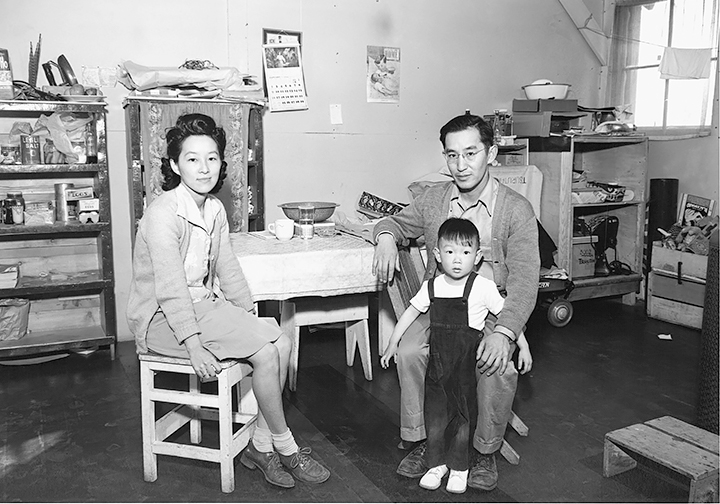
Manzanar : The Wartime Photographs of Ansel Adams

From April 01, 2021 to July 25, 2021
Share
Manzanar : The Wartime Photographs of Ansel Adams
5798 State Highway 80
Cooperstown, NY 13326
Adams's Manzanar photographs, created in 1943, are a departure from his signature style of landscape photography and serve as documentation of the Japanese relocation camp in California. The series was originally shown in the exhibition BORN FREE AND EQUAL: An Exhibition of Ansel Adams Photographs, organized by the Fresno Metropolitan Museum of Art, History and Science in 1984. The photographs document a dark period for America and serve as a reminder "about an unfortunate moment in our country's history that must be better understood. It also should serve as a warning as to what can occur when emotion and fear overwhelm clarity and courage."

Also included in the exhibition are more than twenty-five various photographs, documents, and works of art that further record this era.

The exhibition is presented in memory of Shizuo Tsujihara and is on loan from Photographic Traveling Exhibits.
Our printed edition showcases the winners of AAP Magazine call of entries
All About Photo
Awards 2026
Stay up-to-date  with call for entries, deadlines and other news about exhibitions, galleries, publications, & special events.

Exhibitions Closing Soon

Evidence of Existence
ICP Museum | New York, NY
From May 15, 2026 to May 25, 2026
Evidence of Existence, the 2026 ICP Recent Graduates Exhibition, unfolds at the International Center of Photography in New York from May 15 to May 25, bringing together a new generation of image-makers at a pivotal moment in their development. Drawing from three of the institution’s key educational tracks—including the One-Year Certificate Programs in Creative Practices and Documentary Practice and Visual Journalism, as well as the Teen Academy Imagemakers program—the exhibition offers a broad and layered view of contemporary photographic inquiry. Curated by Sara Ickow, the presentation gathers projects that probe the boundaries between visibility and absence, turning attention toward subjects that often remain unrecorded or overlooked. Across photography, video, installation, and hybrid media, the works reflect an engagement with personal narratives alongside wider social and political concerns. Rather than adhering to a single aesthetic or thematic direction, the exhibition foregrounds multiplicity, with each artist navigating distinct approaches to storytelling and representation. The Creative Practices cohort contributes work shaped by experimentation and conceptual exploration, where images often intersect with performance, sound, or sculptural elements. These projects reveal an ongoing dialogue between medium and message, situating photography within a broader cultural and theoretical framework. In contrast, the Documentary Practice and Visual Journalism participants emphasize investigative rigor, producing long-form narratives grounded in research, ethics, and sustained engagement with their subjects. Their projects reflect the evolving landscape of visual journalism, where traditional reportage meets new forms of distribution and audience interaction. Also included are contributions from the Teen Academy Imagemakers, whose presence underscores ICP’s commitment to fostering emerging voices at an early stage. Their work introduces fresh perspectives shaped by immediacy and curiosity, often addressing identity, community, and the complexities of contemporary life. Taken together, Evidence of Existence functions as both a culmination of study and a point of departure. It presents photography not simply as a tool of documentation, but as a means of inquiry—capable of rendering visible the nuances of lived experience while questioning the conditions under which images are made and understood. Image: Kevin Berlanga, Creative Practices '26,  Thanatos, 2026. © Kevin Berlanga
Haruka Sakaguchi: The Camps America Built
ICP Museum | New York, NY
From March 26, 2026 to May 25, 2026
Haruka Sakaguchi: The Camps America Built assembles a poignant constellation of memory, testimony, and landscape at the International Center of Photography. Each photograph rests at the intersection of history and inheritance, where silence gives way to remembrance. Sakaguchi’s lens captures the enduring imprint of World War II incarceration sites, layered with the human voices that return to them, carrying fragments of loss and resilience. The project portrays descendants and survivors who journey to the ten relocation centers scattered across the United States, from Manzanar in California’s Owens Valley to Heart Mountain in Wyoming and Poston in the Arizona desert. Their handwritten letters, tenderly composed, thread personal recollection with collective reckoning. The words hover between past and present, binding generations through the act of witnessing. In these letters, one hears the ache of departure, the quiet dignity of those who rebuild lives without erasing what cannot be undone. Sakaguchi, born in Osaka and based in New York, turns her camera toward stories that resist disappearance. Her practice extends beyond visual documentation—it listens. Echoing earlier projects such as her portraits of hibakusha in Hiroshima and Nagasaki, this series deepens her inquiry into how trauma crosses generations, reshaping family narratives and national conscience alike. The landscapes she photographs are nearly emptied of human presence, yet they hum with the traces of what once stood there: barbed wire, barracks, wind. By combining personal narrative, archival record, and portrait, The Camps America Built poses a quiet but urgent question about belonging and the meaning of citizenship in the American imagination. Sakaguchi’s portraits do not simply revisit history; they inhabit it, offering viewers a space to contemplate memory as both scar and offering, grief and grace intertwined. Image: Nojima Family Minidoka Survivor Nikki Nojima Louis remembers her incarceration at Minidoka. © Haruka Sakaguchi
Lewis Baltz: The Deaths in Newport
Gallery Luisotti | Los Angeles, CA
From April 01, 2026 to May 30, 2026
Lewis Baltz: The Deaths in Newport returns to public view at Gallery Luisotti as a rare reconsideration of one of the artist’s most enigmatic and experimental projects. Originally presented in the mid-1990s, the work emerges again after more than three decades, revealing a pivotal moment when Baltz expanded beyond the strict formal language that defined his early career. Known for his role in New Topographics, where he redefined landscape photography through an austere and analytical lens, Baltz here turns toward narrative, assembling fragments of history into a complex visual investigation. At the center of the project lies the infamous 1947 Overell murder case, a sensational trial that captured national attention and transformed a local tragedy into a prolonged media spectacle. Baltz approaches this event not as a storyteller seeking resolution, but as an archivist of uncertainty. Drawing from court documents, press clippings, and photographic evidence, he constructs a layered sequence that resists closure. The narrative unfolds through accumulation and repetition, where each detail complicates rather than clarifies, echoing the instability of truth within public memory. Presented in an early digital video format, the work reflects a moment when photographic practice begins to shift under the influence of emerging technologies. Baltz moves away from the singular image toward a time-based structure, where sequencing, duration, and juxtaposition shape meaning. This transition aligns with his broader interest in systems of control and mediation, extending his earlier examinations of industrial and suburban spaces into the realm of information and representation. A subtle but significant thread runs through the project in the form of personal connection. Baltz’s father, who served as a mortician and witness in the trial, introduces an intimate dimension that unsettles the apparent distance of the work. This proximity does not resolve the narrative; instead, it deepens its ambiguity. In The Deaths in Newport, Baltz transforms a historical घटना into a meditation on evidence, memory, and the persistent afterlife of images, where documentation becomes inseparable from interpretation. Image: Lewis Baltz, The Deaths in Newport (Video Still) 1995
Todd Gray: Portals
Perrotin Los Angeles | Los Angeles, CA
From March 21, 2026 to May 30, 2026
Todd Gray: Portals, presented at Perrotin Los Angeles from March 21 to May 30, 2026, gathers a new body of photographic assemblages by Todd Gray. The exhibition unfolds as a meditation on the shifting conditions of Black identity across geography and time. Drawing on landscapes, architectural fragments, and historical references, Gray constructs layered compositions that refuse a single viewpoint. Instead, the works evoke a network of relationships linking Europe, West Africa, and the Americas, suggesting that identity and history emerge through movement rather than fixed definition. Gray’s method relies on the assembly of disparate photographic elements into carefully structured tableaux. Formal gardens, Renaissance interiors, coastal landscapes, and remnants of colonial architecture appear within the same frame, sometimes bordered by ornate or improvised frames that extend the visual dialogue. In Paradox of Liberty (Monticello, Elmina, Akwidaa), palm trees photographed in Ghana intersect with a marble likeness of Thomas Jefferson and the entrance to a dungeon at Elmina Castle. Through these juxtapositions, Gray draws attention to the intertwined legacies of Enlightenment ideals, colonial expansion, and the transatlantic slave trade. Landscapes associated with beauty and leisure appear alongside sites marked by violence and displacement, revealing histories that remain embedded within the visual fabric of the Atlantic world. Photography occupies a complicated place in Gray’s practice. The medium emerged in the nineteenth century alongside expanding colonial systems, often serving as a tool for classification and surveillance. Gray approaches the camera with an acute awareness of this legacy. By layering images, shifting scale, and incorporating visual “glitches” drawn from damaged digital files, he transforms the photograph into an unstable field where meaning remains open and relational. These assemblages resist narrative closure, encouraging viewers to navigate visual connections that unfold across continents and centuries. The title Portals reflects this approach. A portal marks a threshold, an opening between different spaces or states of awareness. Gray’s compositions operate in precisely this manner: each image acts as an entry point into overlapping cultural histories, personal memory, and speculative imagination. Rather than isolating a single moment, the works suggest a continuous flow in which past events echo within the present. Landscapes, monuments, and bodies become passages through which multiple stories circulate, forming a dynamic vision of diasporic experience. Image: The Promise (Ghana, Rome, Gorée), detail, 2026. Four UV pigment prints on Dibond in artist’s frames. ©Todd Gray. Courtesy of the artist and Perrotin.
Stuart Allen: Seeing Color
PDNB | Denton, TX
From March 28, 2026 to May 30, 2026
Stuart Allen: Seeing Color, on view at PDNB Gallery from March 28 to May 30, 2026, brings together recent and earlier works that trace the artist’s sustained investigation into the structure and perception of color. Blending photography, digital processes, and painterly approaches, Allen constructs images that move between scientific inquiry and visual delight, revealing how color operates beyond immediate perception. Central to the exhibition is the series Flights, where photographs taken from airplane windows transform into intricate fields of color. Captured at high altitude, these images register subtle atmospheric shifts that often escape the naked eye. Through algorithmic manipulation, Allen translates these fleeting views into grids of colored dots, reminiscent of halftone printing yet retaining the integrity of each hue. The resulting compositions function as both documents of travel and studies of light in motion, anchored by precise references to time and location. In contrast, the series Every Unique Color turns inward, focusing on the chromatic complexity hidden within everyday subjects. By extracting and reorganizing every color found in a single image—often derived from food—Allen creates ordered matrices that map hue and luminosity with methodical clarity. These works reveal unexpected harmonies and tensions, transforming familiar objects into abstract systems governed by visual logic. The exhibition also revisits earlier explorations, including Allen’s pixel-based works and his studies of soap bubbles, where shifting wavelengths produce iridescent surfaces under controlled light. Across these varied series, a consistent thread emerges: a fascination with how technology and observation can uncover dimensions of color that lie just beyond ordinary vision. Seeing Color reflects an approach grounded in experimentation and curiosity, where the boundaries between art and science dissolve. Allen’s images invite close looking, encouraging viewers to consider not only what color is, but how it is experienced, measured, and ultimately reimagined. Image: Stuart Allen, Bubble No. 12, 2014 © Stuart Allen
Cheryl Clegg: The Endangered Lobstermen
Griffin Museum of Photography | Winchester, MA
From March 02, 2026 to May 30, 2026
Cheryl Clegg: The Endangered Lobstermen, on view at the Griffin Museum from March 2 to May 30, 2026, is a poignant photographic meditation on labor, heritage, and survival along the coast of Maine. Sparked by the red-listing of the American lobster, Clegg’s project shifts the focus from environmental statistics to lived experience, asking what happens when an ecosystem under threat places an entire way of life at risk. The exhibition centers the people whose identities are inseparable from the sea they work. Rather than documenting boats and traps alone, Cheryl Clegg turns her lens toward families and individuals embedded in Maine’s lobstering communities. Her portraits reveal pride passed down through generations, along with the quiet anxiety of an uncertain future. Weathered hands, steady gazes, and intimate domestic scenes speak to resilience forged through daily dependence on tides, seasons, and fragile marine balance. These photographs honor a culture that has endured through cooperation, skill, and an unspoken pact with nature. Clegg’s background in photographic illustration lends the series a careful balance of clarity and empathy. The images are visually striking yet grounded, avoiding romanticization while acknowledging the dignity of hard-won tradition. Viewers encounter not an industry in abstraction, but neighbors, parents, and children whose livelihoods are shaped by policy decisions, environmental change, and forces far beyond the harbor. The work gently underscores how ecological crises ripple outward, touching human communities in deeply personal ways. With The Endangered Lobstermen, Clegg continues a long-standing commitment to socially engaged storytelling. Her career, spanning decades of commercial and personal work, informs a visual language that is both accessible and deeply felt. This exhibition stands as a testament to the strength of Maine’s lobstering families while inviting reflection on what is at stake when tradition, environment, and economic survival collide. It is a reminder that preservation is as much about people as it is about species. Image: The Barrett Family, Addison, ME. © Cheryl Clegg
Michael Kenna: Confessionali
Joseph Bellows Gallery | La Jolla, CA
From April 25, 2026 to May 30, 2026
Michael Kenna: Confessionali, presented at Joseph Bellows Gallery from April 25 to May 30, 2026, gathers a quietly powerful body of work shaped over nearly a decade in the Italian city of Reggio Emilia. Curated by Lile Kvantaliani, the exhibition centers on a subject both humble and profound: the confessional. Within these enclosed wooden structures, the artist finds a visual language capable of addressing memory, secrecy, and the unseen dimensions of human experience. Kenna’s engagement with confessionals begins in 2007 inside the Chiesa di Santo Stefano, where the architectural rhythm and symbolic weight of these spaces first capture his attention. Over repeated visits through 2016, he develops a sustained meditation on their forms. Each photograph isolates subtle variations in design, light, and texture, transforming a familiar ecclesiastical object into something meditative and enigmatic. The series aligns with a long photographic tradition of typologies, yet avoids rigidity by allowing atmosphere and emotion to guide the work. Working exclusively in gelatin silver prints, Michael Kenna continues to favor traditional processes that emphasize craft and patience. His long exposures—often made in low light—render surfaces with a softness that borders on the dreamlike. Shadows deepen, edges dissolve, and details emerge gradually, echoing the slow unfolding of thought itself. These images do not describe confessionals as functional spaces; instead, they evoke them as vessels of unspoken narratives, holding traces of countless private encounters. Throughout his career, Kenna builds a reputation for photographing landscapes and structures at moments when light feels most elusive—before dawn or deep into the night. In Confessionali, that sensibility turns inward. The focus shifts from open horizons to enclosed interiors, yet the same search persists: a desire to reveal what lies beneath the visible surface. The resulting photographs suggest that even the most ordinary forms can contain a quiet intensity, where absence speaks as clearly as presence. By reducing his subject to its essential variations, Kenna invites sustained looking. The exhibition unfolds slowly, rewarding attention and contemplation, and affirms photography’s enduring capacity to approach what cannot be easily named. Image: Confessional, Study 49, Chiesa di Santa Maria Assunta, Minozzo, Reggio Emilia, Italy, 2015 © Michael Kenna. Courtesy of the Joseph Bellows Gallery
Peter Hujar: The Gracie Mansion Show
Ortuzar | New York, NY
From April 22, 2026 to May 30, 2026
At Ortuzar, Peter Hujar: The Gracie Mansion Show revisits a pivotal moment in the history of American photography. On view from April 22 to May 30, 2026, the exhibition reconstructs the artist’s 1986 presentation at Gracie Mansion Gallery, offering a rare opportunity to encounter the work as it was originally conceived. Organized in collaboration with Fraenkel Gallery and the Peter Hujar Archive and Foundation, the show restores the distinctive two-row grid that defined the earlier installation, allowing viewers to engage with the sequencing that lay at the core of Hujar’s vision. First presented under the title Recent Photographs, the 1986 exhibition brought together seventy images that moved fluidly across genres. Portraits of artists, performers, and writers appeared alongside nudes, animals, landscapes, and scenes of urban decay. In this arrangement, hierarchy dissolved: a cow might face an actor, a coffin portrait might sit beside a quiet landscape. The structure encouraged viewers to move laterally, forming connections that remained open-ended and subjective. By re-staging this layout, Ortuzar foregrounds Hujar’s sensitivity to juxtaposition and rhythm, underscoring how meaning emerges through proximity rather than categorization. Though the original exhibition attracted a vibrant downtown audience, it achieved little commercial success. Yet it stands, in retrospect, as a defining statement by an artist deeply embedded in New York’s cultural milieu. Figures such as David Wojnarowicz and Diana Vreeland appeared within his orbit, reflecting a community bound by experimentation and artistic independence. Hujar’s photographs capture this world with an intensity that balances intimacy and detachment, revealing individuals who, as he noted, “cling to the freedom to be themselves.” Born in 1934, Peter Hujar spent much of his life in New York’s East Village, producing a body of work that gained broader recognition only after his death in 1987. Today, his photographs are held in major institutions including the Metropolitan Museum of Art and the Museum of Modern Art. This reinstallation not only commemorates the fortieth anniversary of a landmark exhibition but also reaffirms Hujar’s enduring influence, presenting his images as a living network of relationships that continues to resonate with clarity and force. Image: David Wojnarowicz: Manhattan-Night (III), 1985 Pigment print by Gary Schneider © Peter Hujar, courtesy of Ortuzar gallery
AWAKENING
Photoworks at Glen Echo Park | Glen Echo, MD
From April 25, 2026 to May 31, 2026
At Photoworks, the juried exhibition AWAKENING unfolds from April 25 to May 31, 2026, offering a seasonal reflection on renewal through the language of contemporary photography. Set within Glen Echo Park, the exhibition gathers a wide range of perspectives that engage with transformation, both in the natural world and within personal experience. The show emphasizes the enduring appeal of photography as a medium attuned to cycles of change, where light, time, and subject converge to suggest moments of transition. Juried by Sarah Hood Salomon, the selection reflects a thoughtful balance between formal exploration and emotional resonance. Salomon, whose own practice centers on trees and the environment, brings a sensitivity to themes of growth and interconnectedness. Her influence is evident in the exhibition’s cohesion, where diverse approaches—ranging from landscape to abstraction—coalesce around a shared interest in emergence and renewal. The works resist a singular narrative, instead offering a constellation of interpretations that invite reflection. The participating artists, including Felix Alvarado, Didier Cayre, Meredith Massey, and Tetiana Sulima, among others, contribute images that span geographies and sensibilities. Some photographs focus on the quiet reawakening of nature, capturing subtle shifts in light, texture, and color, while others turn inward, exploring psychological or symbolic dimensions of renewal. Across these works, the notion of awakening extends beyond the seasonal, suggesting moments of personal reckoning, resilience, and redefinition. As a juried exhibition, AWAKENING also highlights the role of Photoworks as a platform for emerging and established voices alike. The show underscores the value of collective presentation, where individual practices gain new meaning through proximity and dialogue. In this setting, photography becomes a space for contemplation, offering viewers an opportunity to engage with images that echo the rhythms of change shaping both the environment and contemporary life. Image: "Sunrise Walk" © Troy Hill
Student Perspectives 2026
Perspective Gallery | Evanston, IL
From May 07, 2026 to May 31, 2026
At Perspective Gallery, Student Perspectives 2026 marks the fifteenth edition of an exhibition dedicated to emerging photographic voices from Chicago-area high schools. On view from May 7 to May 31, 2026, the annual juried show brings together a wide range of student work, offering a glimpse into how younger generations are engaging with photography as both artistic expression and personal inquiry. The exhibition opens with a public reception and awards ceremony on May 9, reinforcing its role as both celebration and community gathering. This year’s selection was made by Kelli Connell, a Chicago-based artist recognized for work exploring identity, gender, sexuality, and the complex dynamics between photographer and subject. From more than 750 submitted images by 261 students across 21 schools and programs, Connell chose 52 artists whose photographs reflect both technical curiosity and strong individual perspective. Her own practice, represented in major museum collections including the Metropolitan Museum of Art and the J. Paul Getty Museum, lends particular relevance to an exhibition centered on the power of visual storytelling. The selected works span a broad range of subjects and approaches, from portraiture and documentary observation to conceptual experimentation and studies of everyday life. Students from schools including Evanston Township, Lane Tech College Prep, Chicago High School for the Arts, and Glenbrook South contribute images that reveal both personal narratives and broader reflections on place, family, and identity. What emerges is not a single generational statement, but a collection of distinct voices shaped by different experiences and visual instincts. As photography continues to evolve in the digital age, exhibitions like Student Perspectives underscore the enduring importance of mentorship and public platforms for young artists. By placing student work in a professional gallery setting, Perspective Gallery creates space for serious engagement with these early practices. The exhibition affirms that photography remains a vital tool for observation and self-definition, while also reminding viewers that some of the most compelling perspectives often come from those just beginning to shape their artistic language. Image: Alejandro Ascencio, Lost in the Blues © Alejandro Ascencio
Lydia Azout: Reflections…now
Dot Fiftyone Gallery | Miami, FL
From March 21, 2026 to May 31, 2026
At Dot Fiftyone Gallery, Lydia Azout: Reflections…now brings together a new body of work that extends the artist’s long-standing investigation into form, balance and transcendence. Presented alongside the release of a monograph surveying five decades of practice, the exhibition situates recent sculptures and installations within a broader continuum, where material experimentation remains closely tied to philosophical inquiry. Azout’s use of industrial materials—stainless steel, iron, aluminum—anchors the exhibition in a language of tension and precision. Her sculptural structures often appear improbably balanced, sometimes resting on a single point, as if suspended between stability and collapse. This approach, developed over decades, reflects an ongoing interest in equilibrium as both a physical and metaphysical condition. The polished surfaces of the works interact with light and space, while photographic elements printed on aluminum and accented with gold introduce a reflective, almost icon-like dimension. The exhibition also includes a video installation that expands these concerns into time-based form, reinforcing the idea that Azout’s work resists fixity. Her practice has long drawn from pre-Hispanic cosmologies and the symbolic weight of sacred landscapes, particularly in Colombia, where she emerged as a key figure in modern and contemporary art. References to ritual and totemic structures persist, though they remain abstracted, embedded in geometry rather than overt representation. A defining moment often cited in relation to her work—a confrontation with the force of a Caribbean hurricane—continues to resonate here. It informs a vocabulary in which opposing elements coexist: fragility and endurance, turbulence and stillness. In Reflections…now, these dualities are not resolved but held in suspension, suggesting a continuous process of transformation rather than a fixed state. The exhibition underscores Azout’s sustained engagement with the relationship between matter, environment and inner experience, positioning her work within a broader dialogue on the spiritual potential of abstraction. Image: © Lydia Azout
Photography from The Menil Collection: Curated by Wendy Watriss
The Menil Collection | Houston, TX
From December 12, 2025 to May 31, 2026
The Menil Collection presents Photography from The Menil Collection: Curated by Wendy Watriss, a major exhibition exploring the power of documentary photography to illuminate social realities and provoke dialogue. On view from December 12, 2025, through May 31, 2026, the exhibition gathers works by influential photographers such as Henri Cartier-Bresson, Larry Burrows, Bruce Davidson, Danny Lyon, and Charles Moore—artists who each found extraordinary meaning within the rhythms of everyday life. Curated by Houston-based photographer and photojournalist Wendy Watriss, the exhibition offers a deeply personal interpretation of the Menil’s photographic holdings. Watriss selected images that not only reflect the strength of the collection but also the humanist vision of the museum’s founders, John and Dominique de Menil. “This exhibition,” Watriss notes, “was shaped by three sets of eyes—my own, and the de Menils’. It is a chance to reconnect with their remarkable way of seeing the world and engaging with art.” The de Menils began collecting photographs in the late 1960s, when the medium was still fighting for its place within fine art. They viewed photography as an accessible and essential art form capable of revealing the shared experiences of humanity. Their early acquisitions, which later formed the foundation of the Menil’s collection, were guided by a belief in art’s potential to bridge culture, ethics, and empathy. For Watriss, this project also marks a return to the roots of her own artistic journey. Alongside her late husband Fred Baldwin, she co-founded FotoFest in 1986, an international photography biennial that transformed Houston into a global hub for photographic dialogue. The Menil’s commitment to connecting art and social justice inspired their work, shaping both their practice and their community engagement. Presented in honor of FotoFest’s 40th anniversary, Photography from The Menil Collection celebrates not only the enduring legacy of the de Menils and Watriss but also photography’s unique capacity to bear witness, question, and connect. Image: Bruce Davidson, East 100th Street, 1966. Gelatin silver print. 7 3/16 × 7 3/16 in. (18.3 × 18.3 cm). The Menil Collection, Houston, Anonymous gift. © Bruce Davidson/Magnum Photos. Photo: Paul Hester
Advertisement
AAP Magazine #58 B&W
Win a Solo Exhibition in July
AAP Magazine #58 B&W
Call for Entries
AAP Magazine #58 B&W
Publish your work in our printed magazine and win $1,000 cash prizes

Related Articles

Belfast Photo Festival 2026: Horizons
The 2026 edition takes visitors towards new ‘Horizons’, a theme that positions photography at a critical threshold in an age of AI-generated imagery, automation and algorithmic seeing. The festival returns as the medium undergoes profound transformation and its claims to truth, trust, authorship and materiality are increasingly being questioned.
Meryl Meisler: Queer-Friendly Nightlife Now
Nearly five decades after documenting disco-era revelry, photographer Meryl Meisler returns with a bold new body of work capturing the pulse of contemporary queer nightlife—its grit, glamour, and enduring sense of community. Meryl Meisler: Queer-Friendly Nightlife Now premieres the CPW's inaugural Upstate Photography Biennial, a new exhibition series featuring 39 artists from across the region, opening May 30, 2026.
Prix Pictet Exhibition Makes U.S. Debut at MoCP
The Museum of Contemporary Photography at Columbia College Chicago (MoCP) will present Prix Pictet Storm from May 29 through August 22, 2026, marking the U.S. debut of the internationally touring exhibition dedicated to photography and sustainability. Organized in partnership with Prix Pictet — widely recognized as the world’s leading award focused on photography and sustainability — the exhibition brings together twelve exceptional contemporary photographers whose work explores environmental instability, political unrest, social tension, and the fragile state of the modern world.
Marilyn Monroe at 100: Landmark Exhibition Opens at National Portrait Gallery
Exploring Monroe’s life, career and legacy , the exhibition will include portraits created by many of the greatest photographers and artists of the 21th and 21st centuries , including Andy Warhol, Pauline Boty and Richard Avedon .
Posto 5: The Renaissance of Committed Photographic Narrative
The birth of an auteur collective dedicated to a sensitive inventory of the world, where the rigor of visual storytelling honors the standards of historical foundations.
Peckham 24: 10th Anniversary, The Eras Edition
Peckham 24, the acclaimed festival of contemporary photography, returns to Copeland Park in Peckham, South London, for its landmark 10th anniversary edition. Over the past decade, the festival has grown into a major cultural highlight, championing innovation while providing a global platform for emerging photographic talent.
The Nature of Hope: A Photo Project Supporting Roots & Shoots and Vital Impacts
Renowned photographer Ami Vitale unveils The Nature of Hope, a global photo project inspired by Jane Goodall. Featuring leading environmental photographers, the initiative supports conservation through Vital Impacts and celebrates storytelling as a force for planetary change and hope.
Tangerine Dreams by Sophie Green
British documentary photographer Sophie Green presents Tangerine Dreams, a vivid portrait of the communities, subcultures and social gatherings that shape contemporary Britain. For over a decade, she has documented how rituals and traditions build connection, belonging and shared identity. This celebratory and emotively kaleidoscopic work will be on show as a free exhibition at the Martin Parr Foundation, Bristol from 4 June - 6 September 2026.
Brussels Street Photography Festival honors Josef Koudelka with Lifetime Achievement Award
The Brussels Street Photography Festival (BSPF) is pleased to announce that Josef Koudelka, one of the most iconic photographers of our time, will be the guest of honor at this year’s 10th-anniversary celebration. Koudelka will receive the festival’s Lifetime Achievement Award in recognition of his extraordinary contributions to photography during a special evening at Brussels City Hall on May 30, 2026. The event will also feature an interview with the photographer and the announcement of this year’s competition winners.
Call for Entries
Win A Solo Exhibition in June
Get International Exposure and Connect with Industry Insiders