All about photo.com: photo contests, photography exhibitions, galleries, photographers, books, schools and venues.
FINAL DAYS TO ENTER AAP MAGAZINE B&W: PUBLICATION AND $1,000 CASH PRIZES

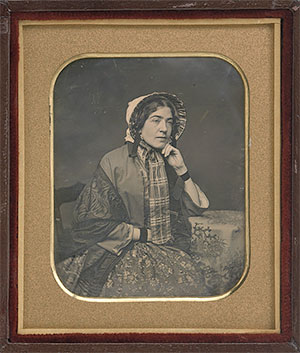
Women of Progress: Early Camera Portraits

From June 14, 2019 to May 31, 2020
Share
Women of Progress: Early Camera Portraits
Eighth and F Streets NW
Washington, DC 20001
In mid-nineteenth-century America, the growing presence of women in public life coincided with the rise of portrait photography. This exhibition of daguerreotypes and ambrotypes from the 1840s and 1850s features portraits of early feminist icons, women's rights advocates Margaret Fuller and Lucy Stone, abolitionist Lucretia Mott and best-selling author Harriet Beecher Stowe. Ann Shumard, the National Portrait Gallery's senior curator of photographs, is the curator of this exhibition.
Stay up-to-date  with call for entries, deadlines and other news about exhibitions, galleries, publications, & special events.

Exhibitions Closing Soon

Leigh Blanchard: "Meet Me Underwater"
440 Gallery | Brooklyn, NY
From April 23, 2026 to May 24, 2026
At 440 Gallery, Meet Me Underwater unfolds as an intimate and layered exploration of perception, identity, and the shifting terrain of self-understanding. In this new body of work, artist Leigh Blanchard turns inward, drawing from her recent autism diagnosis to construct images that operate as both refuge and revelation. At first glance, the compositions appear soft, even lyrical—fields of color, texture, and light that suggest calm. Yet beneath this surface lies a quieter tension, one that invites sustained looking and careful attention. Blanchard’s approach resists conventional definitions of photography. Combining lens-based imagery with fiber elements, collage, and experimental processes such as scanography, she builds tactile surfaces that blur distinctions between mediums. Threads, seams, and layered fragments become visual metaphors, evoking the complexities of sensory experience and the act of piecing together meaning. The resulting works feel both constructed and organic, as if assembled from memory, emotion, and observation all at once. The exhibition emerges from a deeply personal moment, but its resonance extends beyond autobiography. Blanchard addresses the dissonance between internal clarity and external misunderstanding, particularly in a cultural context where autism is often misrepresented or oversimplified. Her images do not illustrate this tension directly; instead, they embody it. Viewers encounter a visual language that oscillates between comfort and unease, familiarity and ambiguity, mirroring the artist’s own navigation of identity and perception. This is Blanchard’s fifth solo presentation at the gallery, and it reflects a continued commitment to experimentation and introspection. Her practice aligns with a broader movement in contemporary photography that embraces hybridity and challenges the boundaries of the medium. In Meet Me Underwater, the photograph no longer serves as a fixed record but as a site of transformation—where materials, processes, and lived experience converge to produce images that are as much felt as they are seen. In a moment saturated with images, Blanchard’s work slows the gaze. It asks not only what we see, but how we see—and what remains just beneath the surface. Image: © Leigh Blanchard
Trisha Brown and Robert Rauschenberg: Glacial Decoy
Walker Art Center | Minneapolis, MN
From June 26, 2025 to May 24, 2026
Trisha Brown and Robert Rauschenberg: Glacial Decoy revisits a groundbreaking collaboration that forever altered the relationship between dance and visual art. In 1979, choreographer Trisha Brown—renowned for her site-specific works performed on rooftops, walls, and in city parks—invited her longtime friend and collaborator Robert Rauschenberg to join her in creating Glacial Decoy. Commissioned by the Walker Art Center, this piece marked Brown’s first choreography for a traditional proscenium stage and opened a new dialogue between movement, space, and image. The exhibition brings together Rauschenberg’s original décor and costumes with archival photographs, prints, and film documenting both the original and more recent performances. His projected backdrop of black-and-white photographs—featuring images of tires, melting ice, and freight trains—moves steadily across the stage, echoing the fluid motion of Brown’s choreography, in which dancers continually enter and exit without pause. The result is a hypnotic rhythm between image and body, between stillness and motion. Rauschenberg’s diaphanous costumes, designed to reveal and conceal the dancers as they move, further blur the boundaries between presence and absence, reality and illusion. Glacial Decoy stands as a poetic meditation on perception and transformation, a reflection of two artists’ shared fascination with the fleeting nature of experience. The exhibition not only honors their pioneering collaboration but also situates it within a broader conversation about interdisciplinary creation at the close of the twentieth century. Opening a yearlong celebration of Rauschenberg’s centennial, the presentation launches the program Rauschenberg\@100: Merce Cunningham, Trisha Brown, Kyle Abraham. Throughout November 2025, live performances and a residency with the Trisha Brown Dance Company will explore the enduring influence of these visionary figures and the continuing resonance of their work at the intersection of movement and art. Image: Trisha Brown Dance Company, Glacial Decoy, 1979. Photo: Boyd Hagen. Courtesy Walker Art Center.
Tara Sellios | Ask Now the Beasts
Fitchburg Art Museum | Fitchburg, MA
From January 18, 2025 to May 24, 2026
Tara Sellios, a Boston-based artist, creates hauntingly beautiful photographs that explore the fragile tension between life and death. Working with organic materials such as animal bones, insect specimens, and dried flowers, she constructs elaborate still-life scenes that evoke both reverence and unease. Captured with a large-format 8 x 10 camera, her compositions reveal a meticulous attention to texture and form, where every feather, petal, and fragment becomes a meditation on impermanence and the natural cycle of decay. Sellios draws deeply from the visual language of Christian devotional art, echoing the spiritual intensity of illuminated manuscripts, altarpieces, and stained-glass windows. Her work also resonates with the vanitas tradition of seventeenth-century Dutch painting, in which symbols of mortality remind viewers of the fleeting nature of existence. Yet, rather than moralizing, her images invite contemplation—transforming decay into something transcendent, even sacred. The grotesque becomes luminous, the ruined becomes reborn. Her latest series, Ask Now the Beasts, takes its title from the Book of Job, a biblical text that contemplates the mysteries of suffering, nature, and divine order. Through this body of work, Sellios examines the harvest and the apocalypse as intertwined forces, suggesting that death and renewal are inseparable. Within these intricate compositions, the earth’s cycles unfold—a quiet revelation of endurance, regeneration, and the eternal dialogue between destruction and creation. Opening January 18, 2025, at the Fitchburg Art Museum, Ask Now the Beasts will remain on view through the end of the year. The exhibition offers an immersive encounter with Sellios’s vision—a world where beauty blooms amid ruin, and where the boundaries between devotion, mortality, and art dissolve into one continuous breath of life and loss. Image: Tara Sellios, Abundantia, ink jet print, 2023. Courtesy of the Artist. © Tara Sellios
Labor Daily | American Working Class
Griffin Museum of Photography | Winchester, MA
From March 20, 2026 to May 24, 2026
Labor Daily | American Working Class, on view from March 20 through May 24, 2026 at the Winchester Galleries at the Griffin Museum, offers a compelling photographic meditation on work as both a lived experience and a defining cultural force. Through a diverse range of perspectives, the exhibition considers how labor continues to shape identity in the United States, even as its meanings, structures, and promises undergo profound change. These photographs look closely at work not as abstraction, but as daily reality—grounded in places, bodies, and routines that quietly sustain the nation. Featuring work by Carl Corey, Chris Aluka Berry, Daniel Overturf, Inna Valin, Julie Dermansky, Terry Evans, and Xavier Tavera, the exhibition brings together artists whose practices span documentary traditions, long-form visual storytelling, and intimate portraiture. Their images move between rural and urban settings, industrial and domestic spaces, revealing labor as an evolving landscape shaped by economic shifts, environmental pressures, and social inequities. Each photographer approaches the subject with deep respect for the individuals they depict, emphasizing resilience over spectacle. Rather than offering nostalgia for a vanished ideal, Labor Daily confronts the present moment with clarity and empathy. The exhibition acknowledges how work, once closely tied to stability and pride, has increasingly become a matter of endurance for many. Yet within these frames, dignity persists—in gestures, postures, and moments of quiet determination. Labor is shown not only as what people do to survive, but as an extension of who they are, carrying histories of community, migration, and belonging. The exhibition also underscores photography’s enduring role as a witness to social change. From environmental labor tied to land and climate, to service, caregiving, and industrial work often rendered invisible, these images insist on attention. They invite viewers to slow down and look closely, recognizing the human cost and human value embedded in everyday work. Ultimately, Labor Daily | American Working Class is both a tribute and a reckoning. It honors the persistence of those who labor while asking urgent questions about what work means today, and what it might yet become. Through these photographs, labor emerges not as a static concept, but as a living, shifting reflection of American life itself. Image: © Carl Corey
Femme ’n isms, Part III: Flashpoints in Photography
Allen Memorial Art Museum | Oberlin, OH
From August 22, 2025 to May 24, 2026
Femme ’n isms is a multi-year series of exhibitions celebrating intersectional feminist artmaking in the Allen’s collection. Inspired by a recent gift of prints and photographs by German artists Käthe Kollwitz and Lotte Jacobi, the third installment of Femme ’n isms features portraits of girls and women, almost entirely by women and femme-identifying artists.. Some works depict artists, musicians, and actors in self-conscious poses, while others capture an exchange of casualness and honesty between women artists and subjects. Nearly half the works are self-portraits in artists’ studios or other intimate spaces, highlighting the overlooked labor of women artists. Spanning more than a century, changing attitudes toward self-fashioning in these works demonstrate that making one’s own image is a crucial means of asserting agency over one’s representation and ultimately oneself.. The exhibition includes works by Emma Amos, Cecilia Beaux, Martine Gutierrez, Lotte Jacobi, Käthe Kollwitz, Marie Laurencin, Joan Semmel, Cindy Sherman, and others.
William Betcher: Memento Mori
Danforth Museum of Art | Framingham, MA
From January 31, 2026 to May 24, 2026
William Betcher: Memento Mori, on view from January 31 to May 24, 2026 at the Danforth Museum of Art in the Delos Reyes Murtaugh Gallery, presents a contemplative and quietly unsettling exploration of photography as a vessel for memory. Rooted in a long-standing investigation of time and place, Betcher’s work invites viewers to reflect on how images hold traces of lives once lived, and how photographs themselves become haunted objects shaped by absence and remembrance. Drawing inspiration from Civil War–era portraiture, Betcher engages with a period when photography was deeply intertwined with rituals of mourning and remembrance. Early photographic processes, fragile and impermanent by nature, become central to his inquiry. Through these references, he connects 19th-century attitudes toward death with contemporary concerns surrounding image-making, preservation, and loss. The resulting portraits feel suspended between eras, evoking both historical weight and modern uncertainty. Betcher’s recent works explore mortality and the uncanny through damaged artifacts, faded transparencies, and visual disruptions that suggest unseen presences. Faces emerge and dissolve, forms hover at the edge of recognition, and the photograph becomes less a document than a threshold. These works resist clarity, instead offering a space where viewers confront the instability of memory and the lingering echoes carried by physical objects marked by time. As evolving photographic objects, Betcher’s memento mori function as a contemporary echo of spirit photography, where belief, illusion, and materiality intertwine. His use of found elements—particularly toys marked by age and wear—introduces narratives of innocence, conflict, and forgotten play, each imbued with implied histories. In Memento Mori, Betcher proposes photography not as a fixed record, but as a living artifact—one that quietly absorbs memory, loss, and the spectral presence of what has passed, reminding us that images, like lives, are never truly still. Image: © William Betcher
Memory is a Verb
Danforth Museum of Art | Framingham, MA
From January 31, 2026 to May 24, 2026
Memory is a Verb, presented at the Litowitz Gallery at the Danforth Museum of Art from January 31 to May 24, 2026, brings together ten photographers whose work approaches memory as an active, evolving process rather than a fixed archive. Featuring Elizabeth Bailey, Annette LeMay Burke, Dena Elisabeth Eber, Sarah Hadley, Diane Hemingway, Susan Lapides, Lori Ordover, Jennifer Pritchard, Rosalie Rosenthal, and Aline Smithson, the exhibition forms a shared meditation on time, loss, and the fragile nature of remembrance. Across the gallery, each artist draws from deeply personal experiences, using photography as a way to navigate the emotional terrain shaped by absence. Their images speak to the aftermath of loss—of loved ones, of homes, of landscapes, and of the rituals once used to safeguard memory. Film negatives, family albums, and slides resurface as symbols of care and continuity, even as they reveal how easily such objects can fade, be discarded, or rendered unreadable by time and technological change. Rather than offering nostalgic certainty, the works in Memory is a Verb embrace ambiguity and fragmentation. Memory appears fluid, incomplete, and often unreliable, shaped as much by perception as by fact. Photographs function not only as records, but as instruments for questioning what is remembered, what is forgotten, and what is imagined in the spaces between. In this way, the medium becomes a tool for inquiry—an act of looking that helps articulate the emotional complexity of holding on and letting go. The exhibition ultimately asks unsettling yet essential questions. When the original witnesses are gone, who carries these memories forward? What narratives survive when names and faces lose their context? By positioning memory as something we actively do, rather than something we simply possess, these artists remind us that remembrance requires attention, care, and participation. Memory is a Verb offers a quiet but powerful reflection on photography’s role as both keeper and interpreter of the past, shaped continually by those who choose to engage with it. Image: I Don’t Know #4, 2005/2023, Collaged Photograph, printed as an Archival Pigment Print. © Aline Smithson
Rebel Girl: Luisa Dörr, Selina Román, and Jo Ann Chaus
Houston Center for Photography HCP | Houston, TX
From March 12, 2026 to May 24, 2026
Rebel Girl: Luisa Dörr, Selina Román, and Jo Ann Chaus, presented at the Houston Center for Photography from March 12 through May 24, 2026, brings together the work of three contemporary photographers whose practices examine the evolving meanings of female identity. Through portraiture, performance, and conceptual self-representation, the exhibition highlights the many ways women challenge inherited expectations and reshape cultural narratives surrounding gender, beauty, and autonomy. The project continues the institution’s long-standing commitment to supporting women artists and amplifying voices that have historically received less recognition within the photographic field. Brazilian photographer Luisa Dörr contributes images from her series Imilla, which follows a collective of Indigenous women skateboarders in Cochabamba. Wearing traditional pollera skirts while skating through the city’s streets, the group merges ancestral identity with contemporary youth culture. The garments, once imposed during colonial rule and later associated with discrimination, are reclaimed as symbols of pride and resistance. Dörr’s portraits capture moments of confidence and solidarity, presenting the skaters not only as athletes but also as agents of cultural affirmation. In contrast, photographer Selina Román turns the camera toward her own body in the series XS. Through tightly framed images and vibrant fabrics, Román transforms familiar parts of the body into abstract compositions of color, curve, and texture. The photographs playfully disrupt conventional ideas of scale and beauty, inviting viewers to reconsider the ways the female form is seen and judged. By combining minimalist compositions with bold visual experimentation, Román creates images that oscillate between intimacy and abstraction. The exhibition concludes with work by Jo Ann Chaus, whose ongoing project Conversations with Myself examines the tension between mid-century ideals of femininity and contemporary understandings of identity. Through staged self-portraits and vintage clothing drawn from personal memory, Chaus reflects on aging, self-perception, and the lingering influence of social expectations. Together, the three artists trace a wide arc of experience, from youthful rebellion to introspective maturity, revealing how photography continues to provide a powerful space for questioning, reimagining, and affirming the many dimensions of womanhood. Image: © Luisa Dörr
THE VANGUARD
Houston Center for Photography HCP | Houston, TX
From March 12, 2026 to May 24, 2026
The Vanguard, presented at the Houston Center for Photography from March 12 through May 24, 2026, commemorates the institution’s forty-five years of dedication to the photographic arts. Conceived as both an exhibition and a reflection on institutional memory, the presentation brings together twenty women photographers whose work appeared during the center’s formative decades. Drawn from HCP’s archives, the exhibition highlights artists whose practices shaped the visual and intellectual landscape of contemporary photography while also illuminating the organization’s long-standing commitment to supporting women in the field. Since its founding in 1981, HCP has stood apart as a member-driven space where artists, curators, and educators collectively influenced the direction of the organization. Early leadership and curatorial voices helped foster an environment in which women photographers received visibility at a time when many institutions overlooked their contributions. The influence of figures such as Anne Wilkes Tucker helped establish a thoughtful and ambitious approach to photographic exhibitions, placing HCP among the most respected nonprofit photography centers in the United States. Over time, the organization cultivated a reputation for championing innovative work and introducing emerging artists to broader audiences. The Vanguard revisits that history through photographs that span a wide range of visual approaches and cultural perspectives. The exhibition includes works by artists such as Graciela Iturbide, Carrie Mae Weems, and An-My Lê, whose images address identity, social structures, and the complexities of memory and place. Their photographs appear alongside works by Deborah Bay, Dornith Doherty, Maggie Taylor, and others whose practices range from documentary observation to digital experimentation and conceptual storytelling. Together, these artists reveal the extraordinary diversity that characterizes contemporary photographic practice. Rather than presenting a chronological survey, the exhibition unfolds through a series of personal connections and curatorial reflections. Each selected artist represents a moment in the evolving relationship between the curator and the institution—artists discovered through HCP’s early programming, collaborators encountered through professional exchange, or photographers whose work emerged more recently within the Houston community. Through this layered approach, The Vanguard honors the women who shaped the center’s legacy while reaffirming the enduring importance of institutions that nurture artistic voices and expand the history of photography. Image: © Deborah Bay
Sophie Calle: Overshare
UC Irvine Langson Orange County Museum of Art | Costa Mesa, CA
From January 31, 2026 to May 24, 2026
Sophie Calle: Overshare, on view from January 31 to May 24, 2026, presents the first major North American survey to fully explore the scope of Sophie Calle’s influential career. Spanning five decades, the exhibition traces how Calle has consistently placed herself at the center of her work, using her own experiences as both material and method. Long before digital platforms normalized public confession, Calle was already probing the fragile boundary between private life and public display. Through photography, text, video, and installation, her work reveals how storytelling, observation, and intimacy can become artistic strategies—inviting viewers into narratives that feel at once personal and unsettling. At the heart of Overshare lies a sustained reflection on self-disclosure and its inherent contradictions. Calle’s projects often begin with a simple gesture—following a stranger, documenting a relationship, or exposing a personal loss—but quickly unfold into complex investigations of trust, consent, and voyeurism. These works do not merely reveal the artist’s life; they implicate the viewer, activating curiosity and discomfort in equal measure. By foregrounding acts of looking, recording, and recounting, Calle raises enduring questions about surveillance and intrusion, issues that resonate strongly in a contemporary culture shaped by constant visibility and performance. Organized by the Walker Art Center and presented at the UC Irvine Langson Orange County Museum of Art, Sophie Calle: Overshare situates Calle’s practice within a broader cultural conversation about identity, authorship, and ethics. Her work feels strikingly prescient, anticipating how social media would later transform everyday life into curated narrative. Yet it also remains deeply rooted in conceptual traditions, emphasizing structure, repetition, and chance encounters. This exhibition offers a rare opportunity to engage with Calle’s art in its full complexity, encouraging viewers to reconsider how stories are told, shared, and consumed—and what is at stake when the line between observer and subject quietly dissolves. Image: Sophie Calle, Autobiographies (Dead in a Good Mood) (detail), 2013, digital print and text panel, framed photo: 19 7/8 x 19 7/8 in. (50.5 x 50.5 cm), framed text: 30 1/8 x 19 7/8 in. (76.5 x 50.5 cm). © 2026 Sophie Calle / Artists Rights Society (ARS), New York / ADAGP, Paris. Courtesy of Sophie Calle and Paula Cooper Gallery, New York.
Labors of Love | Illuminating the Archive
Griffin Museum of Photography | Winchester, MA
From March 20, 2026 to May 24, 2026
From March 20 through May 24, 2026, Labors of Love | Illuminating the Archive brings the work of Edward Boches into dialogue with that of Arthur Griffin in the Founder’s Gallery at the Griffin Museum of Photography. Part of the museum’s ongoing Illuminating the Archive series, the exhibition invites a contemporary photographer to respond to Griffin’s vast body of work, creating a conversation across generations grounded in shared values of observation and respect. Boches, a Boston- and Cape Cod–based documentary photographer, has spent years immersed in communities defined by dedication: amateur boxers training in spare gyms, social justice activists organizing behind the scenes, oyster farmers tending their beds before dawn. His practice resists spectacle. Rather than focus on the triumphant moment—on stage, in print, or plated for applause—he turns his lens toward rehearsal, preparation, and repetition. The photographs honor the discipline required to pursue a calling, suggesting that meaning resides not only in achievement but in persistence. In revisiting Griffin’s archive, Boches discovered a kindred sensibility. Griffin, whose career spanned much of the twentieth century and who became a pioneer in the expressive use of color film, documented athletes, performers, and working people throughout New England with curiosity and dignity. As a photojournalist for publications including the Boston Globe and national magazines, he captured everyday life with clarity and warmth, revealing the pride embedded in ordinary labor. Installed alongside the larger exhibition Labor Daily | American Working Class, this focused presentation underscores a common thread: devotion to craft. Whether depicting a Pulitzer Prize–winning writer at work or a lobster fisherman hauling traps, both photographers seek the same quiet intensity. Their images affirm that behind every public accomplishment lies unseen effort—labors of love that define character, sustain communities, and bind past to present through the enduring language of photography. Image: Cleaning the Run © Edward Boches
Haruka Sakaguchi: The Camps America Built
ICP Museum | New York, NY
From March 26, 2026 to May 25, 2026
Haruka Sakaguchi: The Camps America Built assembles a poignant constellation of memory, testimony, and landscape at the International Center of Photography. Each photograph rests at the intersection of history and inheritance, where silence gives way to remembrance. Sakaguchi’s lens captures the enduring imprint of World War II incarceration sites, layered with the human voices that return to them, carrying fragments of loss and resilience. The project portrays descendants and survivors who journey to the ten relocation centers scattered across the United States, from Manzanar in California’s Owens Valley to Heart Mountain in Wyoming and Poston in the Arizona desert. Their handwritten letters, tenderly composed, thread personal recollection with collective reckoning. The words hover between past and present, binding generations through the act of witnessing. In these letters, one hears the ache of departure, the quiet dignity of those who rebuild lives without erasing what cannot be undone. Sakaguchi, born in Osaka and based in New York, turns her camera toward stories that resist disappearance. Her practice extends beyond visual documentation—it listens. Echoing earlier projects such as her portraits of hibakusha in Hiroshima and Nagasaki, this series deepens her inquiry into how trauma crosses generations, reshaping family narratives and national conscience alike. The landscapes she photographs are nearly emptied of human presence, yet they hum with the traces of what once stood there: barbed wire, barracks, wind. By combining personal narrative, archival record, and portrait, The Camps America Built poses a quiet but urgent question about belonging and the meaning of citizenship in the American imagination. Sakaguchi’s portraits do not simply revisit history; they inhabit it, offering viewers a space to contemplate memory as both scar and offering, grief and grace intertwined. Image: Nojima Family Minidoka Survivor Nikki Nojima Louis remembers her incarceration at Minidoka. © Haruka Sakaguchi
Advertisement
AAP Magazine #58 B&W
Win a Solo Exhibition in June
AAP Magazine #58 B&W
Call for Entries
AAP Magazine #58 B&W
Publish your work in our printed magazine and win $1,000 cash prizes

Related Articles

Belfast Photo Festival 2026: Horizons
The 2026 edition takes visitors towards new ‘Horizons’, a theme that positions photography at a critical threshold in an age of AI-generated imagery, automation and algorithmic seeing. The festival returns as the medium undergoes profound transformation and its claims to truth, trust, authorship and materiality are increasingly being questioned.
Meryl Meisler: Queer-Friendly Nightlife Now
Nearly five decades after documenting disco-era revelry, photographer Meryl Meisler returns with a bold new body of work capturing the pulse of contemporary queer nightlife—its grit, glamour, and enduring sense of community. Meryl Meisler: Queer-Friendly Nightlife Now premieres the CPW's inaugural Upstate Photography Biennial, a new exhibition series featuring 39 artists from across the region, opening May 30, 2026.
Prix Pictet Exhibition Makes U.S. Debut at MoCP
The Museum of Contemporary Photography at Columbia College Chicago (MoCP) will present Prix Pictet Storm from May 29 through August 22, 2026, marking the U.S. debut of the internationally touring exhibition dedicated to photography and sustainability. Organized in partnership with Prix Pictet — widely recognized as the world’s leading award focused on photography and sustainability — the exhibition brings together twelve exceptional contemporary photographers whose work explores environmental instability, political unrest, social tension, and the fragile state of the modern world.
Marilyn Monroe at 100: Landmark Exhibition Opens at National Portrait Gallery
Exploring Monroe’s life, career and legacy , the exhibition will include portraits created by many of the greatest photographers and artists of the 21th and 21st centuries , including Andy Warhol, Pauline Boty and Richard Avedon .
Posto 5: The Renaissance of Committed Photographic Narrative
The birth of an auteur collective dedicated to a sensitive inventory of the world, where the rigor of visual storytelling honors the standards of historical foundations.
Peckham 24: 10th Anniversary, The Eras Edition
Peckham 24, the acclaimed festival of contemporary photography, returns to Copeland Park in Peckham, South London, for its landmark 10th anniversary edition. Over the past decade, the festival has grown into a major cultural highlight, championing innovation while providing a global platform for emerging photographic talent.
The Nature of Hope: A Photo Project Supporting Roots & Shoots and Vital Impacts
Renowned photographer Ami Vitale unveils The Nature of Hope, a global photo project inspired by Jane Goodall. Featuring leading environmental photographers, the initiative supports conservation through Vital Impacts and celebrates storytelling as a force for planetary change and hope.
Tangerine Dreams by Sophie Green
British documentary photographer Sophie Green presents Tangerine Dreams, a vivid portrait of the communities, subcultures and social gatherings that shape contemporary Britain. For over a decade, she has documented how rituals and traditions build connection, belonging and shared identity. This celebratory and emotively kaleidoscopic work will be on show as a free exhibition at the Martin Parr Foundation, Bristol from 4 June - 6 September 2026.
Brussels Street Photography Festival honors Josef Koudelka with Lifetime Achievement Award
The Brussels Street Photography Festival (BSPF) is pleased to announce that Josef Koudelka, one of the most iconic photographers of our time, will be the guest of honor at this year’s 10th-anniversary celebration. Koudelka will receive the festival’s Lifetime Achievement Award in recognition of his extraordinary contributions to photography during a special evening at Brussels City Hall on May 30, 2026. The event will also feature an interview with the photographer and the announcement of this year’s competition winners.
Call for Entries
Win A Solo Exhibition in June
Get International Exposure and Connect with Industry Insiders