All about photo.com: photo contests, photography exhibitions, galleries, photographers, books, schools and venues.
Win a Solo Exhibition in July 2026 + An Exclusive Interview!

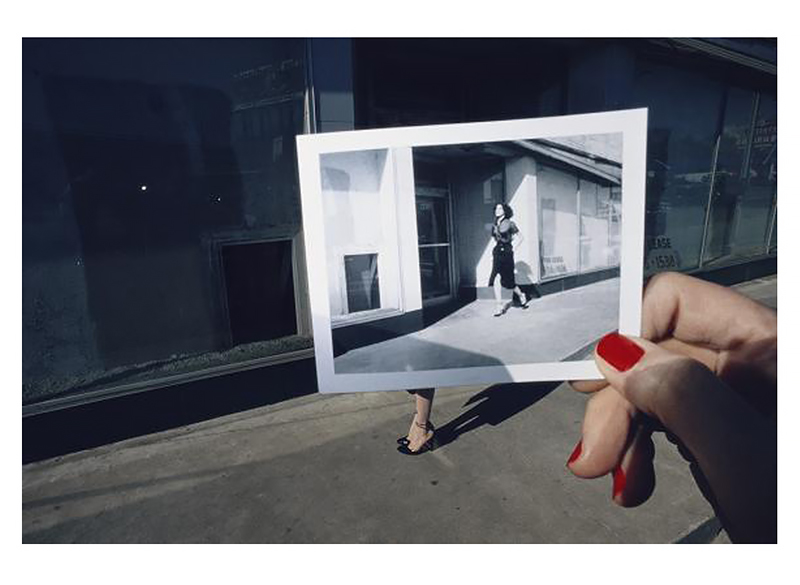
The Polaroid Project: At the Intersection of Art and Technology

From October 11, 2019 to June 21, 2020
Share
The Polaroid Project: At the Intersection of Art and Technology
265 Massachussetts Avenue
Cambridge, MA 02139
In its heyday, Polaroid and its products were loved by millions of amateurs and embraced by countless professionals. ThePolaroidProject tells the fascinating and instructive story of the Polaroid company, and presents all aspects of Polaroid photography, including the technology that made it possible. After traveling around the world, this critically acclaimed exhibition will make a stop at the MIT Museum, approximately a block from where instant film was first invented.

This unique exhibition explores various dimensions of the art-technology relationship through the exhibition of both art and artifacts. Featured will be over two hundred original works by 120 artists, including Ansel Adams, Chuck Close, Barbara Crane, Harold Edgerton, Walker Evans, Hans Hansen, David Hockney, Dennis Hopper, Gyorgy Kepes, Robert Mapplethorpe, Robert Rauschenberg, Andy Warhol, and William Wegman. The exhibition also showcases more than 75 artifacts--including cameras, prototypes, experimental films and other technical materials--from the MIT Museum's own historic Polaroid collection.

Due to the sensitivity of the photographs, the exhibition will be shown in two parts, with a complete re-installation mid-way through.
Our printed edition showcases the winners of AAP Magazine call of entries
All About Photo Magazine
Issue #56
Stay up-to-date  with call for entries, deadlines and other news about exhibitions, galleries, publications, & special events.

Exhibitions Closing Soon

Western Cowboy: Reloaded
Colorado Photographic Arts Center CPAC | Denver, CO
From May 08, 2026 to June 09, 2026
Western Cowboy: Reloaded, on view at CPAC from May 8 through June 20, 2026, revisits one of the most enduring figures in American visual culture with a measured, contemporary lens. Curated by Samantha Johnston, the exhibition gathers six Colorado-based photographers—Juan Fuentes, Constance Jaeggi, Amanda Lopez, Jack Ludlam, Rob Hammer, and Ian Warren—whose work collectively challenges the simplified mythology of the cowboy and reframes it within a broader cultural and historical context. For generations, the cowboy has occupied a central place in the American imagination, often portrayed as a solitary figure embodying independence and resilience. Yet this exhibition shifts the focus away from that familiar narrative, drawing attention instead to the diverse communities and traditions that have shaped the American West. Indigenous histories, Hispanic heritage, and the practical realities of ranching and rodeo life all surface in these images, complicating the notion of a singular, unified identity. The photographers approach the subject from varied perspectives. Some turn toward portraiture, capturing riders, wranglers, and workers in moments of quiet presence that emphasize lived experience over legend. Others focus on the material culture of the West—worn leather, weathered landscapes, tools of labor—highlighting the tactile dimensions of a life often romanticized from a distance. Scenes of rodeo culture introduce a different energy, where physical endurance and risk replace the stillness of traditional iconography. What emerges is not a rejection of the cowboy figure, but a recalibration. The exhibition acknowledges the symbolic power of the image while insisting on a more nuanced understanding of its origins and meanings. By presenting multiple viewpoints, it opens a space for reconsideration, where the West appears less as a fixed idea and more as an evolving set of relationships between land, labor, and identity. Timed alongside significant historical anniversaries, Western Cowboy: Reloaded situates its inquiry within a broader reflection on national narratives. It suggests that revisiting familiar symbols can reveal overlooked histories, offering a more grounded and inclusive vision of the American West. Image: Cowpuncher, © Rob Hammer
Paul Fusco and the RFK Funeral Train - a remembrance.
Danziger Gallery New York | New York, NY
From June 04, 2026 to June 11, 2026
Paul Fusco and the RFK Funeral Train - a remembrance returns to one of the most haunting public moments in American photography. On view from June 4 to 11, 2026, the presentation marks the anniversary of Robert F. Kennedy’s assassination and revisits the funeral train that carried his body from New York to Washington, D.C., and then to Arlington National Cemetery. Paul Fusco, working on assignment for LOOK magazine, rode the train and photographed the crowds that gathered along the route. The images show families, workers and children standing beside the tracks in towns and cities across the country. They are ordinary faces caught in an extraordinary moment, and together they form a record of public grief that still carries force nearly six decades later. Kennedy was killed on June 5, 1968, and the funeral train became a national event watched in silence by millions. Fusco’s photographs, made from the moving train window, capture a country suspended between shock and reflection. The pictures do not rely on spectacle. Their strength comes from repetition, from the steady sequence of people who stopped to watch, and from the range of emotions that pass across their faces as the train moves by. The selection of 20 images highlights both the scale of Fusco’s original coverage and the discipline behind it. He made hundreds of photographs that day, building one of the most recognizable visual archives of public mourning in American history. The work also connects to Kennedy’s message of justice and compassion, which remained central to his political legacy and continues to shape how the era is remembered. Presented as a remembrance, the exhibition treats photography as both document and witness. Fusco’s images preserve a national moment, but they also point to something more enduring: the way grief, memory and public life often appear most clearly in the faces of strangers gathered at the edge of the road. Image: #20 from the series "RFK Funeral Train", 1968 © Paul Fusco
Charles Swedlund: No Small Pictures
Stephen Daiter Gallery | Chicago, IL
From March 20, 2026 to June 12, 2026
At Stephen Daiter Gallery, Charles Swedlund: No Small Pictures foregrounds a practice that has consistently challenged the scale and material limits of photography. The exhibition gathers large-format prints produced with contemporary imaging technologies, allowing images originally conceived in more modest dimensions to unfold with heightened clarity. Grain, texture and tonal variation become more pronounced, encouraging a slower, more attentive mode of viewing. Swedlund’s work has long been associated with the square format, often centered on the human figure in states of movement or quiet transformation. His images resist fixed narratives, instead emphasizing gesture, repetition and the subtle distortions introduced through multiple exposures. These layered compositions blur the boundary between documentation and construction, positioning the photographic surface as a site of experimentation rather than simple capture. A lesser-known aspect of his practice appears here in a series of large-scale photograms. Produced without a camera, these works return to one of photography’s earliest techniques while pushing it into new territory through scale and precision. Objects placed directly onto photosensitive material leave behind traces that feel at once immediate and abstract, underscoring Swedlund’s sustained interest in the physical processes underlying image-making. Born in Chicago in 1935, Swedlund emerged from the influential Institute of Design, where he studied under Aaron Siskind and Harry Callahan. That lineage remains visible in his attention to form and structure, though his career has taken a distinctly experimental path. Alongside his own production, he has contributed to photographic education and scholarship, notably through his widely used handbook on photographic history and processes. His work resides in major museum collections across Europe, Asia and the United States. Now in his nineties, Swedlund continues to test the possibilities of the medium. No Small Pictures reflects a career defined less by stylistic consistency than by sustained inquiry, where each technical shift opens new ways of seeing and rethinking what a photograph can be. Image: Swedlund Untitled (dancing female nudes), c. 1966 © Charles Swedlund
Jonathan Calm - To Wherever, Forever: Archives of Absence & Sites of Passage
The de Saisset Museum | Santa Clara, CA
From February 05, 2026 to June 13, 2026
Jonathan Calm – To Wherever, Forever: Archives of Absence & Sites of Passage, on view at Santa Clara University from February 5 to June 13, 2026, is a layered and quietly powerful meditation on movement, memory, and the landscapes shaped by exclusion. Working across photography, video, embroidery, and installation, Calm traces how histories of erasure persist within the American terrain, revealing places where beauty and violence occupy the same ground. Presented at the de Saisset Museum, Archives of Absence examines sites where communities and lives have been displaced or submerged. In the Ghost Ship photographs, the iconic Phantom Ship of Crater Lake is transformed into a drifting vessel, hovering between myth and history, migration and mourning. This spectral image resonates with the legacy of forced journeys, while remaining rooted in a specific American landscape. Elsewhere, Drown Town uses embroidered photographs to restore visibility to towns erased by dam projects, each stitch acting as a quiet act of remembrance. Cyanotype grids of hurricanes further expand this archive, underscoring how environmental catastrophe repeatedly impacts marginalized communities. The exhibition also confronts geographies of racial exclusion. In Sundown Town, embroidered images mark places where Black presence was once violently restricted, surrounded by road signage that transforms the gallery into a space of warning and witness. Across campus, at the Art & Art History Department Gallery, Sites of Passage revisits locations listed in the historic Negro Motorist Green Book. Through photographs, targets bearing the names of victims of police violence, and videos filmed from inside a moving vehicle, Calm collapses past and present, turning travel into both testimony and vigil. Together, these intertwined exhibitions form an unsettled map of the United States—an archive built from fragments, absences, and slow looking. Calm invites viewers to consider how movement through space can become an ethical act, and how remembering, like travel, demands attention to what has been left behind as much as what lies ahead. Image: Jonathan Calm, Green Book (Lorraine Motel), 2016. Archival Pigment Print, 20" X 20" Courtesy of the Artist and Rena Bransten Gallery © Jonathan Calm
Jesse Ly: try, take time – take time, try
Filter Photo | Chicago, IL
From May 01, 2026 to June 13, 2026
Jesse Ly’s try, take time – take time, try brings together photographic, sculptural, and installation works that navigate the tensions between care and labor. The exhibition examines how tenderness coexists with the discipline and intensity required to create change, using sequences of images and symbolic gestures to explore protection, affirmation, and preparedness as active forms of making. The works consider the interplay between softness and firmness, demonstrating how conviction can exist alongside compassion. Ly’s compositions blend multiple emotional and conceptual registers, creating spaces where the practical and the poetic intersect. Each piece engages with the processes of maintaining ideals, fostering care, and holding space for possibility, inviting viewers to reflect on the balance of effort and attention in personal and communal life. Through repetition, layering, and careful sequencing, Ly cultivates a visual rhythm that mirrors the persistence and endurance inherent in both labor and emotional care. The exhibition foregrounds the agency of making, illustrating how intentionality and attentiveness shape outcomes and allow space for human connection. Objects, images, and installations work together to suggest the nuanced strategies needed to navigate complex emotional and social landscapes. Ly’s practice is informed by a commitment to exploring the material and conceptual possibilities of image-making. The works resonate across scales, from intimate gestures to immersive installations, emphasizing the relational and performative qualities of care. By combining multiple forms and approaches, try, take time – take time, try challenges viewers to consider how softness, rigor, and attentiveness operate in tandem, revealing the labor embedded in acts of sustaining, protecting, and nurturing both ideas and communities. The exhibition underscores the potential of art to reflect and shape our engagement with time, care, and responsibility. Ly’s integration of photographic, sculptural, and installation practices offers a compelling meditation on how making can embody both vulnerability and strength, fostering reflection, empathy, and the cultivation of enduring connections. Image: © Jesse Ly
Fast Forward: Analog Photography as a Third Space
Los Angeles Center of Photography (LACP) | Los Angeles, CA
From April 10, 2026 to June 13, 2026
Fast Forward: Analog Photography as a Third Space, on view from April 10 through June 13, 2026, brings renewed attention to the enduring relevance of film-based practices at a moment when image culture feels increasingly saturated and accelerated. Gathering prize-winning works alongside a wide selection of emerging and established photographers, the exhibition frames analog photography not as a nostalgic return, but as a deliberate and timely response to contemporary visual overload. Curated by Aline Smithson and Dr. Rotem Rozental, the project examines how photography functions as a social and material space—one shaped as much by process as by image. In contrast to the frictionless production of digital media, the artists presented here embrace slowness, imperfection, and tactility. Grain, chemical traces, and subtle tonal shifts become essential elements rather than flaws, anchoring each photograph in time and physical reality. The exhibition highlights a range of approaches, from traditional darkroom printing to experimental manipulations of film and light. While the visual languages vary, a shared sensibility emerges: an insistence on presence. These works resist the disposability often associated with contemporary imagery, inviting sustained attention and a closer reading of surface and detail. In this context, repetition, delay, and manual intervention operate as creative tools, shaping both the image and the experience of viewing it. Beyond the images themselves, Fast Forward points to the communal dimension of analog practice. Darkrooms, workshops, and shared studio environments foster exchanges that extend beyond the solitary act of picture-making. Photography becomes a site of dialogue, where knowledge circulates through hands-on engagement and collective experimentation. This emphasis on connection underscores the idea of a “third space,” situated between tradition and innovation, solitude and collaboration. In an era increasingly defined by automation and speed, the exhibition suggests that the future of photography may lie דווקא in its oldest methods. By reasserting the value of process, material, and time, these artists reaffirm photography’s capacity to remain both deeply personal and profoundly human. Image: 1st Place Winner – Chandler Nelson Hubbard, A Funeral Home for Fish © Chandler Nelson Hubbard, courtesy of LACP
Mike Brodie: New And Selected Works
Casemore Gallery | San Francisco, CA
From May 02, 2026 to June 13, 2026
Mike Brodie, on view from May 2 to June 13, 2026 at Casemore Gallery, marks the gallery’s first solo exhibition with the American photographer, whose work has come to define a raw and immersive vision of life on the margins. Known for his early years documenting freight train travel across the United States, Brodie’s images offer a perspective shaped not by observation from afar, but by lived experience within the communities he photographs. Brodie’s entry into photography begins almost by accident, after discovering a Polaroid camera in the early 2000s. What follows is a period of constant movement, as he travels alongside a network of drifters, hitchhikers, and train hoppers. Shooting under the name “The Polaroid Kidd,” he produces a series of intimate portraits and scenes that capture both the harshness and camaraderie of transient life. These early works, characterized by their immediacy and physical closeness, quickly gain recognition for their unfiltered portrayal of a rarely seen subculture. As materials change, so does his approach. The transition from Polaroid to 35mm film marks a shift toward a broader narrative, culminating in the publication of A Period of Juvenile Prosperity. The book receives widespread acclaim and situates Mike Brodie within a lineage of American photographers concerned with movement, identity, and the open road. His photographs echo earlier traditions while maintaining a distinctly contemporary sensibility, rooted in personal connection rather than detached documentation. After stepping away from photography for several years, Brodie returns with new work that reflects a different phase of life. His more recent images, gathered in the monograph Failing, trace a quieter yet no less intense exploration of relationships, labor, and introspection. The focus shifts from collective experience to more personal narratives, revealing the passage of time and the complexities that accompany it. This exhibition brings these trajectories into focus, presenting Brodie’s practice as both a record of a specific moment and an ongoing inquiry into belonging and survival. His photographs remain grounded in empathy, offering a view of American life that resists simplification while retaining a sense of immediacy and truth. Image: Mike Brodie, #5060, 2025, Archival Pigment Print © Mike Brodie, courtesy of the Casemore Gallery
Culture Crops: Ohio’s Hidden Gardens and Secret Food Histories
Richard and Carole Cocks Art Museum | Oxford, OH
From January 27, 2026 to June 13, 2026
Culture Crops: Ohio’s Hidden Gardens and Secret Food Histories unfolds at the Richard and Carole Cocks Art Museum as a vivid exploration of the deep connections between land, memory, and nourishment. Through the lens of photographer Tina Gutierrez, the exhibition gathers a series of portraits that honor the individuals and communities shaping Ohio’s agricultural landscape. These images move beyond documentation, offering an intimate encounter with people whose lives remain rooted in cycles of planting, tending, and harvesting. Gutierrez approaches her subjects with a sensitivity that emphasizes presence and dignity. Farmers, foragers, and gardeners appear within their environments, often surrounded by the crops that define their labor and heritage. The photographs carry a quiet intensity, revealing the layered histories embedded in everyday practices. Indigenous knowledge, immigrant traditions, and local ingenuity converge in these portraits, forming a collective narrative that speaks to both continuity and adaptation across generations. The exhibition extends into moving image through Asa Featherstone’s video interviews, where voices and gestures deepen the visual experience. Personal stories unfold with candor, tracing journeys shaped by migration, resilience, and community ties. Accompanied by historical insights into regional foodways, the project situates these lived experiences within a broader cultural framework. Together, image and testimony create a space where the act of growing food becomes inseparable from identity and belonging. At its core, Culture Crops reflects on the often unseen networks that sustain daily life. Gardens, whether expansive or modest, emerge as sites of knowledge, care, and resistance. The exhibition invites a reconsideration of how food circulates—not only as sustenance, but as a carrier of stories and relationships. In bringing these narratives to light, the project affirms the enduring significance of local practices while encouraging a renewed awareness of the histories that shape what we eat. Image: Tina Gutierrez, 2024. “Madonna of the Garden.” Jordyn Flowe and Obadiah with Early Girl Tomato at Melrose Garden, Cincinnati. © Tina Gutierrez.
Devlin Claro: Crushing
Donald Ryan Gallery | New York, NY
From April 30, 2026 to June 13, 2026
At Donald Ryan Gallery, the exhibition Devlin Claro: Crushing, on view from April 30 to June 13, 2026, introduces a new body of work that deepens the artist’s exploration of contemporary urban life. Born in Queens in 1995, Devlin Claro approaches photography as a constructed practice, staging scenes that blur the boundaries between observation and invention. This latest presentation expands his visual language through large-format prints and an installation that heightens the immersive, cinematic quality of his images. Claro’s work draws extensively from the outer boroughs of New York, which he describes as a “middle world,” neither central nor peripheral. In these transitional spaces—parks, residential streets, bridges, and overlooked corners of the city—he constructs scenes that feel both familiar and quietly disquieting. Often shaped through reenactment and careful staging, the photographs resist clear narrative resolution. Clothing, architecture, and lighting obscure temporal markers, situating the images in an ambiguous moment that hovers between past and present. A defining element of the series lies in its attention to infrastructure and atmosphere. The warm, fading glow of sodium-vapor streetlights, now largely replaced by LED systems, casts the city in an amber haze that evokes a pre-digital threshold. Within this light, elements such as rail lines, bridges, and municipal structures take on a heightened presence, subtly pointing to the political and economic systems that shape urban experience. Parks appear emptied of their social function, while built environments emerge as both backdrop and active force, reflecting the unease and complexity of contemporary life. The exhibition coincides with Claro’s inclusion in Greater New York at MoMA PS1, a recurring survey known for spotlighting emerging artists working across the metropolitan area. Educated at The Cooper Union, Claro continues to develop a practice that engages photography, film, and video, with works held in collections such as Huis Marseille, Museum for Photography. At Donald Ryan Gallery, Crushing offers a measured yet evocative portrait of a city in flux, where the ordinary becomes a stage for broader reflections on surveillance, memory, and the shifting textures of American life. Image: © Devlin Claro
Sheila Pinkel: Early Works, 1974-1977
Higher Pictures | Brooklyn, NY
From April 22, 2026 to June 13, 2026
At Higher Pictures, Sheila Pinkel: Early Works, 1974–1977 brings to light a formative chapter in the artist’s career, presenting a group of cyanotypes that have remained largely unseen until now. On view from April 22 to June 13, 2026, the exhibition gathers twelve works that trace the origins of Pinkel’s sustained investigation into light, material, and transformation. These early experiments reveal a practice already attuned to the intersection of scientific process and artistic intuition. Central to the exhibition are the Body Cyanotypes, in which Pinkel uses sunlight as both medium and collaborator. Exposed at midday to achieve heightened contrast, the works transform the human figure into something fluid and unstable. Bodies appear suspended, fragmented, and multiplied, as if reshaped by the movement of light itself. The resulting images echo surrealist traditions, yet remain grounded in the physical act of exposure, where time, gesture, and environment leave their imprint on the photographic surface. Pinkel expands this approach through increasingly complex techniques, layering objects, photographic negatives, and textures directly onto treated paper. Using tools such as carbon-arc lamps and vacuum frames, she manipulates light with precision, while also introducing a tactile dimension by pressing materials into the paper before exposure. These interventions leave subtle traces that persist even after development, giving the works an almost archaeological quality. The surface becomes a record not only of what is seen, but of what has passed through it. Among the most striking aspects of the exhibition is Pinkel’s early engagement with computer-generated imagery, an unusual move at the time. Integrating digital forms into her cyanotypes, she creates a dialogue between emerging technologies and traditional photographic processes. The recurring presence of Marilyn Monroe, rendered as a ghostly and fragmented figure, underscores this interplay between cultural memory and technological transformation. Together, these works position Pinkel’s early practice as both experimental and prescient, anticipating ongoing conversations around the boundaries of image-making. Now recognized in major collections including the Museum of Modern Art and the Centre Pompidou, Sheila Pinkel emerges here as an artist already pushing against the limits of her medium. This exhibition offers a focused yet expansive view of a body of work that continues to resonate across both analog and digital contexts. Image: © Sheila Pinkel, courtesy of Higher Pictures
Gordon Parks: The South in Color
Jackson Fine Art | Atlanta, GA
From April 02, 2026 to June 13, 2026
Gordon Parks: The South in Color, presented at Jackson Fine Art from April 2 through June 13, 2026, revisits one of the most powerful photographic projects of the twentieth century. Organized in collaboration with The Gordon Parks Foundation, the exhibition commemorates the seventieth anniversary of the publication of Parks’ groundbreaking photographs of the segregated American South in Life magazine. Bringing together more than thirty images from the celebrated Segregation Story series, the presentation offers a renewed perspective on a body of work that continues to resonate with extraordinary emotional depth and historical significance. During the summer of 1956, Gordon Parks traveled to Mobile to document the daily lives of African American families living under the strict realities of racial segregation. Working primarily with a twin-lens Rolleiflex camera, Parks chose to photograph the story in color, an unusual decision for documentary photography at the time. The resulting square-format images capture quiet yet profound moments within the Thornton family and their extended community. Scenes of everyday life—children at play, family gatherings, and simple acts of resilience—stand alongside powerful symbols of segregation, including the now-iconic photograph At Segregated Drinking Fountain. The exhibition is curated by acclaimed photographer Dawoud Bey, whose scholarship and artistic practice often explore the layered histories of African American life. Through his curatorial approach, Bey highlights the remarkable visual sensitivity present in Parks’ images. Rich colors, balanced compositions, and careful attention to gesture reveal lives shaped not only by hardship but also by dignity, intimacy, and endurance. The photographs convey a deep respect for the individuals who appear within the frame, transforming documentary observation into a form of visual poetry. Alongside the historic photographs, the exhibition introduces a newly released limited-edition portfolio titled The South in Color, published to mark the twentieth anniversary of the Foundation. The portfolio emphasizes Parks’ recurring attention to children, whose presence often anchors the emotional center of the series. Across these photographs, youth becomes a symbol of continuity and quiet hope within a deeply divided society. Seen today, the images remain both historical testimony and enduring works of art, reminding viewers of photography’s unique ability to illuminate injustice while affirming the humanity of those who stand before the lens. Image: Untitled, Shady Grove, Alabama, 1956 (37.036) from The South in Color Portfolio (37.160), 1956. © The Gordon Parks Foundation, courtesy of the Jackson Fine Art gallery.
Teresa Montoya’s Tó Łitso (Yellow Water): Ten Years after the Gold King Mine Spill
The Block Museum of Art | Evanston, IL
From February 04, 2026 to June 14, 2026
Tó Łitso (Yellow Water): Ten Years after the Gold King Mine Spill, presented at the Block Museum of Art, revisits one of the most visible environmental disasters in recent American history through a lens that is both intimate and expansive. A decade after the 2015 Gold King Mine spill sent millions of gallons of toxic wastewater coursing through the Animas and San Juan Rivers, artist and anthropologist Teresa Montoya retraces the path of contamination, revealing its enduring imprint across landscapes and communities. Montoya’s project begins as a journey, following the flow of polluted water from Colorado into New Mexico, but it quickly unfolds into a layered examination of consequence. Her photographs do not settle for documentation alone. They register subtle traces of damage—discolorations, altered terrains, and quiet moments of disruption—while also capturing the resilience of the communities who continue to live with these conditions. In doing so, the work resists the spectacle often associated with environmental catastrophe, focusing instead on its prolonged aftermath. What distinguishes Tó Łitso is its interdisciplinary approach. Photographic images are presented alongside sound recordings, water samples, and mapping data, creating a dense network of information and perception. This combination underscores water as more than a resource; it becomes a carrier of memory, culture, and harm. For Indigenous communities, particularly within the Navajo Nation, water holds deep spiritual significance, and its contamination reverberates far beyond physical health, touching identity, tradition, and continuity. Montoya’s work challenges conventional narratives of environmental damage by foregrounding Indigenous knowledge systems and lived experience. Rather than isolating the spill as a singular घटना, the exhibition situates it within a broader history of extraction and neglect in the American Southwest. The images, at times strikingly beautiful, at others unsettling, reflect this tension between visibility and invisibility—between what can be seen and what persists beneath the surface. Ten years on, Tó Łitso offers neither closure nor resolution. Instead, it insists on attention, asking viewers to consider how environmental crises continue to unfold over time, and how their effects remain embedded in both land and life. Image: Teresa Montoya (Diné, born 1984), Tó Łitso #22 (Yellow Water #22), from the series Tó Łitso (Yellow Water), 2016, Inkjet print. Mary and Leigh Block Museum of Art, Northwestern University, Block Board of Advisors Endowment Fund purchase. Image courtesy of the artist
Advertisement
AAP Magazine #59 Shapes
Win a Solo Exhibition in July
AAP Magazine #59 Shapes
Call for Entries
AAP Magazine #59 Shapes
Publish your work in our printed magazine and win $1,000 cash prizes

Related Articles

Huxley-Parlour Presents ‘Select Works, 1962-2019’ by Joel Meyerowitz
Huxley-Parlour Gallery is thrilled to announce Select Works, 1962-2019, a major exhibition celebrating the enduring legacy of world-renowned photographer Joel Meyerowitz. Marking the artist’s fourth solo show with the gallery, this carefully curated collection brings together twenty-five seminal photographs. Spanning a remarkable six-decade career, the exhibition tracks the evolution of Meyerowitz's influential photographic voice and his pioneering approach to the medium, offering viewers an intimate look at how one of masters of modern photography transformed the way we view the world.
CPW Upstate Photography Biennial
This summer, CPW (Center for Photography at Woodstock) will debut the inaugural Upstate Photography Biennial, a major new exhibition celebrating the thriving photographic arts scene across upstate New York. Bringing together the work of 39 artists, the landmark exhibition offers a compelling snapshot of the region’s creative vitality and its growing influence on contemporary photography.
Beneath the Surface: Mining and American Photography
Beneath the Surface to feature some 150 photographs by 100 artists spanning 185 years of society and industry in the United States
photo basel 2026 Celebrates the Expanding Language of Photography
Switzerland’s Premier Photography Event Returns for Its 11th Edition. Shifting Frames: Photo Basel 2026 Redefines the Limits of Fine Art Photography A Convergence of Legends: Curating 450 Masterworks
All About Photo Presents ’Fading Shehuo’ by Chris Yan
All About Photo is proud to present Chris Yan as the featured artist of our upcoming solo exhibition with his project Fading Shehuo, showcased exclusively on All About Photo. A project preserving the Spirit of Rural China Through Street Photography.
Belfast Photo Festival 2026: Horizons
The 2026 edition takes visitors towards new ‘Horizons’, a theme that positions photography at a critical threshold in an age of AI-generated imagery, automation and algorithmic seeing. The festival returns as the medium undergoes profound transformation and its claims to truth, trust, authorship and materiality are increasingly being questioned.
Meryl Meisler: Queer-Friendly Nightlife Now
Nearly five decades after documenting disco-era revelry, photographer Meryl Meisler returns with a bold new body of work capturing the pulse of contemporary queer nightlife—its grit, glamour, and enduring sense of community. Meryl Meisler: Queer-Friendly Nightlife Now premieres the CPW's inaugural Upstate Photography Biennial, a new exhibition series featuring 39 artists from across the region, opening May 30, 2026.
Prix Pictet Exhibition Makes U.S. Debut at MoCP
The Museum of Contemporary Photography at Columbia College Chicago (MoCP) will present Prix Pictet Storm from May 29 through August 22, 2026, marking the U.S. debut of the internationally touring exhibition dedicated to photography and sustainability. Organized in partnership with Prix Pictet — widely recognized as the world’s leading award focused on photography and sustainability — the exhibition brings together twelve exceptional contemporary photographers whose work explores environmental instability, political unrest, social tension, and the fragile state of the modern world.
Marilyn Monroe at 100: Landmark Exhibition Opens at National Portrait Gallery
Exploring Monroe’s life, career and legacy , the exhibition will include portraits created by many of the greatest photographers and artists of the 21th and 21st centuries , including Andy Warhol, Pauline Boty and Richard Avedon .
Call for Entries
Win A Solo Exhibition in July
Get International Exposure and Connect with Industry Insiders