As a nationally recognized youth photography and mentoring program, First Exposures strives to make a long-term impact on the lives of high-need, underserved youth in the San Francisco Bay Area.
First Exposures provides youth aged 11-18 the opportunity to engage with photography in a classroom with guidance from a photographer who serves as both a mentor and a positive adult role model. Many of our students have experienced difficult life circumstances and are in the process of stabilizing their lives. Photography is the catalyst by which our students acquire vital life skills and the vehicle through which we deepen their intellectual, academic, and developmental experiences. While learning to photograph, students are also enhancing their self-confidence, developing their personal vision, and cultivating their passion for learning. Since the program's founding in 1993, over 95% of our students have gone on to pursue a college education. We reinforce our class time with time spent in experiential learning environments: visits to local newspapers, major museums, alternative art spaces, commercial photography studios, etc. And each semester we also go on a field trip to locations like Angel Island, Pie Ranch in Pescadero, the Solano Land Trust, and Bay Area beaches. The students use their cameras to explore and interpret these places, as well as with sites and people closer to home.
We meet at RayKo Photo Center (a community darkroom) and in our SOMA home - right next to Adolph Gasser at 2nd and Howard. First Exposures classes are located conveniently near BART and many bus lines.
Academic Year Mentorship Program Since 1993 each First Exposures student is matched one-to-one with a photographer who provides individualized guidance and serves as a volunteer mentor and positive adult role model. Photography is the catalyst by which our students acquire vital life skills and it is the vehicle through which we deepen their intellectual, academic and developmental experiences. Classes are offered in both traditional and digital photography.
Summer Group Mentoring Program In the summer of 2014 we introduced our first group-mentoring program offering our services for 30 youth. In comparison to our academic year program, this class operates in small group settings with two mentors and five mentees acting as a team to provide a unique shared experience and more peer-to-peer learning. Using state-of-the-art digital SLR cameras we provide a very similar experience to our regular program in an intensive eight weeks.
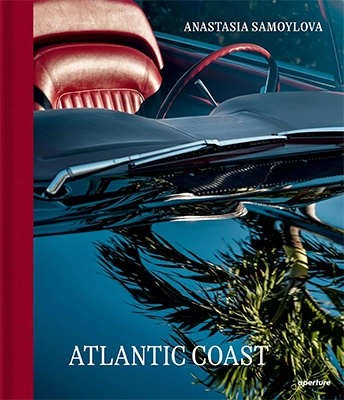
Anastasia Samoylova: Atlantic Coast opens a vast, quietly unsettling portrait of the American East Coast — one in which nostalgia, dislocation and transformation are sewn into the landscape itself. In this new monograph, Samoylova retraces the route pioneered by Berenice Abbott in 1954, journeying from Florida to Maine to revisit the places Abbott once documented, and to observe what has become of them decades later. Her images — in vivid color and stark black and white — reveal the tension between myth and reality, between promises of progress and the traces of decay or displacement.
Where once small towns and coastal communities had a certain stillness, Samoylova finds change carved into facades and roadside signs, into suburban sprawl and shuttered shopfronts. She frames these scenes with a photographer’s patience and a poet’s sensitivity — capturing abandoned diners, empty motels, decaying houses, ghostly intersections. At the same time, there is stubborn life: occasional portraits of people, wildlife, reminders that behind every sign of decline, someone, something endures.
Her book does not simply document physical places. It traces the shifting contours of identity, belonging and memory in a nation where the open road has long symbolized freedom — and where that ideal has become tangled with consumerism, environmental degradation, and socio-economic upheaval. Through Atlantic Coast, Samoylova asks whether the “American Dream” remains intact, or if it has fractured along with the towns her car passes through.
Reading this volume is to experience a slow, attentive journey — as a witness, as a traveller, as someone invited to reconsider what America has become. Her photographs linger, subtly unsettling the viewer’s assumptions about beauty, progress and decline. In its silence and restraint, the book whispers that memory, identity and place are fragile — and that every road carries stories worth listening to.
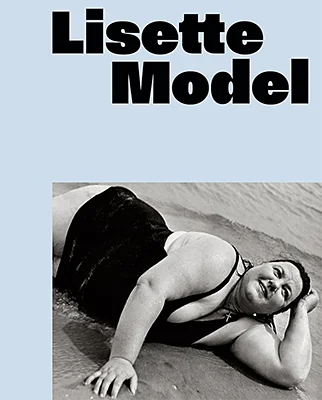
Lisette Model presents a definitive exploration of one of the most influential photographers of the twentieth century, whose bold vision reshaped the way urban life and society were captured on film. This stunning hardcover features over 200 reproductions, ranging from her early Parisian portraits to the striking images of New York streets that defined her career.
Model’s photographic journey began in Vienna and matured in France, where her keen eye for social observation developed. Early works, including portraits of idle elites in Nice, reveal her sharp sense of critique tempered by empathy. These images, at once confrontational and intimate, established her as a formidable observer of human behavior. After emigrating to the United States, Model brought this incisive approach to New York, producing iconic images such as the Coney Island Bather and the Cafe Metropole series, which juxtapose vitality, vulnerability, and the stark contrasts of city life.
Her lens captured both the glamour and grit of her surroundings: the bustling streets of the Lower East Side, the grandeur of high-society gatherings, and the nuanced everyday gestures that reveal the inner lives of her subjects. Model’s distinctive framing, bold compositions, and unflinching attention to human detail created a visual language that remains influential to this day.
This collection also includes lesser-known works from her travels along the U.S. West Coast and Venezuela, highlighting her continued exploration of character, form, and place. Insights from scholar Walter Moser contextualize her work within the broader trajectory of twentieth-century photography, illuminating her enduring impact as both an artist and a teacher.
Lisette Model is more than a retrospective; it is an immersive journey into a world seen through a lens of unvarnished reality and poetic observation. It celebrates a photographer whose fearless engagement with her subjects, combined with her artistic rigor, forged a path for generations of street and documentary photographers, offering an essential resource for enthusiasts and scholars alike.
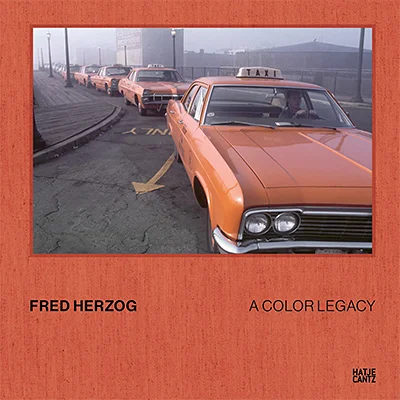
Fred Herzog: A Color Legacy opens a fresh chapter on the streets of Vancouver and beyond, offering the public previously unseen images from the archives of a man whose eye for color and life defied the conventions of his time. Herzog’s work in the 1950s and 60s stands out because he chose Kodachrome — a decision nearly heretical when art photography still equated seriousness with black and white. What emerges through his Leica’s lens is a world awash in warm reds, neon signs, and the soft glow of streetlights — a world that feels alive, tactile, and tender.
After emigrating from Germany to Vancouver in 1953 and working by day as a medical photographer, Herzog spent his evenings and weekends roaming the city streets. He captured storefronts, everyday people going about their lives, second-hand shops, Chinatown alleys, decaying cars, neon reflections — details often overlooked, but rich with character. He treated photography not as artifice but as observation, documenting modern urban life with precision and empathy. His photographs turned ordinary city scenes into a tribute to human presence and urban texture.
The volume collects these rediscovered gems alongside his best-known photos, offering a more complete portrait of a photographer who stubbornly trusted color when many of his peers turned away. The images span Vancouver and also trace Herzog’s travels to the U.S., the Caribbean, Mexico and Central America, showing a restless spirit and a worldwide curiosity. Each frame is infused with intimacy, subtle humor, and a respect for the quotidian — light on one face, a reflection in a shop window, the curve of a car hood shimmering in rain.
Fred Herzog: A Color Legacy is not just a homage to a photographer but a statement about memory, time, and beauty in the urban fabric. It reminds us how much of a city’s soul lives in small moments — a street sign, a storefront, a quiet onlooker — and how color, long seen as frivolous in serious photography, can reveal more truth than monochrome ever could.
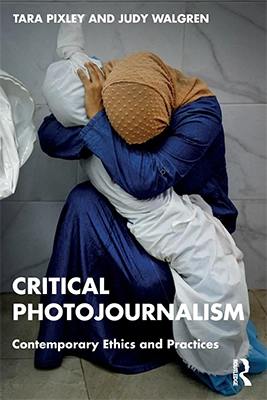
An essential introduction to the complexities of visual representation, this book offers a critical new framework for understanding and practicing photojournalism in a global digital context.
Critical Photojournalism guides readers through a variety of ethical, technical and business skills, plus the mental health, self-care and safety considerations necessary to thrive in the field. Drawing on their extensive industry and teaching experience, the authors provide real-world advice on how to navigate the demands of the profession while addressing the impact that photojournalism has on society and ways that photojournalists can mitigate harm. Consideration is given to understanding and disrupting implicit bias and power structures in newsrooms, as well as issues around access, working in breaking news environments and balancing informed consent with varying media laws around the world. In accessible language, this book highlights the importance of collaboration and community engagement in contemporary photojournalism and encourages students to adopt a decolonial approach to their work. Readers will learn to balance the needs for accuracy and thoughtfulness with the priorities of a global, social-media-engaged audience.
This is a key textbook for those seeking a nuanced introduction to visual journalism and/or a fresh approach to their craft. This book is supported by a website which can be accessed at www.criticalphotojournalism.com. The website includes a full-length bonus chapter on video and photojournalism, interviews with professional visual journalists, further tips and tools, and a glossary of key terms.