The Phoenix Art Museum photography exhibition
Ecstatic Time: The Alchemy of Photography opens on July 29, 2026, in Phoenix, Arizona. Organized in partnership with the University of Arizona’s
Center for Creative Photography (CCP), the exhibition brings together nearly 100 works that examine how photography shapes perception, alters reality, and expands human understanding of time.
On view through January 3, 2027, Ecstatic Time spans nearly the entire history of photography. From early experimental processes to contemporary conceptual works, the exhibition positions photography not only as a documentary medium, but as a creative force capable of transformation, imagination, and visual invention.
Photography, Reality, and the Concept of 'Ecstatic Time'
While photography is often understood as a tool for capturing reality, Ecstatic Time reframes the medium as something far more fluid and interpretive. The exhibition emphasizes photography’s ability to distort, heighten, and reconfigure what we see.
The title comes from film theorist Hollis Frampton, who described photographs as offering access to “ecstatic time”—a state outside of ordinary chronological experience. Derived from the Greek word ékstasis, meaning “to stand outside oneself,” the concept reflects how photographs can suspend moments, separating them from the continuous flow of lived time.
In this sense, photography becomes not just a record of what has been, but a way of entering new perceptual and temporal dimensions.
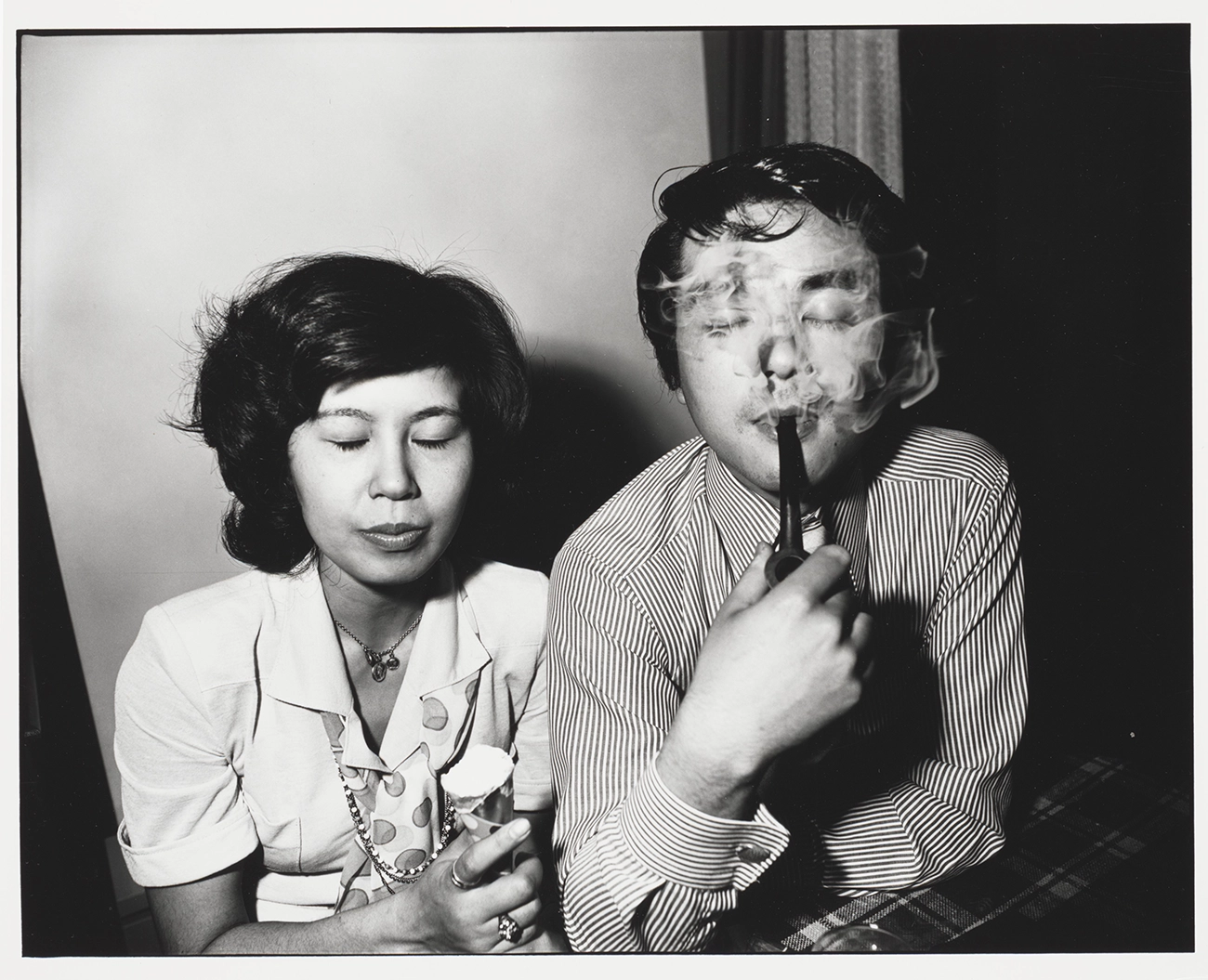
New Couple Who Closed Their Eyes, Tokyo, 1974. Gelatin silver print. Center for Creative Photography, University of Arizona: Purchase, with matching funds from Hitachi America, Ltd., 90.11.2.© Kikuji Kawada
The exhibition also marks the 20th anniversary of the partnership between Phoenix Art Museum and the Center for Creative Photography. Established through the support of Mr. and Mrs. John R. Norton, the collaboration has made it possible to bring significant works from CCP’s world-renowned collection to broader audiences in Phoenix, Arizona.
“Phoenix Art Museum is proud to present Ecstatic Time in partnership with the Center for Creative Photography as we celebrate two decades of collaboration,” said Jeremy Mikolajczak, Sybil Harrington Director and CEO of Phoenix Art Museum and coordinating curator of the exhibition’s presentation. “This enduring collaboration has allowed our institutions to share extraordinary works while advancing a deeper understanding of photography as an evolving and transformative medium.”
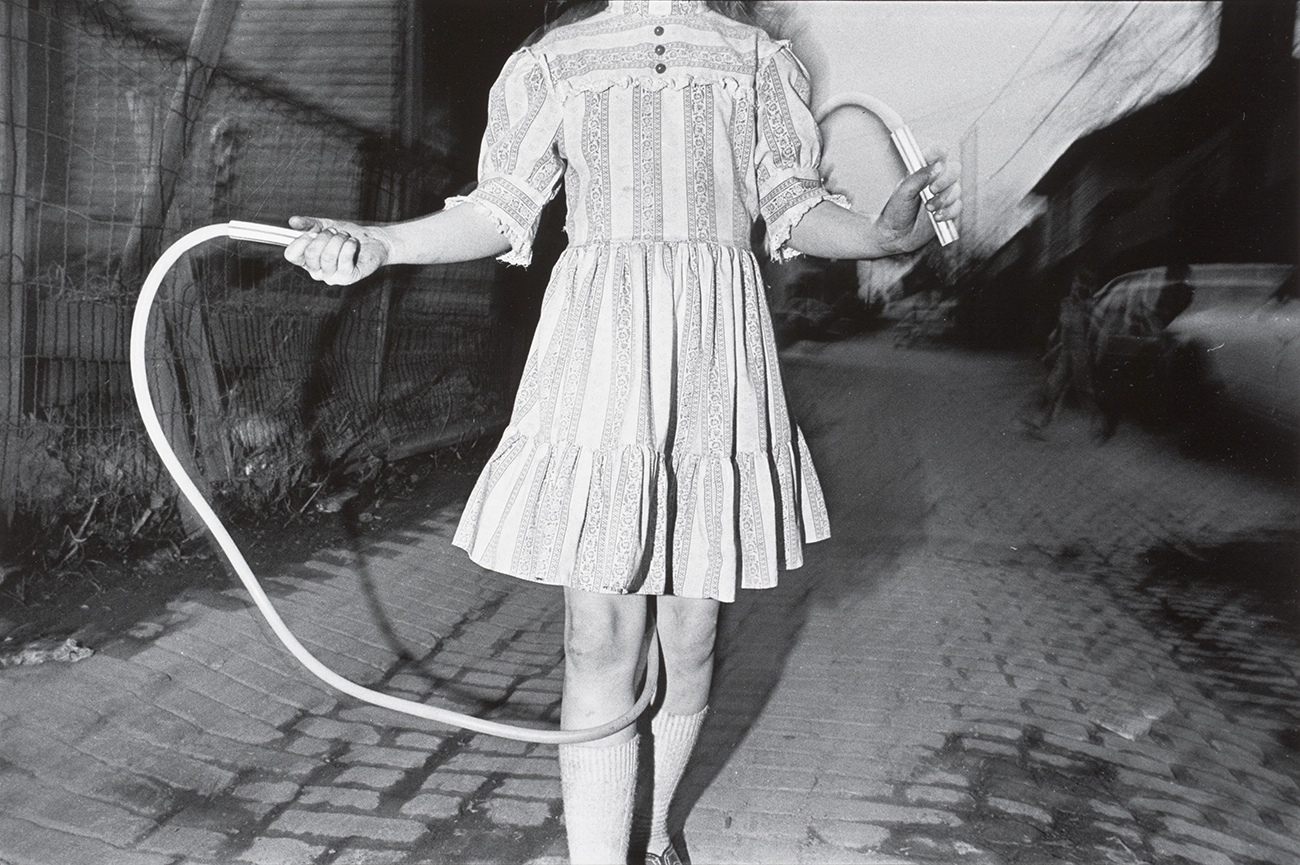
Untitled, 1975. Gelatin silver print. Center for Creative Photography, University of Arizona: Gift of the artist, 2004.19.3 © Mark Cohen
Featuring approximately 100 works drawn from CCP’s collection, Ecstatic Time includes both iconic and lesser-known photographs by major figures such as
Ansel Adams and
Edward Weston. Alongside these canonical works are experimental and conceptual images that highlight photography’s technical innovation and artistic range.
Spanning the 19th century through the present, the exhibition places particular emphasis on early 20th-century photography, including developments in flash photography, still life, time-lapse imagery, and astronomical imaging. Many of these works capture phenomena invisible to the naked eye, expanding the boundaries of what photography can reveal.
Collectively, the exhibition evokes a sense of a visual cabinet of curiosities, where scientific inquiry and artistic experimentation meet.
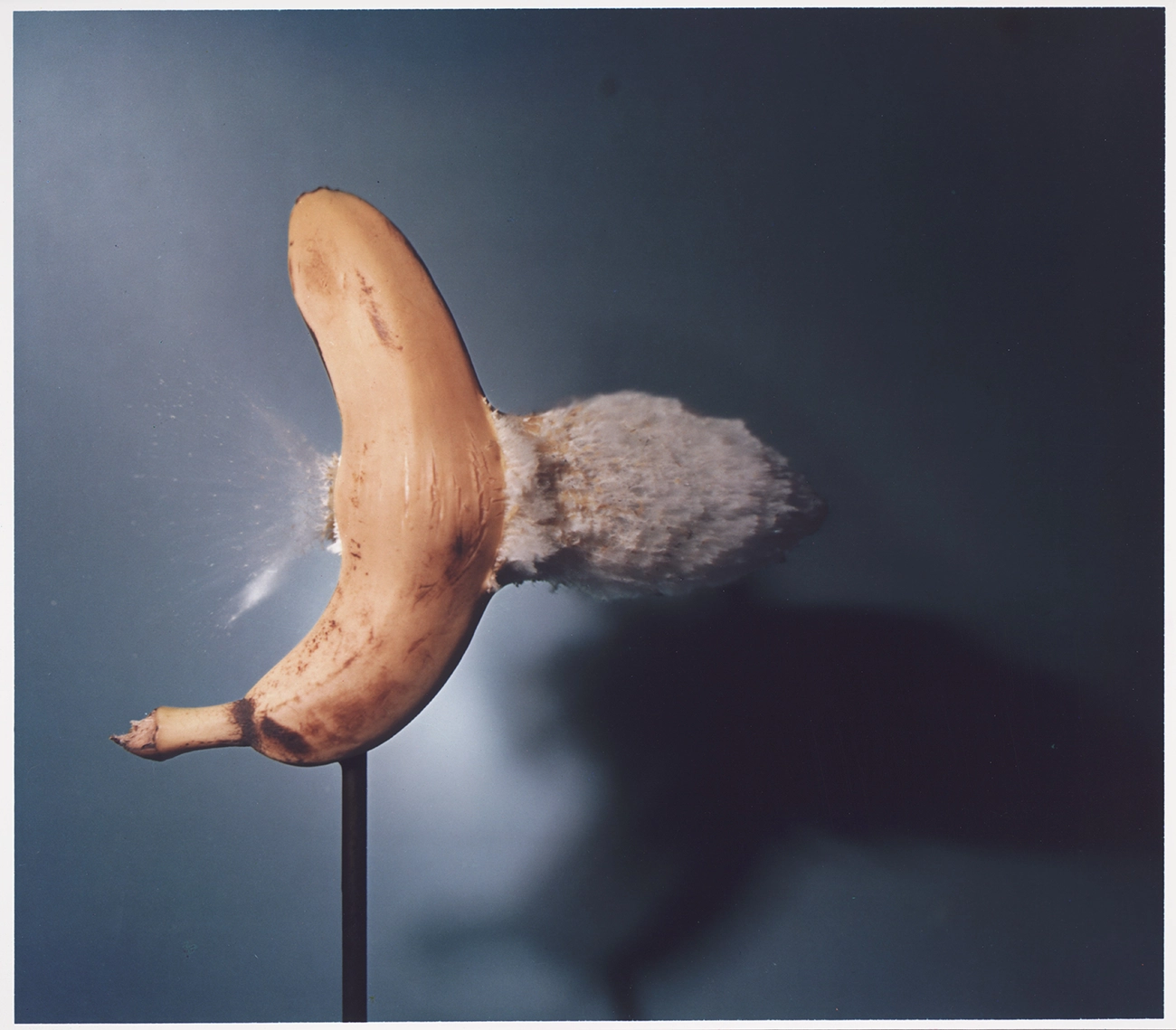
Harold Edgerton, Bullet through Banana, 1964. Dye transfer print. Center for Creative Photography, University of Arizona: Gift of The Harold and Esther Edgerton Family Foundation, 96.71.5. © Harold Edgerton, MIT, courtesy of Palm Press Inc.
Ecstatic Time is organized into four thematic sections, each exploring a different dimension of photography’s relationship to time, perception, and reality.
Awake and Dreaming: Surreal Photography and Camera Vision
The first section, Awake and Dreaming, brings together surreal and enigmatic 20th-century photographs that highlight the transformative power of camera vision. It emphasizes how photographic techniques—particularly flash—can freeze time, disrupt perception, and reveal unexpected moments.
Artists featured in this section include
Ilse Bing,
Manuel Álvarez Bravo,
Kozo Miyoshi, and
Garry Winogrand. Their works range from dreamlike compositions to candid street photography, all of which challenge conventional ways of seeing.
The Thing Itself: Still Life and the Cabinet of Curiosities
The Thing Itself presents a dense, immersive installation of still life photography that foregrounds the physical presence of objects. The section draws inspiration from the idea of a cabinet of curiosities, where disparate objects are collected to provoke wonder and inquiry.
Featured photographers include
Harold Edgerton,
Edward Weston, Masahisa Fukase, and
Abelardo Morell. Together, their works elevate everyday subjects into carefully constructed visual studies that emphasize form, texture, and material presence.
Out of this World: Astronomy and the Expanding Universe of Photography
The third section, Out of this World, explores astronomical and space-based photography. This includes images of solar eclipses, such as a photograph by
Ansel Adams, as well as imagery captured by NASA’s Mars Pathfinder rover.
These works demonstrate how photography extends human perception beyond Earth, capturing phenomena that are distant, cosmic, or otherwise invisible. In doing so, they expand the scale of photography from the intimate to the astronomical.
Incisions in History / Segments of Eternity: Photography and Time
The final section, Incisions in History / Segments of Eternity, examines photography’s complex relationship to time. It brings together conceptual works by artists such as
Hiroshi Sugimoto and
Lew Thomas, who explore how photography can compress, stretch, or disrupt temporal experience.
This section also includes 19th-century photographs that reflect earlier historical moments, creating a dialogue between past and present. Together, these works highlight photography’s ability to hold multiple temporalities within a single frame.
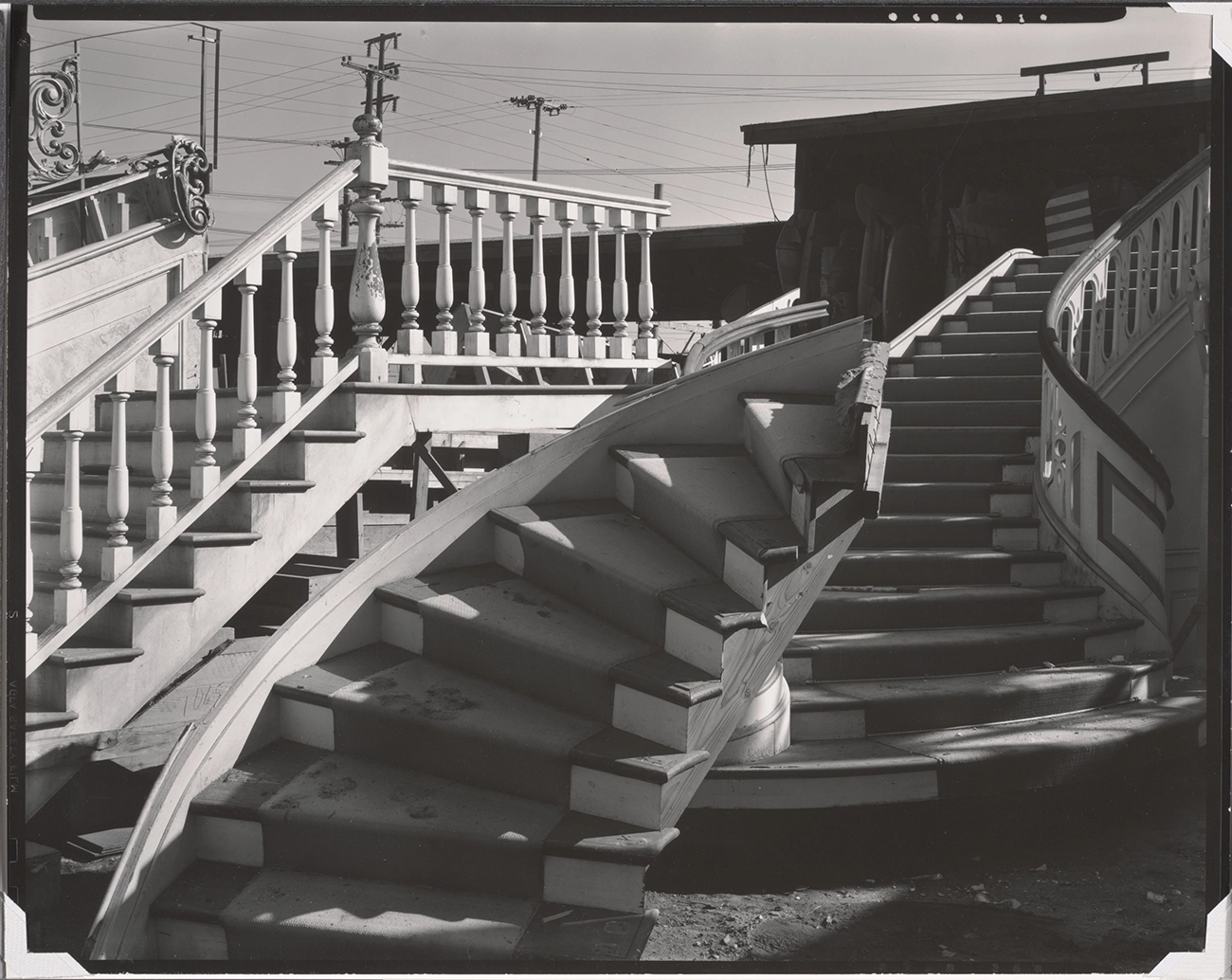
Edward Henry Weston, MGM Studios, 1939. Gelatin silver print. Center for Creative Photography, University of Arizona: Edward Weston Archive, 81.251.128. © Center for Creative Photography, Arizona Board of Regents
Across all four sections, Ecstatic Time features works by some of the most influential figures in photography, including Ansel Adams and Edward Weston. Their images sit alongside experimental and conceptual works that challenge traditional definitions of the medium.
This combination underscores photography’s evolution—from technical documentation to a fully expressive and experimental art form capable of shaping how we understand reality itself.
Why Ecstatic Time Is a Must-See Photography Exhibition
As one of the most significant Phoenix Art Museum photography exhibitions of 2026, Ecstatic Time: The Alchemy of Photography offers a sweeping look at how photography continues to evolve as an artistic and conceptual practice.
By bringing together historical works, experimental processes, and contemporary interpretations, the exhibition invites viewers to reconsider photography not as a mirror of reality, but as a dynamic medium that transforms how we see, think, and experience time itself.
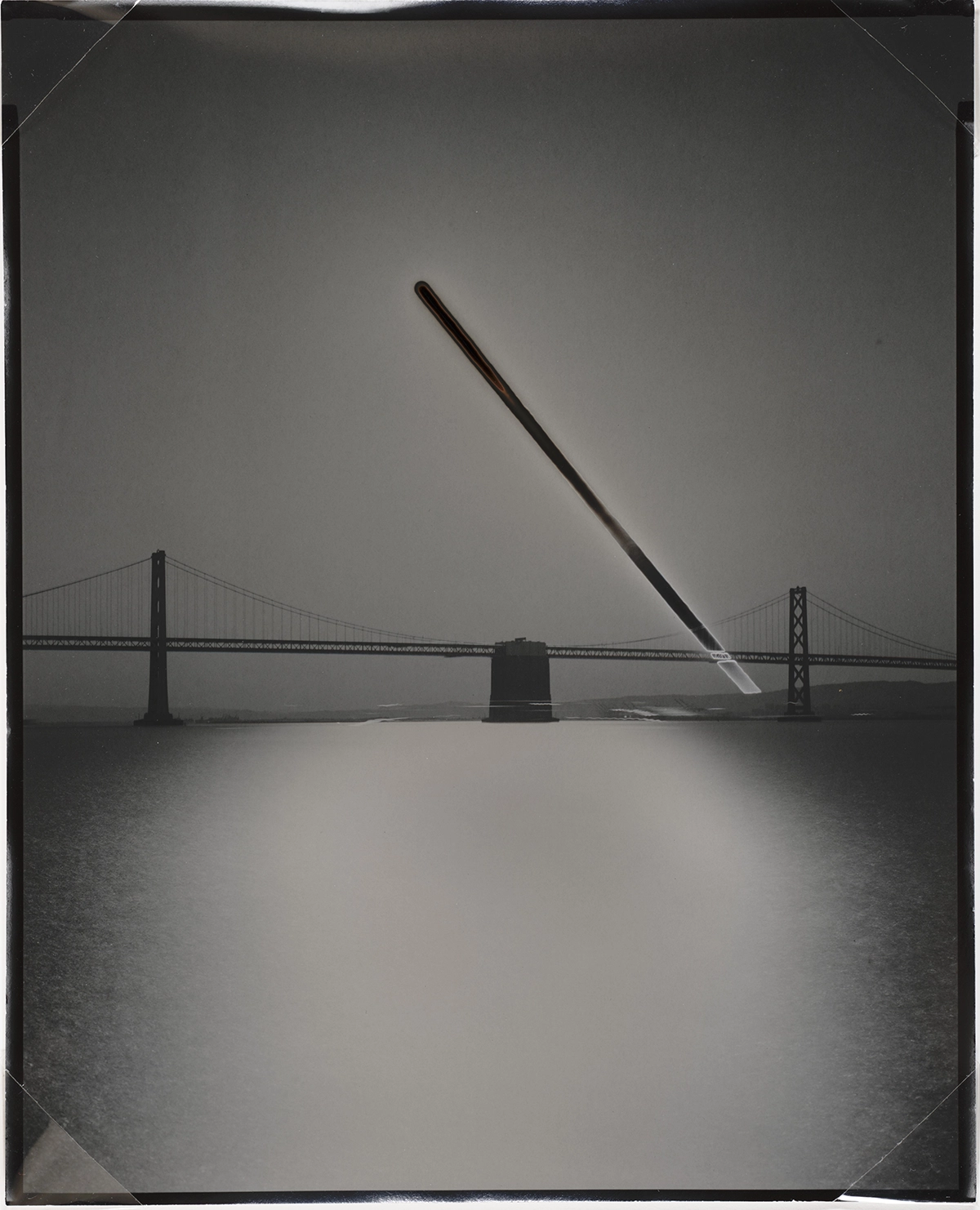
Sunburned GSP #340 (SF Bay Bridge), 2009. Gelatin silver print. Center for Creative Photography, University of Arizona: Purchase, 2011.5.1. © 2009 Chris McCaw